 By
By  February 16th, 2024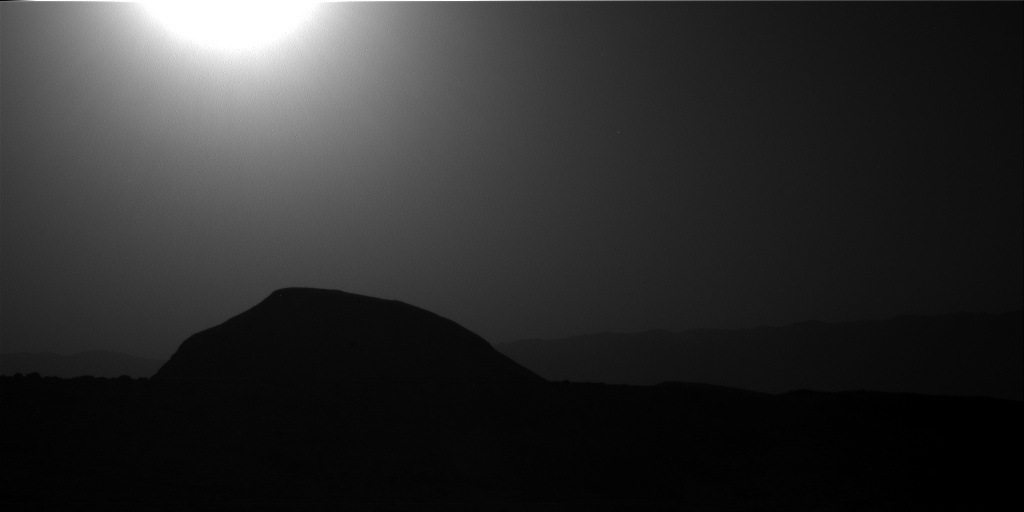
Curiosity Right B Navigation Camera photo acquired on Sol 4098, February 15, 2024.
Image credit: NASA/JPL-Caltech
NASA’s Curiosity Mars rover at Gale Crater is now performing Sol 4099 duties.
Alex Innanen, an atmospheric scientist at York University in Toronto, Ontario, reviews the rover’s new workspace. “There’s a lot to look at — different textures, different colors, different shapes.”
One of these is a contact science target, “Horseshoe Meadows,” a section of bedrock that is redder than what Mars researchers have been seeing recently.
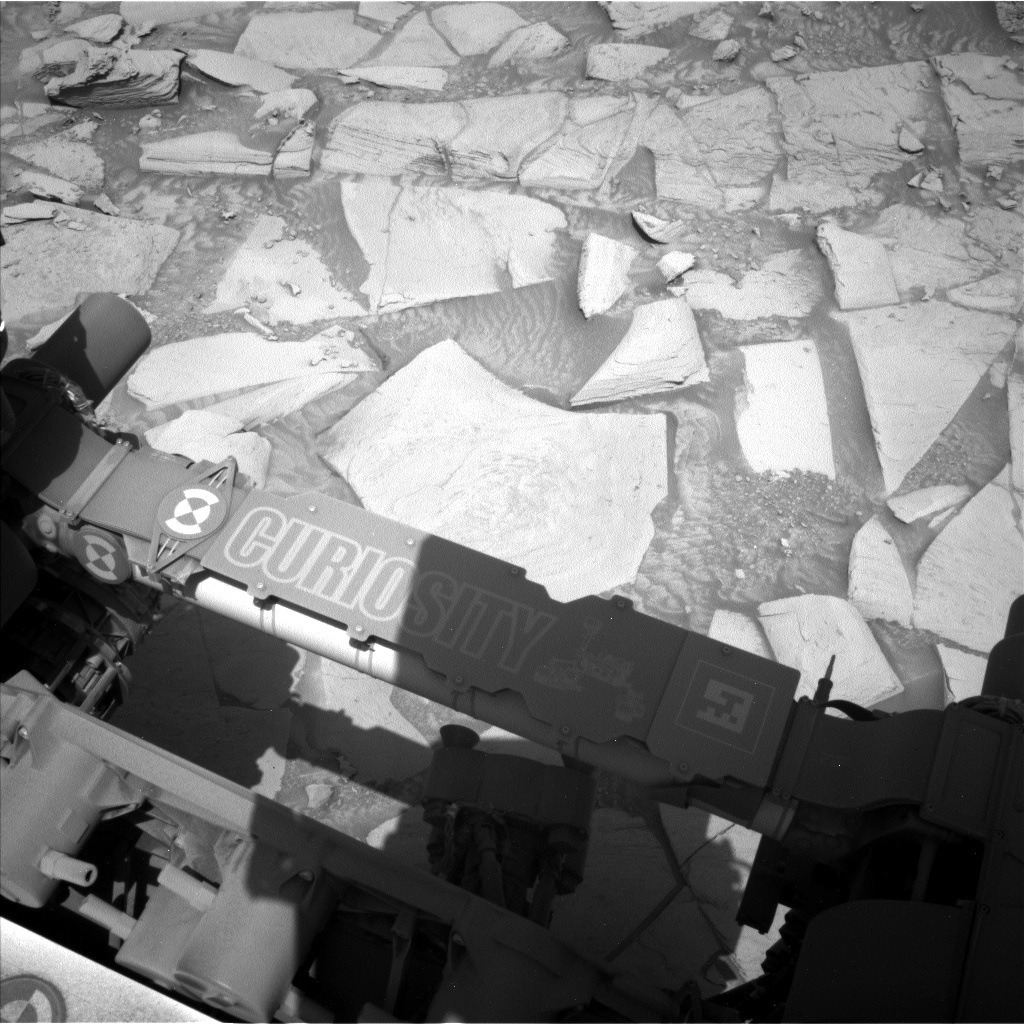
Curiosity contact science target, “Horseshoe Meadows,” is a section of bedrock observable in this image, right above where “Curiosity” is written. This image was taken by Left Navigation Camera on Sol 4096 February 13, 2024.
Image credit: NASA/JPL-Caltech
Familiar target
After the robot’s Alpha Particle X-Ray Spectrometer (APXS) takes a look, the science team is set to move into a main science block, Innanen points out, which starts with a session using Chemistry & Camera (ChemCam) Laser Induced Breakdown Spectroscopy (LIBS) on a different bedrock target, “Post Corral Creek.”
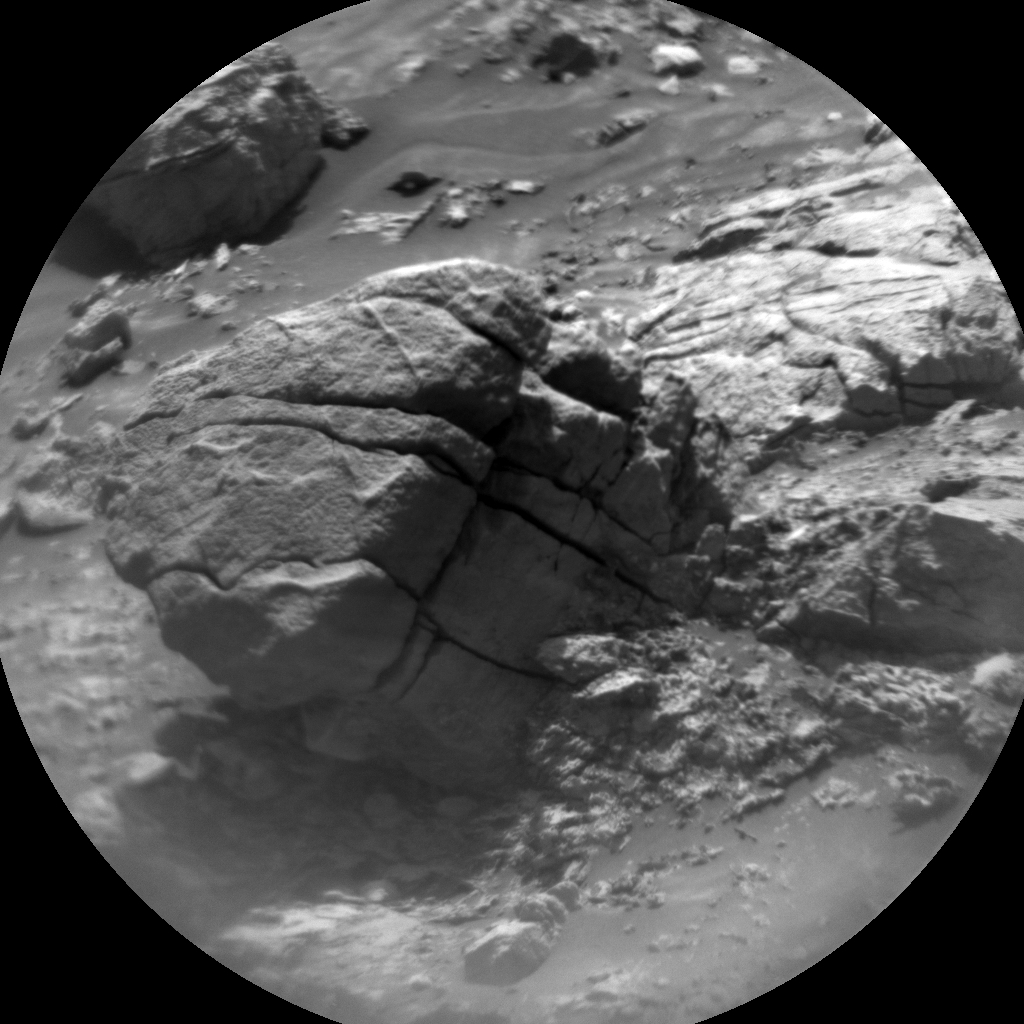
Curiosity Chemistry & Camera (ChemCam) Remote Micro-Imager (RMI) photo taken on Sol 4098, February 15, 2024.
Image credit: NASA/JPL-Caltech/LANL
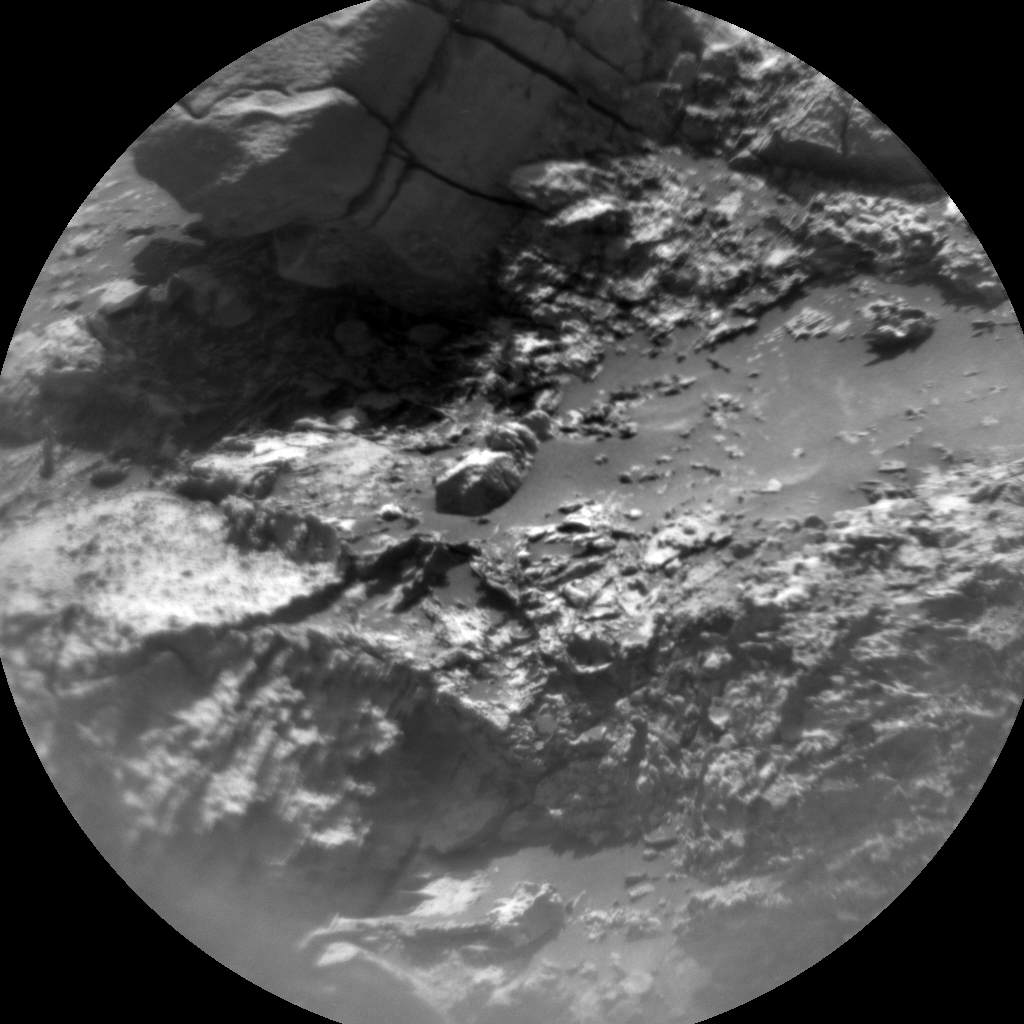
Curiosity Chemistry & Camera (ChemCam) Remote Micro-Imager (RMI) photo taken on Sol 4098, February 15, 2024.
Image credit: NASA/JPL-Caltech/LANL
“ChemCam will then set its sights further afield to a familiar target, Fascination Turret,” which Mastcam examined earlier.
Old friend
Mastcam was scheduled to start imaging two mosaics of the upper Gediz Vallis Ridge “and an old friend, the Orinoco Butte, which has been a regular companion of Curiosity for many, many sols,” Innanen adds.
Mastcam will also join ChemCam in imaging “Post Corral Creek.”
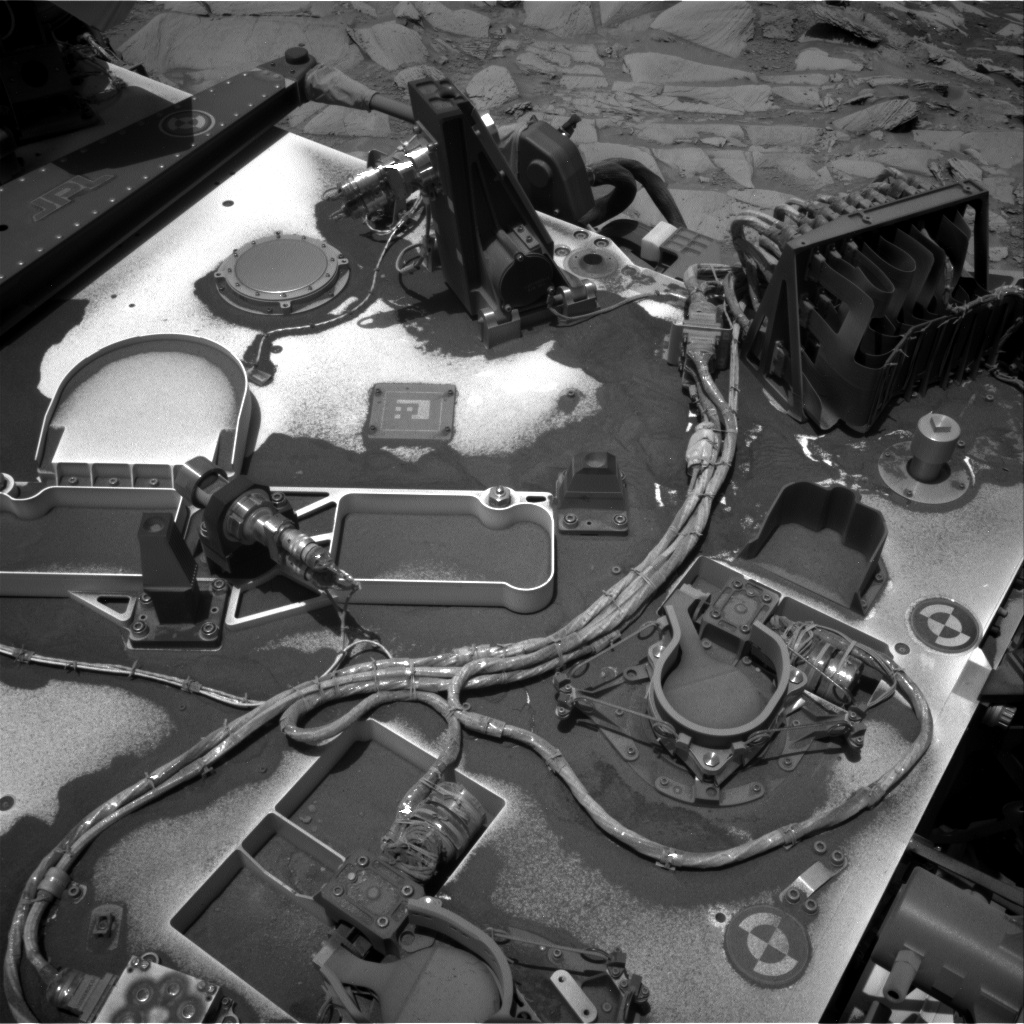
Curiosity Right B Navigation Camera photo acquired on Sol 4098, February 15, 2024.
Image credit: NASA/JPL-Caltech
“The science block finishes up with a deck monitoring image. We’ve been taking these recently before and after every drive to see how the dust that collects on the rover deck changes because of things like driving or wind,” Innanen reports.
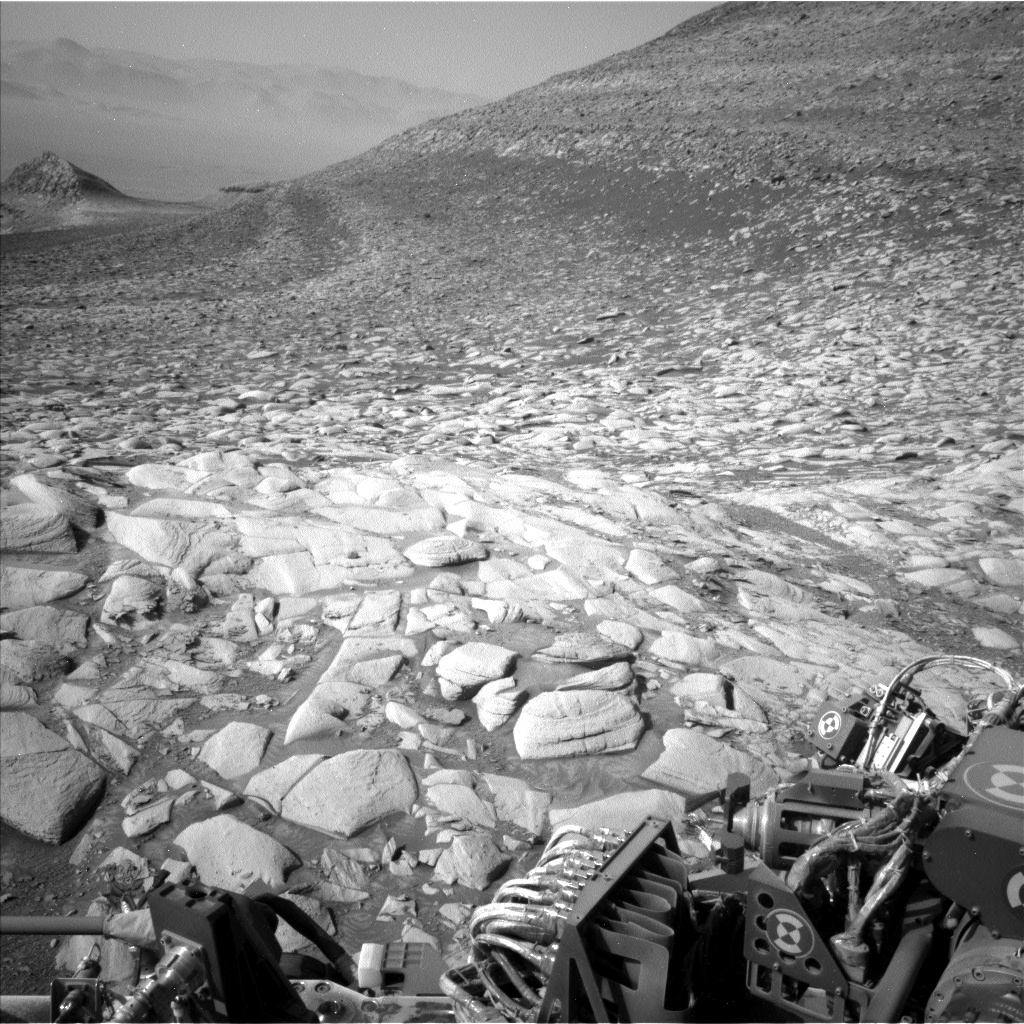
Curiosity Left B Navigation Camera on Sol 4098, February 15, 2024.
Image credit: NASA/JPL-Caltech
Bid farewell
After the science block, the plan is to return to Horseshoe Meadows with Curiosity’s Dust Removal Tool (DRT) and the Mars Hand Lens Imager (MAHLI), “and then it’s time to bid farewell to this workspace and drive away.”
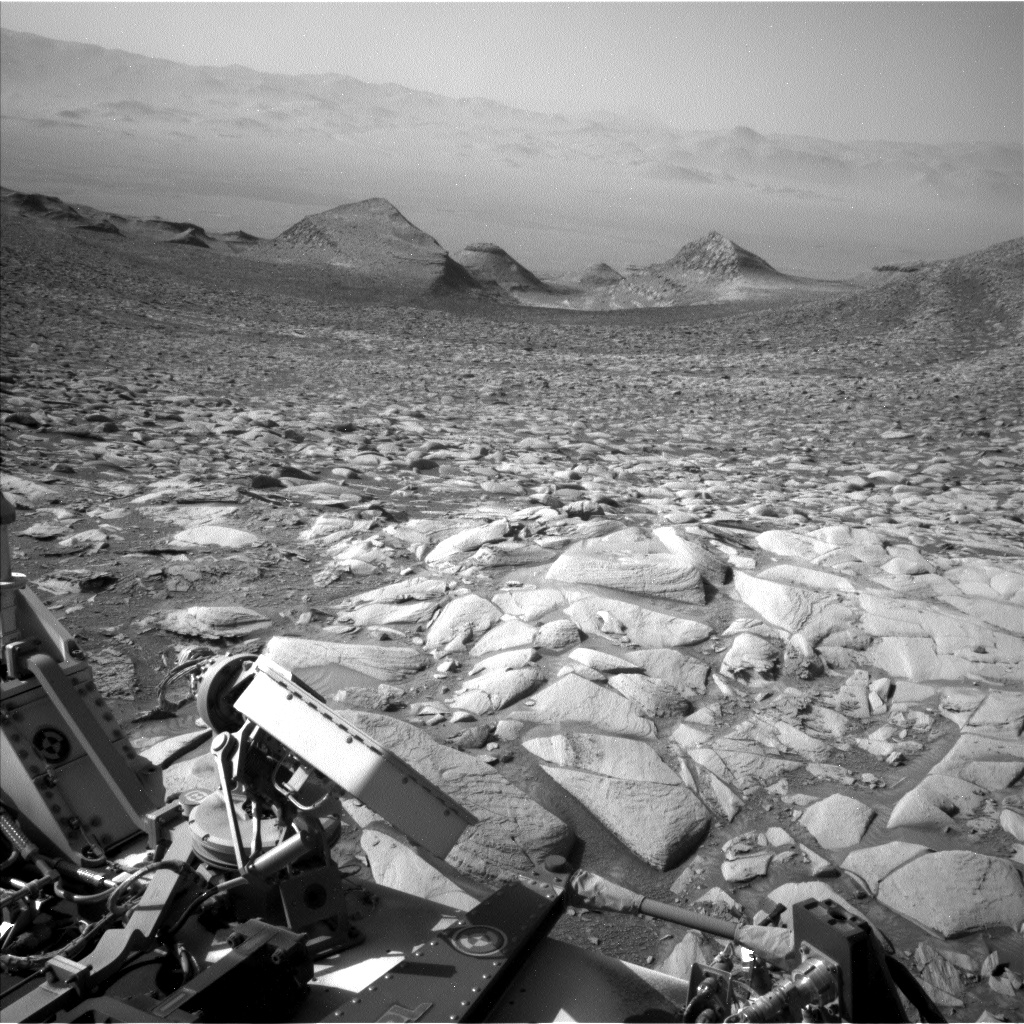
Curiosity Left B Navigation Camera on Sol 4098, February 15, 2024.
Image credit: NASA/JPL-Caltech
Sol 4098 was not set to end there, though. “After the drive we have another science block to sneak in some later afternoon environmental activities. These include a Mastcam observation and Navcam line of sight to look at dust in the atmosphere and a dust devil survey to look for dust being lifted from the ground as well as a cloud movie,” says Innanen.
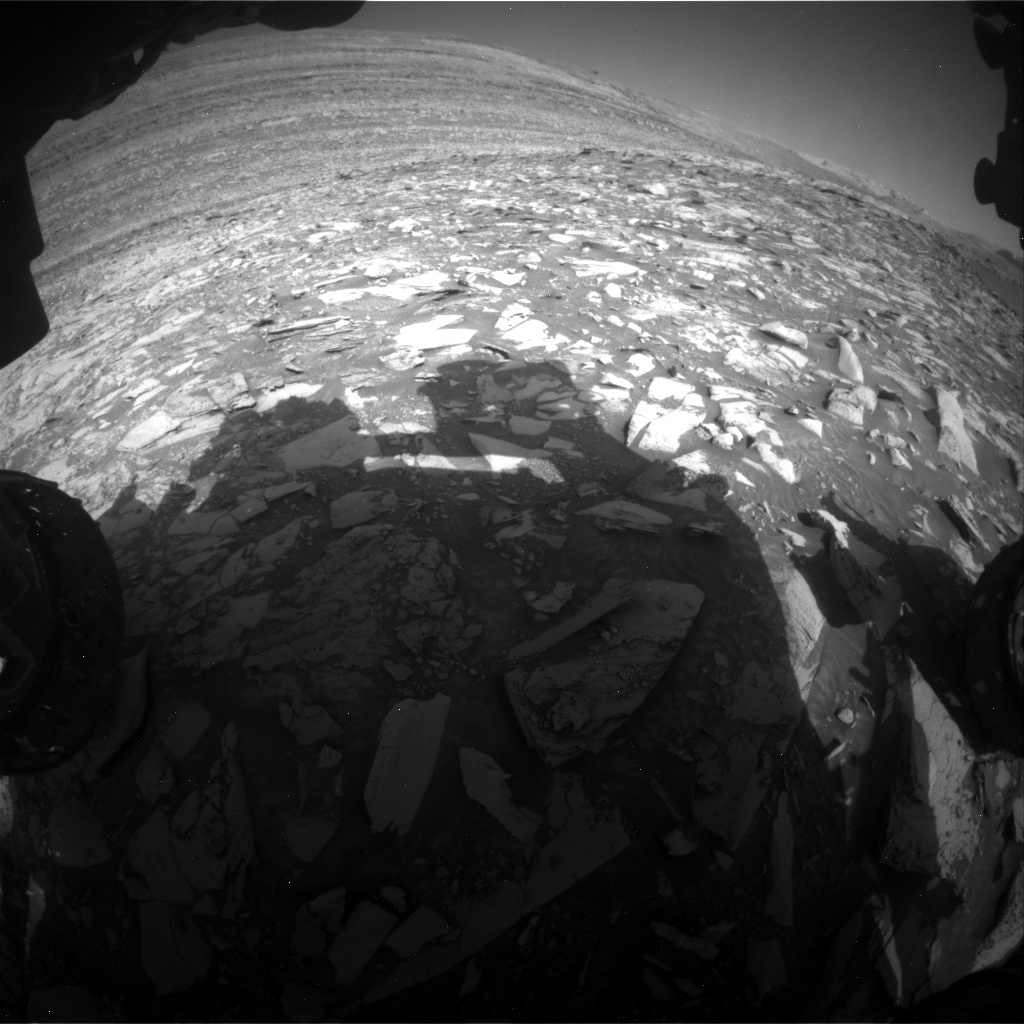
Curiosity Front Hazard Avoidance Camera Left B photo taken on Sol 4098, February 15, 2024.
Image credit: NASA/JPL-Caltech
Robot nap
Curiosity’s Sol 4099 was slated to not only have one science block a little before noon which includes a ChemCam AEGIS activity, a post-drive deck monitoring, another cloud movie and a long dust devil movie.
AEGIS stands for Autonomous Exploration for Gathering Increased Science) – a software suite that permits the rover to autonomously detect and prioritize targets.
“Once that’s wrapped up, Innanen concludes, “Curiosity will nap for the rest of the sol in preparation for a weekend plan.”
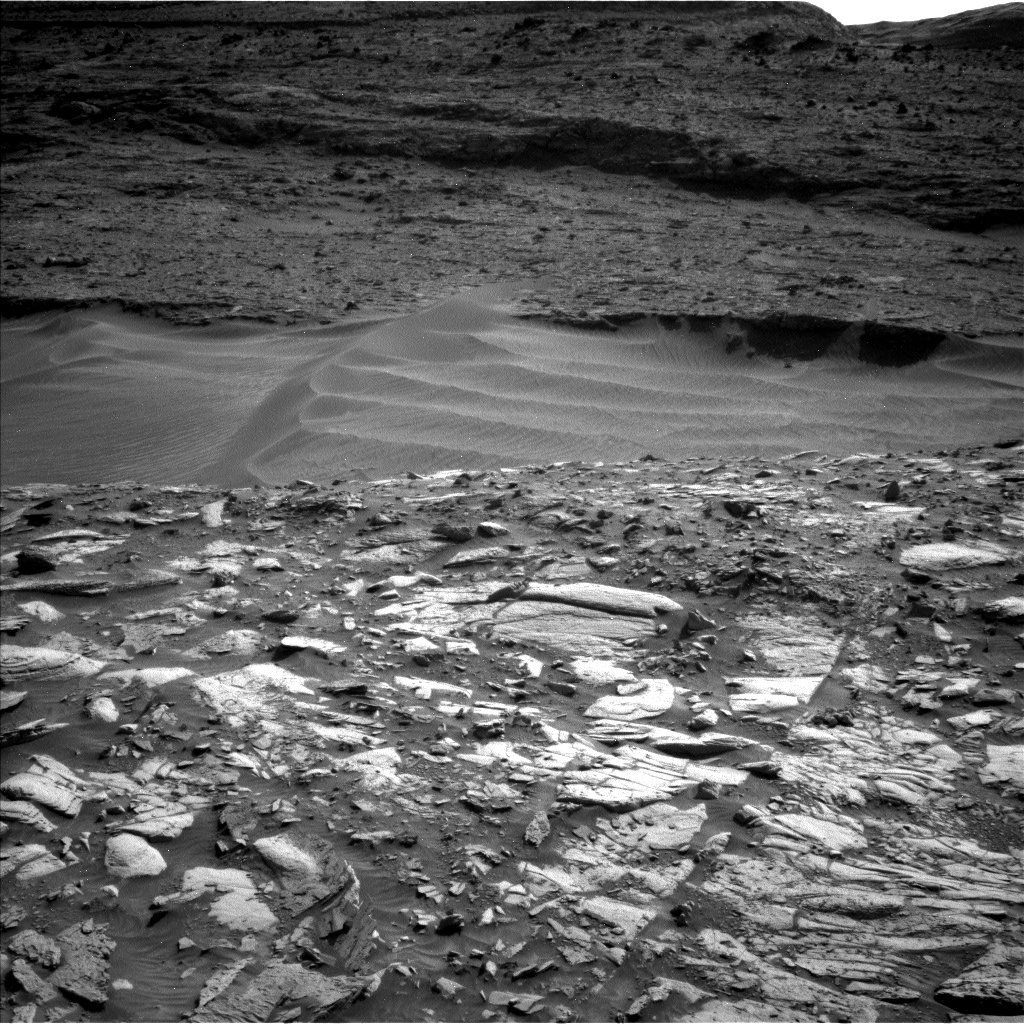
Curiosity Left B Navigation Camera on Sol 4098, February 15, 2024.
Image credit: NASA/JPL-Caltech
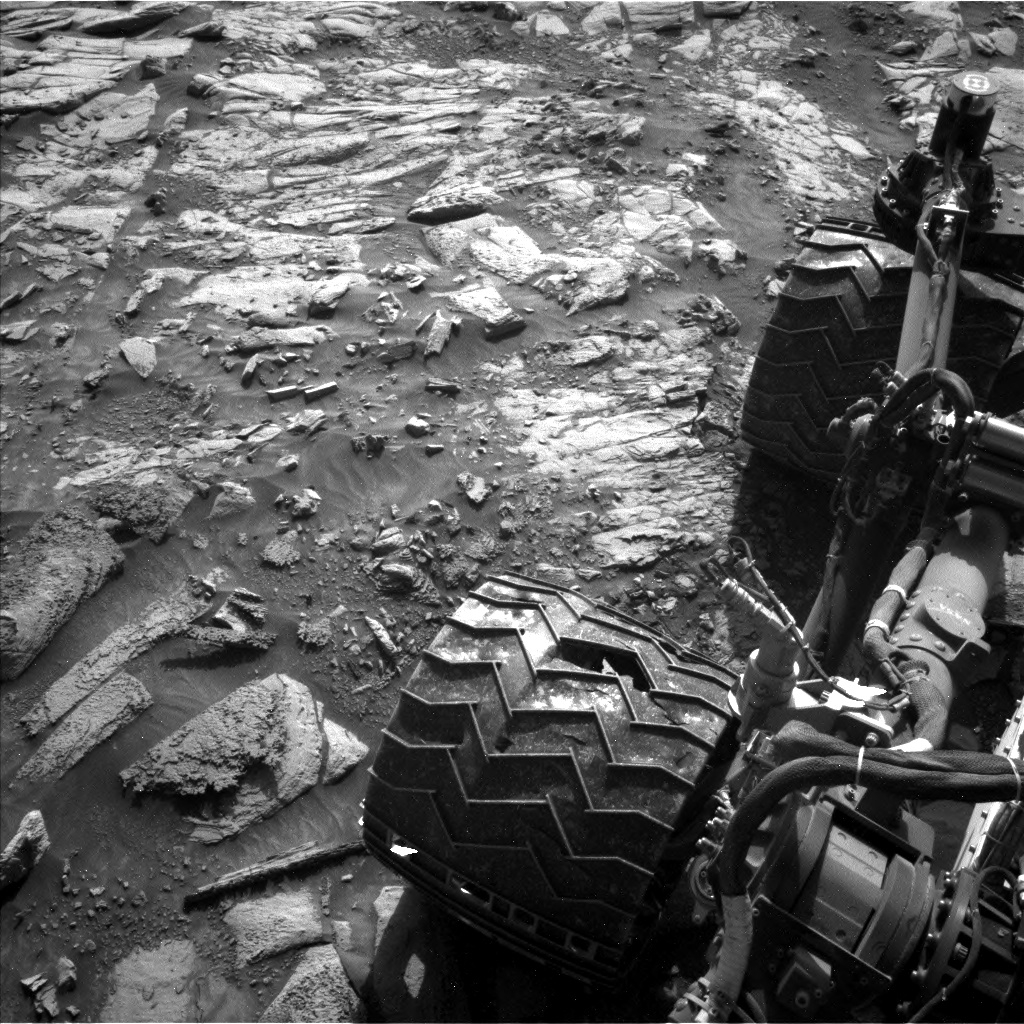
Curiosity Left B Navigation Camera on Sol 4098, February 15, 2024.
Image credit: NASA/JPL-Caltech
 Posted in Space News

