 By
By  January 10th, 2024
Curiosity’s location as of Sol 4062, Distance driven to date: 19.35 miles/31.15 kilometers
Image credit: NASA/JPL-Caltech/Univ. of Arizona
NASA’s Curiosity Mars rover at Gale Crater is now performing Sol 4063 duties.
According to Abigail Knight, a graduate student at Washington University in St. Louis, Missouri, last weekend Curiosity performed a successful “bump backwards.”
The robot is now positioned “to execute contact science on a flat block of dark-toned bedrock in its workspace and continue investigating the composition and texture of the dark bands we’ve been observing from orbit,” Knight reports.
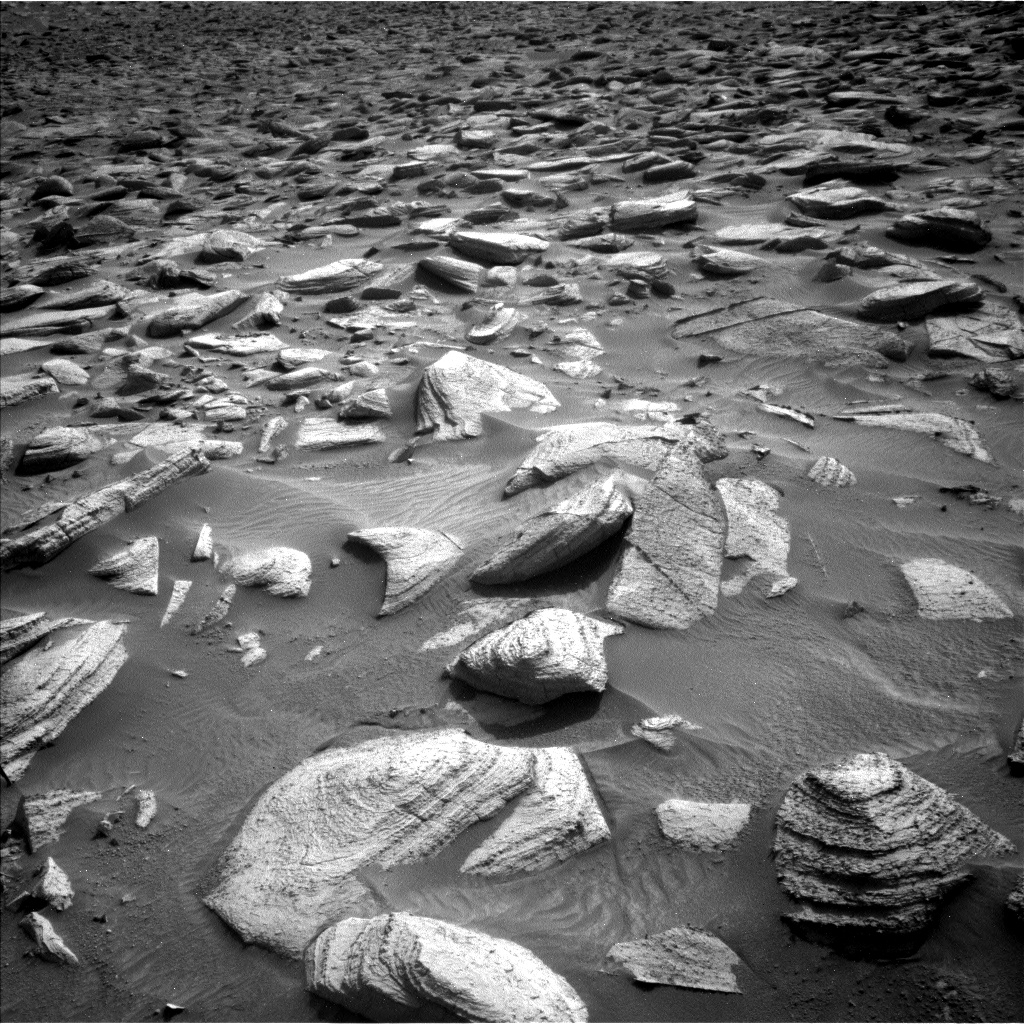
Curiosity Left B Navigation Camera image acquired on Sol 4062, Janaury 9, 2024.
Image credit: NASA/JPL-Caltech
Science target
A recently scripted two-sol plan (Sols 4062-4063) was slated to start with a passive measurement by the Dynamic Albedo of Neutrons (DAN) experiment, followed by brushing of the contact science target “Chagoopa” and a brief Alpha Particle X-Ray Spectrometer (APXS) integration on the target.

Curiosity Chemistry & Camera Remote Micro-Imager (RMI) photo taken on January 9, 2024 on Sol 4062.
Image Credit: NASA/JPL-Caltech/LANL
Up next, rover scientists were to have a morning science block with Chemistry & Camera (ChemCam) observations of “Chagoopa,” target “Painted Lady” (an outcrop of fractured bedrock with an interesting polygonal texture), and a long-distance RMI of Milestone Peak (a deposit with large boulders).

Curiosity Front Hazard Avoidance Camera Left B image taken on Sol 4062, January 9, 2024.
Image credit: NASA/JPL-Caltech
Rock observations
Mastcam has planned observations of “Chagoopa,” “Saddlerock Lake,” an exposed truncation surface with a possible ventifact [a rock that has been abraded, pitted, etched, grooved, or polished by wind-driven sand], and “Rock Creek” (fractured rock), as well as an AEGIS activity. AEGIS stands for Autonomous Exploration for Gathering Increased Science – a software suite that permits the rover to autonomously detect and prioritize targets.
Mastcam will then image the Dust Removal Tool, and the Mars Hand Lens Imager (MAHLI) was to acquire imagery of “Chagoopa” from 25 cm, 5 cm, and 2 cm away.
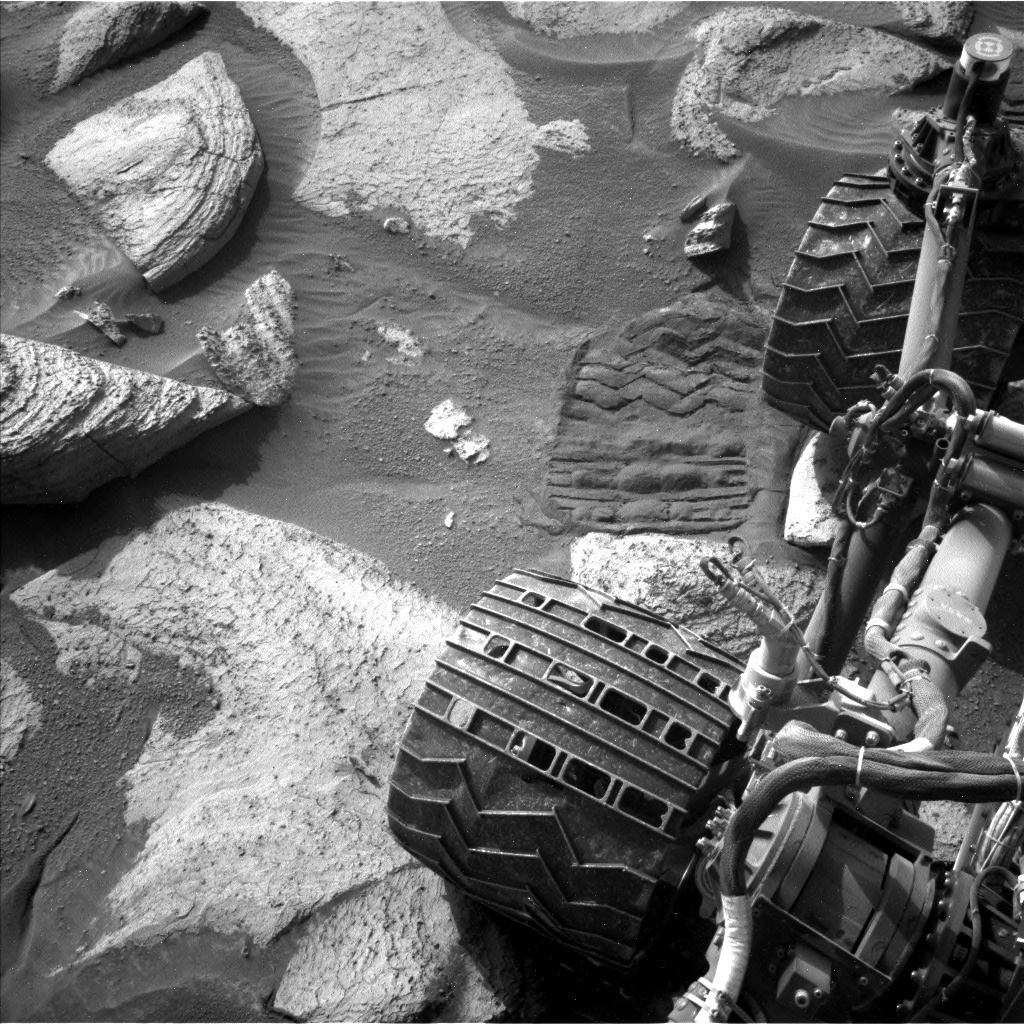
Curiosity Left B Navigation Camera image acquired on Sol 4062, Janaury 9, 2024.
Image credit: NASA/JPL-Caltech
After the morning science block, Curiosity was slated to drive about 52 feet (16 meters) to some polygonal fractured material, and the rover’s Mars Descent Imager (MARDI) was scheduled to perform a video activity to document the fractures.
Clasts and soils
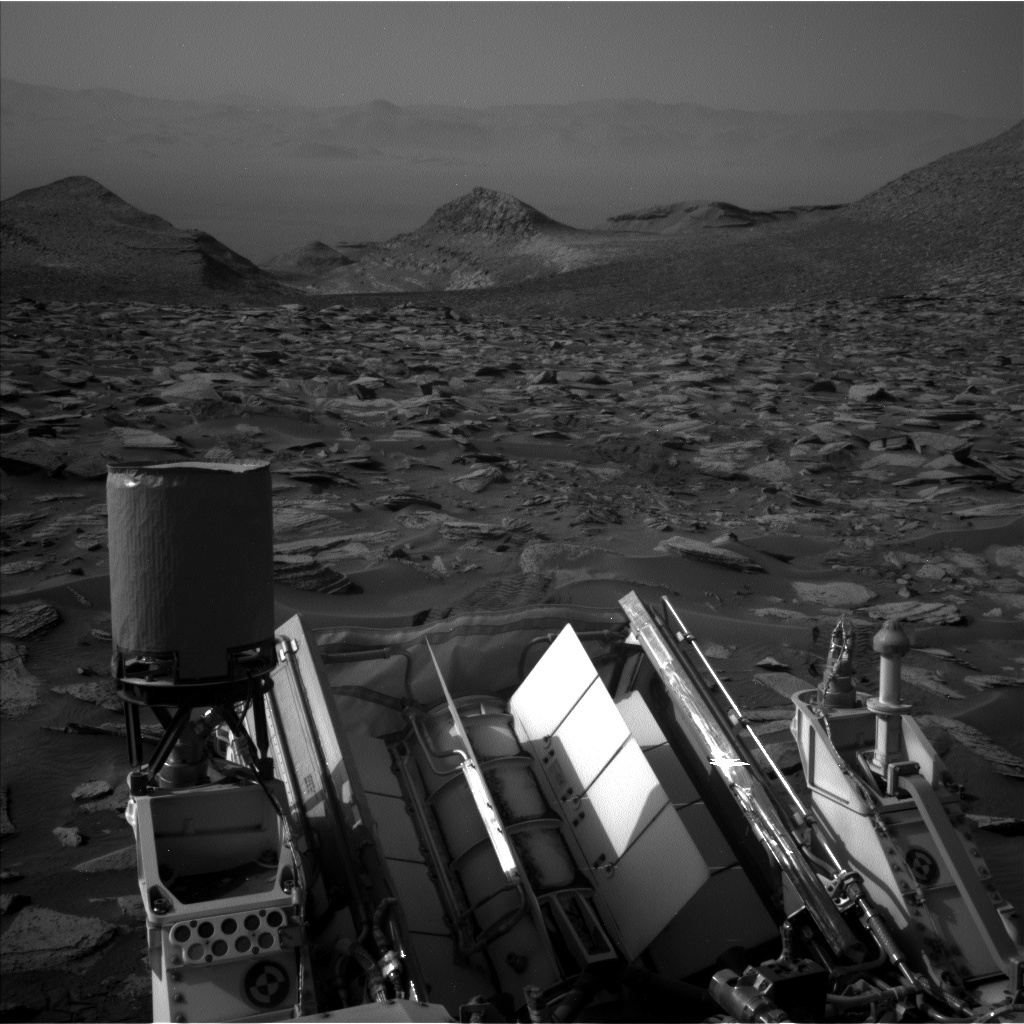
Curiosity Left B Navigation Camera image acquired on Sol 4062, Janaury 9, 2024.
Image credit: NASA/JPL-Caltech
“Following this, we have post-drive imaging to assist the rover planners, identify targets for the next plan, and systematically document clasts and soils along the traverse,” Knight notes.
MARDI was scheduled to acquire a single image at twilight to close out the first sol of this plan.
The second sol begins with another DAN passive and an untargeted science block in the morning.
“This science block includes ChemCam AEGIS of bedrock, a Navcam line-of-sight observation, and a Navcam dust devil movie,” Knight concludes. “The planned contact science observations of the dark-toned bedrock target in our workspace will inform a decision on potentially drilling the rocks in this region again or not.”

Curiosity Left B Navigation Camera image acquired on Sol 4062, Janaury 9, 2024.
Image credit: NASA/JPL-Caltech
 Posted in Space News

