 By
By  October 6th, 2022
Curiosity Chemistry & Camera (ChemCam) Remote Micro-Imager (RMI) photo acquired on Sol 3613. October 5, 2022.
Credit: NASA/JPL-Caltech/LANL
NASA’s Curiosity Mars rover at Gale Crater is now performing Sol 3614 duties.
The Curiosity team continues with the “Canaima” drill campaign, reports Elena Amador-French, science operations coordinator at NASA’s Jet Propulsion Laboratory.
A recently scripted two-sol plan (Sols 3614-3615) was set to provide a first look at the minerals present within this sample from drill hole #36, adds Amador-French.
This is complementary but different than the chemical compositions provided by the robot’s Chemistry and Camera (ChemCam) and the Alpha Particle X-Ray Spectrometer (APXS) pre-drilling.
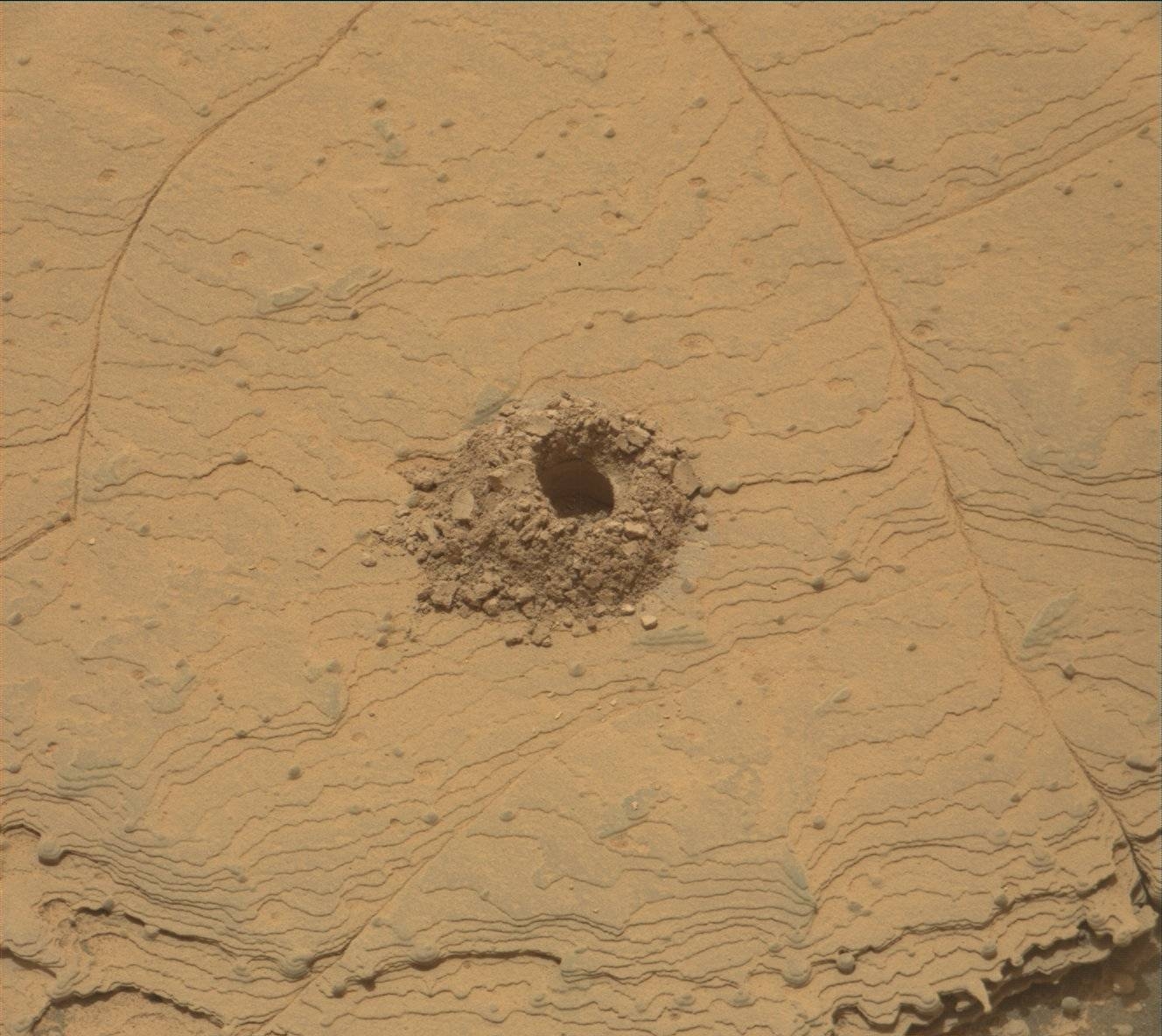
Curiosity Mast Camera Right photo taken on Sol 3612, October 4, 2022 .
Credit: NASA/JPL-Caltech/MSSS
Diffraction pattern
The Chemistry & Mineralogy X-Ray Diffraction/X-Ray Fluorescence Instrument (CheMin) uses X-ray diffraction to confirm crystalline mineralogy, they direct a beam of X-rays, as fine as a human hair, through the drilled sample, Amador-French points out.

Curiosity Front Hazard Avoidance Camera Right B image taken on Sol 3613, October 5, 2022.
Credit: NASA/JPL-Caltech
“The X-rays interact with the material and then diffract at specific angles. This creates a diffraction pattern that can be used to uniquely identify the crystalline minerals present,” Amador-French adds. “Understanding the crystal structure provides a clearer picture of the environment in which they formed and how they’ve been altered subsequently.”
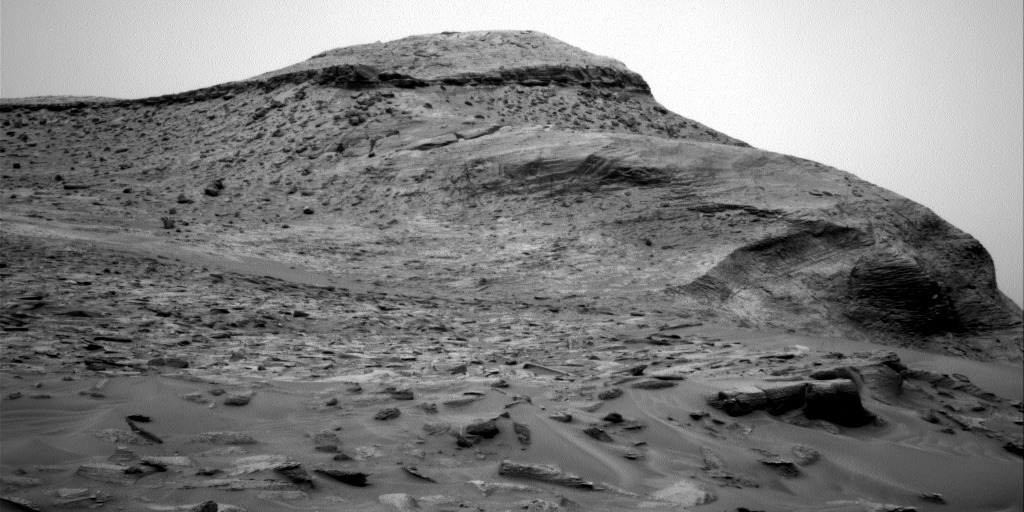
Curiosity Right B Navigation Camera image taken on Sol 3613, October 5, 2022.
Credit: NASA/JPL-Caltech
Sample cup
After delivering sample to CheMin with Curiosity’s robotic arm, CheMin will work through the night integrating and building a robust diffraction pattern to be sent back to Earth in the morning.
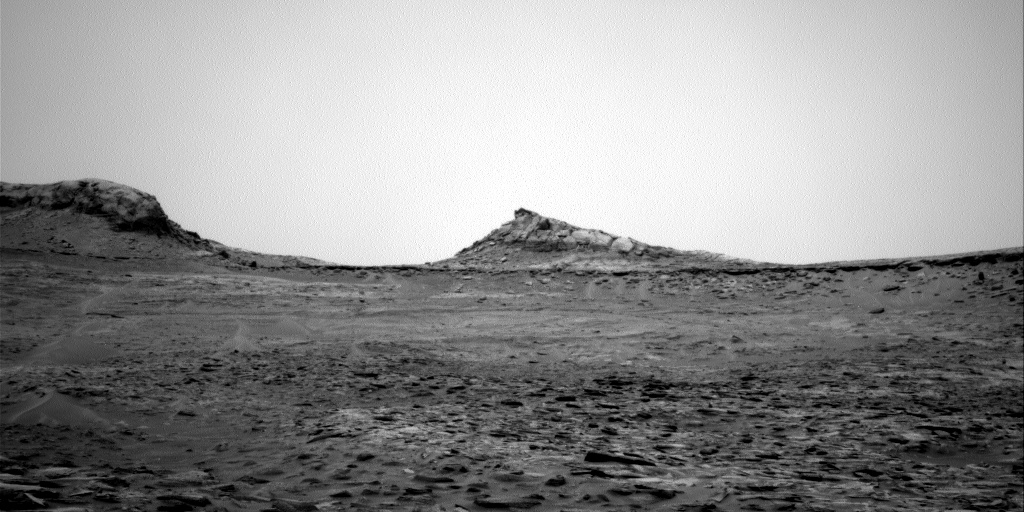
Curiosity Right B Navigation Camera image taken on Sol 3613, October 5, 2022.
Credit: NASA/JPL-Caltech
The robot’s Sample Analysis at Mars (SAM) Instrument Suite instrument will also prepare its sample cup to receive sample, pending the results from CheMin.
“In addition to these activities, we also used ChemCam to look inside the drill hole and the drill tailings left behind before they could be potentially mobilized by wind,” Amador-French concludes.
“As is a common theme, we continue with our regular cadence of environmental monitoring.”
 Posted in Space News

