 By
By  November 3rd, 2021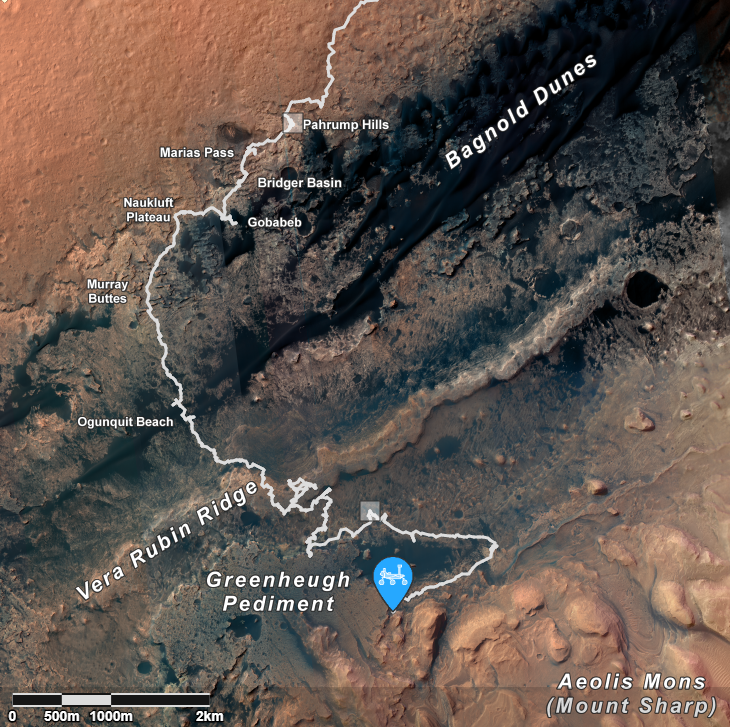
Curiosity’s location as of Sol 3285. Distance driven is 16.50 miles/26.56 kilometers.
Credit: NASA/JPL-Caltech/Univ. of Arizona
NASA’s Curiosity Mars rover at Gale Crater is now performing Sol 3286 duties.
Reports Ken Herkenhoff, a planetary geologist at the USGS Astrogeology Science Center in Flagstaff, Arizona, the robot’s Sol 3285 drive went well.
The rover has a good view of nearby outcrops, so the science team had a lot of potential drill and contact science targets to discuss, Herkenhoff adds. “We sent a prioritized list of drive targets to the rover planners, and ultimately selected a low-lying outcrop.”
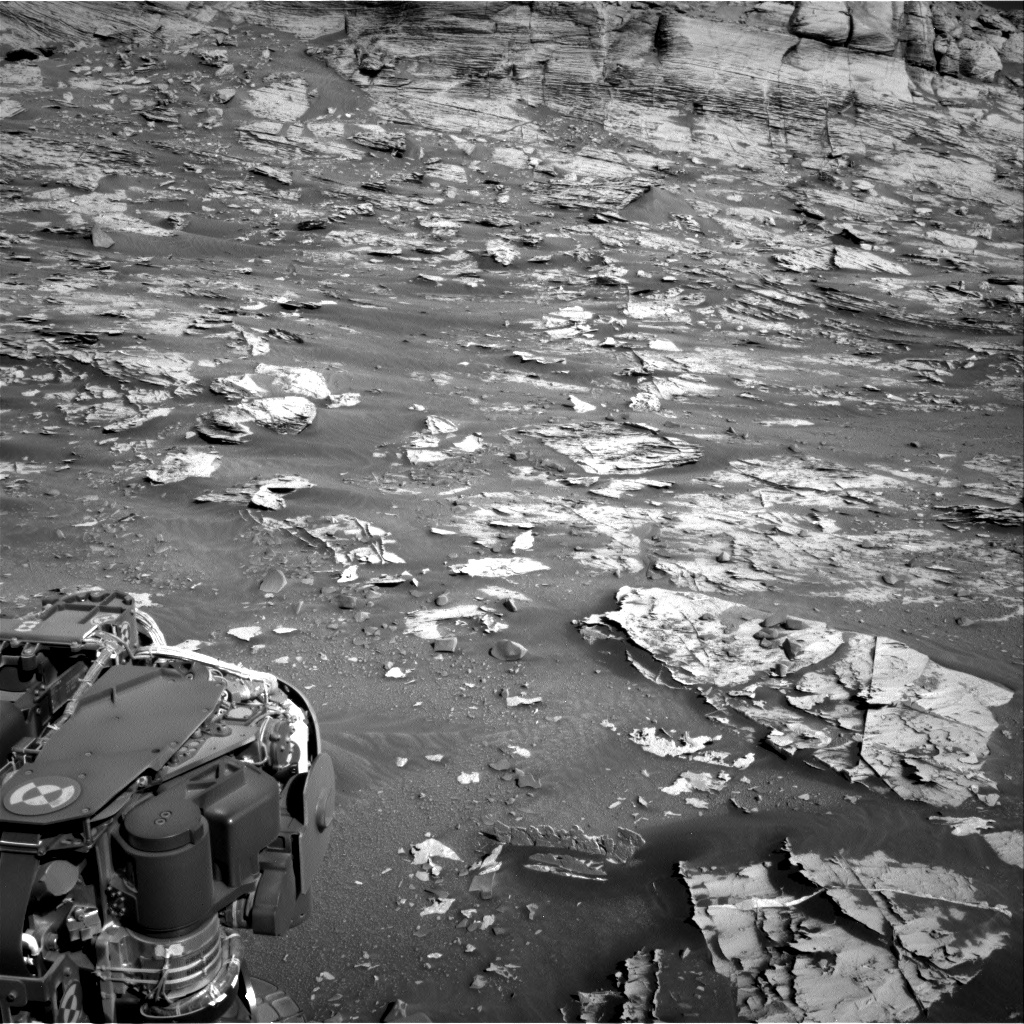
Mars researchers are selected a low-lying outcrop seen right of center in this image taken by Curiosity’s Right Navigation Camera on Sol 3285.
Credit: NASA/JPL-Caltech
This target appears to be easily accessible, so a newly scripted plan represents the first sol of a new drill campaign!
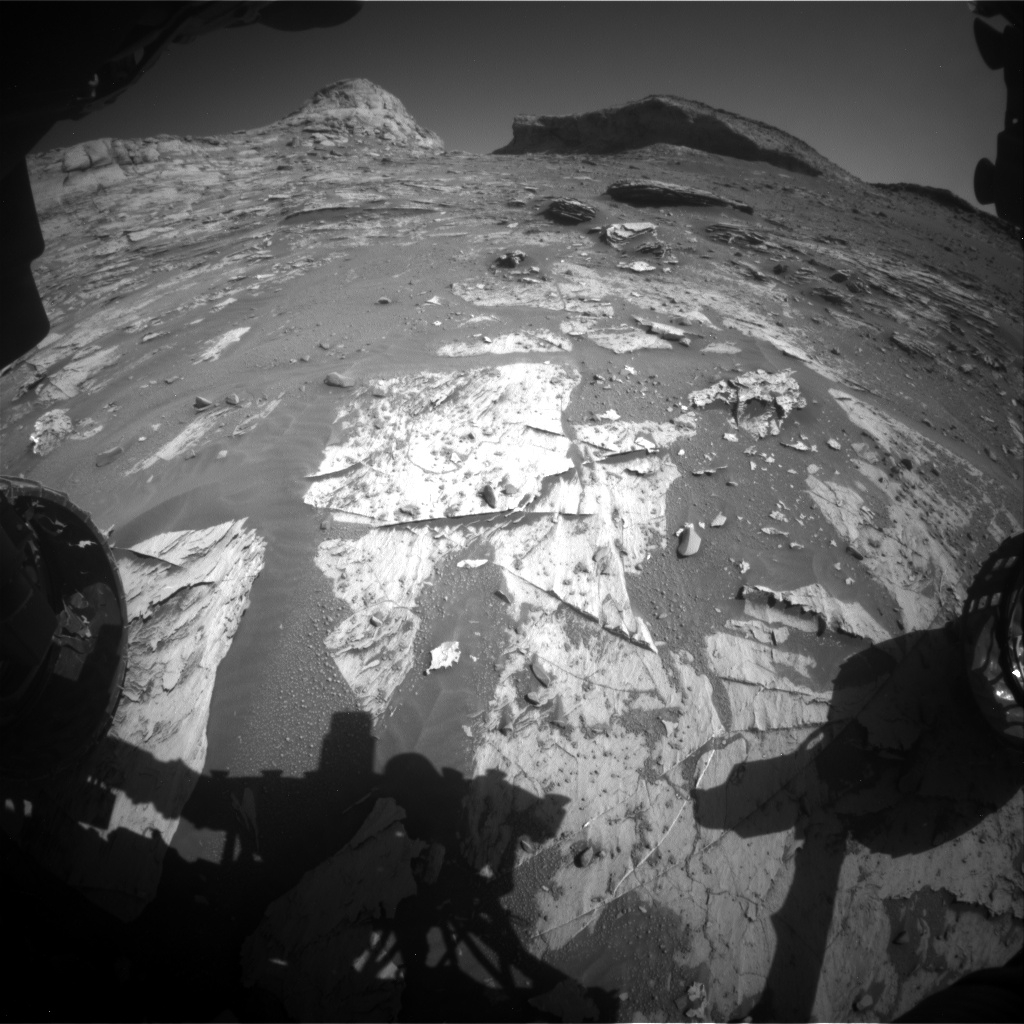
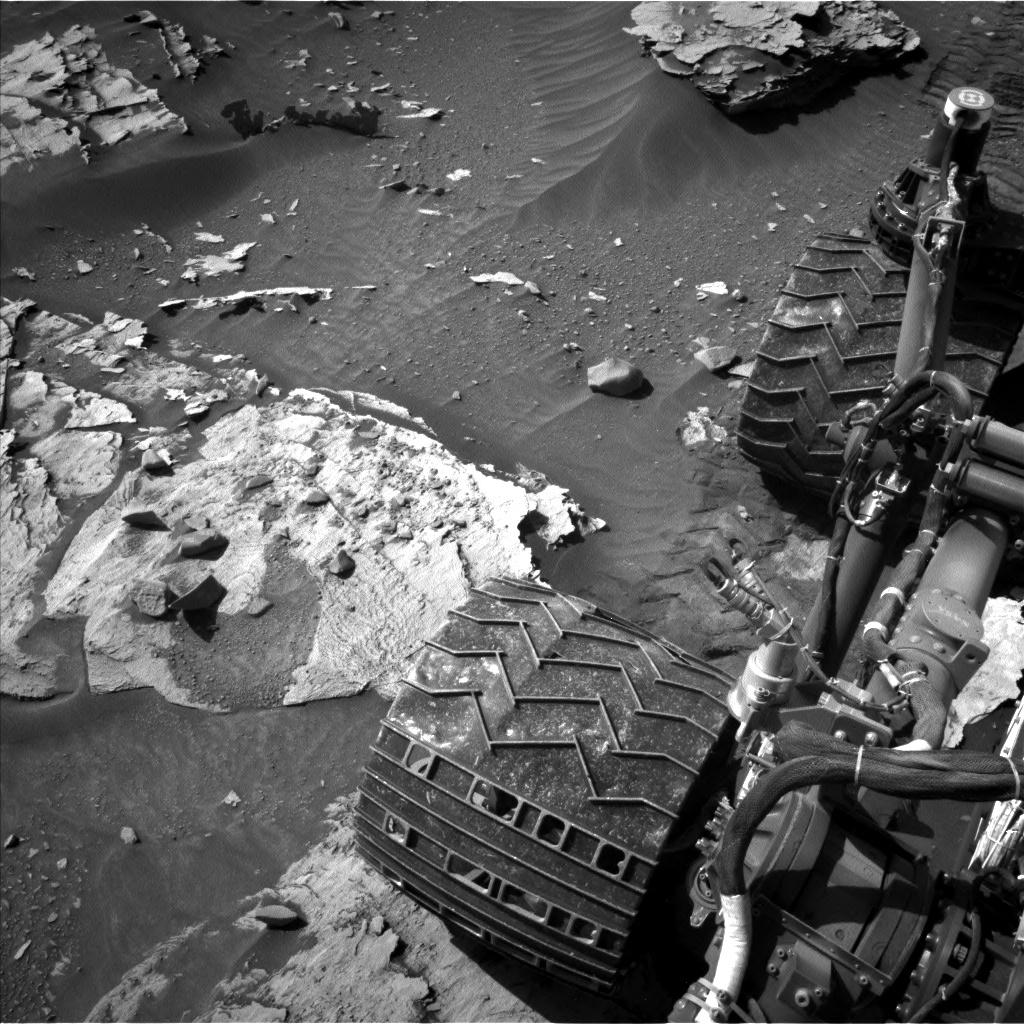
Curiosity Front Hazard Avoidance Camera Left B photo taken on Sol 3286, November 3, 2021.
Credit: NASA/JPL-Caltech
Planning day
“Although the time available before new data must be relayed to Earth was limited today, we were able to plan contact science on a nearby rock target called “Dumbuck” and some remote sensing observations as well,” Herkenhoff notes. “It was a busy and sometime hectic planning day for the team…but the effort was worth it because the final plan is excellent.”
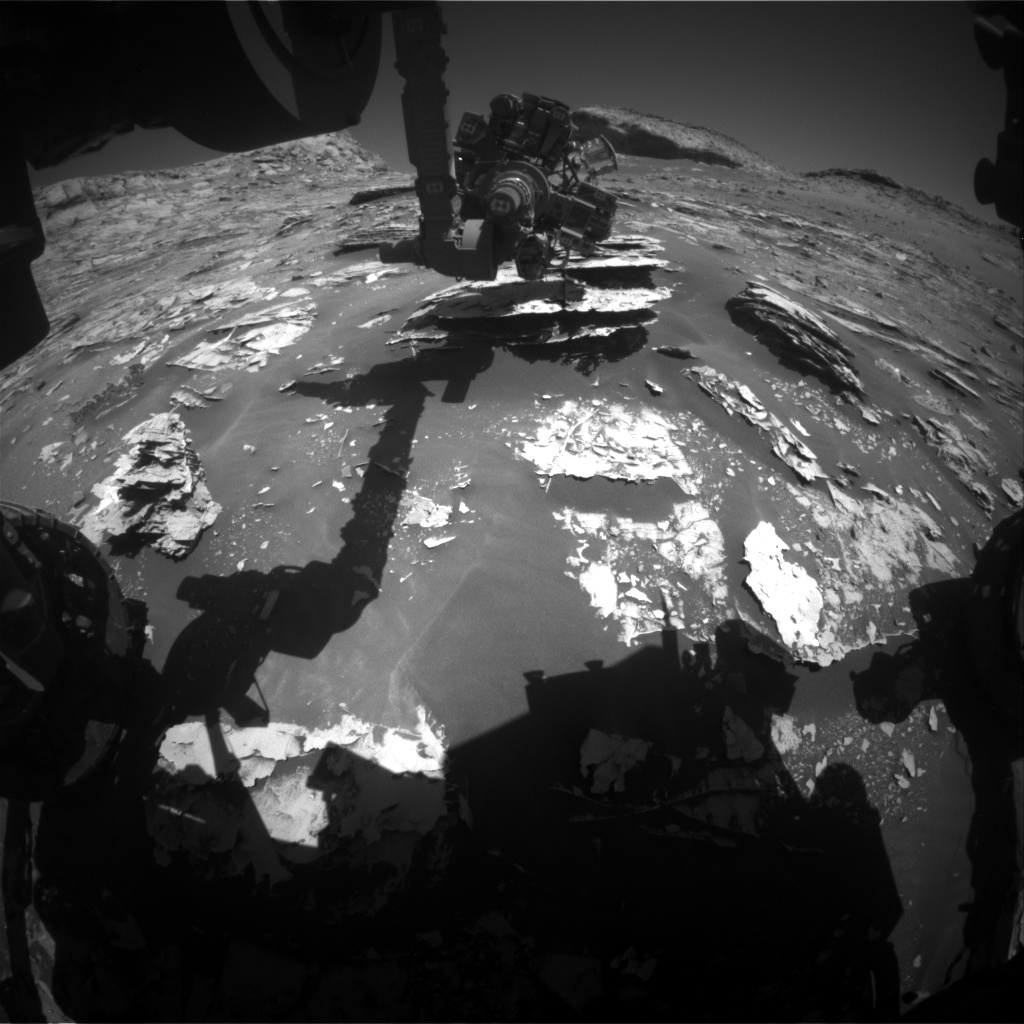
Curiosity Front Hazard Avoidance Camera Right B photo taken on Sol 3286, November 3, 2021.
Credit: NASA/JPL-Caltech
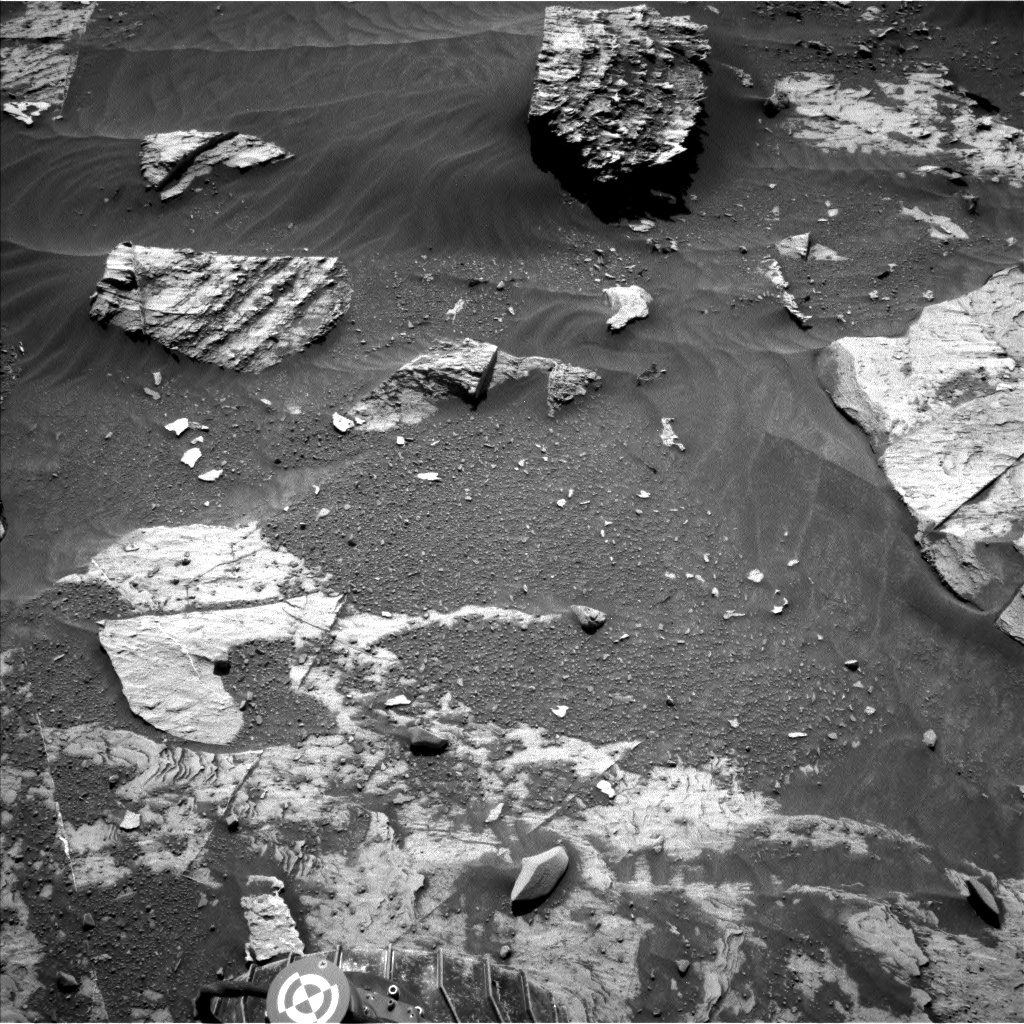
After the Alpha Particle X-Ray Spectrometer (APXS) and the Mars Hand Lens Imager (MAHLI) examine Dumbuck, the rover’s Chemistry and Camera (ChemCam) will shoot its laser at a nearby nodule-rich bedrock target named “Fallen Stack,” Herkenhoff reports, “to look for compositional variations among the nodules and surrounding bedrock.”
Curiosity Left B Navigation Camera image acquired on Sol 3286, November 3, 2021.
Credit: NASA/JPL-Caltech
Drill site mosaics
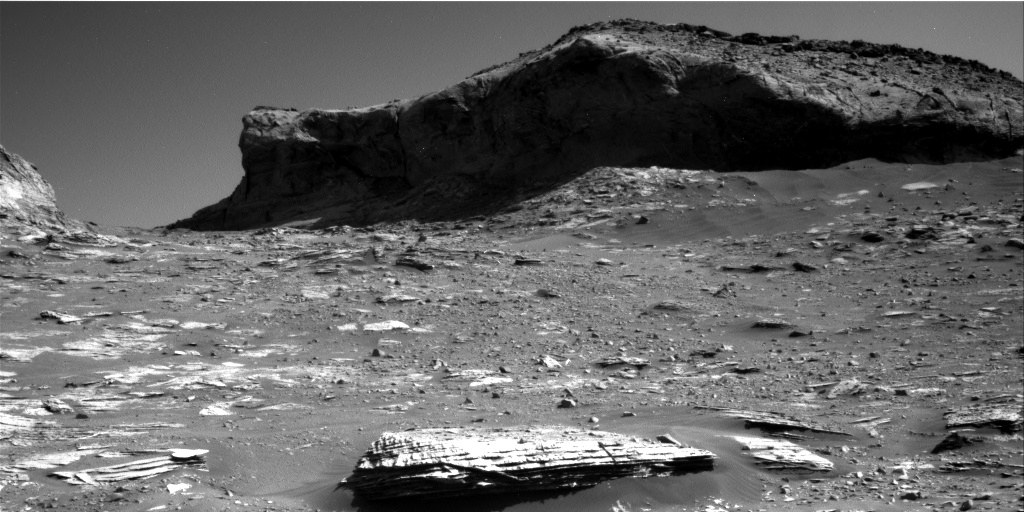
After Curiosity’s Right Mastcam documents the laser spots, several Mastcam stereo mosaics are planned of the drill site for context, of an outcrop to the west dubbed “Bellevue,” and an outcrop uphill named “Cliffs of Hallaig.”
Curiosity Left B Navigation Camera image acquired on Sol 3286, November 3, 2021.
Credit: NASA/JPL-Caltech
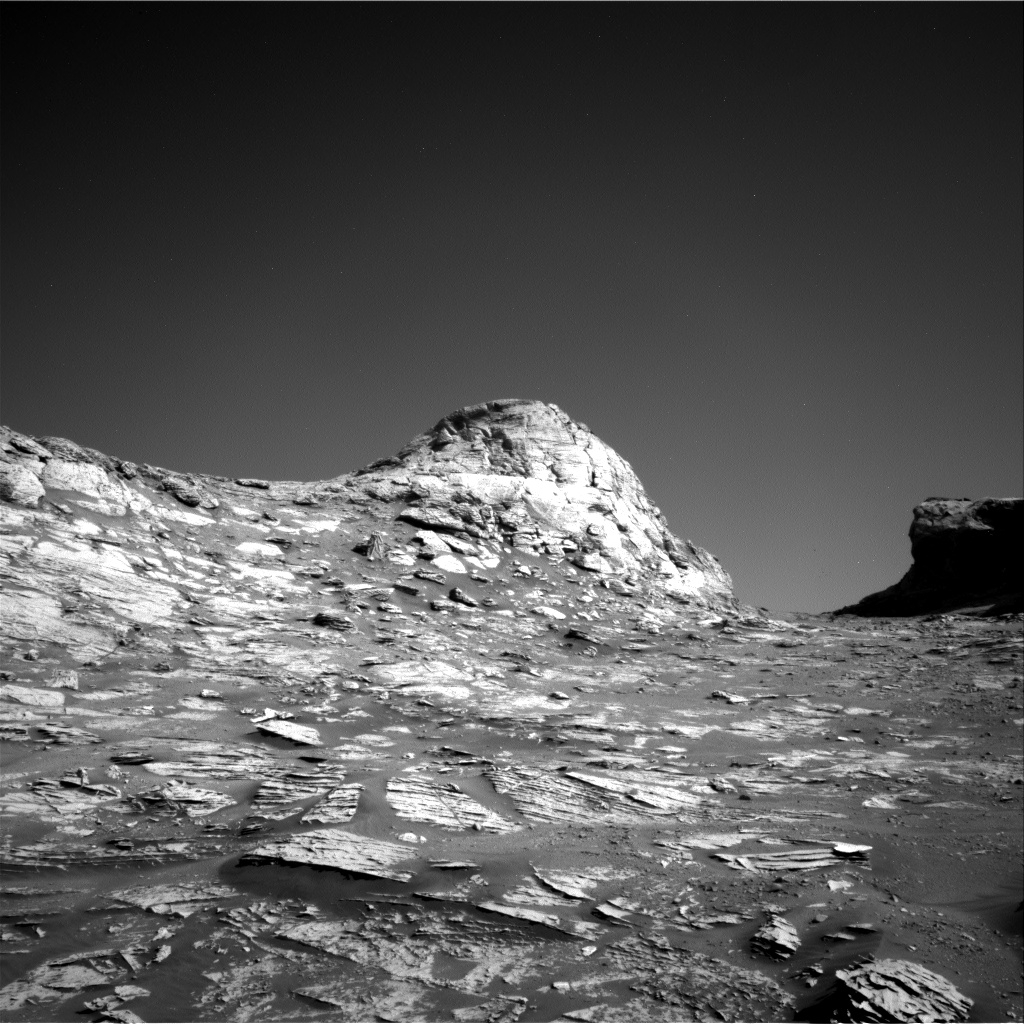
Curiosity Right B Navigation Camera image acquired on Sol 3286, November 3, 2021.
Credit: NASA/JPL-Caltech
“Mastcam stereo mosaics will also be acquired on a couple targets that had been imaged before, “Coylton Rocking Stone” and “Ciuff Hill,” from our new viewpoint,” Herkenhoff says.
After the drive to the new drill site, in addition to the standard post-drive imaging, Navcam and Mastcam will take mosaics of much of the terrain surrounding Curiosity to enable an upcoming, detailed target selection.
Navcam will also search for clouds and the robot’s Mars Descent Imager (MARDI) will image the surface behind the left front wheel during twilight.
Curiosity Right B Navigation Camera image acquired on Sol 3286, November 3, 2021.
Credit: NASA/JPL-Caltech
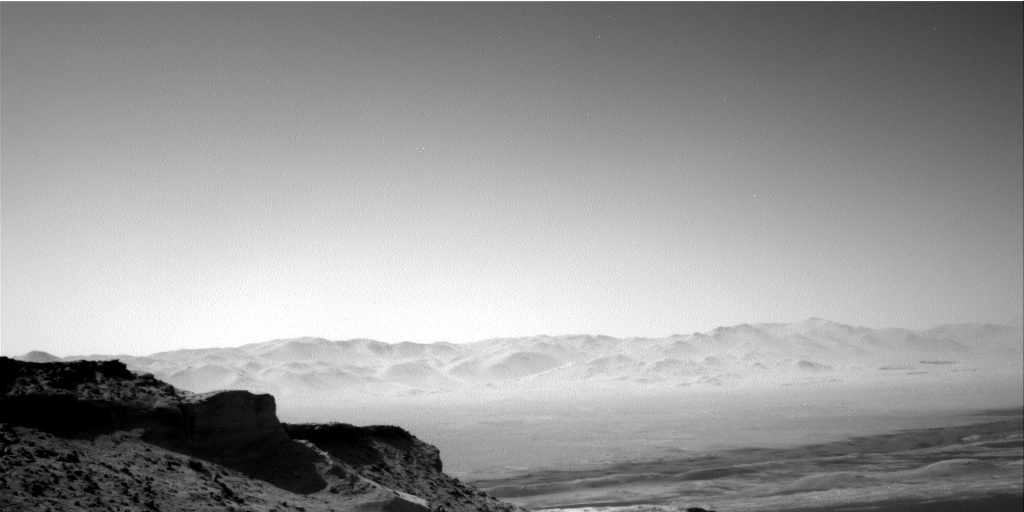
Curiosity Right B Navigation Camera image acquired on Sol 3286, November 3, 2021.
Credit: NASA/JPL-Caltech
 Posted in Space News

