 By
By  September 8th, 2016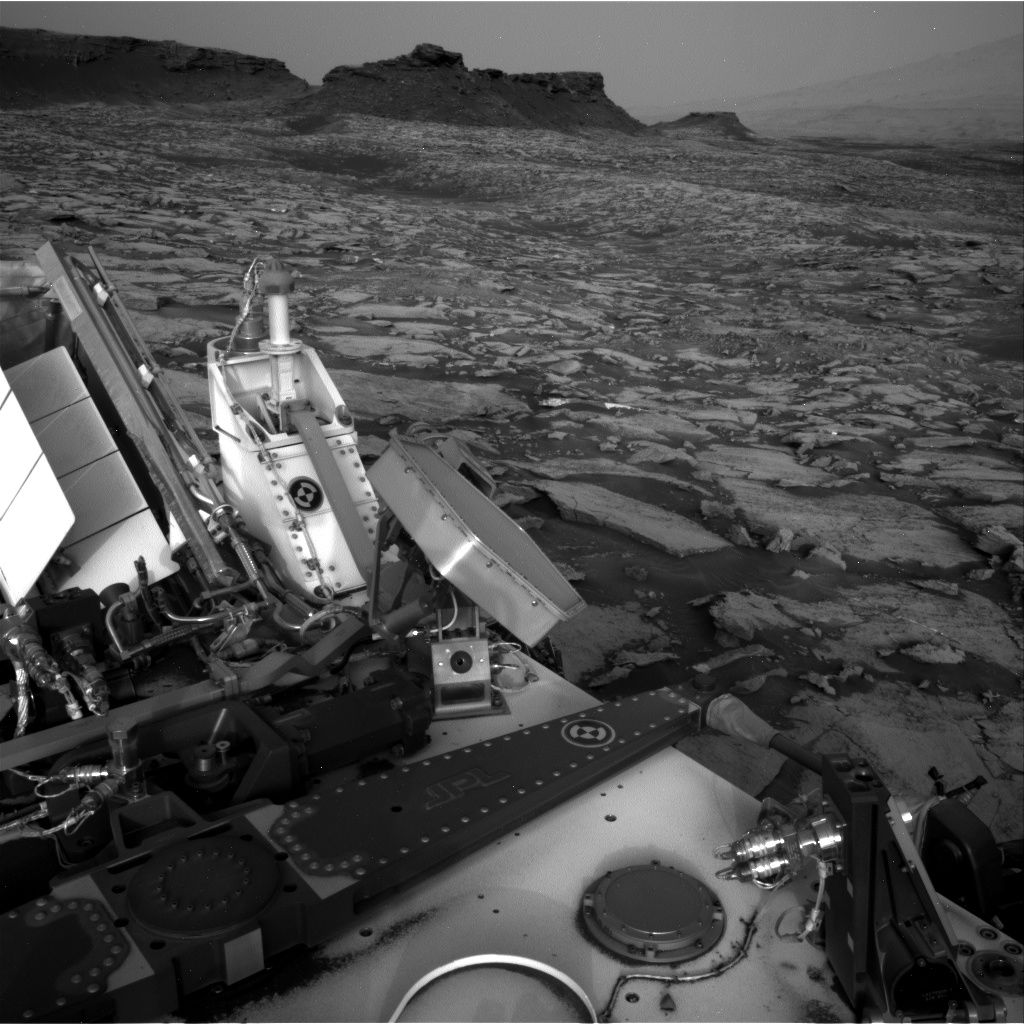
Curiosity Navcam Right B image taken on Sol 1454, September 8, 2016.
Credit: NASA/JPL-Caltech
On Mars it’s Sol 1455 for the Curiosity rover.
After another successful drive of roughly 130 feet (40 meters), Curiosity is aiming to approach the south side of a butte for its next potential drill site.
The area is known as “Quela” – a bright outcrop at the base of the butte.
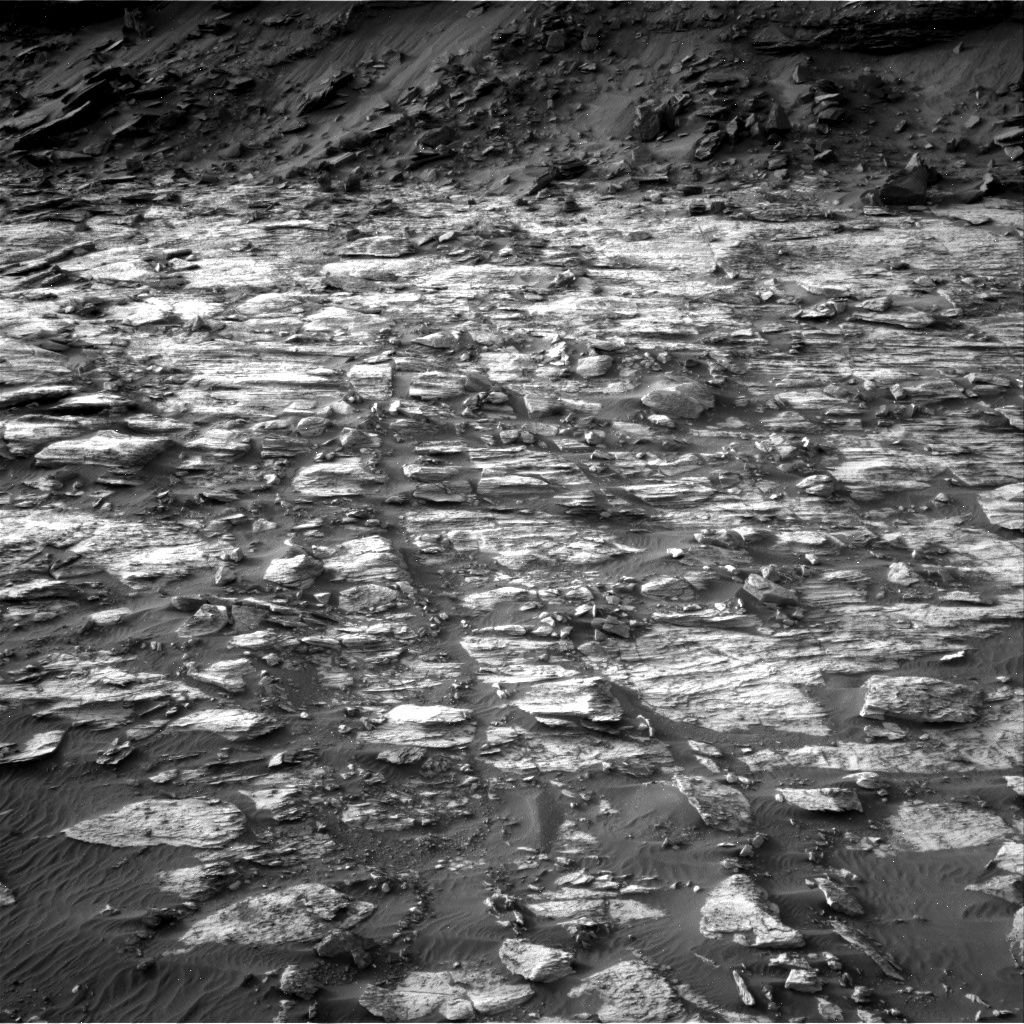
Potential rover drill site: an area known as “Quela,” and is seen in this Navcam image as the bright outcrop at the base of the butte. Curiosity Navcam Right B image taken o Sol 1454, September 8, 2016.
Credit: NASA/JPL-Caltech
Major dust storm?
Lauren Edgar, a research geologist at the USGS Astrogeology Science Center in Flagstaff, Arizona reports on the plan are several Mastcam mosaics to assess the local stratigraphy, laminations in the Murray formation, and to document the butte and proposed drill site.
Also on tap is acquisition of a Chemistry & Camera (ChemCam) observation of the bedrock at the target “Humpata,” and use of Mastcam to assess atmospheric opacity.
In addition to geology observations, the rover science team has increased the frequency of meteorological measurements with the Rover Environmental Monitoring Station (REMS) and imaging “in response to observations from other spacecraft at Mars of the potential start of a major dust storm,” Edgar adds.
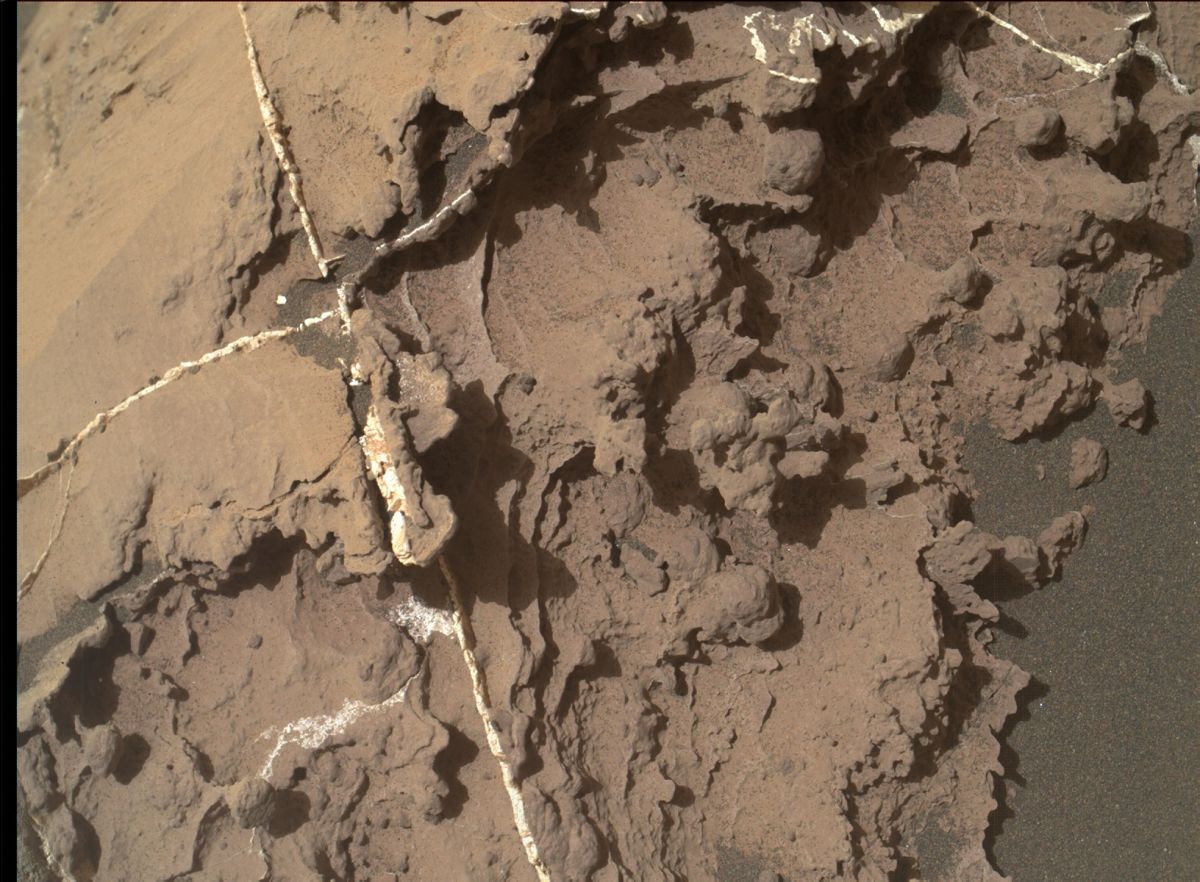
NASA’s Mars rover Curiosity acquired this image using its Mars Hand Lens Imager (MAHLI), located on the turret at the end of the rover’s robotic arm, on September 8, 2016, Sol 1454.
Credit: NASA/JPL-Caltech/MSSS
Drilling position
The drive in the current plan may put Curiosity in position at the next drill site, so post-drive imaging will help prepare scientists for that scenario.
“We’ll also squeeze in another autonomously selected ChemCam target in the afternoon,” Edgar concludes. “It’s exciting to think about drilling again already!”
 Posted in Space News

