 By
By  January 14th, 2023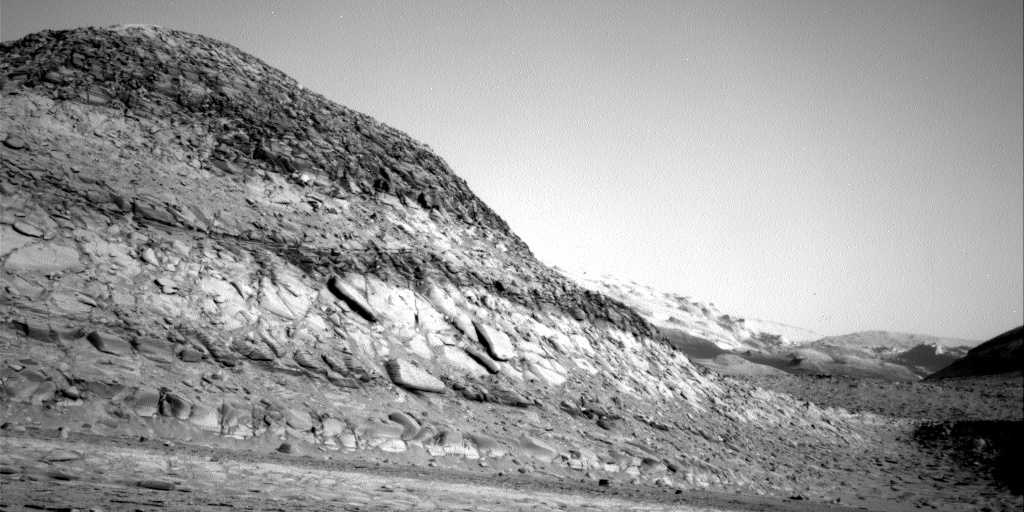
Curiosity Right B Navigation Camera photo taken on Sol 3711, January 14, 2023.
Image credit: NASA/JPL-Caltech
NASA’s Curiosity Mars rover at Gale Crater is now performing Sol 3712 duties.
The robot is safe and sound, but a recent downlink glitch slowed down research plans, reports Kristen Bennett, a planetary geologist at the USGS Astrogeology Science Center in Flagstaff, Arizona.
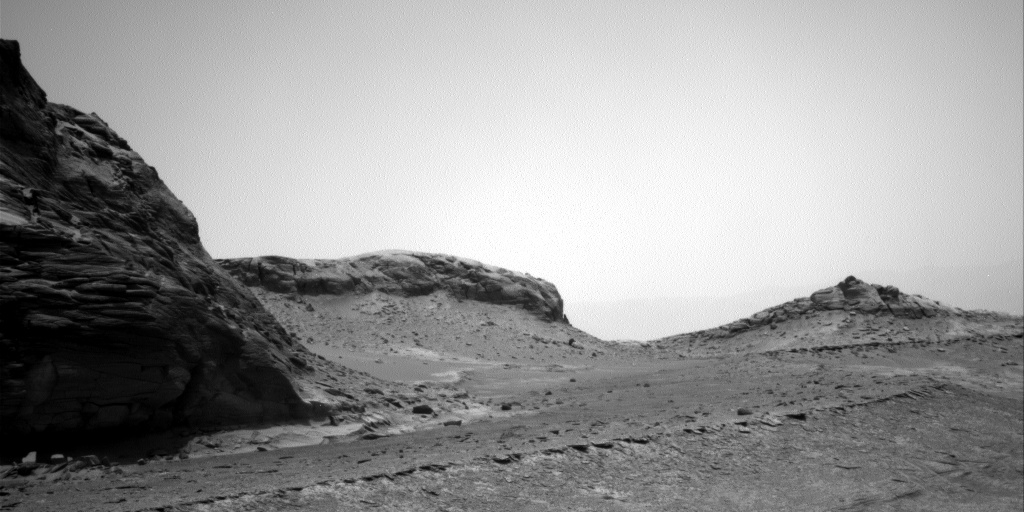
Curiosity Right B Navigation Camera photo taken on Sol 3711, January 14, 2023.
Image credit: NASA/JPL-Caltech
“All we need to do is wait for the missing data and keep going! We have enough images to look at the terrain that is in the distance, but not enough to see what is in front of the rover right now,” Bennett notes. “This means we cannot do contact science or drive, but we can take in the view with plenty of long distance images in today’s plan.”
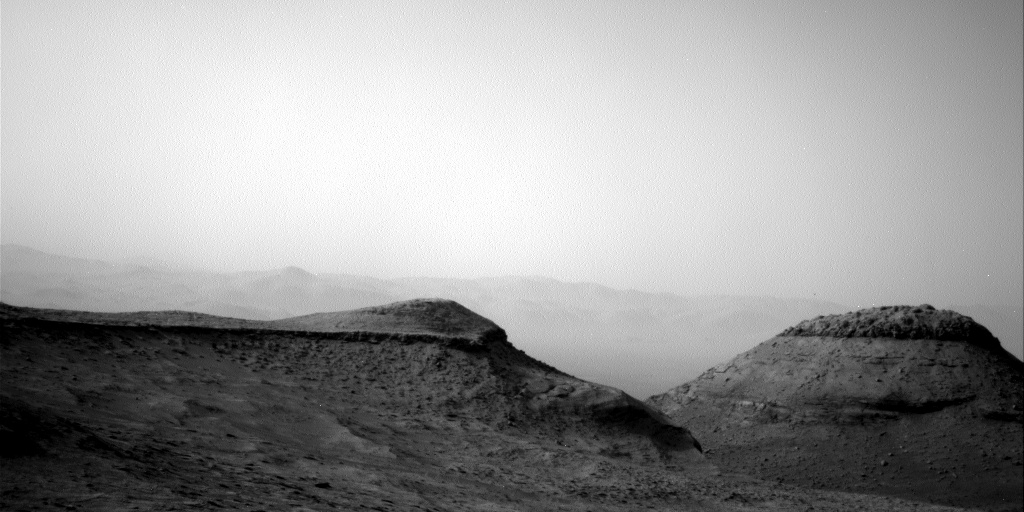
Curiosity Right B Navigation Camera photo taken on Sol 3711, January 14, 2023.
Image credit: NASA/JPL-Caltech
Distant terrain
Several Mastcam mosaics are included in a recent two sol plan, drafted for Sols 3710-3711.
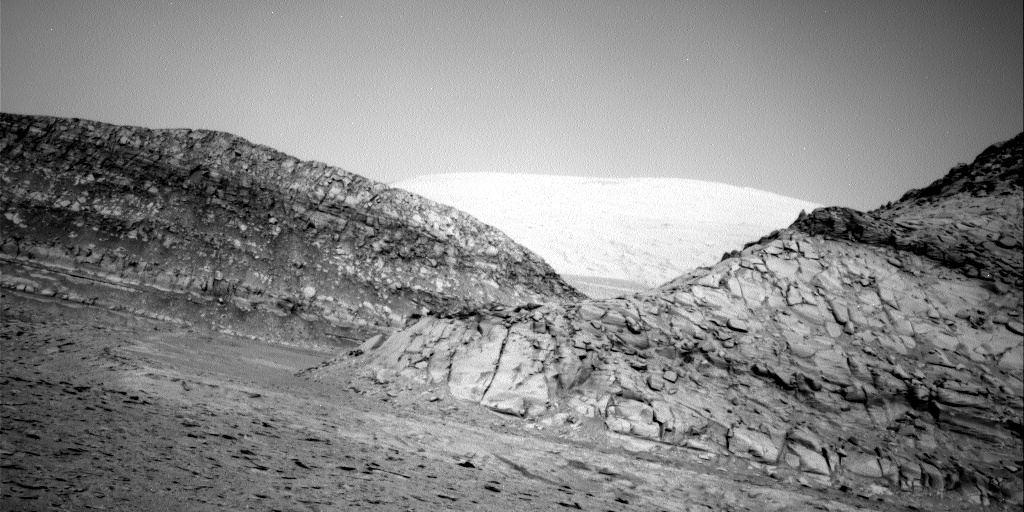
Curiosity Right B Navigation Camera photo taken on Sol 3711, January 14, 2023.
Image credit: NASA/JPL-Caltech
“First, Mastcam is characterizing some distant terrain at the base of Chenapau that we expect to drive to soon. There is also a Mastcam mosaic that covers Amapa from a different angle. The plan also includes the “Tupaquim” and “Uaiu” mosaics, which both target features that are exposed below the marker band. Tupaquim targets dark-toned bands, and Uaiu targets potentially wavy layers,” Bennett adds.
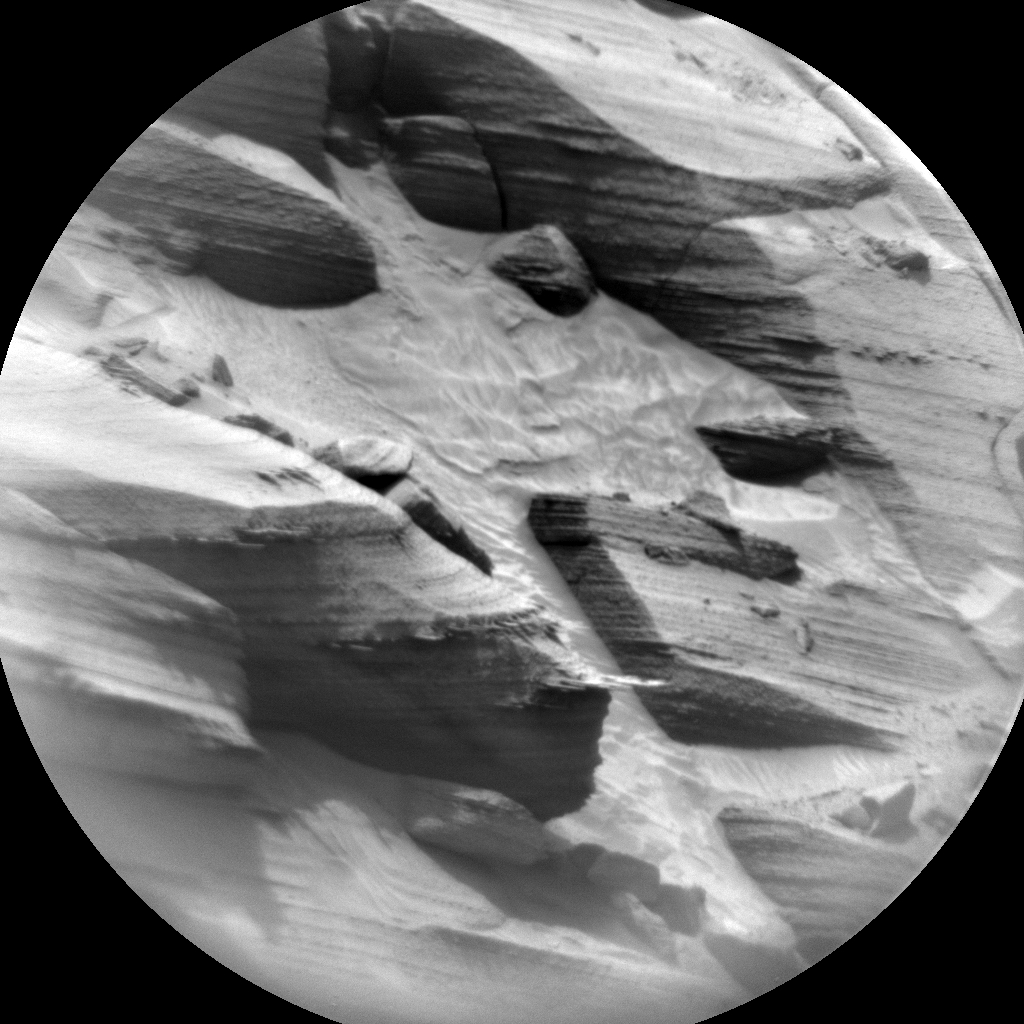
Curiosity Chemistry & Camera Remote Micro-Imager (RMI) photo acquired on Sol 3711, January 14, 2023.
Image credit: NASA/JPL-Caltech/LANL
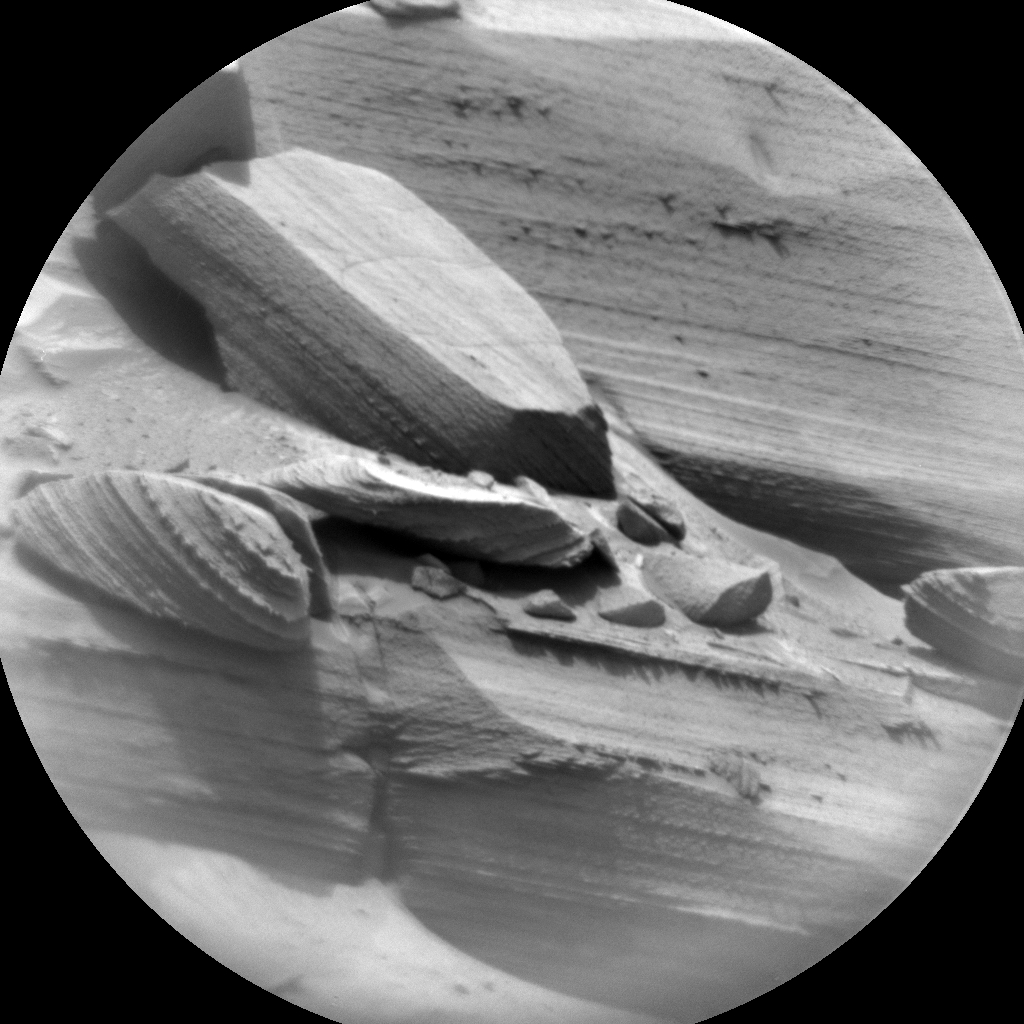
Curiosity Chemistry & Camera Remote Micro-Imager (RMI) photo acquired on Sol 3711, January 14, 2023.
Image credit: NASA/JPL-Caltech/LANL
Two planned Chemistry and Camera (ChemCam) Laser Induced Breakdown Spectroscopy (LIBS) observations were to occur a little closer to the rover on targets “Iracoume” and “Moreiru.”
These targets are to characterize the closest bedrock that is visible in the images that were downlinked, Bennett notes. The plan also includes two long distance Remote Micro-Imager (RMI) observations: one on the flank of Chenapau and another on the marker band.
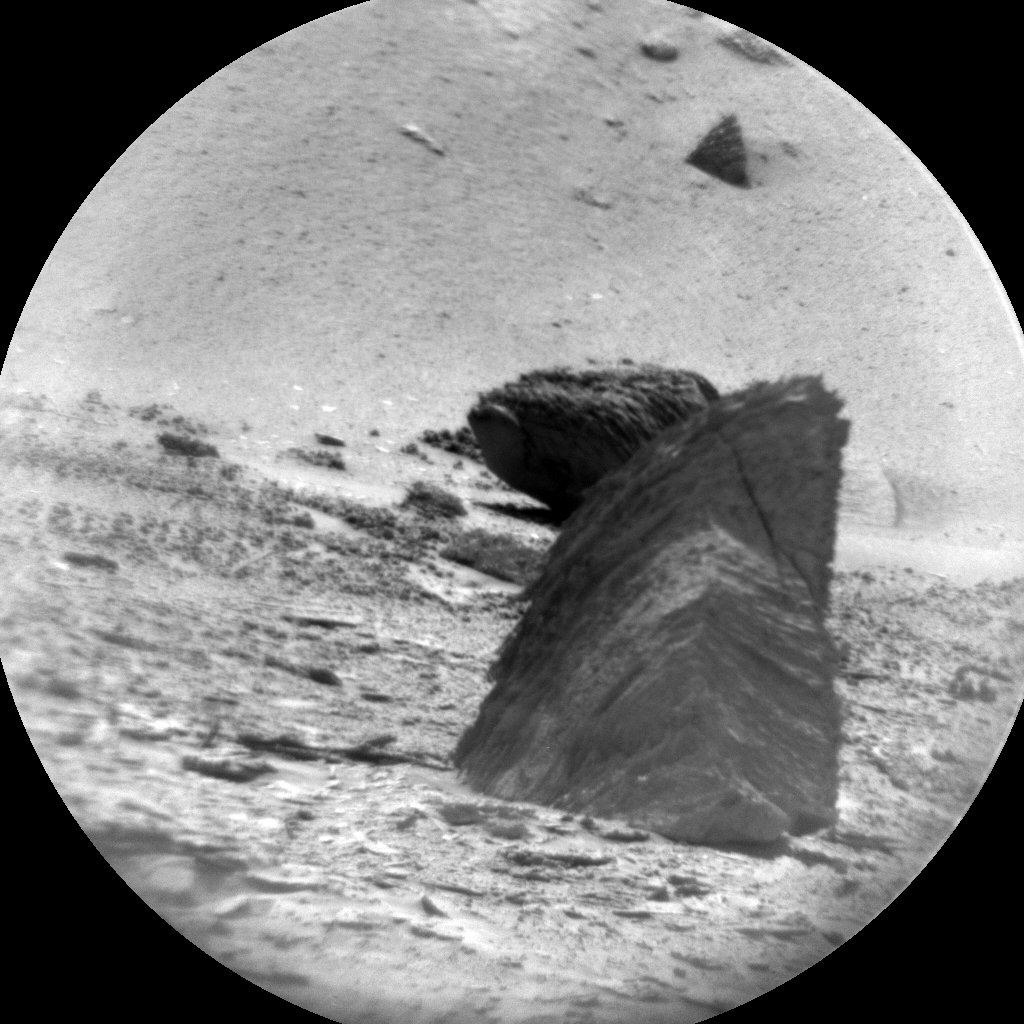
Curiosity Chemistry & Camera (ChemCam) RMI taken on Sol 3710, January 13, 2023.
Image credit: NASA/JPL-Caltech/LANL
 Posted in Space News

