 By
By  December 12th, 2021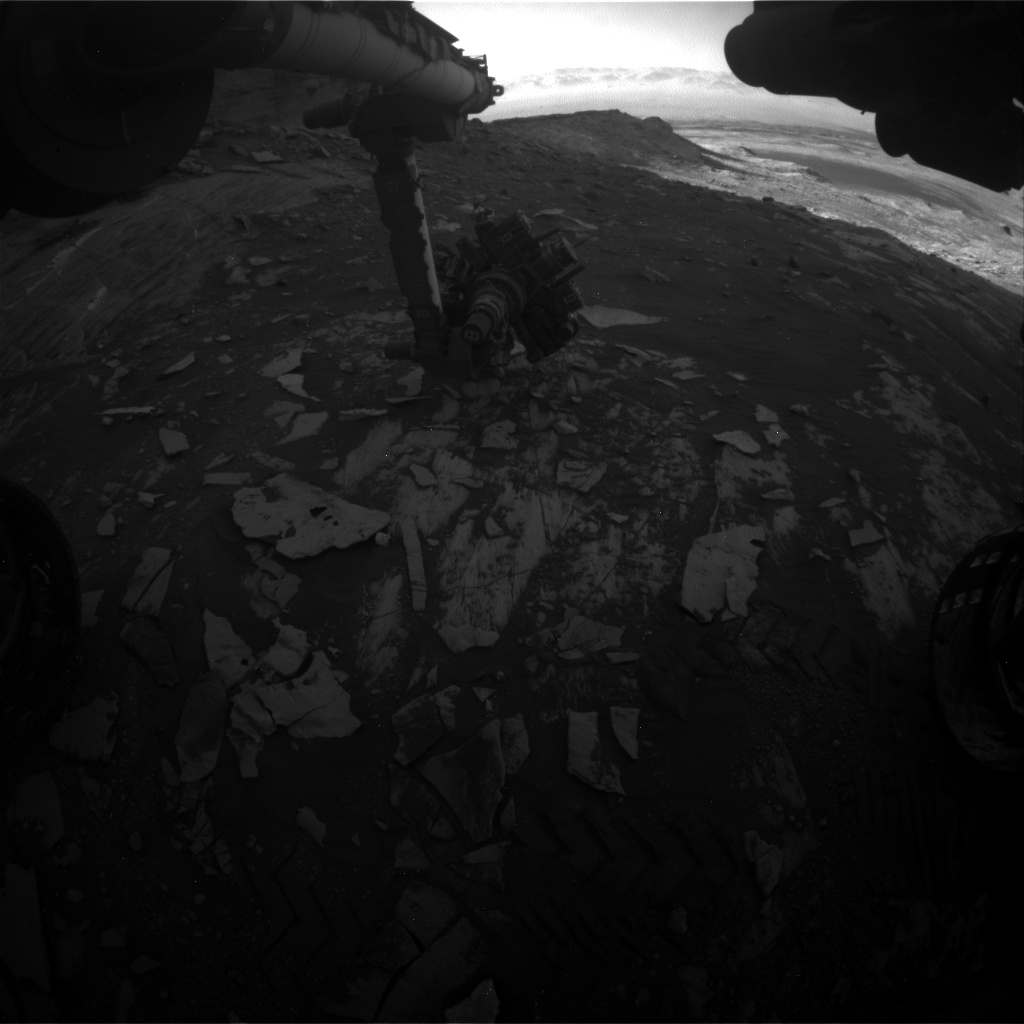
Curiosity Front Hazard Avoidance Camera Right B image taken on Sol 3323, December 11, 2021.
Credit: NASA/JPL-Caltech
NASA’s Curiosity Mars rover at Gale Crater is now performing Sol 3324 duties.
Abigail Fraeman, a planetary geologist at NASA’s Jet Propulsion Laboratory reports that the robot recently parked just a few meters away from the towering western wall of Maria Gordon notch.
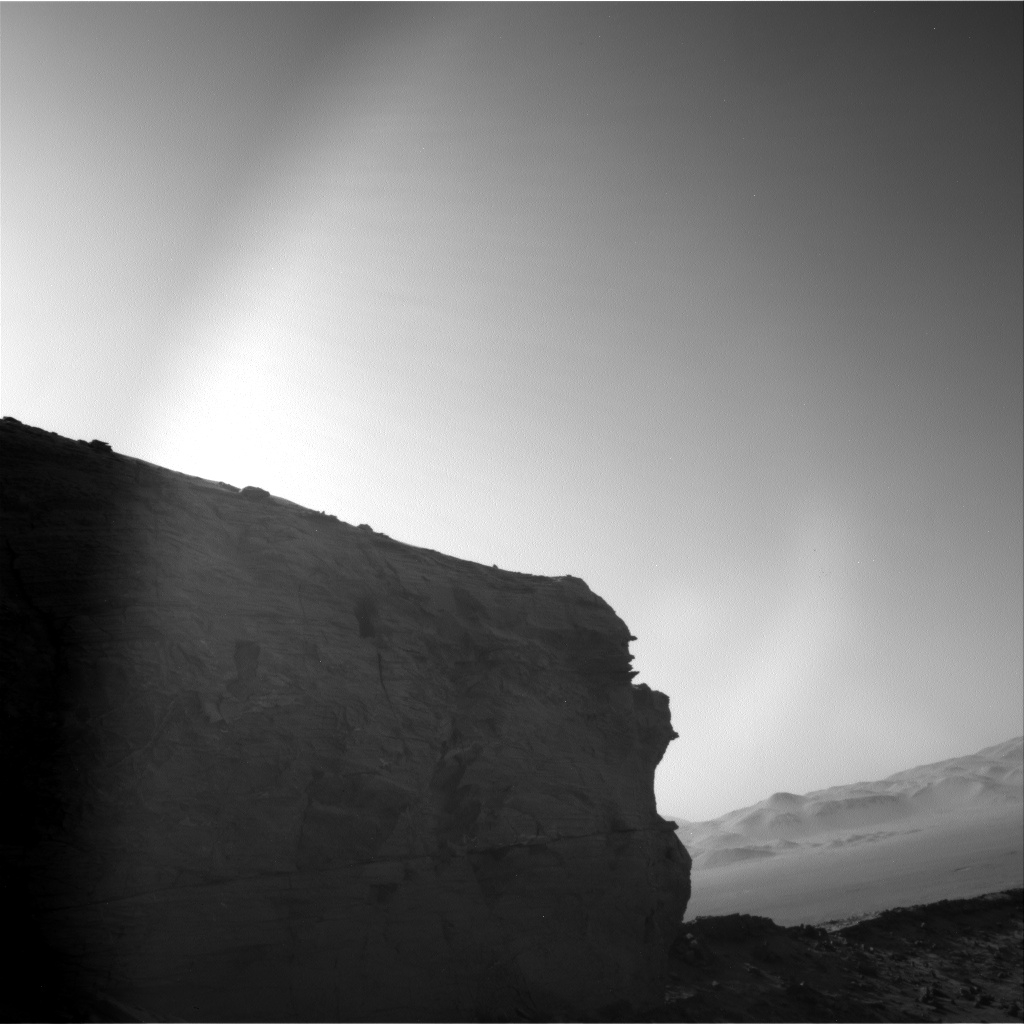
In the shadow of Maria Gordon Notch. Image taken by Curiosity’s Right Navigation Camera on Sol 3322 December 10, 2021
Credit: NASA/JPL-Caltech
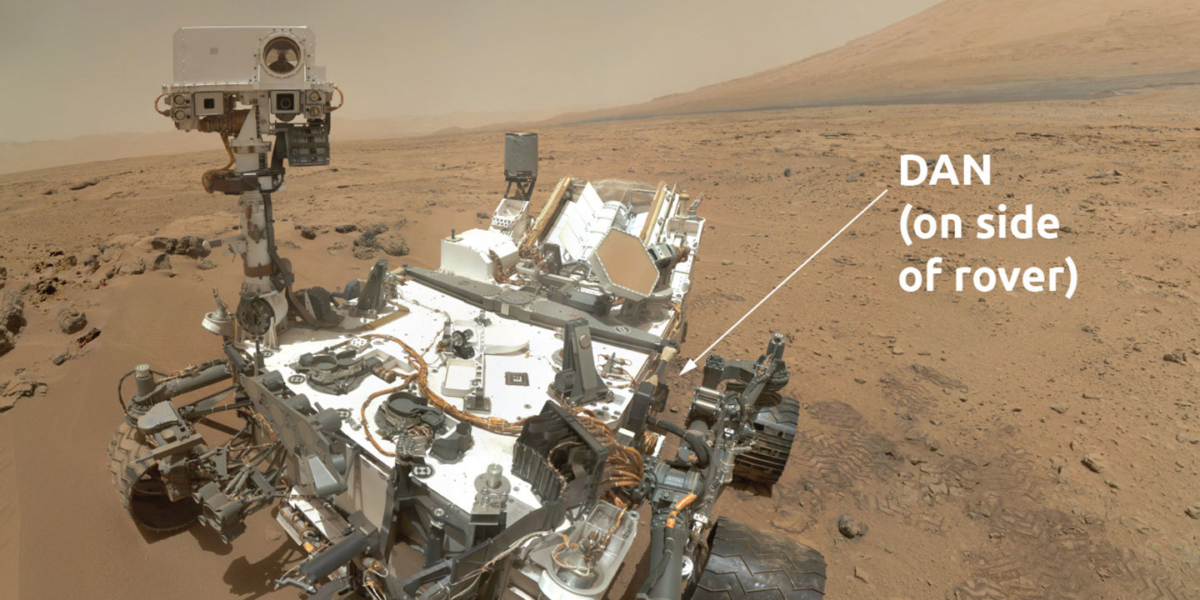
“While this location gives us spectacular views of the layering, veins, and nodules exposed on the side of the outcrop, it was actually chosen to support an experiment with Curiosity’s neutron spectrometer, DAN (Dynamic Albedo of Neutrons),” Fraeman adds.
Credit: NASA/JPL-Caltech
DAN has the ability to measure the amount of hydrogen, Fraeman points out, a proxy for water, around the rover.
“The instrument is sensitive to surroundings all around Curiosity, although usually the only interesting signature comes from the ground beneath the rover where the instrument can detect water bound within hydrated minerals,” Fraeman explains.

The Dynamic Albedo of Neutrons tool, called DAN for short, looks for telltale changes in the energies of neutrons released from Martian subsurface that indicate how much water is chemically bound in the soil or rocks.
Credit: NASA/JPL-Caltech/Russian Federal Space Agency
Three-point turn
By parking close to the side of Maria Gordon notch, Mars researchers have an opportunity to see information with DAN from both the ground and the wall next to the rover, which will help refine understanding of DAN data throughout the mission.
DAN measurements will be done in three different positions: a current parking position and two more planned during a planned drive.
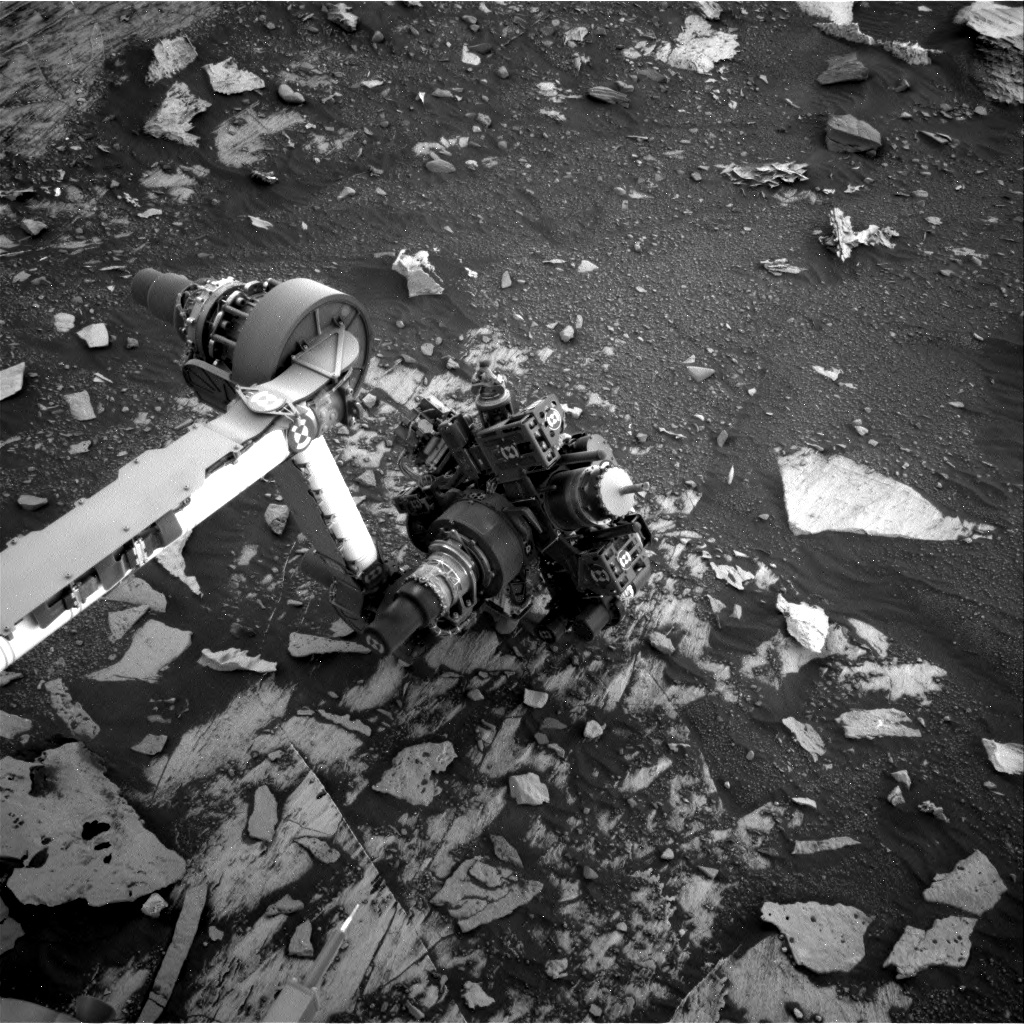
Curiosity Right B Navigation Camera image taken on Sol 3323, December 11, 2021.
Credit: NASA/JPL-Caltech
“The drive will place Curiosity perpendicular to the cliff and then parallel again, but a little bit closer than we are now,” says Fraeman. “It’s a little like a rover version of an almost three-point turn!”
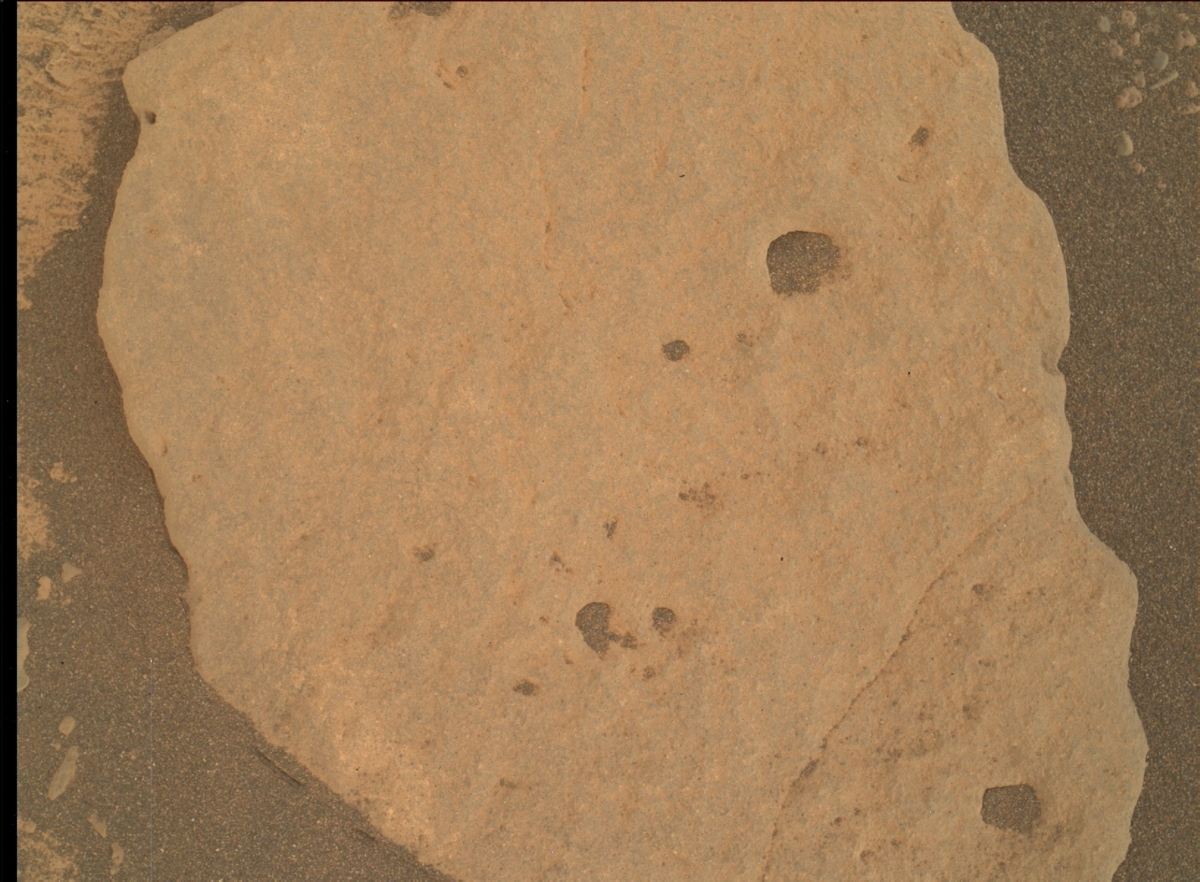
Curiosity Mars Hand Lens Imager (MAHLI) photo produced on Sol 3323, December 11, 2021.
Credit: NASA/JPL-Caltech/MSSS
Scenic location
In addition to the DAN experiments, also on tap is collecting Alpha Particle X-Ray Spectrometer (APXS) and Mars Hand Lens Imager (MAHLI) observations on two pebbles in front of Curiosity, one with pits (“Helens Bay”) and one without pits (“Lakeheads”), as well as Chemistry and Camera (ChemCam) observations of “Orlock Ridge” and “Hailes Quarry.”
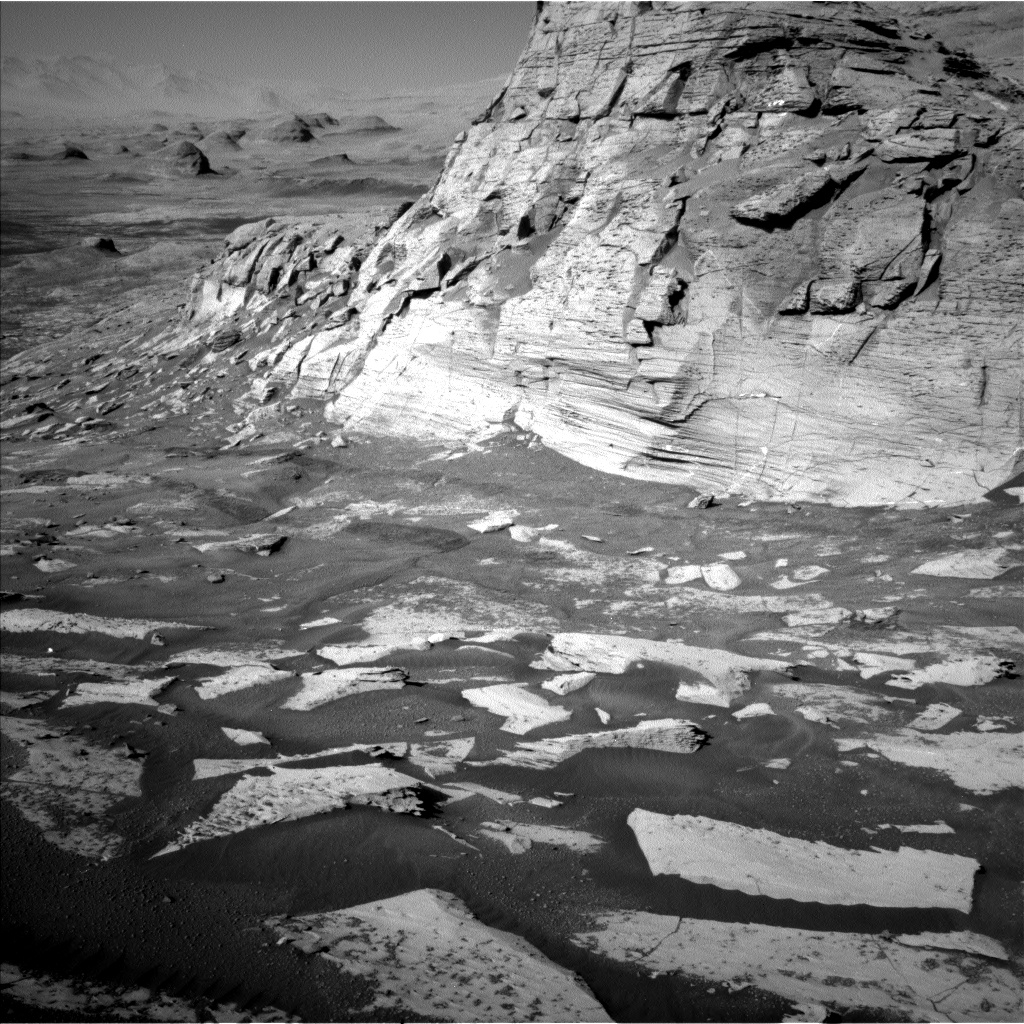
Curiosity Left B Navigation Camera image acquired on Sol 3322, December 10, 2021.
Credit: NASA/JPL-Caltech
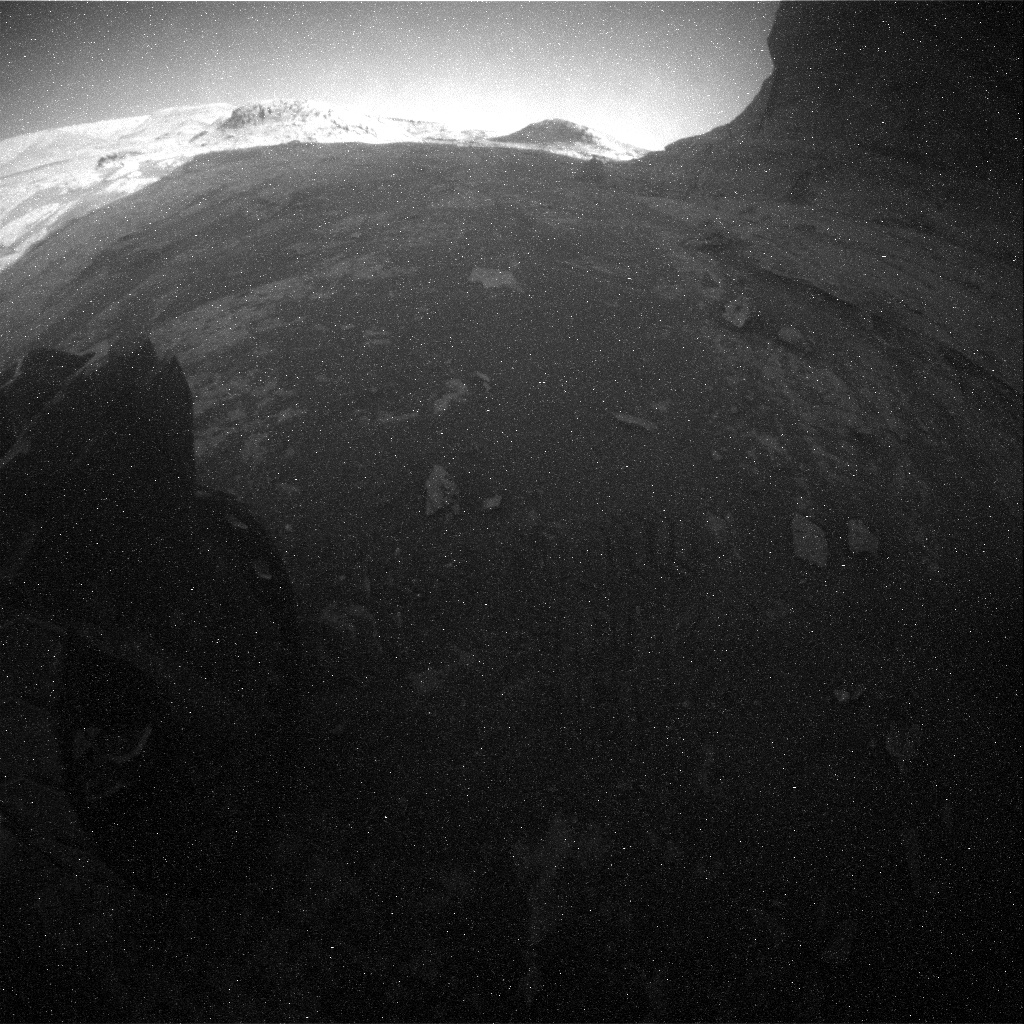
Curiosity Rear Hazard Avoidance Camera Left B image taken on Sol 3323, December 11, 2021.
Credit: NASA/JPL-Caltech
“And of course since we’re at such an amazingly scenic location, we’ll make sure to take lots and lots of Mastcam mosaics throughout the day,” Fraeman concludes.
 Posted in Space News

