 By
By  December 20th, 2019
Curiosity Mast Camera Left photo of “Blackwaterfoot” taken on Sol 2618, December 18, 2019.
Credit: NASA/JPL-Caltech/MSSS
NASA’s Curiosity Mars rover is now wrapping up Sol 2620 tasks.
“All dressed up…and no data to (touch and) go on,” reports Michelle Minitti, a planetary geologist at Framework in Silver Spring, Maryland
Curiosity handlers were anxiously awaiting the images from the end of the rover’s drive of 66 feet (20 meters) further up “Western Butte,” as they anticipated having both the bedrock that covers this part of the butte and an intriguing dark block, Minitti adds, possibly shed from a layer higher up on the butte, in the robot’s workspace.

Curiosity Left B Navigation Camera photo acquired on Sol 2620, December 20, 2019.
Credit: NASA/JPL-Caltech
“However, the two communication passes that were to deliver the data we needed to plan observations in the workspace only delivered a fraction of the expected data,” Minitti notes.
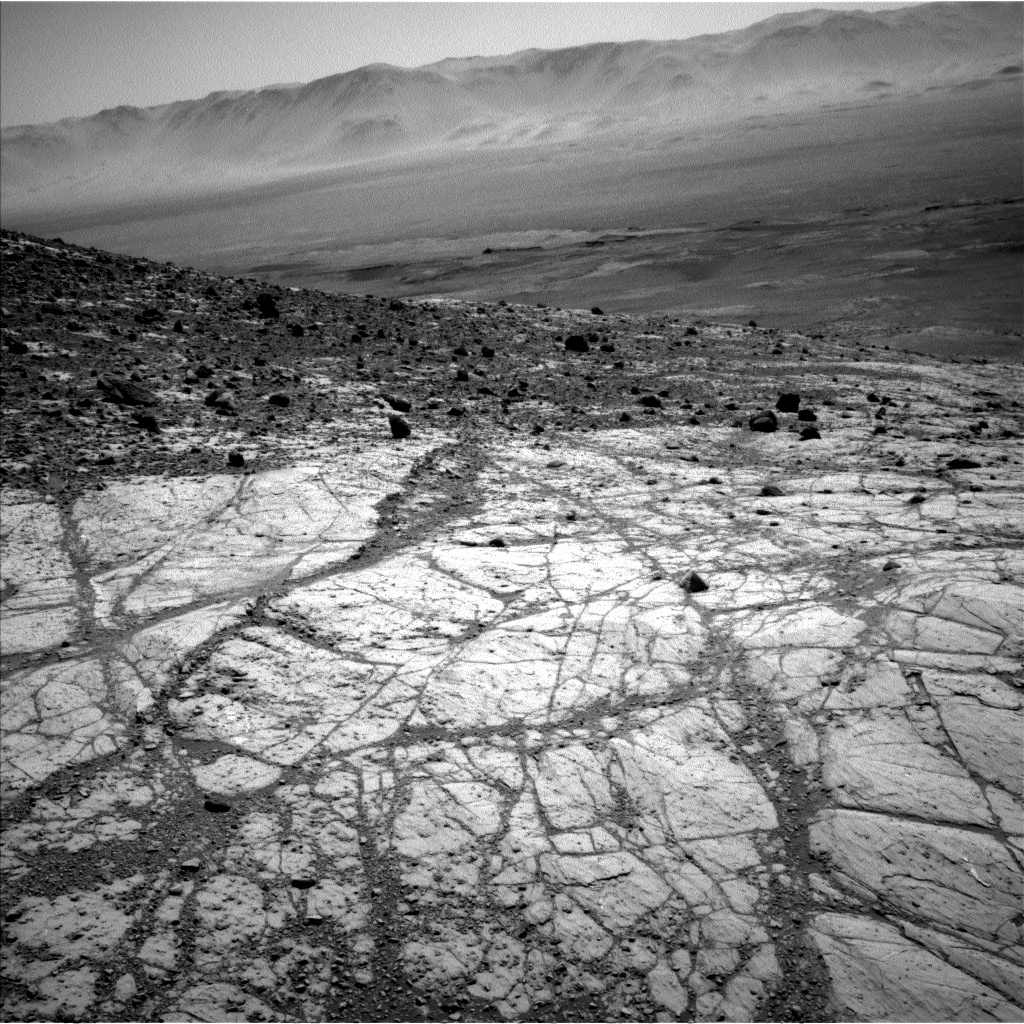
Curiosity Left B Navigation Camera image taken on Sol 2618, December 18, 2019.
Credit: NASA/JPL-Caltech
Settling in
The dearth of images meant that researchers could not target the Chemistry and Camera (ChemCam), Mars Hand Lens Imager (MAHLI), or Alpha Particle X-Ray Spectrometer (APXS)…or plan a drive.
“Thus, we settled into our home for the end of 2019 and did our best to fill the 11 sols covered by this plan despite our downlink challenges,” Minitti reports.
“When we plan a large number of sols at one time,” Minitti points out, “we cannot fill each sol with many activities, as it is very complicated to build and verify such a plan, and it increases the chances something will go wrong that will then impact all subsequent planned activities.”
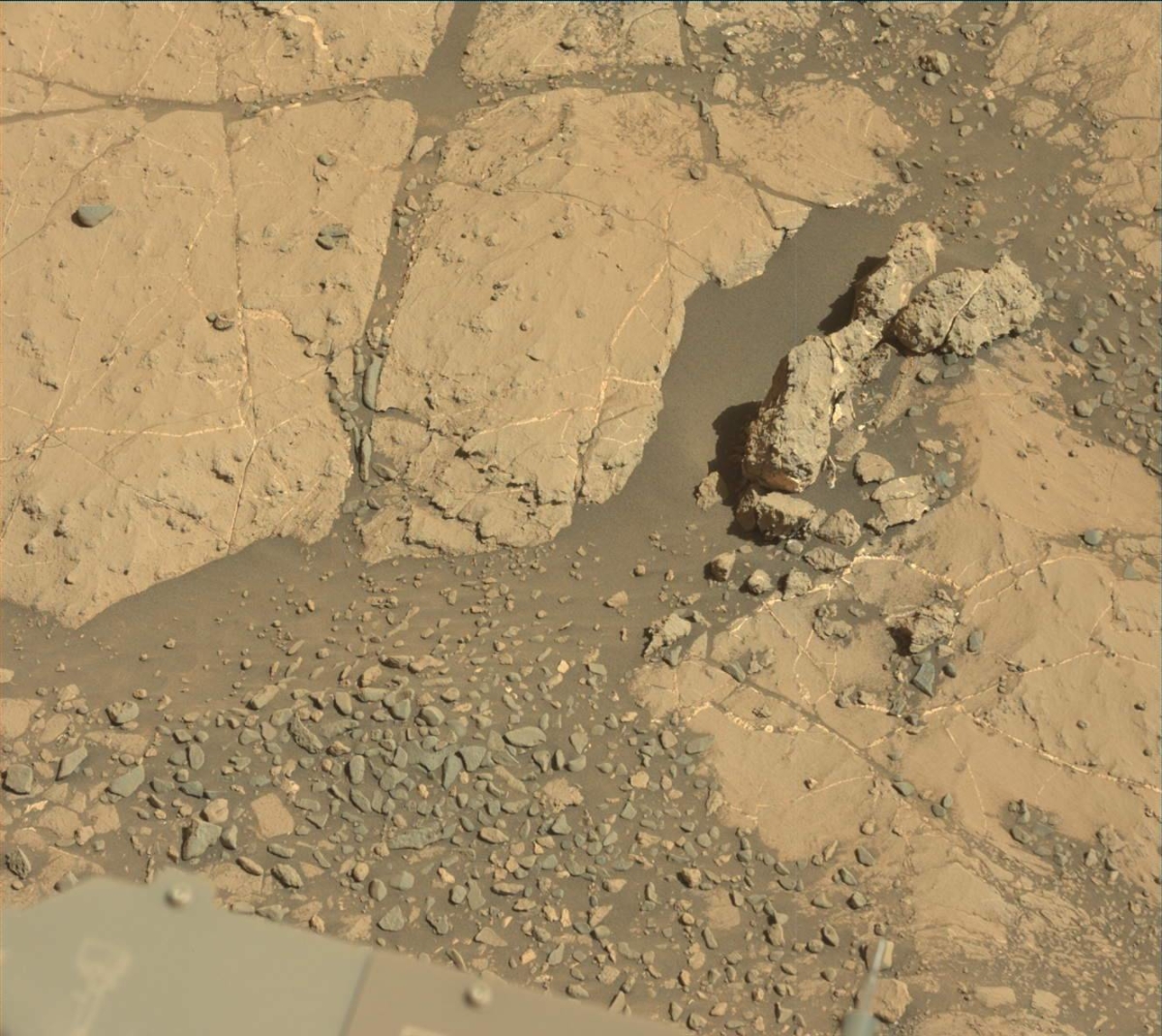
Curiosity Mast Camera Right image taken on Sol 2618, December 18, 2019.
Credit: NASA/JPL-Caltech/MSSS
Low risk plan
To build a long but lower risk plan, scientists utilize sols that include only Rover Environmental Monitoring Station (REMS) data acquisition. For this plan, Sols 2622 to 2625 and 2627 to 2630 will be REMS-only sols. REMS will keep going on the other sols, too, giving scientists an unbroken record of Martian weather through the end of the year.
Sols 2620, 2621 and 2626 mark the few sols of the plan when the rover will be a bit more active.
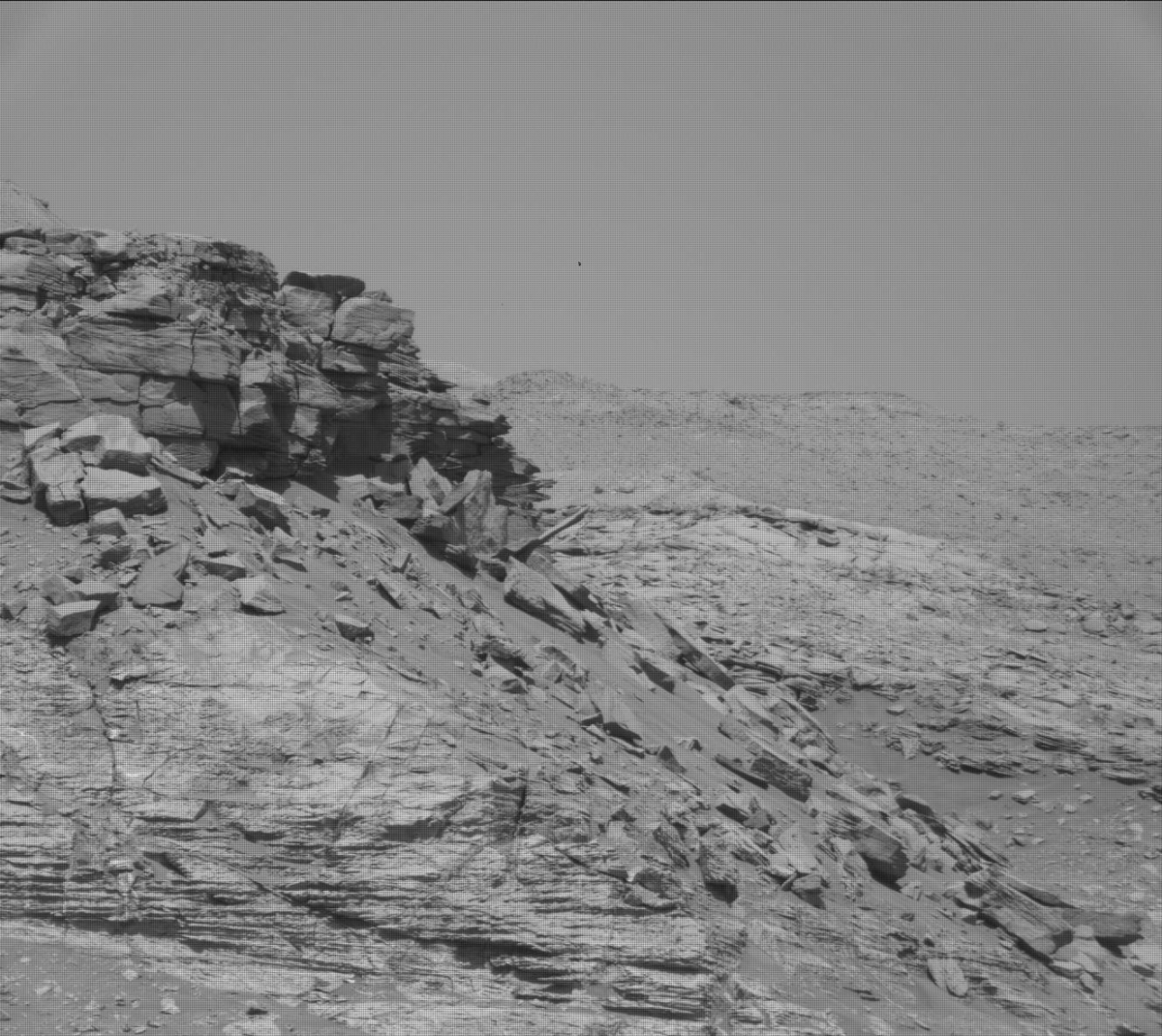
Curiosity Mast Camera Right image taken on Sol 2618, December 18, 2019.
Credit: NASA/JPL-Caltech/MSSS
Nice view
“On Sol 2620, we fit in activities that could be planned with the little targeting data we had. Mastcam was able to plan a multispectral observation of the dark block in the workspace, named “Blackwaterfoot,” two images of the target “Ayrshire” for the purposes of change detection, and a large mosaic of the “Greenheugh Pediment,” of which we have a particularly nice view from the topside of the butte,” Minitti says.
Curiosity’s ChemCam was able to plan two untargeted observations in the workspace using its autonomous target selection capability. No targeting data are required to look at the sky, so Mastcam and Navcam team up for observations of atmospheric dust load, dust devils and clouds.
These activities will finish by the time planning was slated to start today, Minitti reports, giving the operations team one last chance to recover from any issues and keep Curiosity on track up for a productive end to December.
From Sol 2620 into 2621, APXS will measure atmospheric argon, and then the robot’s Chemistry & Mineralogy X-Ray Diffraction/X-Ray Fluorescence Instrument (CheMin) will attempt to clean out some previously used cells that have sample powder stubbornly stuck in them.
Atmospheric methane
On Sol 2626, Dynamic Albedo of Neutrons (DAN) will ping the ground beneath us with passive and active measurements, ChemCam will carry out several calibration activities, Mastcam will image Ayrshire again to look for changes since Sol 2620, and then Mastcam and Navcam will acquire another round of observations of atmospheric dust load, dust devils and clouds.
From Sol 2626 into 2627, the rover’s Sample Analysis at Mars (SAM) Instrument Suite will measure atmospheric methane.

Curiosity Front Hazard Avoidance Camera Right B photo acquired on Sol 2619, December 19, 2019.
Credit: NASA/JPL-Caltech
Parking spot
Late in a recent planning day, a subsequent communication pass brought Mars scientists the full view of our parking spot.
“The workspace is as promising as we had hoped! Studying it will be quite the way to start off 2020,” Minitti adds.
Please note that dates of planned rover activities described are subject to change due to a variety of factors related to the Martian environment, communication relays and rover status.
 Posted in Space News

