 By
By  January 13th, 2019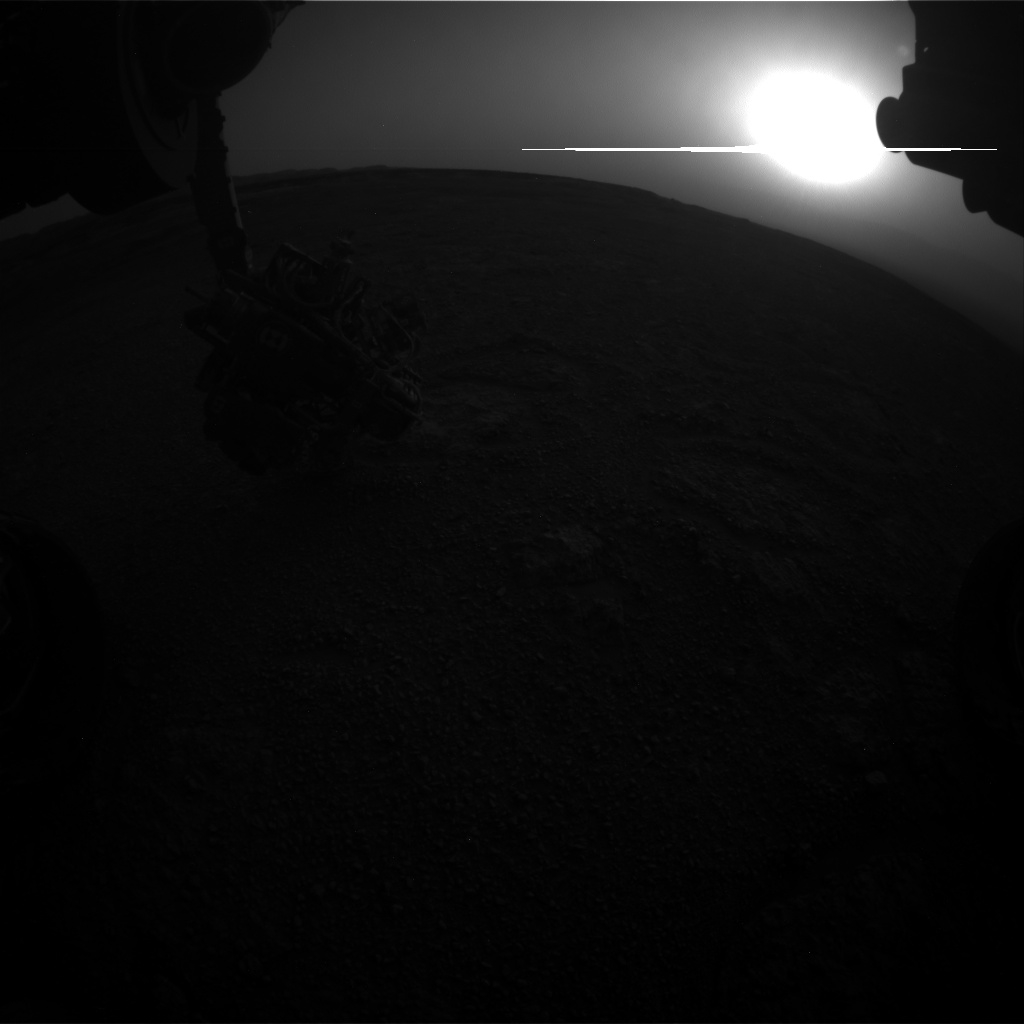
Curiosity Front Hazcam Left A image taken on Sol 2288, January 13, 2019.
Credit: NASA/JPL-Caltech
NASA’s Curiosity Mars rover has just begun Sol 2289 activities.
Reports Susanne Schwenzer, a planetary geologist at the Open University; Milton Keynes, the U.K.: “We will soon be leaving the Rock Hall area, thus this one last look at the drill site from a hazard camera perspective. Seeing those holes always is special, even for #19!”
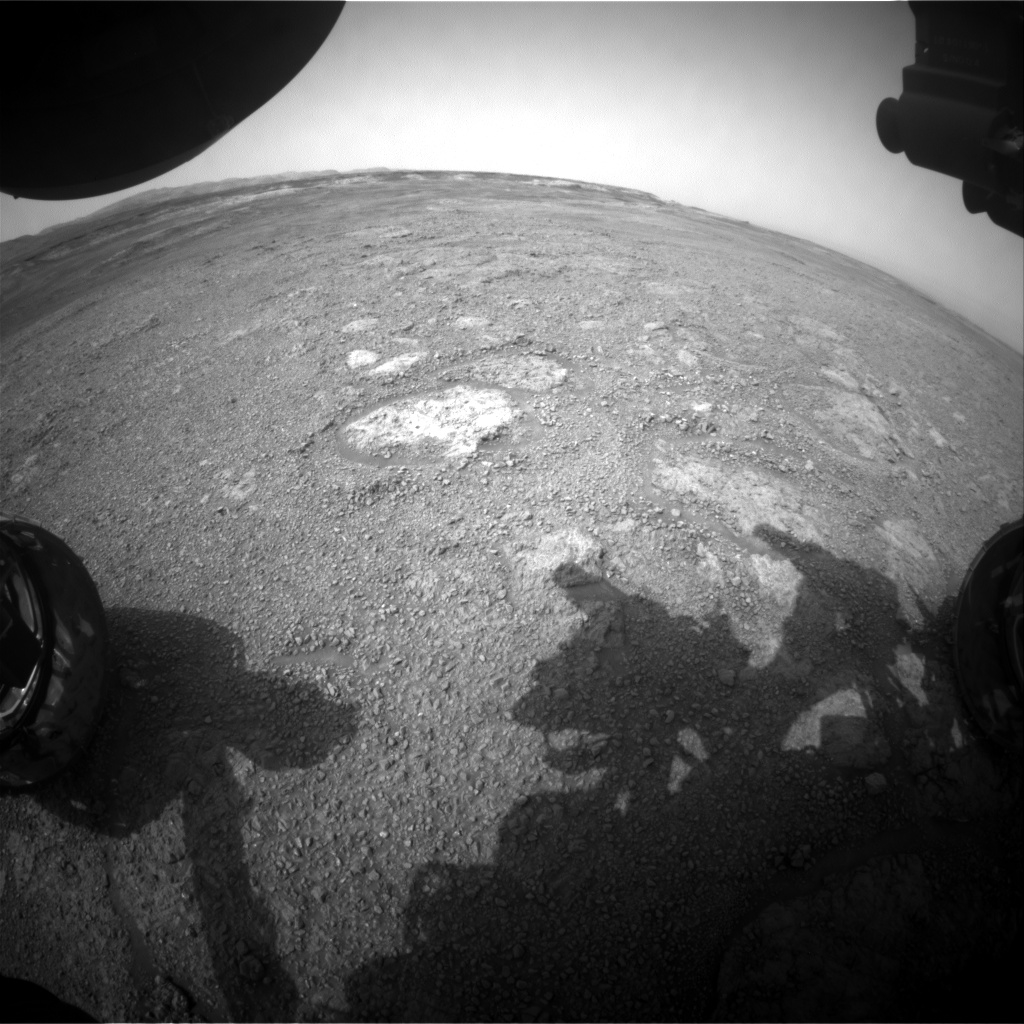
Front Hazcam Left A image taken on Sol 2288, January 12, 2019.
Credit: NASA/JPL-Caltech
Rock powder dumping

Curiosity Navcam Left A image acquired on Sol 2288, January 13, 2019.
Credit: NASA/JPL-Caltech
In recent planning, the rover was slated to dump the remaining rock powder from the drill and investigate it with all instruments, starting with the Alpha Particle X-Ray Spectrometer (APXS).
Schwenzer notes that Sol 2288 plans included a range of environmental investigations, with a dedicated morning science block on sol 2288 to a passive sky observation and a Mastcam tau to see how the dust loading in the atmosphere is changing.
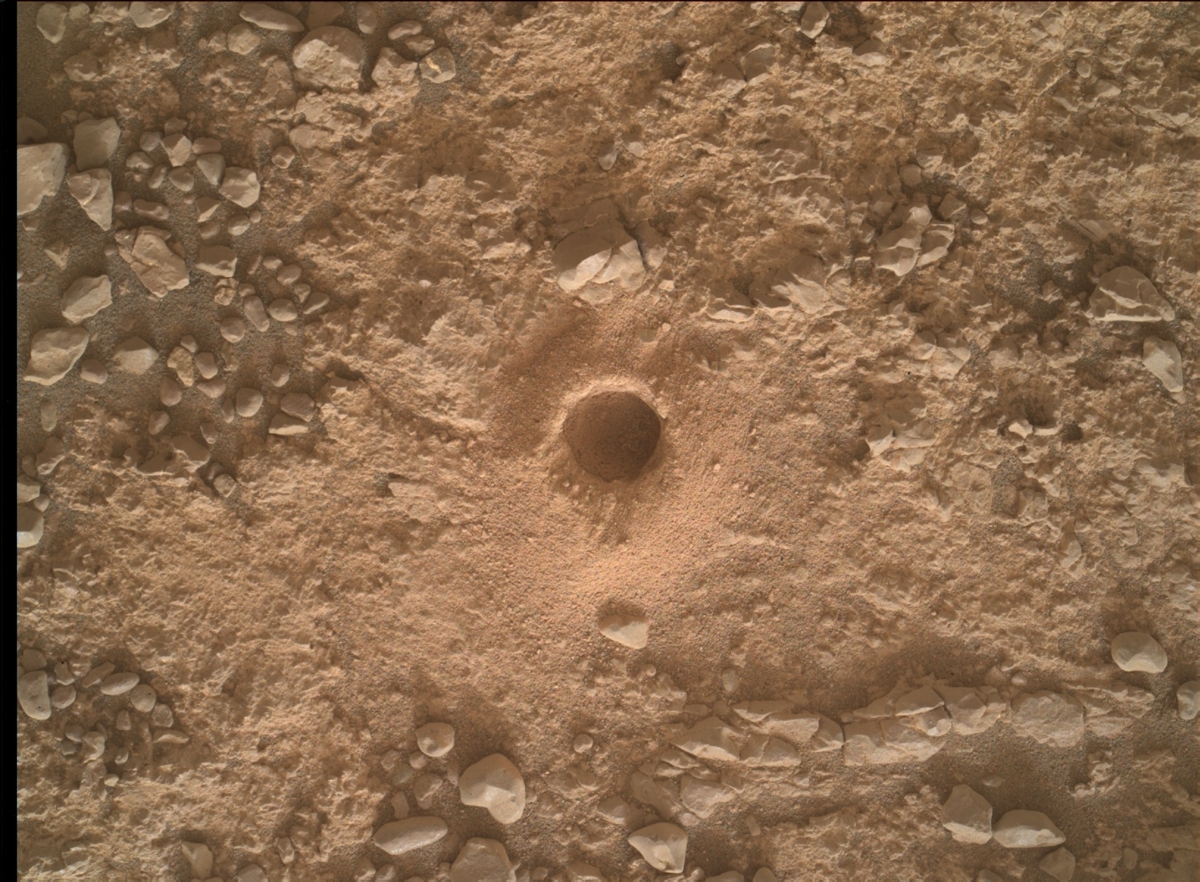
Curiosity Mars Hand Lens Image (MAHLI) photo produced on Sol 2288, January 13, 2019. MAHLI is located on the turret at the end of the rover’s robotic arm.
Credit: NASA/JPL-Caltech/MSSS
Bedrock observations
The science block of sol 2289 is dedicated to spectral analysis of the dump pile with Chemistry and Camera (ChemCam) passive and Mastcam multispectral investigations.
ChemCam is holding off on its active Laser-Induced Breakdown Spectrometer (LIBS) observations of the dump pile until scientists know that APXS and the spectral analysis completed successfully. Thus there are two bedrock observations in the sol 2290 plan: the targets are Dufftown and Lairg.
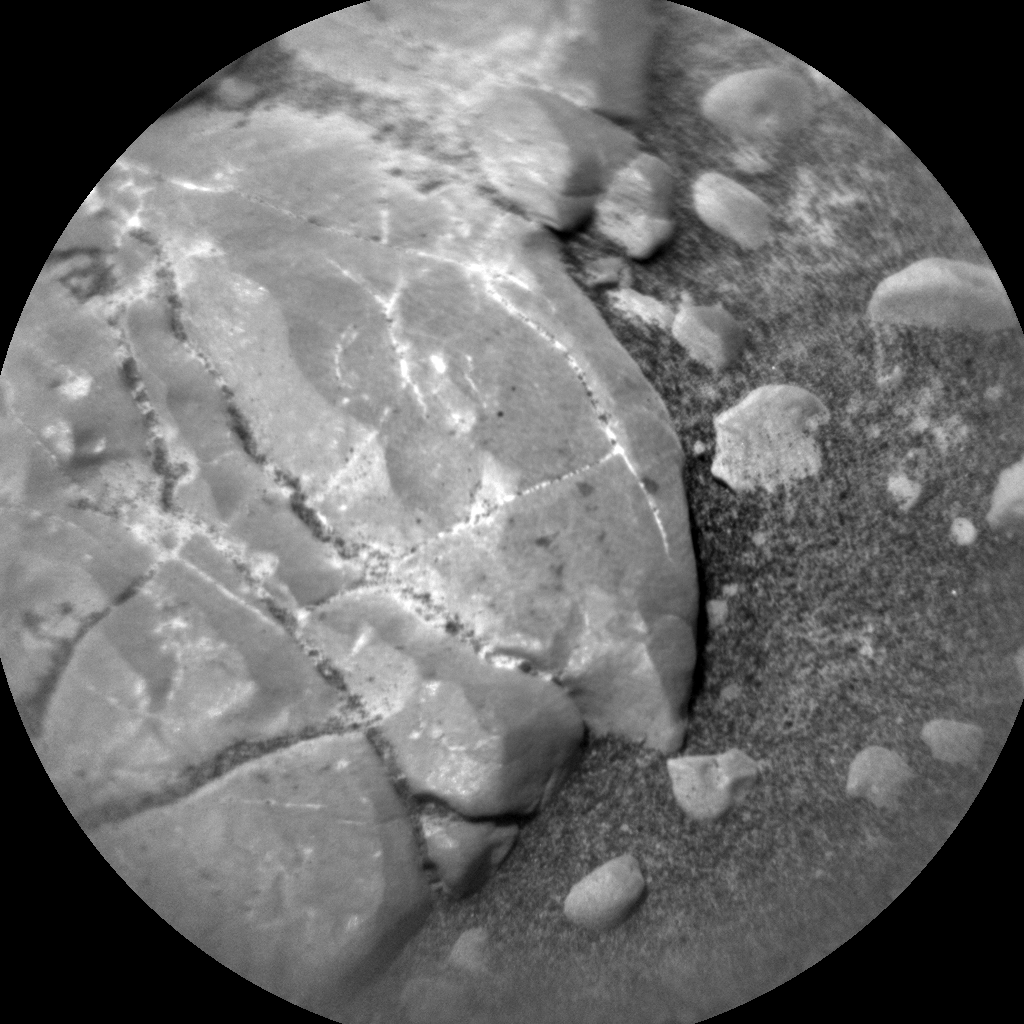
Curiosity ChemCam Remote Micro-Imager photo taken on Sol 2287, January 12, 2019.
Credit: NASA/JPL-Caltech/LANL
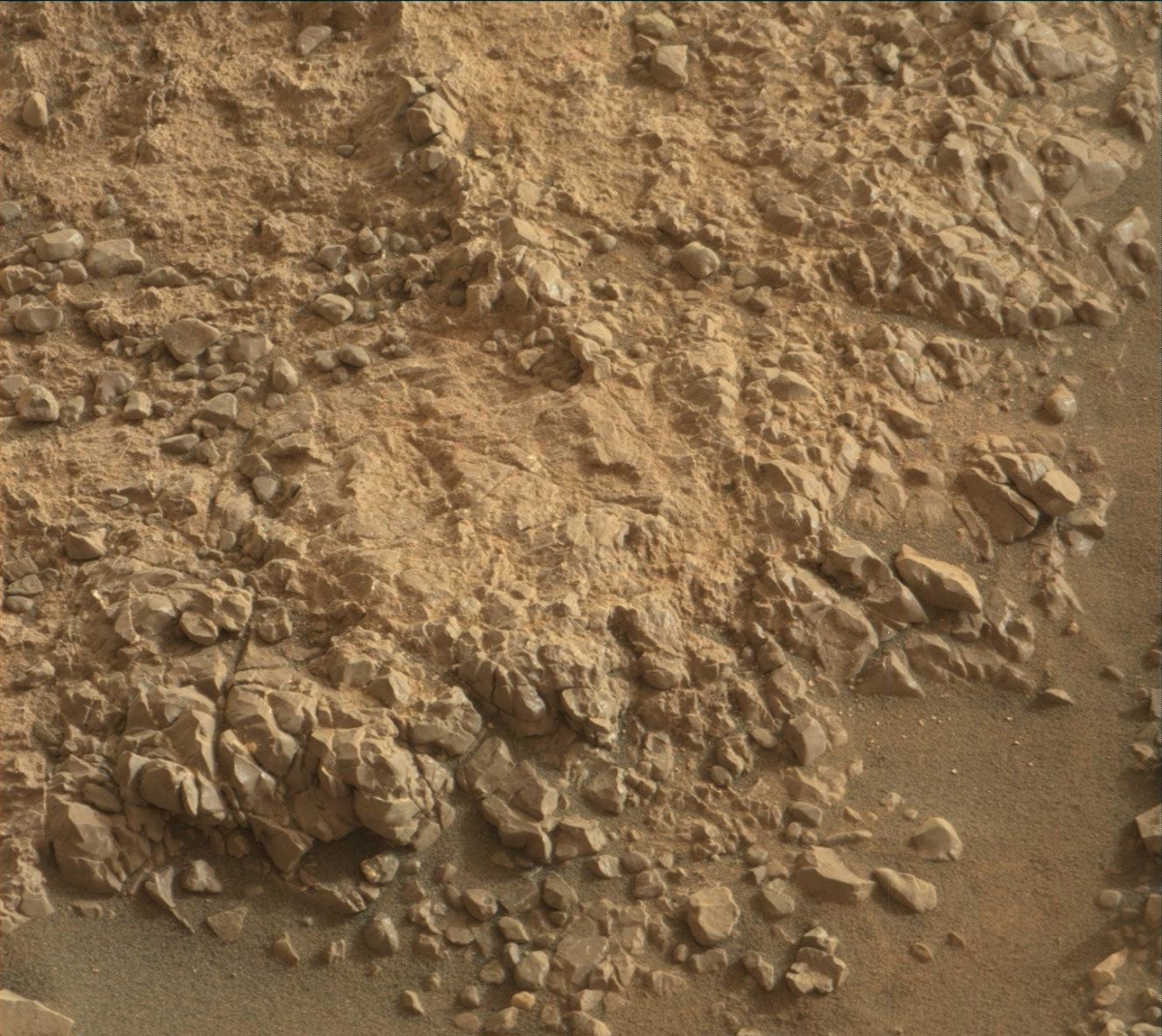
Curiosity Mastcam Right image acquired on Sol 2287, January 12, 2019.
Credit: NASA/JPL-Caltech/MSSS
“Both will be investigated with 10-point rasters to further capture the bedrock variability we have been seeing,” Schwenzer adds. “Monday’s plan will be the last one at Rock Hall before we start our descent of the ridge and into the clay unit. I am excited to explore the new terrain, and so is the entire team!”
 Posted in Space News

