 By
By  October 26th, 2020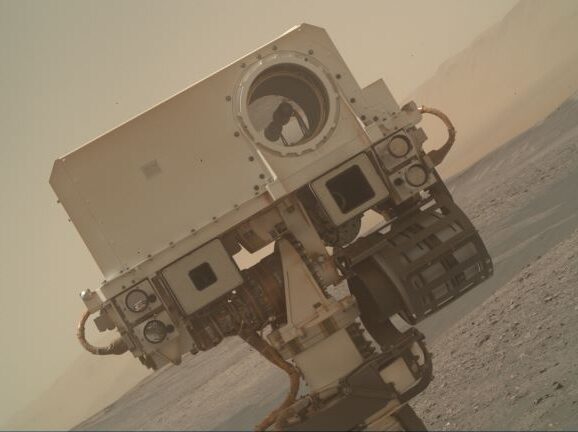
Curiosity Mars Hand Lens Imager (MAHLI) photo produced on Sol 2922, October 25, 2020.
Credit: NASA/JPL-Caltech/MSSS
NASA’s Curiosity Mars rover is now performing Sol 2923 tasks.
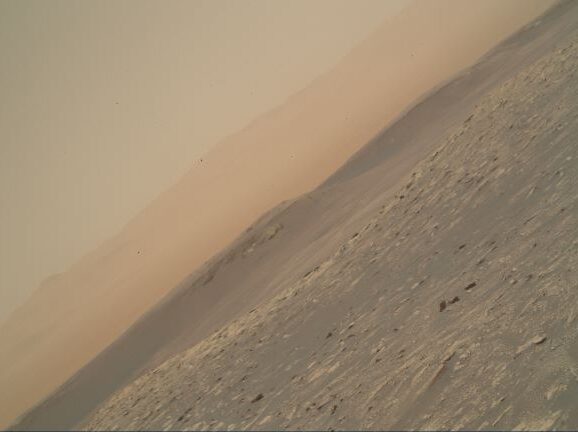
Curiosity Mars Hand Lens Imager (MAHLI) photo produced on Sol 2922, October 25, 2020.
Credit: NASA/JPL-Caltech/MSSS
Mars scientists are in the homestretch of having Curiosity complete work at the “Mary Anning” and “Groken” drill sites, reports Michelle Minitti, a planetary geologist at Framework in Silver Spring, Maryland.
A recent plan checks off final important work boxes at the site before the robot heads back uphill, Minitti explains.
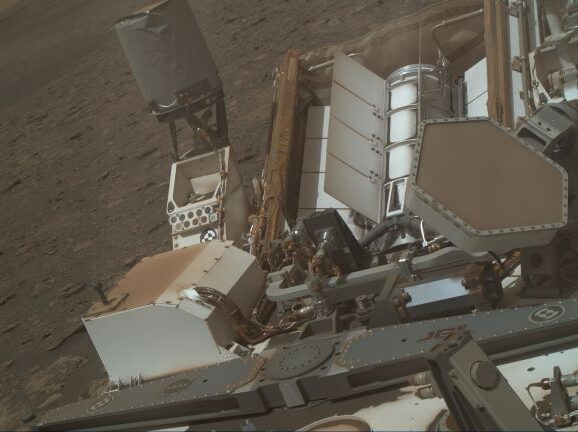
Curiosity Mars Hand Lens Imager (MAHLI) photo produced on Sol 2922, October 25, 2020.
Credit: NASA/JPL-Caltech/MSSS
Discarded sample
With a recently acquired sample delivered to the Sample Analysis at Mars (SAM) Instrument Suite, the plan calls for clearing the remaining sample out of the drill and have a look at the discarded sample with the Mars Hand Lens Imager (MAHLI) and the Alpha Particle X-Ray Spectrometer (APXS).
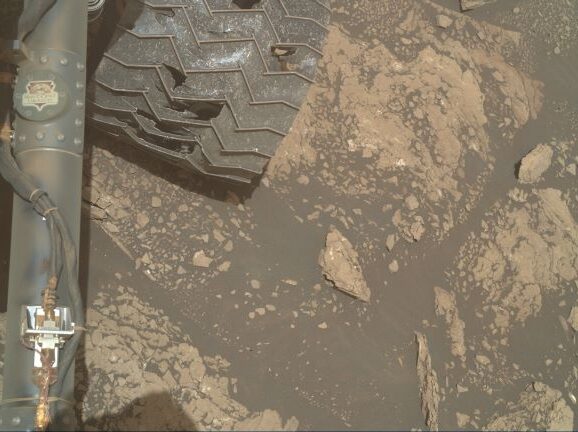
Curiosity Mars Hand Lens Imager (MAHLI) photo produced on Sol 2922, October 25, 2020.
Credit: NASA/JPL-Caltech/MSSS
The chemistry of the Groken drill sample from APXS will be combined with the mineralogy determined by the Chemistry & Mineralogy X-Ray Diffraction/X-Ray Fluorescence Instrument (CheMin) and the volatile contents determined by SAM Minitti explains, “to build a comprehensive picture of the origin and history of this part of Gale Crater.”
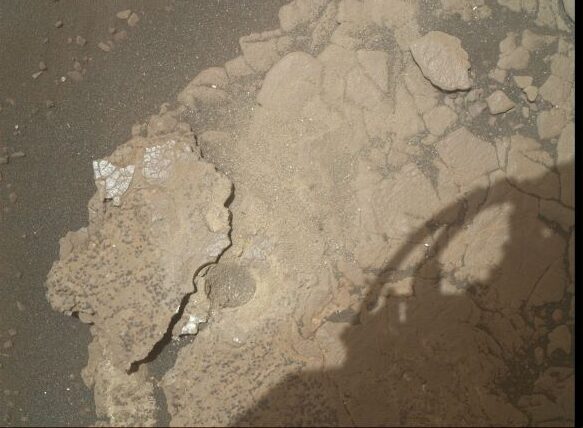
Curiosity Mars Hand Lens Imager (MAHLI) photo produced on Sol 2922, October 25, 2020.
Credit: NASA/JPL-Caltech/MSSS
Clean looks
MAHLI will also look at the Groken drill hole tailings, which have been somewhat scattered by the wind since created on Sol 2910, Minitti adds.
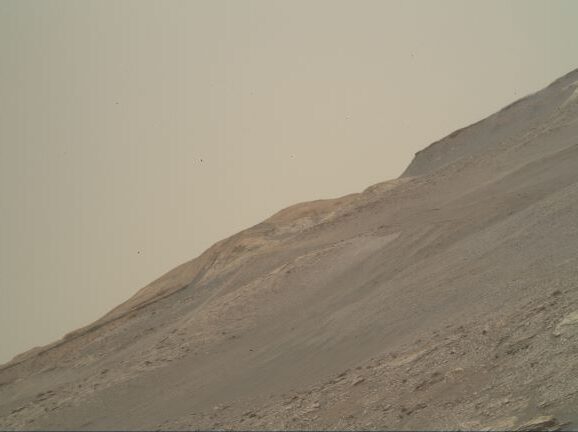
Curiosity Mars Hand Lens Imager (MAHLI) photo produced on Sol 2922, October 25, 2020.
Credit: NASA/JPL-Caltech/MSSS
“We will also look around and beyond the drill target with our remote sensing instruments,” Minitti notes.
The rover’s Chemistry and Camera (ChemCam) will acquire chemistry from the target “Vord,” a clean, broken surface exposed during the drill activity. “We do not often get such new, dust-free surfaces on Mars so we like to take advantage of clean looks at their chemistry and texture,” Minitti says.
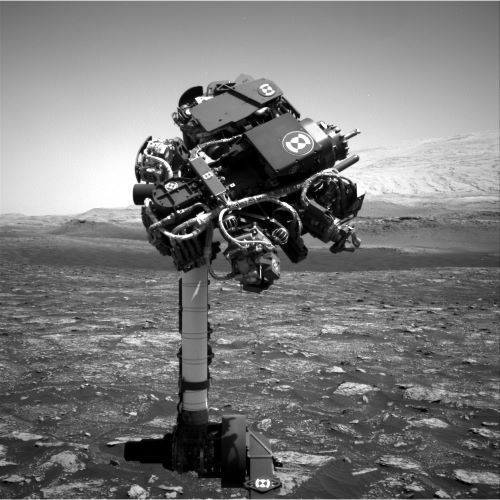
Curiosity Right B Navigation Camera image acquired on Sol 2922, October 25, 2020.
Credit: NASA/JPL-Caltech
Wonderland of geology
ChemCam will add to the extensive and spectacular collection of Remote Micro-Imager (RMI) images of the “Housedon Hill” area east of the rover, which reveal a real wonderland of geology within Mount Sharp.
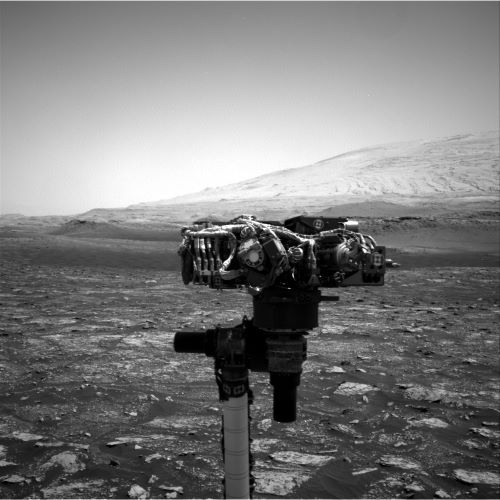
Curiosity Right B Navigation Camera image acquired on Sol 2922, October 25, 2020.
Credit: NASA/JPL-Caltech
The robot’s Mastcam and Navcam will combine forces to measure the amount of dust in the atmosphere, and look for dust devils and clouds. The steady gazes of the Dynamic Albedo of Neutrons (DAN), the Radiation Assessment Detector (RAD) and the Rover Environmental Monitoring Station (REMS) “remain fixed on the skies above us and subsurface below us as the other instruments do their work, continuing to build their records of the environment in Gale crater,” Minitti concludes.
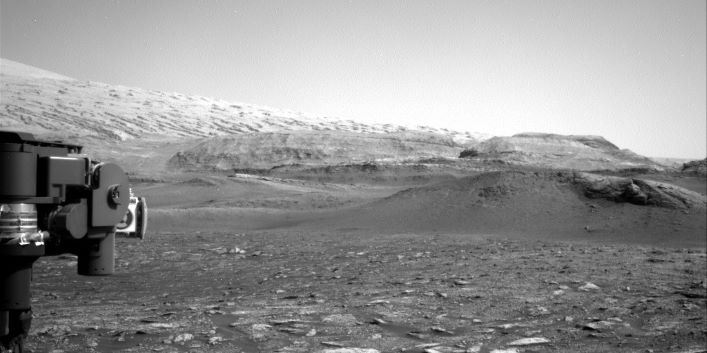
Curiosity Right B Navigation Camera image acquired on Sol 2922, October 25, 2020.
Credit: NASA/JPL-Caltech
 Posted in Space News

