 By
By  July 25th, 2019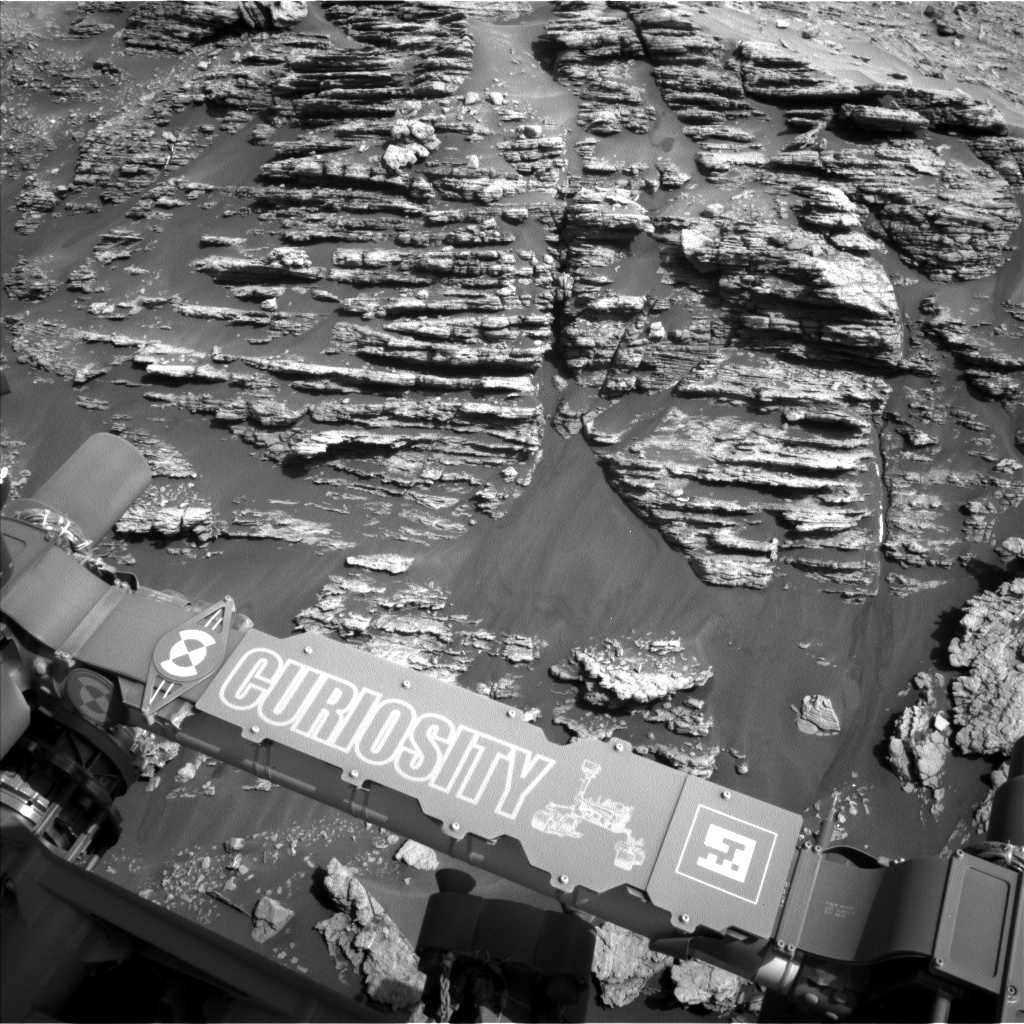
Curiosity Navcam Left B image acquired on Sol 2476, July 25, 2019.
Credit: NASA/JPL-Caltech
NASA’s Curiosity Mars rover is now closing out Sol 2476 duties.
Reports Ashley Stroupe, a mission operations engineer at NASA’s Jet Propulsion Laboratory, the robot is parked at the base of the southern escarpment of the Visionarium.
“She’s at a significant tilt of 21 degrees,” Stroupe adds. “We’ve been imaging this ridge from several locations over the past few sols, trying to build up our understanding of the geology in this area.”
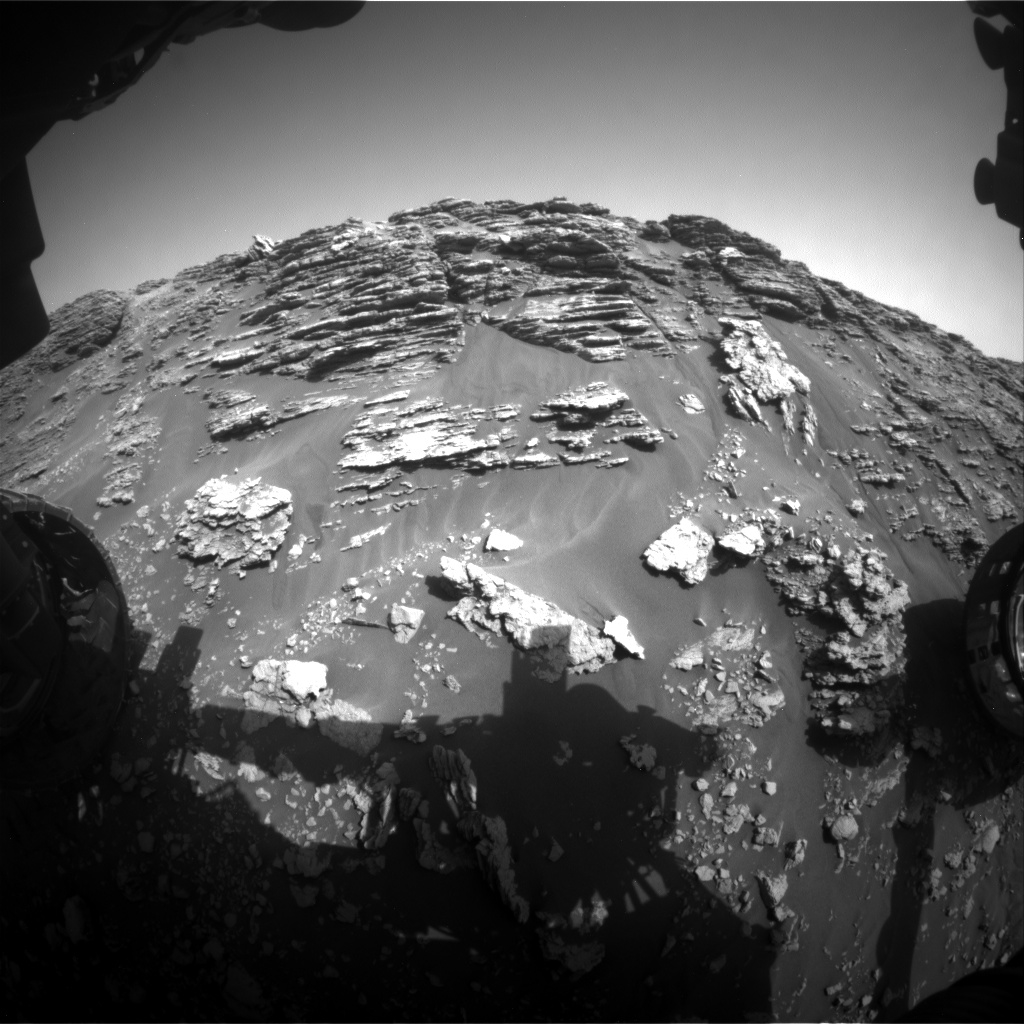
Curiosity Front Hazcam Left B image taken on Sol 2476, July 25, 2019.
Credit: NASA/JPL-Caltech
Details of layering
A recently drafted plan has Curiosity continuing to take high resolution images of the outcrop with Mastcam and its Chemistry and Camera (ChemCam) instrument; three specific areas are being targeted on the outcrop to see details of the various layering: “Antonine Wall,” “Tyrebagger Hill,” and “Seaton Cliffs.”
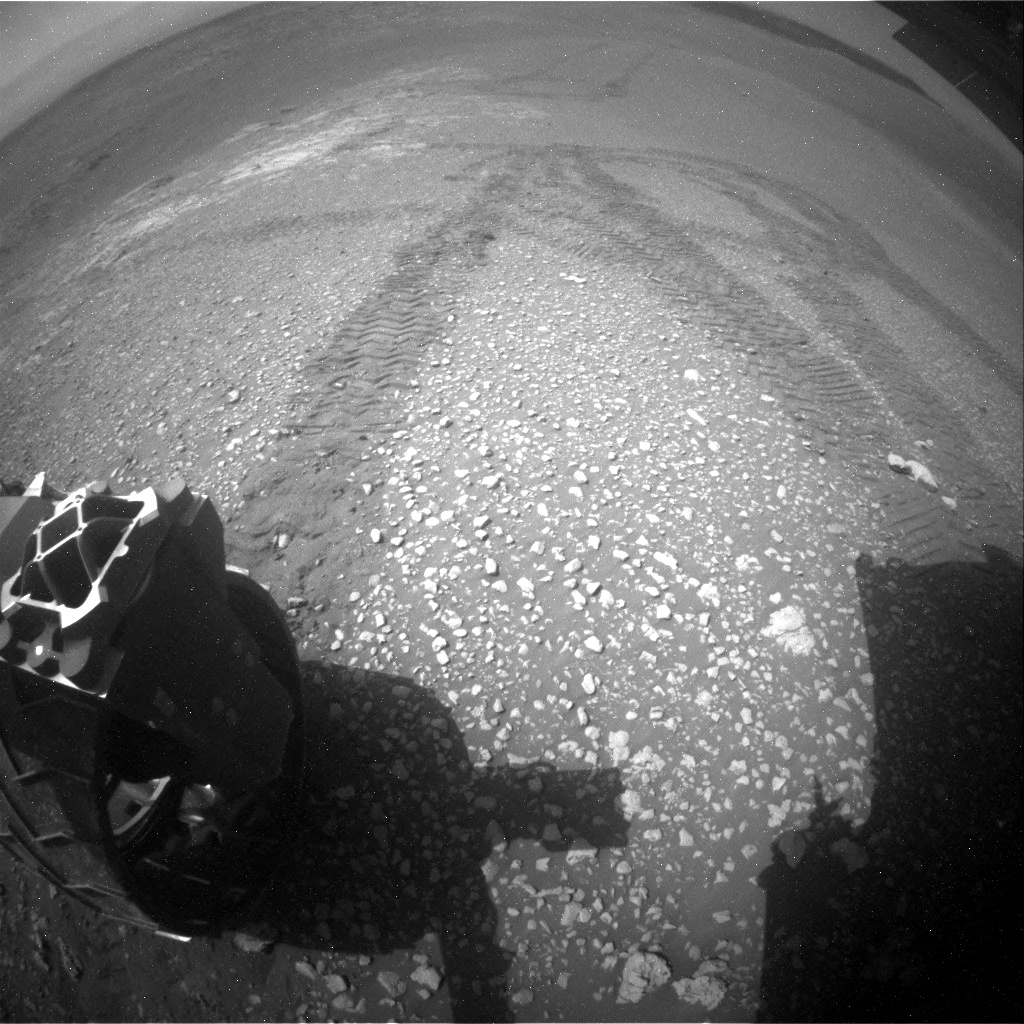
Curiosity Rear Hazcam Left B photo acquired on Sol 2476, July 25, 2019.
Credit: NASA/JPL-Caltech
“After completing the imaging, Curiosity will be driving just a little bit closer to try to put the layers near Tyrebagger Hill into the arm workspace,” Stroupe explains. “This requires backing up a short distance, turning slightly, and then re-approaching the ridge at a slightly different location, where we believe parking will be safe to unstow the arm for contact science,” including low-angle Mars Hand Lens Imager (MAHLI) photos of the layers.
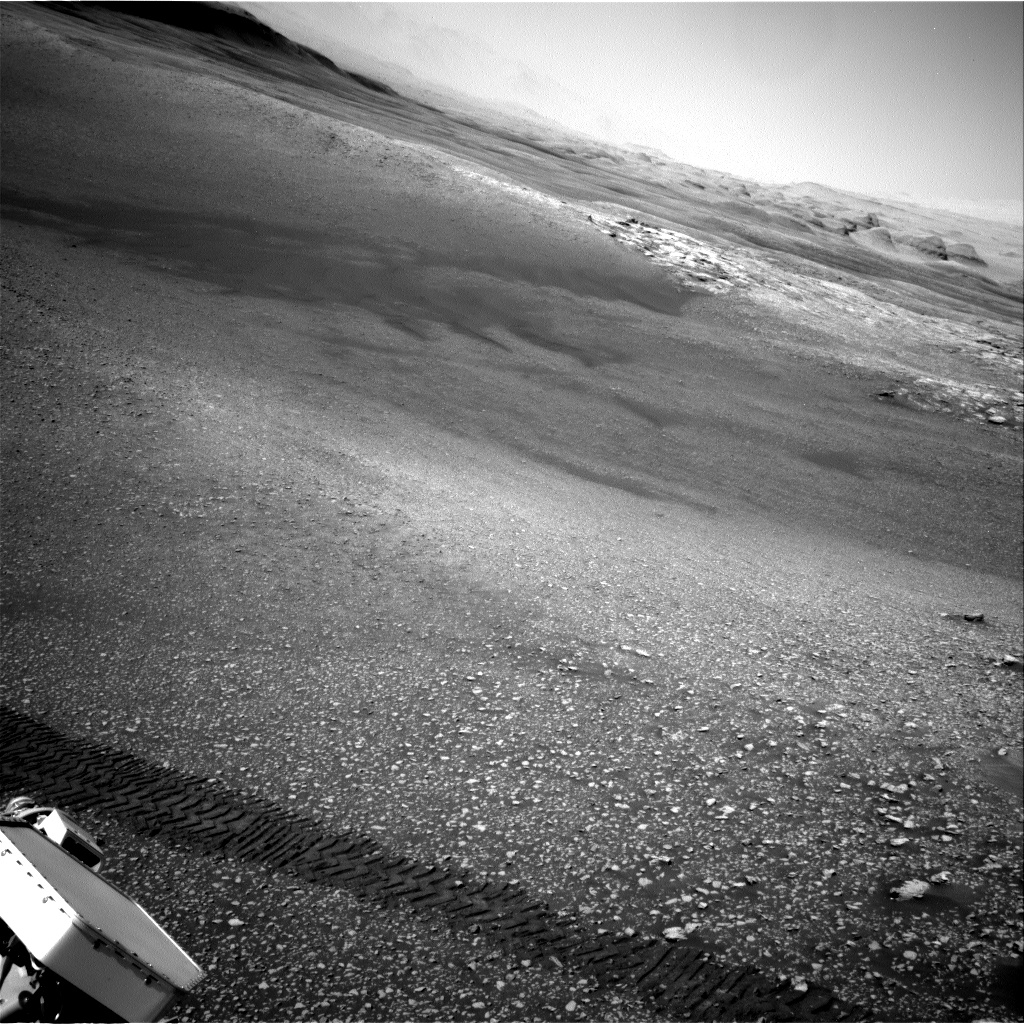
Curiosity Navcam Right B photo taken on Sol 2476, July 25, 2019.
Credit: NASA/JPL-Caltech
“We may get close to or even break Curiosity’s high tilt record on this drive!”
Winter for Curiosity
In an earlier report, Dawn Sumner, a planetary geologist at University of California Davis, notes that it is winter for Curiosity, and it’s cold.
“That means that we have to spend extra energy heating up the instruments and motors for our activities,” Sumner explains. “All of our energy comes from batteries, charged by the [radioisotope thermoelectric generator] RTG.
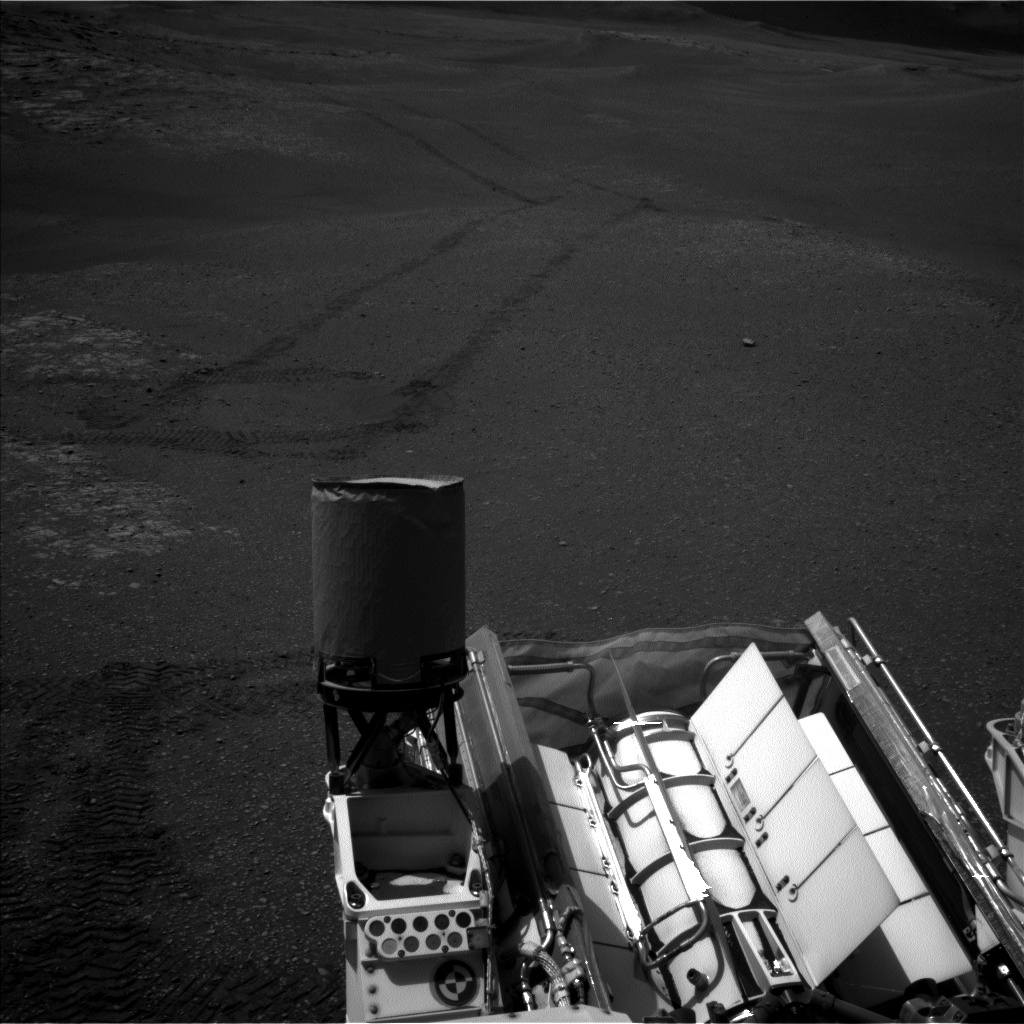
Curiosity Navcam Left B image of RTG unit, taken on Sol 2475, July 24, 2019.
Credit: NASA/JPL-Caltech
“The RTG gives us more power than solar panels would, but in the winter, we are still limited by the amount of power it can generate. That means we have to choose among various activities,” Sumner adds.
Document the topography
Team members selected the saving of a little extra power for a big science day coming up.
“Thus, we planned only one ChemCam analysis, which was on the target Monreith,’ accompanied by a Mastcam image to document the analysis. We also asked Curiosity to take a Mastcam mosaic looking west to document the topography.”
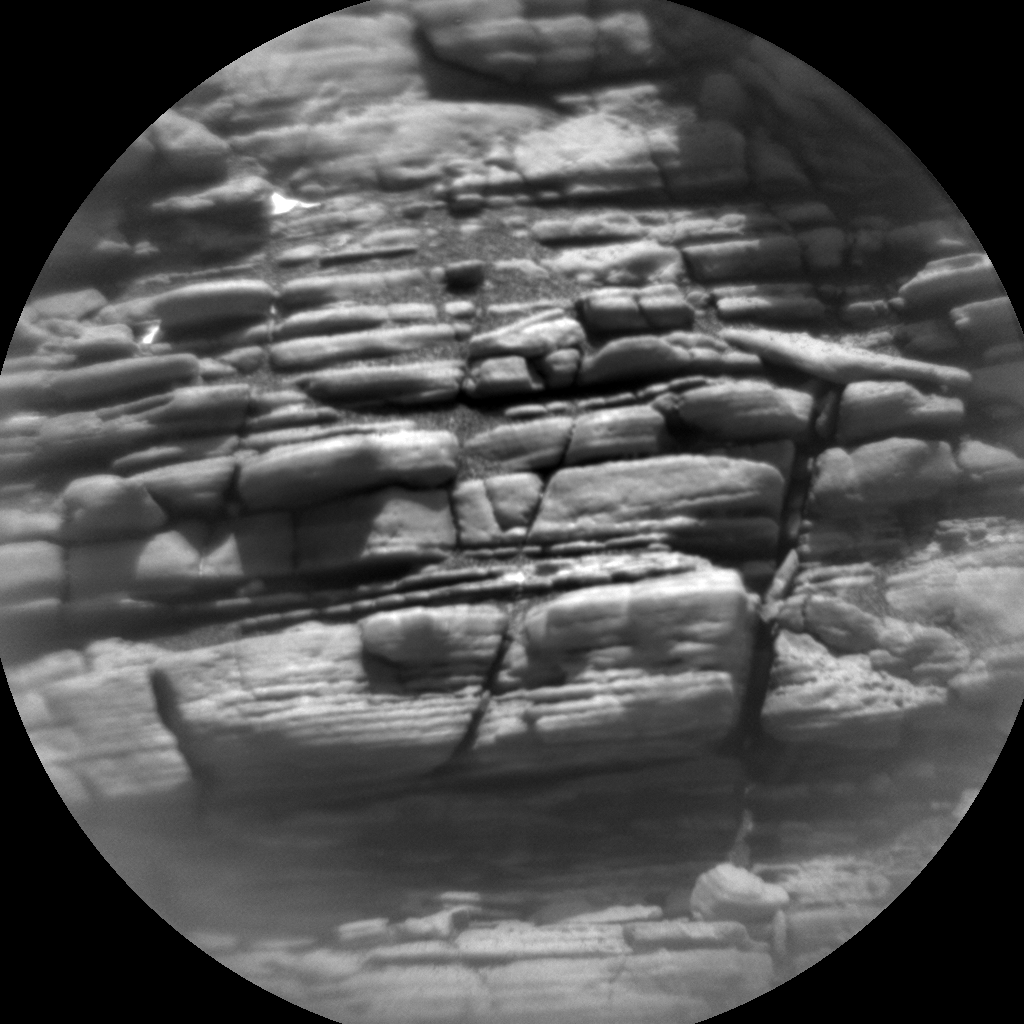
Curiosity ChemCam Remote Micro-Imager photo taken on Sol 2476, July 25, 2019.
Credit: NASA/JPL-Caltech/LANL
Seasonal changes
After playing photographer, Sumner points out, “Curiosity will drive up to the escarpment we’ve been imaging to the south. Once there, Curiosity will image its surroundings as well as look for clouds in the sky. Winter is the cloudy season at Gale Crater, so we are doing extra cloud imaging to better understand the atmosphere.”
Seasonal changes provide important insights into the climate of Mars, Sumner concludes. “Thus, winters are particularly interesting times for environmental observations even if the cold means that we can’t take as much data as we can in the warmer months.”
 Posted in Space News

