 By
By  March 6th, 2018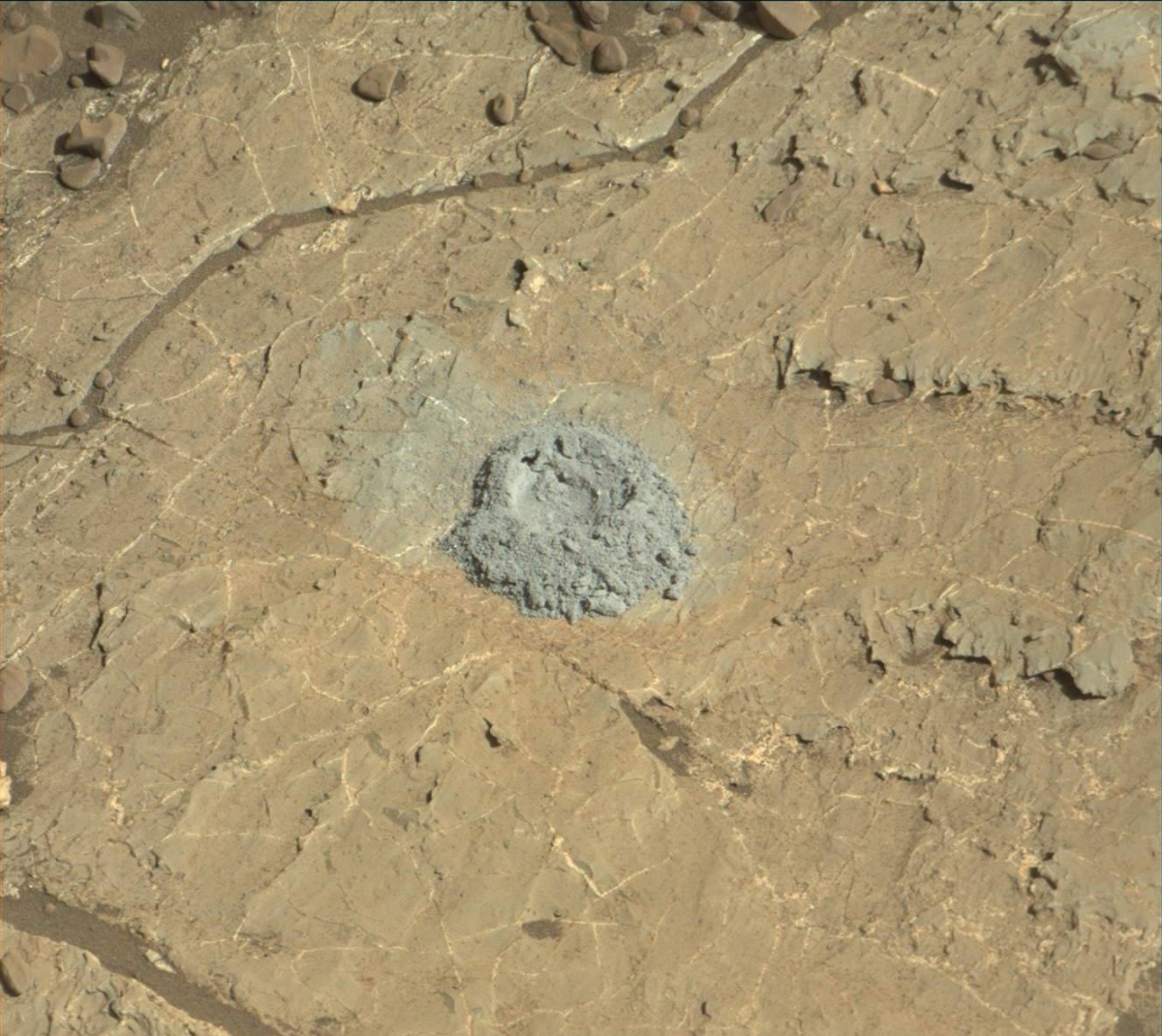
Curiosity Mastcam Right image taken on Sol 1979, March 1, 2018.
Credit: NASA/JPL-Caltech/MSSS
“Vera Rubin Ridge is as hard as a rock!”
That’s the call from Scott Guzewich, an atmospheric scientist at NASA’s Goddard Space Flight Center in Greenbelt, Maryland.
“After two drilling attempts, Curiosity’s drill was not able to dig into the bedrock sufficiently to collect a sample of rock at this location,” Guzewich reports.
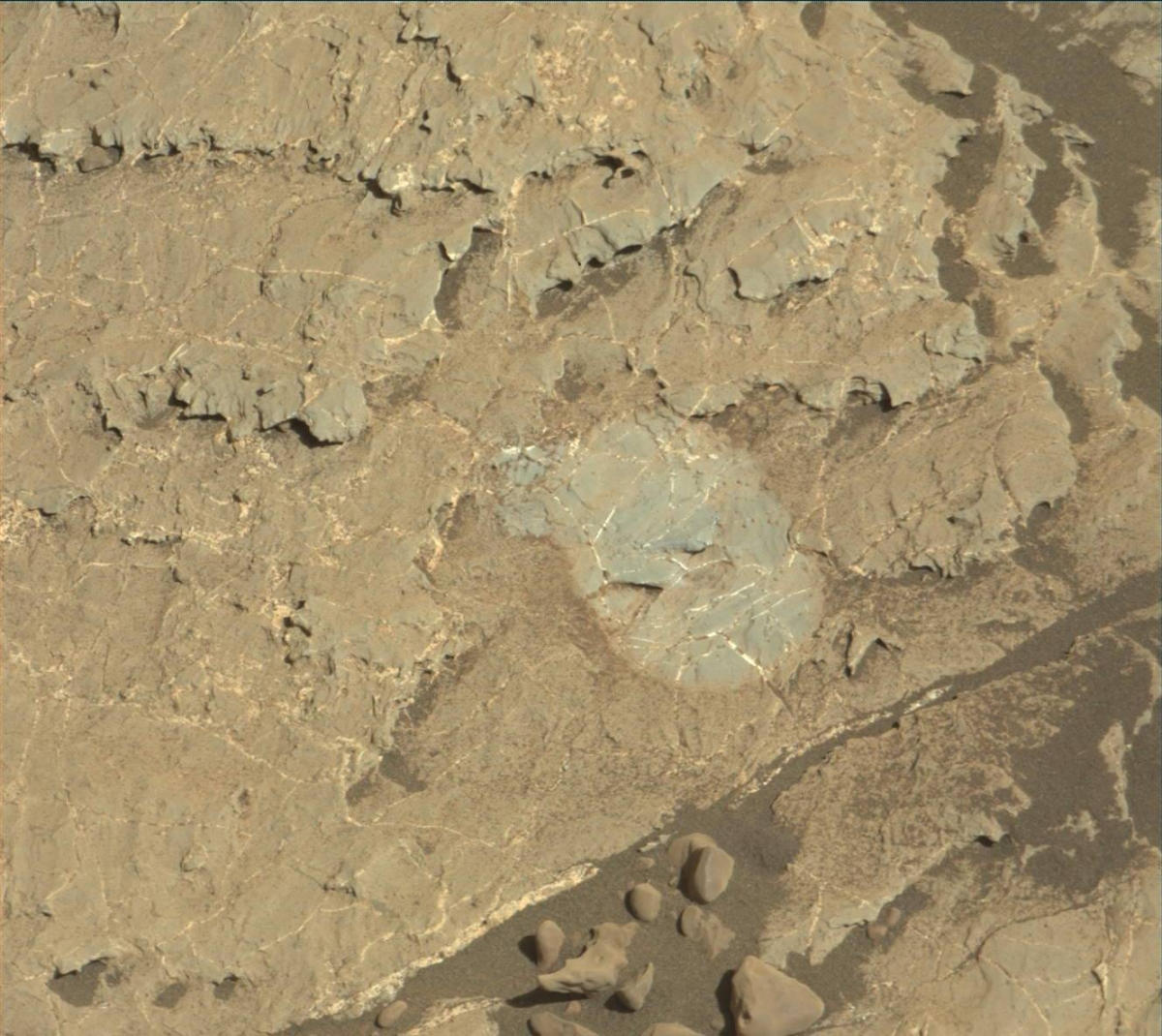
Curiosity Mastcam Right photo acquired on Sol 1980, March 3, 2018.
Credit: NASA/JPL-Caltech/MSSS
Engineers for the robot are continuing to refine the rover’s new drilling method. “In the future, this might include adding percussion, which could enable drilling into harder rock,” Guzewich adds.
Drill tailings
Curiosity is currently carrying out Sol 1984 science duties.
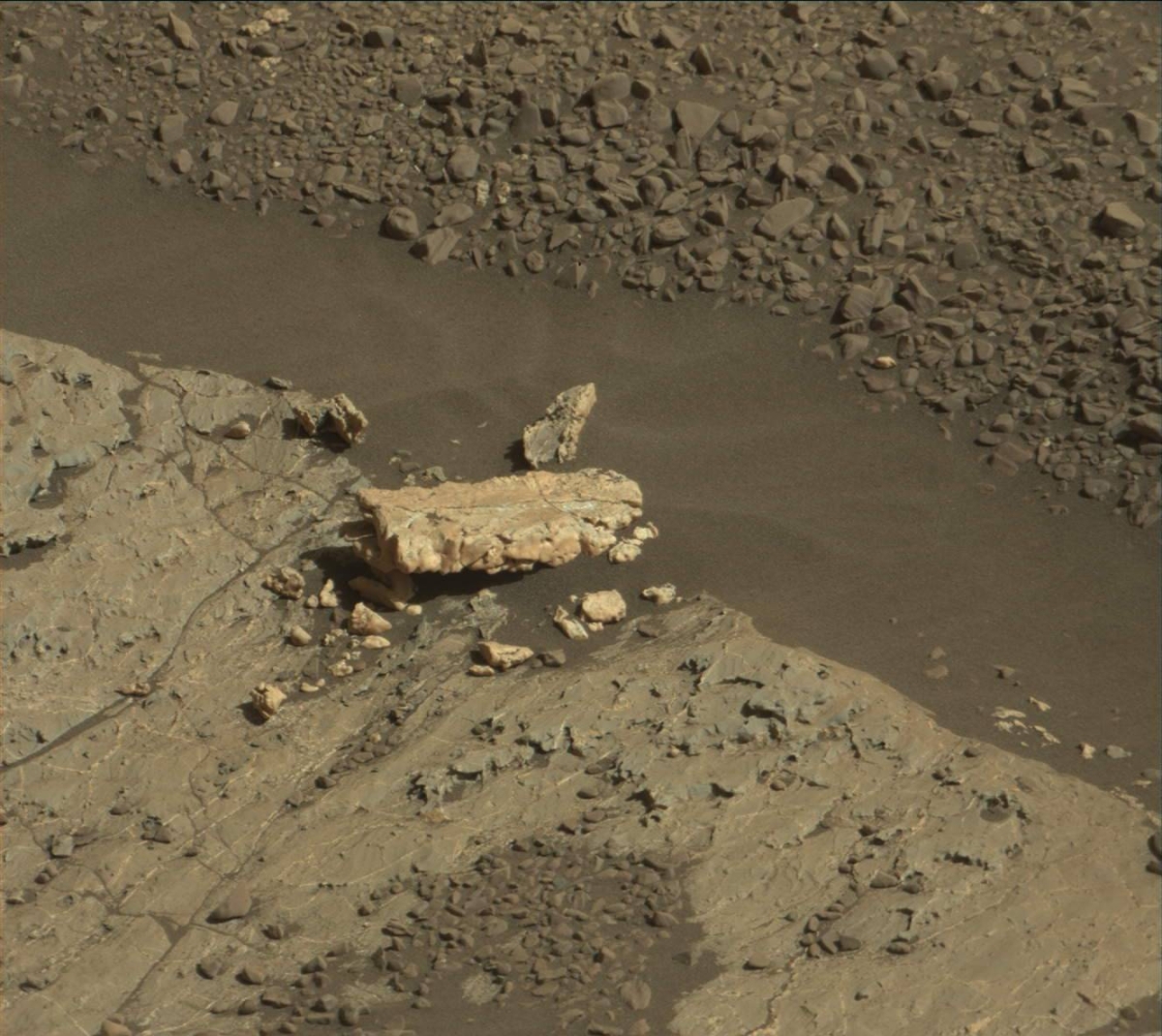
Curiosity Mastcam Right image taken on Sol 1981, March 3, 2018.
Credit: NASA/JPL-Caltech/MSSS
Meanwhile, the Curiosity science team scoped out a series of Mastcam and Chemistry and Camera (ChemCam) “passive” observations that included scans by the instrument’s laser-induced breakdown spectroscopy (LIBS) device of the attempted drill hole at “Lake Orcadie 2.”
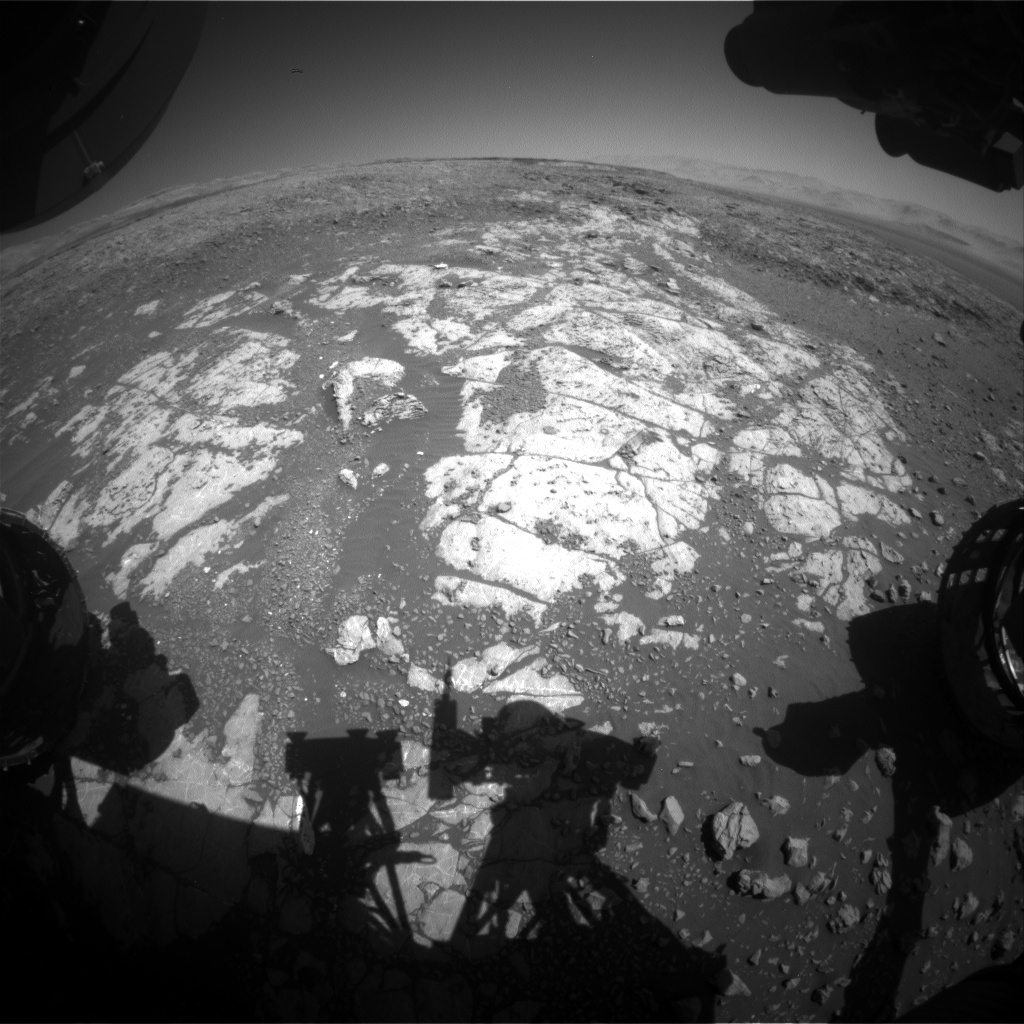
Curiosity Front Hazcam Right B image taken on Sol 1983, March 5, 2018.
Credit: NASA/JPL-Caltech
In addition, the plan called for contact science on the drill “tailings” (the powdered bits of rock ground up by the drill) with the rover’s Mars Hand Lens Imager (MAHLI) and Alpha Particle X-Ray Spectrometer (APXS).
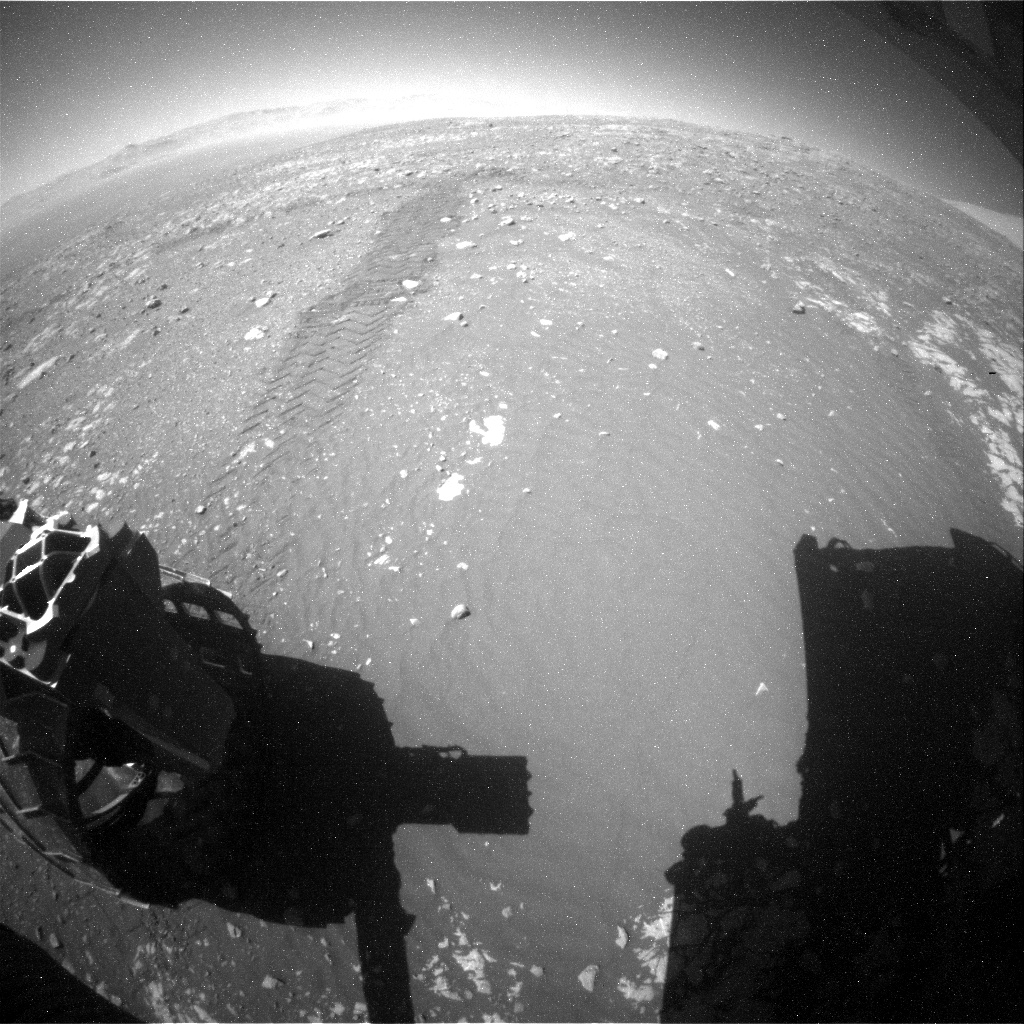
Curiosity Rear Hazcam Right B photo acquired on Sol 1983, March 5, 2018.
Credit: NASA/JPL-Caltech
“A ChemCam passive observation uses the instrument’s ability to detect different wavelengths of light to get a sense of a rock’s composition without using the laser to vaporize tiny bits of the rock surface,” Guzewich points out.
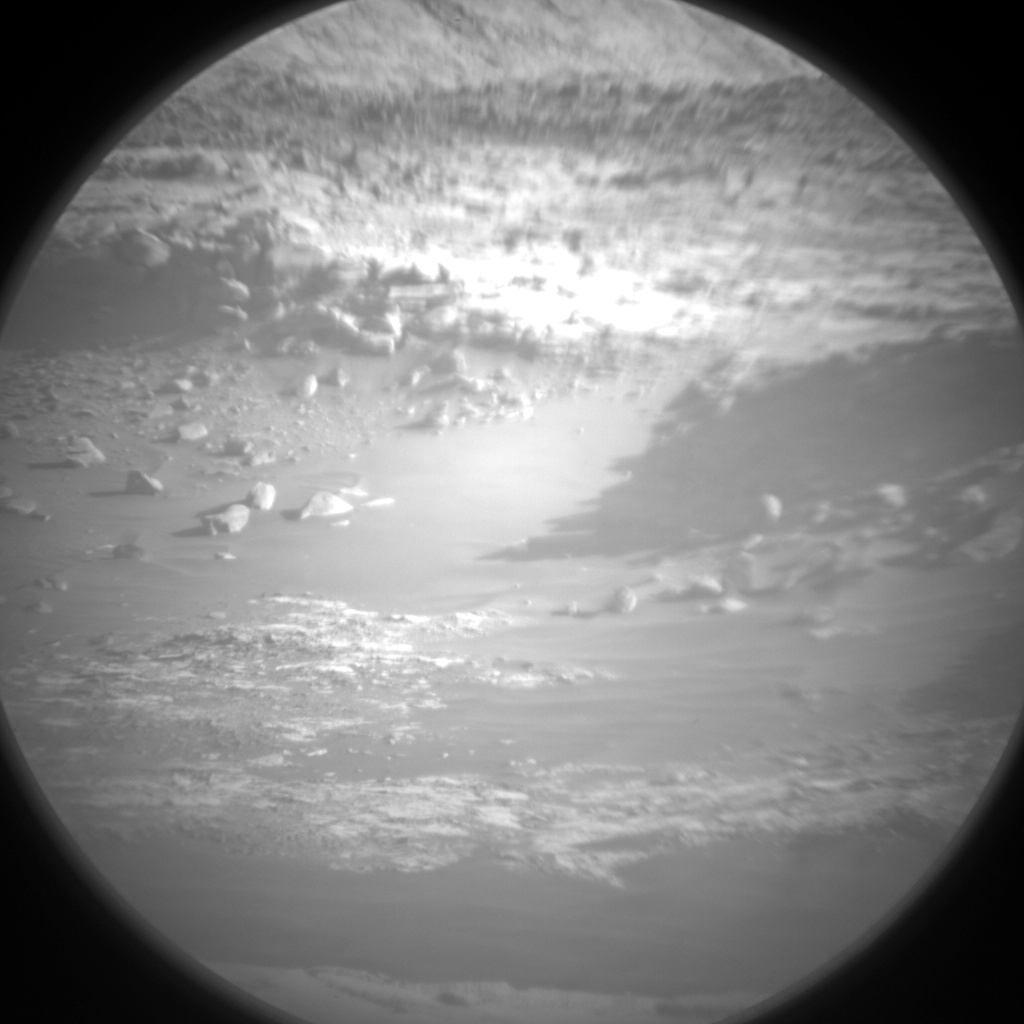
Curiosity ChemCam Remote Micro-Imager photo acquired on Sol 1981, March 3, 2018.
Credit: NASA/JPL-Caltech/LANL
The team also planned another trick with ChemCam, Guzewich concludes: taking long-distance image sequences of Peace Vallis on the far side of Gale Crater and a portion of the clay unit that represents part of Curiosity’s future agenda.
 Posted in Space News

