 By
By  October 7th, 2020
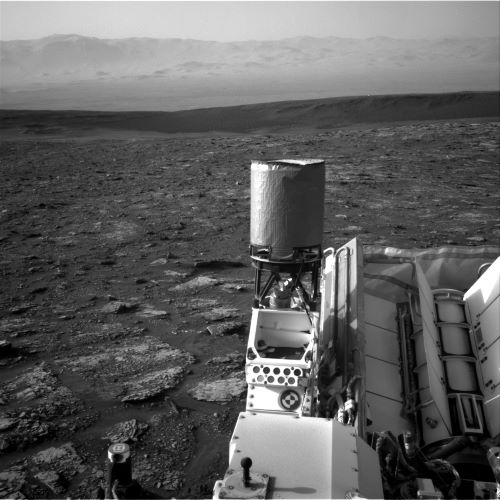
Curiosity Right B Navigation Camera photo taken on Sol 2904, October 7, 2020.
Credit: NASA/JPL-Caltech
NASA’s Curiosity Mars rover is now carrying out Sol 2905 tasks.
Over last weekend, the rover successfully performed arm diagnostic duties, reports Michelle Minitti, a planetary geologist at Framework in Silver Spring, Maryland.
“This news gave Curiosity the green light to move – ever so slightly forward – from her double drill workspace at “Mary Anning” toward our next drill site near the ‘Ayton’ target, Minitti adds.
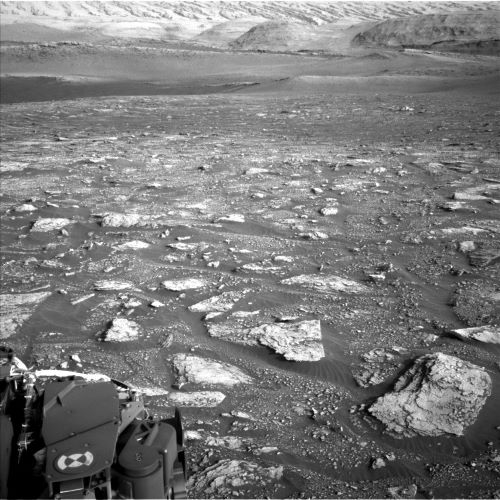
Curiosity Left B Navigation Camera image acquired on Sol 2904, October 7, 2020.
Credit: NASA/JPL-Caltech
Short drive
Ayton itself and the immediate area around it have been the subject of many analyses, from the Mars Hand Lens Imager (MAHLI) to the Alpha Particle X-Ray Spectrometer (APXS), Chemistry & Camera (ChemCam) to Mastcam since the robot arrived at the Mary Anning drill site.
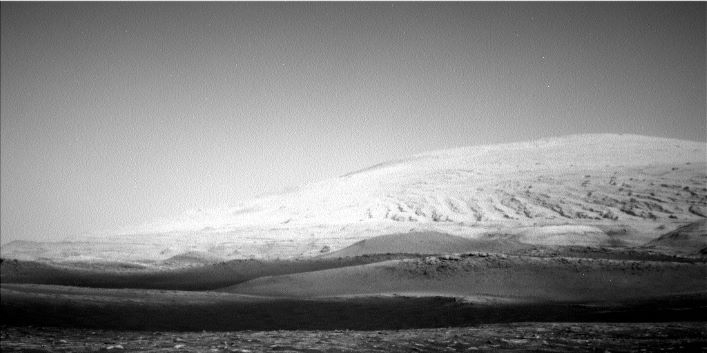
Curiosity Left B Navigation Camera image acquired on Sol 2904, October 7, 2020.
Credit: NASA/JPL-Caltech
“The team thought the prominent dark gray nodular features in this area warranted a more detailed look with a drill sample,” Minitti notes. “Bumping toward Ayton was the main focus of the plan, but Curiosity will keep busy both before and after the short drive.”
Diagnostic data
A recently scripted plan has the rover gathering more diagnostic data from the arm by testing out a few more systems on the turret and arm. After stowing the arm, Mastcam will acquire a couple of mosaics that have otherwise been occluded by the position of the arm during the diagnostic activities of the last several sols.
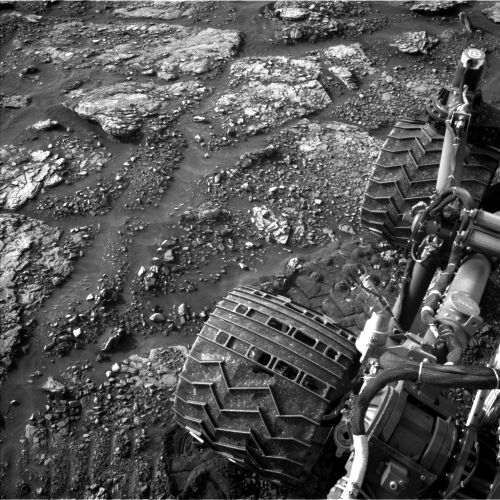
Curiosity Left B Navigation Camera image acquired on Sol 2904, October 7, 2020.
Credit: NASA/JPL-Caltech
Mastcam is set to image “Skelmorlie” in stereo.
“This sand target has been imaged several times to track the wind-induced changes,” Minitti points out, so the plan calls for a last time look to document those changes before Curiosity’s position changes.
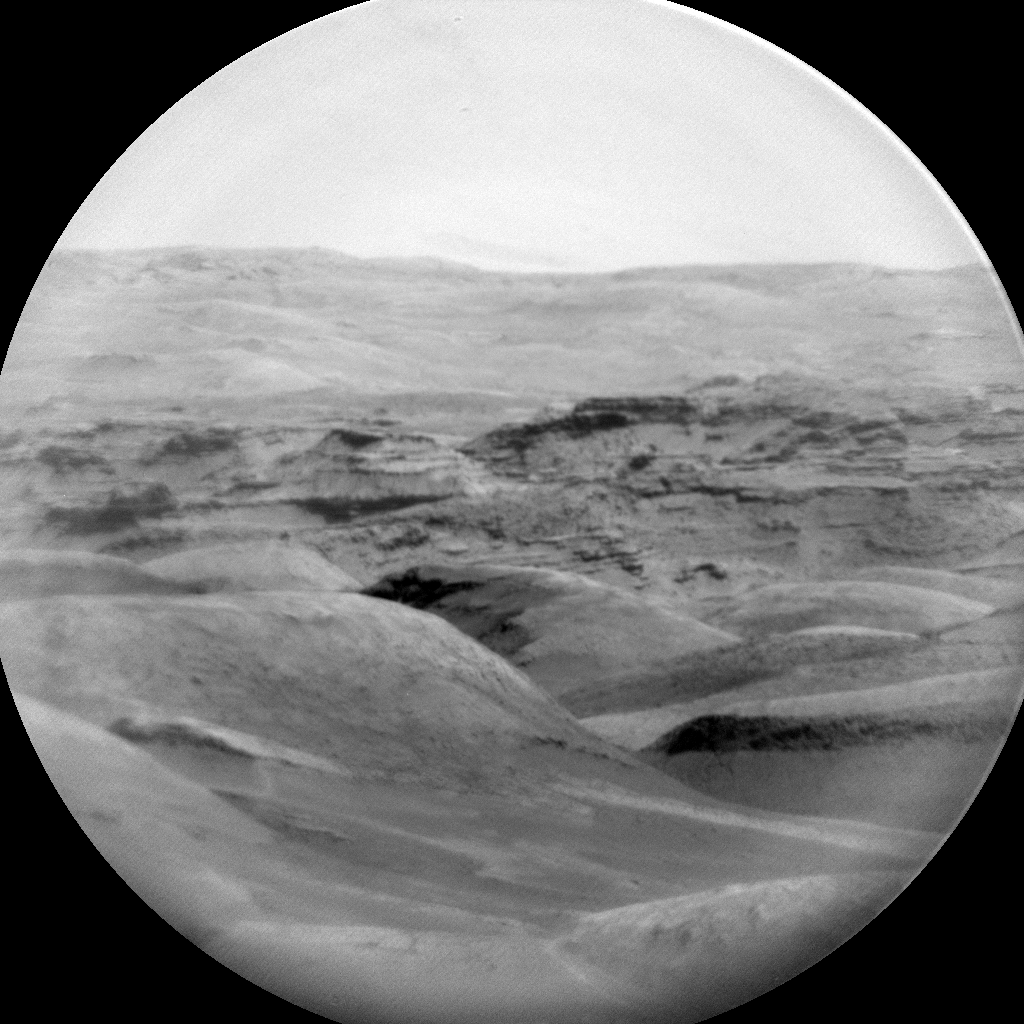
A slice of the “Housedon Hill” area east of the rover taken by Curiosity’s Chemistry & Camera Remote Micro-Imager (RMI) telescope on Sol 2900, October 2, 2020.
Credit: NASA/JPL-Caltech/LANL
Wind action
“Another change detection observation will be acquired at “Upper Ollach,” a trough in the sand just off the left of the Mary Anning slab. The trough has changed dynamically under the competing forces of our drilling at Mary Anning and the slow, relentless action of the wind,” Minitti says.
Mastcam will also acquire four stereo images from the left side of the workspace, the last part of the Mary Anning site that has been hidden by the arm.
The robot’s ChemCam gets in on the imaging action by adding to the mosaic of images from the “Housedon Hill” area east of the rover.
“With the arm free to move, MAHLI will take care of a couple of systematic check outs of the instrument. The first check out is courtesy of Mastcam, with three Mastcam images aimed at the MAHLI cover. The second check out is done by MAHLI herself in a series of images of the sky, some with the cover closed and some with the cover open. These are called sky flat images, which image a bland portion of the sky to track the amount of dust on the MAHLI cover and the MAHLI front lens,” Minitti reports.
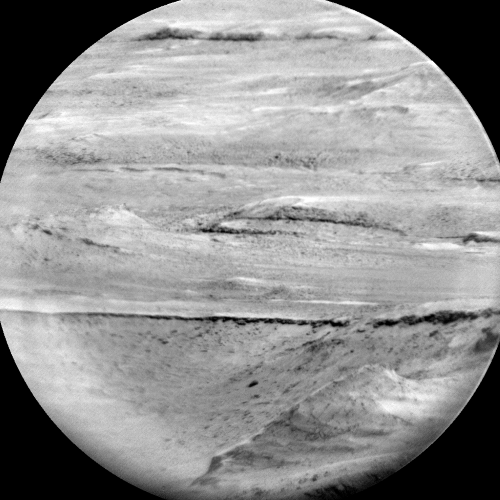
Curiosity Chemistry & Camera Remote Micro-Imager (RMI) telescope photo acquired on Sol 2904, October 6, 2020.
Credit: NASA/JPL-Caltech/LANL
Dust devils
After Curiosity bumps forward toward Ayton, the robot will turn its attention to the sky again the next sol, Minitti says.
“Navcam and Mastcam will measure the amount of dust in the atmosphere, Navcam will shoot a movie looking for dust devils spinning across Gale crater, and ChemCam will acquire passive spectra of the atmosphere. ChemCam will also pick up a systematic measurement of their titanium calibration target,” Minitti concludes. “Here’s to a (slightly) new world!”
 Posted in Space News

