 By
By  December 2nd, 2021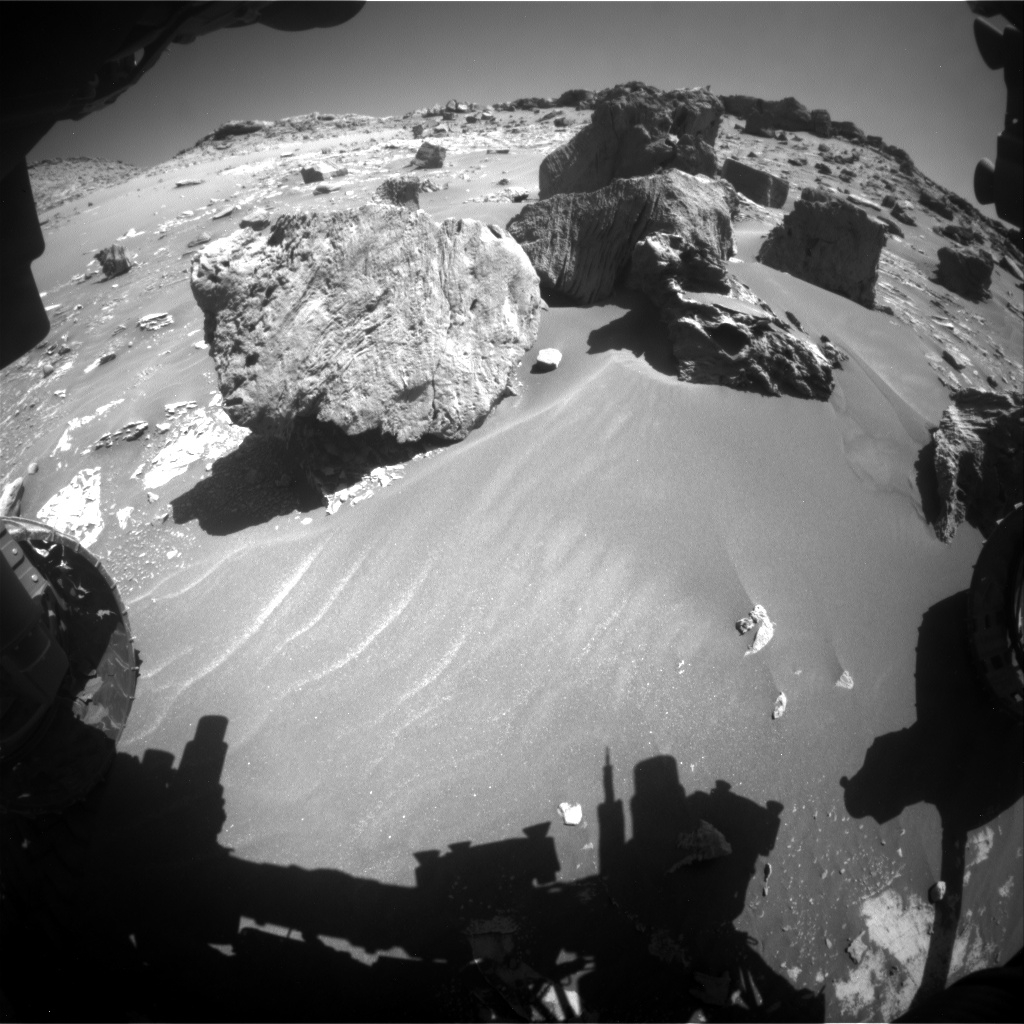
Curiosity Front Hazard Avoidance Camera Left B photo taken on Sol 3314, December 2, 2021.
Credit: NASA/JPL-Caltech
NASA’s Curiosity Mars rover at Gale Crater is now performing Sol 3315 tasks.
Curiosity scored a perfect drive to some boulders that the science team have been interested in investigating, reports Lucy Thompson, a planetary geologist at University of New Brunswick; Fredericton, New Brunswick, Canada
“The large boulders are thought to represent the darker, resistant rocks exposed just above us that cap the underlying less resistant, lighter colored rocks we have been driving over,” Thompson adds.

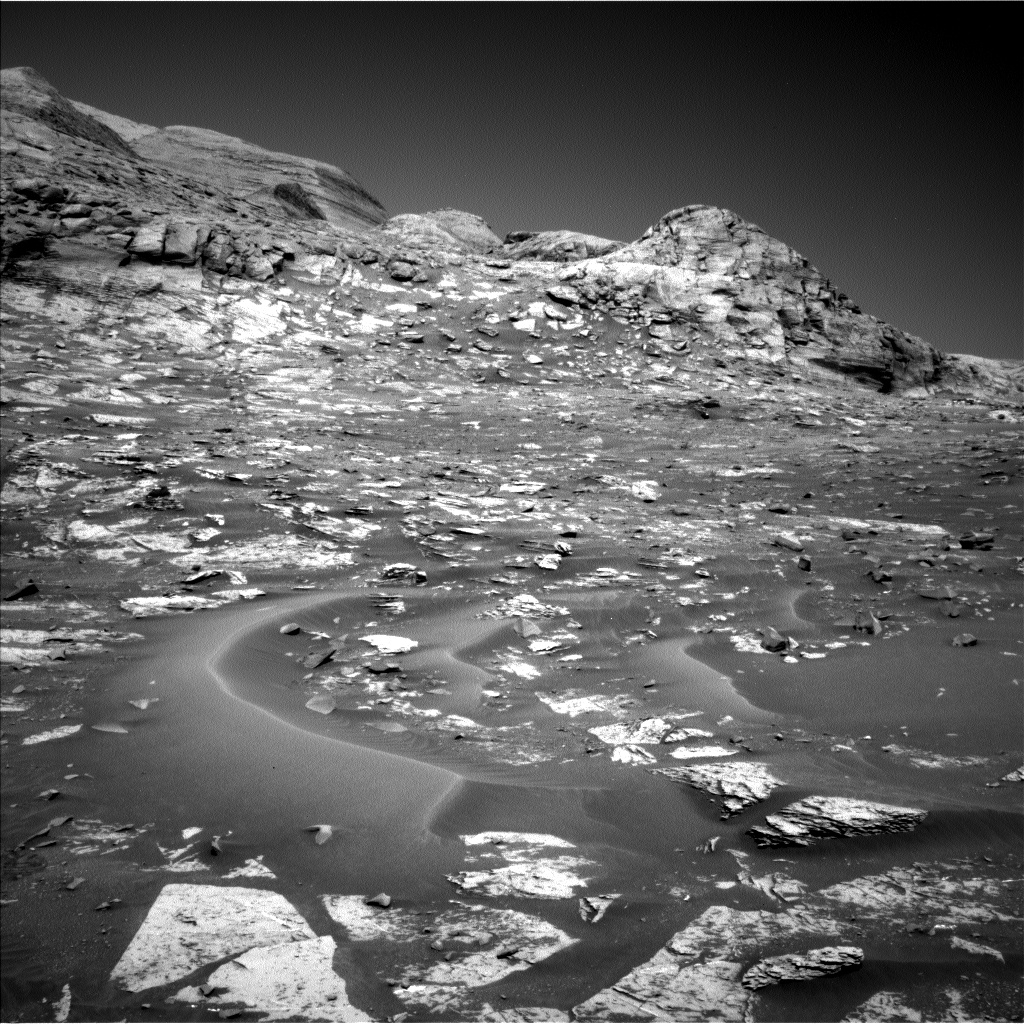
Curiosity Left B Navigation Camera image acquired on Sol 3314, December 2, 2021.
Credit: NASA/JPL-Caltech
Different textures
The caprocks and boulders both show two different textures; 1) layered and 2) more massive and irregular with cavities.
The team wants to examine these different textures in more detail and determine whether there are differences in composition between the two.
Curiosity Left B Navigation Camera image acquired on Sol 3314, December 2, 2021.
Credit: NASA/JPL-Caltech
“We will also be able to compare the chemistry of these boulders with the pediment capping sandstones we analyzed when we first ascended the pediment. Does the more massive texture represent alteration of the layered caprock? This contact is an important one within Gale crater and represents an unconformity (a gap in time) between the underlying Mount Sharp group (laid down in lakes and rivers) and the overlying Siccar Point group (primarily wind-blown sedimentary rocks),” Thompson points out.
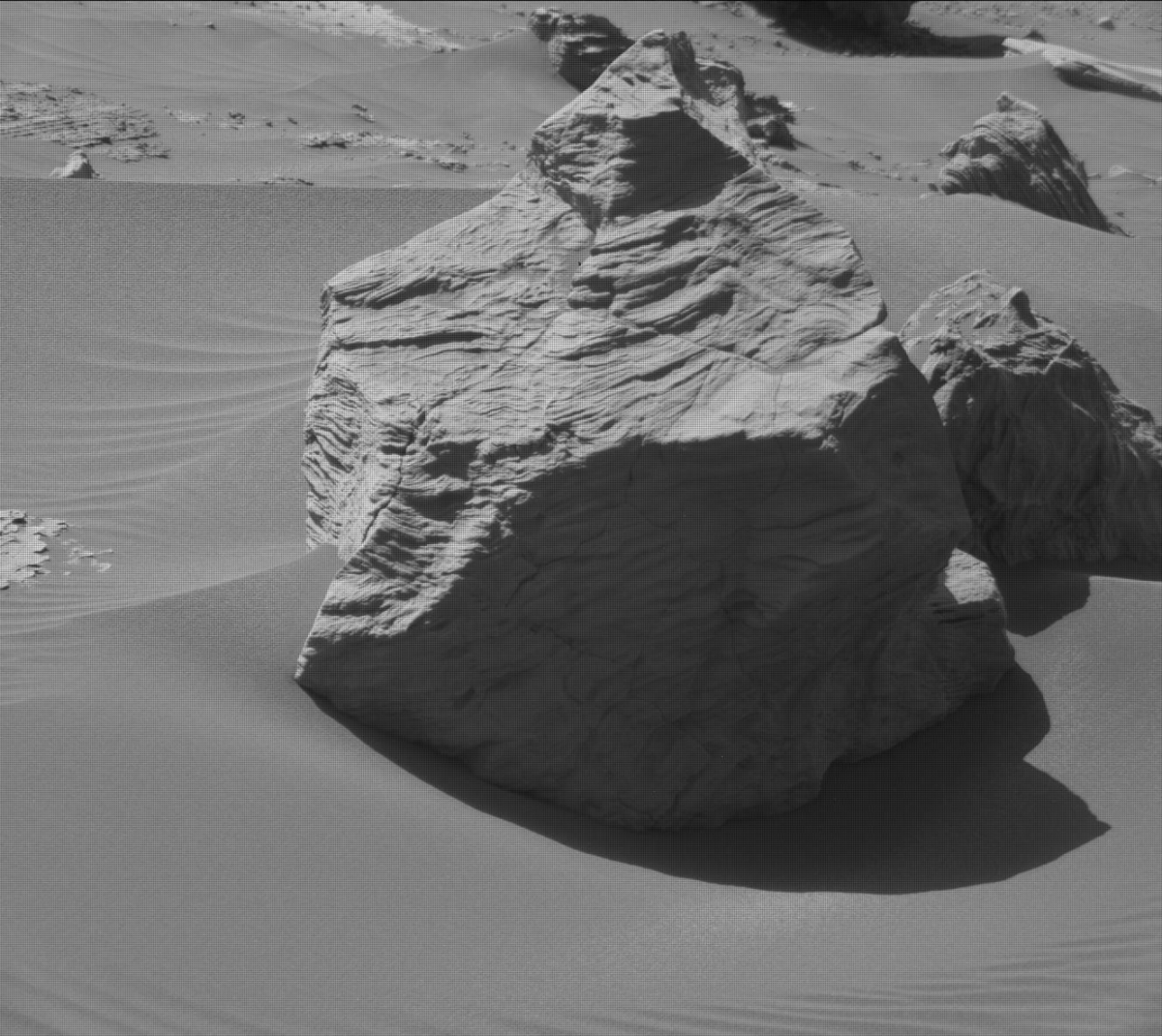
Curiosity Mast Camera Right photo taken on Sol 3313, December 1, 2021.
Credit: NASA/JPL-Caltech/MSSS
More massive rock
Recently, the robot placed the Alpha Particle X-Ray Spectrometer (APXS) and Mars Hand Lens Imager (MAHLI) instruments in contact with the “Yarrow Stone” target, which will allow Mars researchers to examine the chemistry and close-up texture of the more massive rock.
“We can compare the composition with the small, layered float, APXS target, ‘Camusnagaul,’” acquired in a recent plan, Thompson notes.
Curiosity’s Chemistry and Camera (ChemCam) will use passive spectroscopy to examine the same “Yarrow Stone” target, and the Laser Induced Breakdown Spectroscopy (LIBS) is slated to look at another spot on the same boulder (“Avochie”), also with the massive texture.

Curiosity Right B Navigation Camera image taken on Sol 3314, December 2, 2021.
Credit: NASA/JPL-Caltech
Source of boulders
Scientists want to examine the layered, “Borve” target on the same block with ChemCam LIBS. Mastcam will acquire complementary imaging of these targets and the surrounding area. MAHLI will also image two of the layered targets (“Whaligoe Steps” and “Arainn”), which we may try to place APXS on over the weekend. To investigate the probable source area for these boulders, we plan to take Mastcam and ChemCam [Remote Micro-Imager](RMI) imaging of the pediment.
Environmental monitoring activities will include a Navcam dust devil movie and line of site observation, a Mastcam tau.Standard Dynamic Albedo of Neutrons (DAN), Radiation Assessment Detector (RAD) and Rover Environmental Monitoring Station (REMS) activities round out the plan, Thompson concludes.
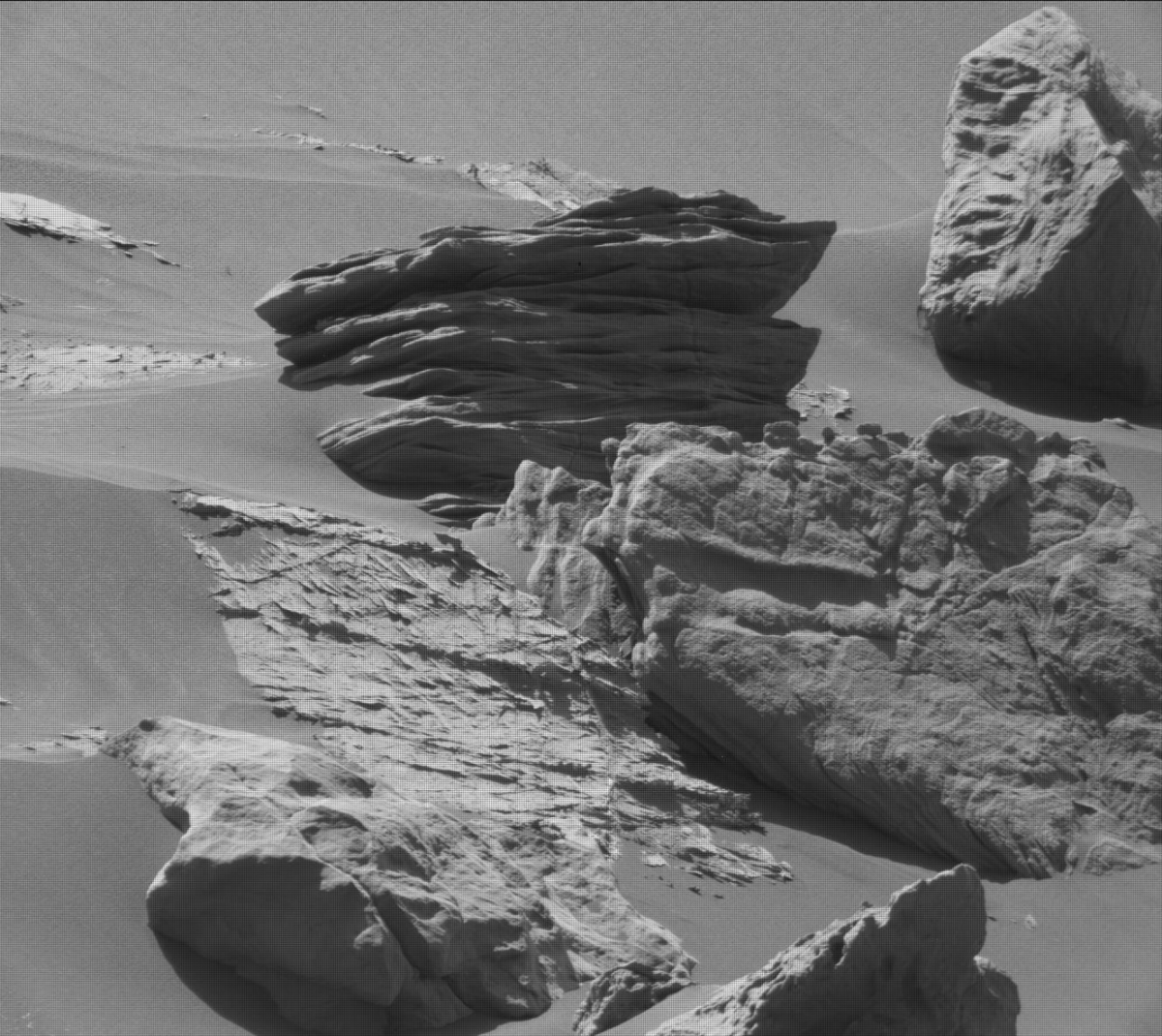
Curiosity Mast Camera Right photo taken on Sol 3313, December 1, 2021.
Credit: NASA/JPL-Caltech/MSSS
Road less traveled
Fred Calef, a planetary geologist at NASA’s Jet Propulsion Laboratory, also reports, the rover’s recent drive took the “road less traveled” to investigate a bunch of boulders shed down from a cliff face off to the side of our expected traverse to the south.
“Why? Beneath the Greenheugh Pediment, the flat-lying, high-standing escarpment to the west, the scientists could see a unique layer with a convoluted texture,” Calef says. The robot’s drive means the Mars machinery is headed to blocks from this layer that have rolled down close to the cliff base.
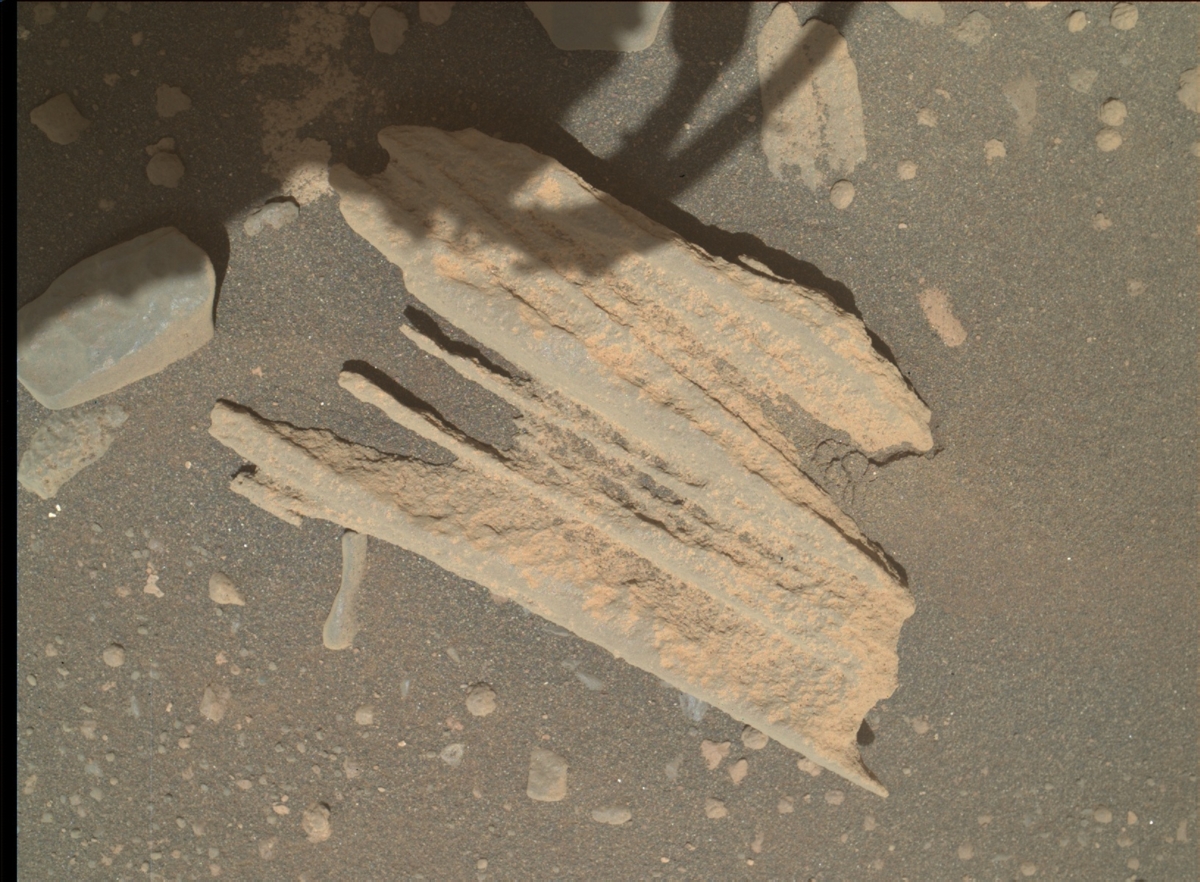
Curiosity Mars Hand Lens Imager photo produced on Sol 3313, December 1, 2021.
Credit: NASA/JPL-Caltech/MSSS
First, the rover will do some contact science with MAHLI on target “Camusnagaul,” which is likely a fragment from the top of the pediment.
Calef explains that ChemCam and Mastcam observations will be targeted on “Dutch Village” to create a higher resolution mosaic of the pediment.
Another Mastcam mosaic will be created on “Old Scatness” to document some partially exposed bedrock near the rover as well as one on the nearby boulder field, Calef concludes.
 Posted in Space News

