 By
By  August 18th, 2020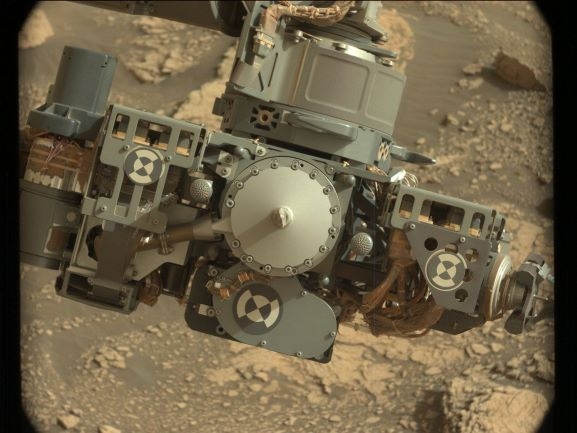
Curiosity Mast Camera Left image taken on Sol 2853, August 15, 2020.
Credit: NASA/JPL-Caltech/MSSS
NASA’s Curiosity Mars rover is now carrying out Sol 2856 duties and in between drill holes.
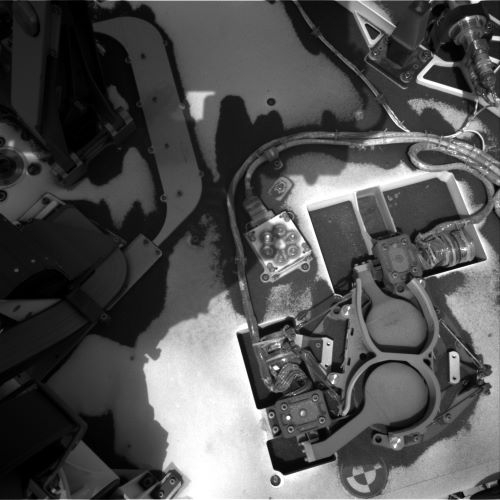
Curiosity Right B Navigation Camera photo taken on Sol 2856, August 18, 2020.
Credit: NASA/JPL-Caltech
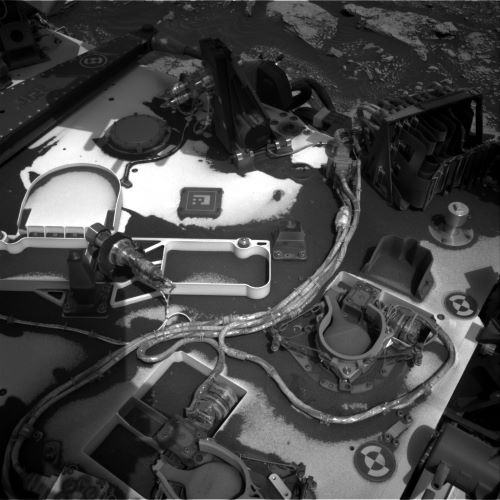
Curiosity Right B Navigation Camera photo acquired on Sol 2856, August 18, 2020.
Credit: NASA/JPL-Caltech
Roger Wiens, a geochemist at Los Alamos National Laboratory in New Mexico, explains that on this Earth day in Mars exploration history 15 years ago, Spirit was approaching the summit of a roughly 328 feet (100-meter) tall “Husband Hill” in “Gusev Crater,” which it conquered by the end of that month.
Meanwhile, Opportunity was analyzing targets named after various berries and fruits on its way to “Erebus” crater in Meridiani Planum, Wiens says.
“At that point in time, Curiosity was little more than a gleam in a lot of engineers’ eyes and a pile of engineering drawings, Wiens adds. “You’ve come a long way, baby!”
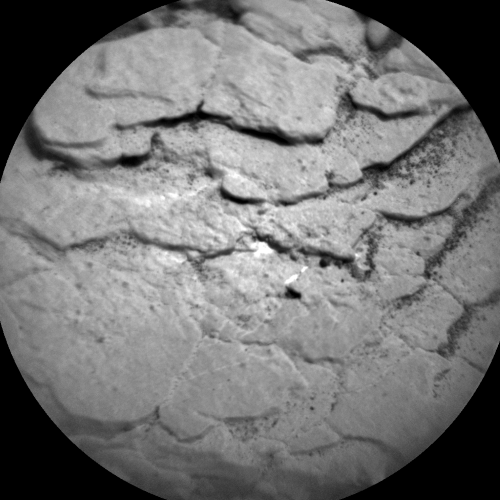
Curiosity Chemistry & Camera Remote Micro Imager (RMI) photo taken on Sol 2856, August 18, 2020.
Credit: NASA/JPL-Caltech/LANL
Second drill hole
A new plan directs the rover’s arm to investigate a target off to the side of the first drill hole and prepare for eventual analysis of a second drill hole.
The robot’s Sample Analysis at Mars (SAM) Instrument Suite is slated to do a cleaning of gas chromatograph #4 along with collecting diagnostic information.
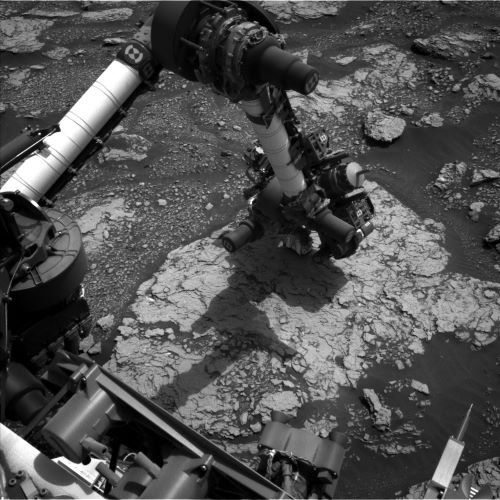
Curiosity Left B Navigation Camera photo taken on Sol 2854, August 16, 2020.
Credit: NASA/JPL-Caltech
The rover’s Chemistry and Camera (ChemCam) will do a 10-point laser raster on “Tom Molach,” and Mastcam will image this target.
Curiosity’s Alpha Particle X-Ray Spectrometer (APXS) is also set to do an overnight integration on “Ayton,” and the Mars Hand Lens Imager (MAHLI) is scheduled to image the target.
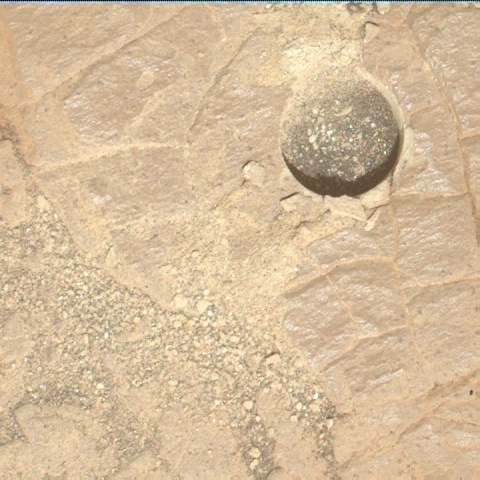
Curiosity Mars Hand Lens Imager photo produced on Sol 2854, August 15, 2020.
Credit: NASA/JPL-Caltech/MSSS
Dark nodules
“It is on the same block as the drill hole and is characterized by some dark nodules that were observed several times with ChemCam. The Hazcams will take several images, Mastcam will take a sun tau image and a crater rim extinction image, and Navcam will take a movie looking for dust devils,” Wiens notes.
Lastly, the Rover Environmental Monitoring Station (REMS) and the Radiation Assessment Detector (RAD) are on tap to also take data.
Dates of planned rover activities are subject to change due to a variety of factors related to the Martian environment, communication relays and rover status.
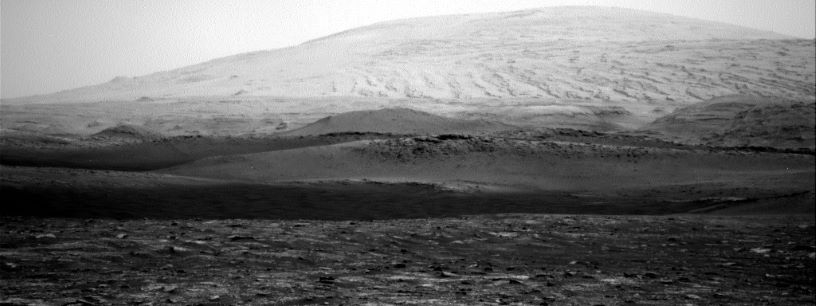
Curiosity Right B Navigation Camera photo taken on Sol 2856, August 18, 2020.
Credit: NASA/JPL-Caltech
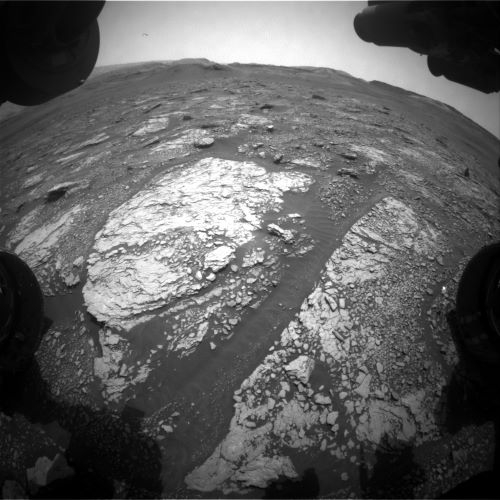
Curiosity Front Hazard Avoidance Camera Right B photo acquired on Sol 2856, August 18, 2020.
Credit: NASA/JPL-Caltech
 Posted in Space News

