 By
By  October 5th, 2022
New image shows 36th drill spot. Curiosity Front Hazard Avoidance Camera Right B photo taken on Sol 3612, October 4, 2022.
Credit: NASA/JPL-Caltech
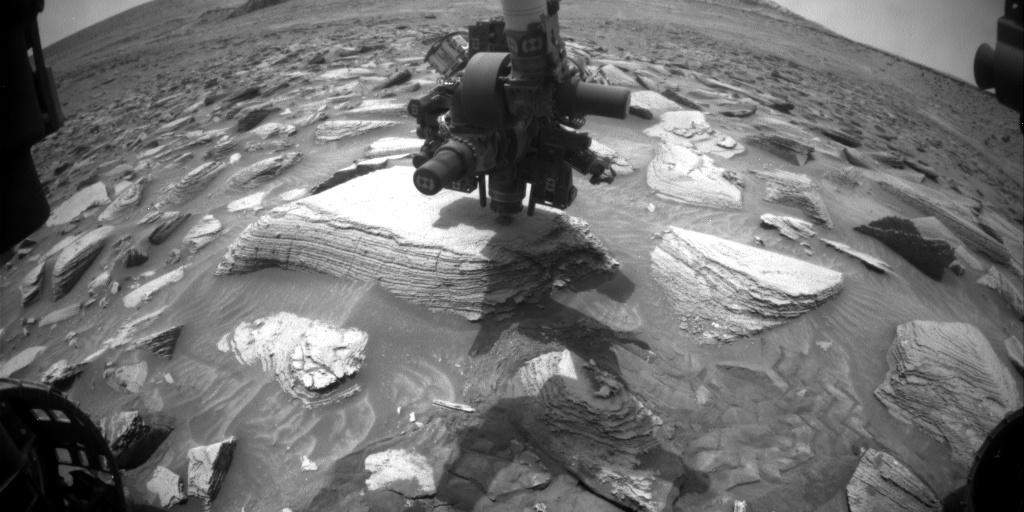
Curiosity Front Hazard Avoidance Camera Right B photo taken on Sol 3612, October 4, 2022.
Credit: NASA/JPL-Caltech
NASA’s Curiosity Mars rover at Gale Crater is now performing Sol 3613 duties.
Over last weekend, Curiosity took compositional measurements of the “Canaima” bedrock target in order to determine if the target merits collecting drilled sample, reports Elena Amador-French, a science operations coordinator at NASA’s Jet Propulsion Laboratory.
Stability of the rock
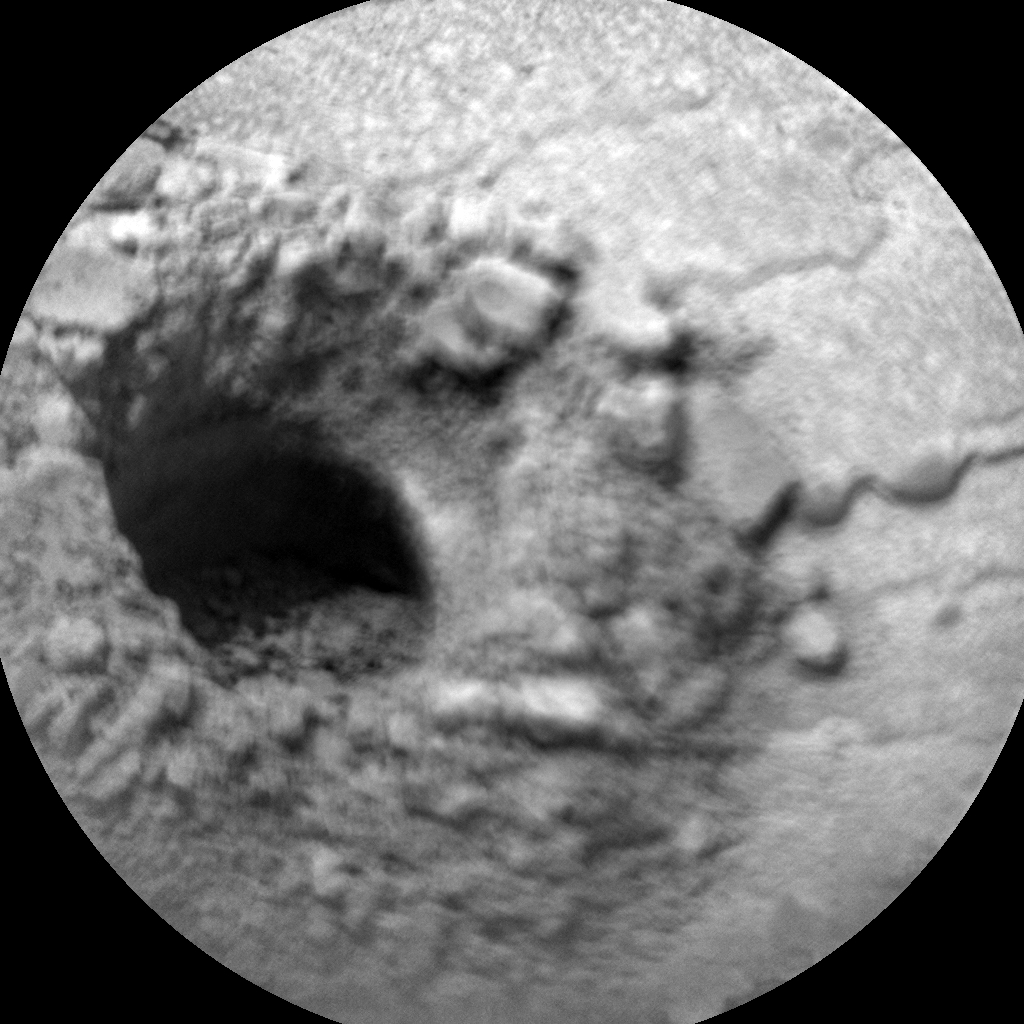
Curiosity Chemistry & Camera (ChemCam) Remote Micro-Imager (RMI) photo acquired on Sol 3613, October 5, 2022.
Credit: NASA/JPL-Caltech/LANL
Concurrently, the engineering team took preload measurements to determine the stability of the rock for drilling, with science and engineering teams later reviewing the information downlinked.

Curiosity Left B Navigation Camera image taken on Sol 3612, October 4, 2022.
Credit: NASA/JPL-Caltech
“We’re excited to approve moving forward with drilling Canaima,” Amador-French adds.
In a new plan, rover planners carefully sequenced the motions the rover’s arm and turret will make to drill to approximately 35 mm depth, creating a ~1.6 cm diameter hole (a little less than the diameter of a US dime).
“This seemingly small volume of drilled sample will be enough to ingest in our internal analytical laboratories to identify mineralogy with CheMin [Chemistry & Mineralogy X-Ray Diffraction/X-Ray Fluorescence Instrument],” Amador-French notes, “and search for organics with SAM [Sample Analysis at Mars (SAM) Instrument Suite] later this week, should the team choose to!”
Power intensive
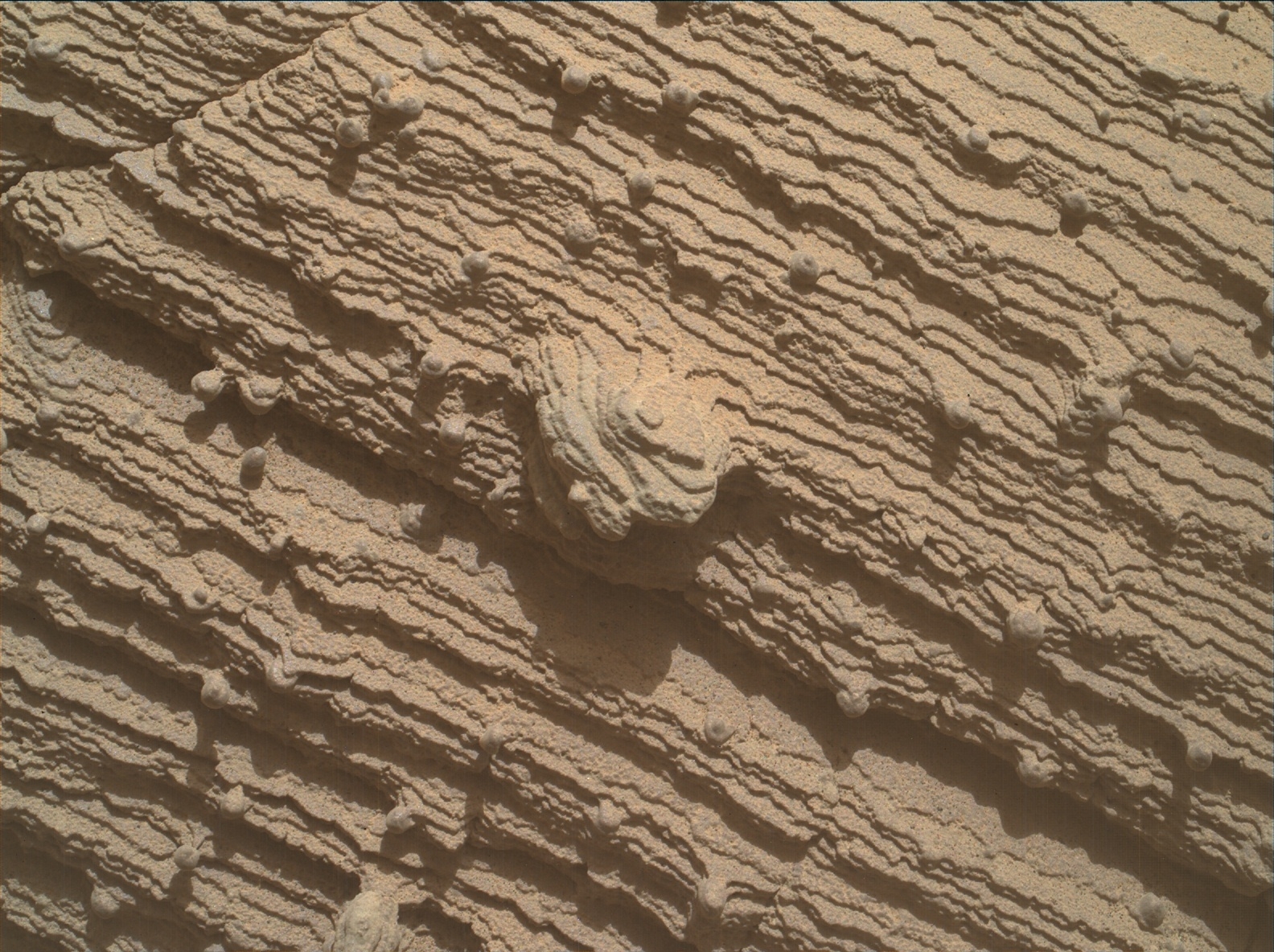
Using an onboard focusing process, the Mars Hand Lens Imager (MAHLI) acreated this product by merging two to eight images previously taken by the MAHLI, located on the turret at the end of the rover’s robotic arm.
Credit: NASA/JPL-Caltech/MSSS
These future measurements with CheMin and SAM are very power intensive.
“Even though we are not certain we will perform them,” Amador-French points out, the Mars research team was careful to conserve power in the event that they are used. “We therefore limited today’s plan to drilling activities and our regular environmental monitoring measurements and extra imaging to monitor for changes in dust levels in our atmosphere.”
Amador-French concludes: “Looking forward to our 36th drill hole!”

Using an onboard focusing process, the Mars Hand Lens Imager (MAHLI) created this product by merging two to eight images previously taken by the MAHLI, located on the turret at the end of the rover’s robotic arm. Curiosity performed the merge on October 1, 2022, Sol 3609.
Credit: NASA/JPL-Caltech/MSSS
Delicately thin
By the way, “Canaima,” is named for Canaima National Park in Venezuela which contains spectacular million-year-old, table-top mountains and is a UNESCO World Heritage Site.
“The observations thus far of this rock…are quite lovely,” explains Elena Amador-French, science operations coordinator at NASA’s Jet Propulsion Laboratory. “I particularly like how the layering is expressed on this rock. They are so delicately thin with more resistant nodules poking out – in what setting were they deposited and what kind of alteration have they been through since?”
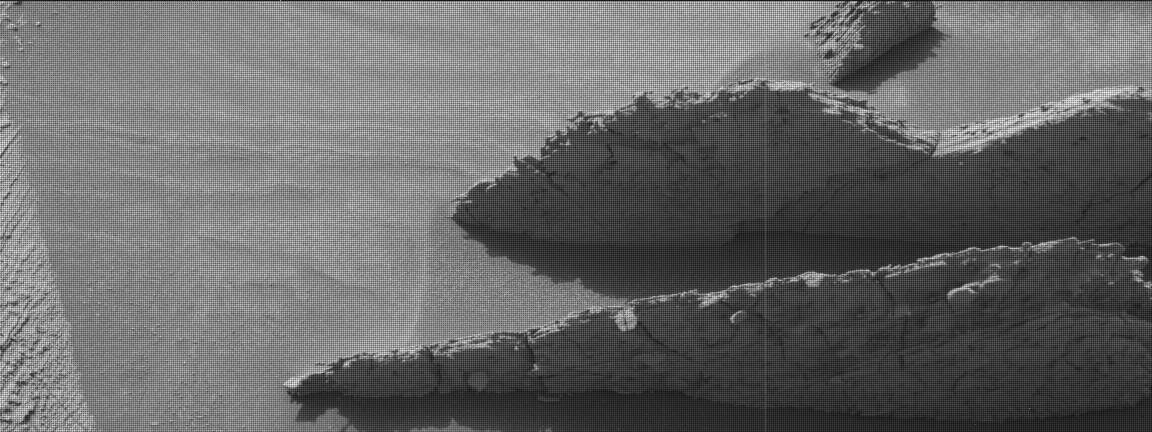
Curiosity Mast Camera Left image acquired on Sol 3610, October 2, 2022.
Credit: NASA/JPL-Caltech/MSSS
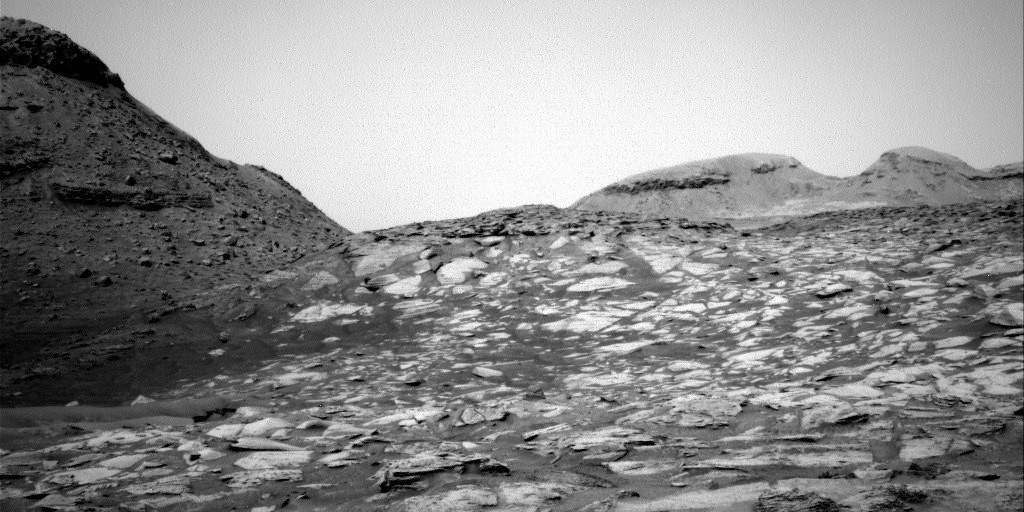
Curiosity Right B Navigation Camera image taken on Sol 3610, October 10, 2022.
Credit: NASA/JPL-Caltech
 Posted in Space News

