 By
By  September 6th, 2026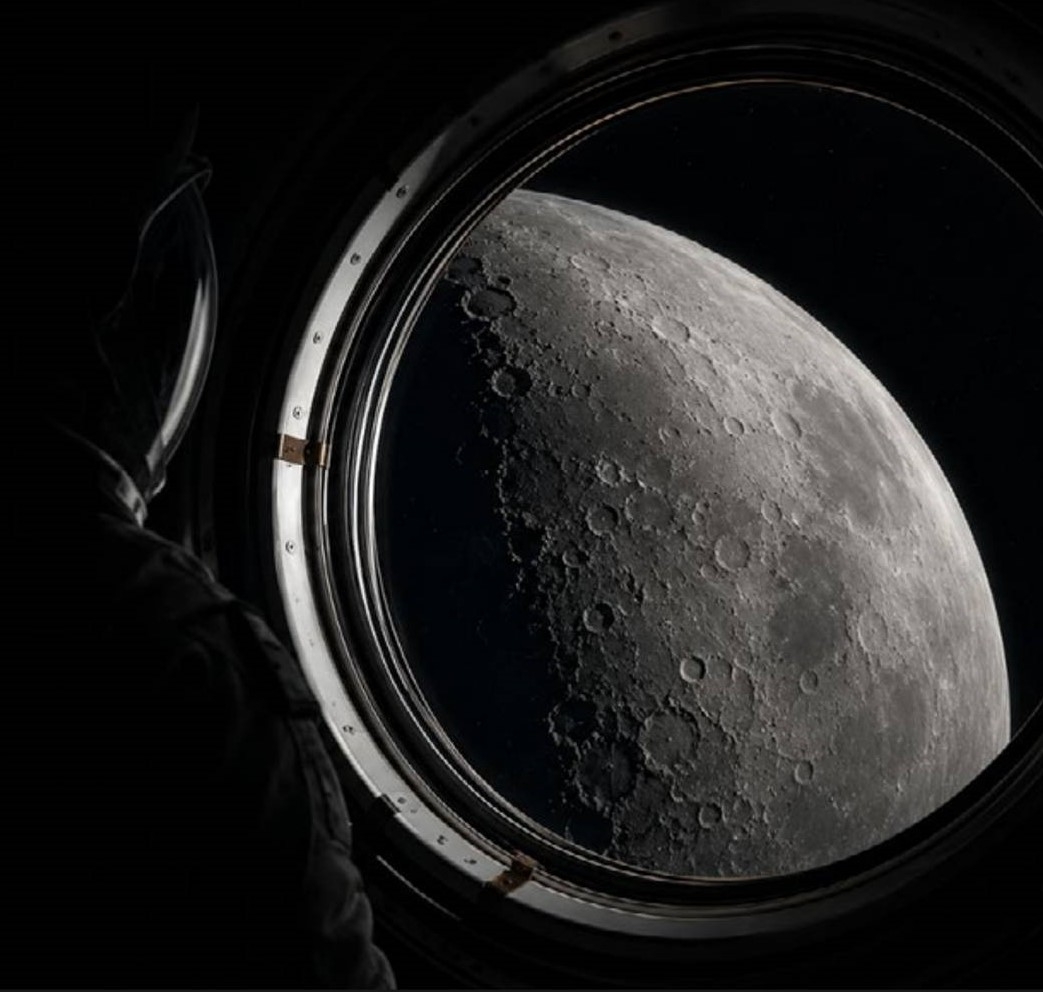
Image credit: Deloitte
Could Earth’s Moon be a witness plate, peppered with extraterrestrial material evidence of past extraterrestrial technology?
“Whereas electromagnetic SETI is restricted to contemporaneous transmitters, searches for artificially generated particles integrate over gigayear timescales and are therefore sensitive to technomaterial released by civilizations long extinct.”
The idea is that technogenic artifacts may survive natural interstellar transport and accumulate on solar system surfaces, such as our Moon.
Given that the lunar landscape’s minimal geochemical alteration and billions of years of exposure history, our Moon may well be an exceptionally stable long-duration collector of such material.
That’s the view from Lewis Pinault of the SETI Institute in Mountain View, California.

As human explorers visit the Moon on a recurring basis, time to keep an eye out for ET artifacts?
Image credit: NASA
Exo-archaeology
Pinault and colleagues suggest that identifying anomalous grains within a well-characterized natural background of the Moon, particulate technosignatures found could become an accessible form of exo-archaeology – and, in favorable cases, yield direct material evidence on the technological history of the Galaxy.
The possibility that the Moon may preserve material evidence of past extraterrestrial technology “strengthens the case for systematic, well-characterized regolith sampling,” the researchers explain.
Sifting through that lunar topside may offer the answer to one of astrobiology’s central questions: “whether technological life has ever arisen elsewhere in our Galaxy,” they report.
The exploratory paper, “Micron-Scale Technosignatures: How a Cubic Metre of Lunar Regolith May Begin to Constrain the Number of Past Technological Civilisations in the Galaxy” — a preprint version of which has been submitted to the International Journal of Astrobiology –– can be reviewed at:
 Posted in Space News

