 By
By  October 12th, 2024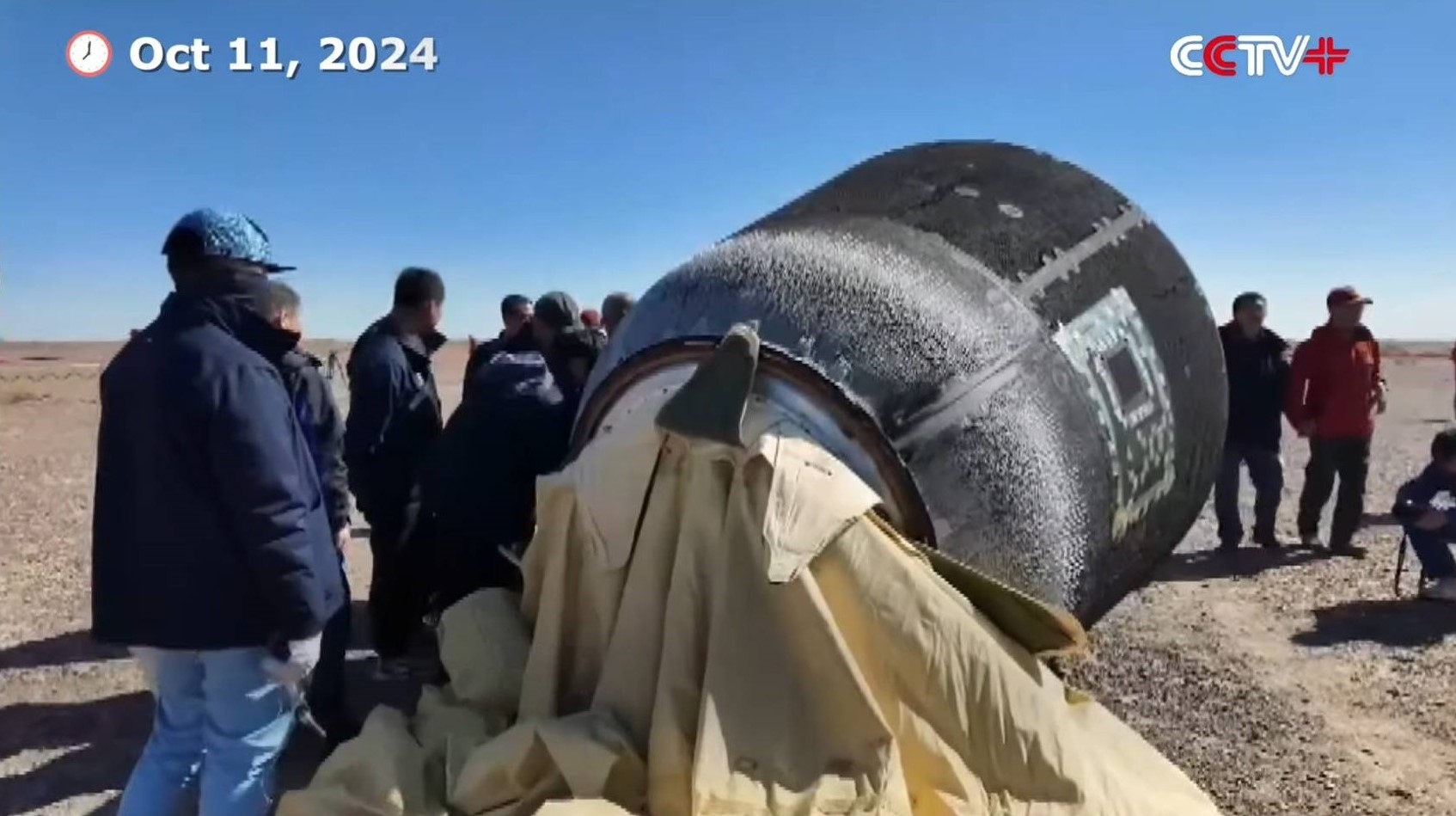
Image credit: CCTV/Inside Outer Space screengrab
China’s first “reusable, returnable” test satellite returned to Earth, landing in the Dongfeng landing site in north China’s Inner Mongolia Autonomous Region.
The capsule of the Shijian-19 mission came to full stop on October 11. The craft was launched on September 27 by a Long March-2D rocket from the Jiuquan Satellite Launch Center in northwest China.
According to the China National Space Administration (CNSA) the satellite performed experiments related to micro-gravity conditions, including the breeding of micro-organisms in space and the validation of new space technologies.
Payloads from five countries, including Thailand and Pakistan, were aboard the spacecraft.
The Shijian-19 satellite reportedly enhances the technical level and application efficiency of China’s returnable satellites, while also reducing operational costs.
A review of the landing site imagery would suggest the craft reenters nose first, deploying airbags to cushion its touchdown.
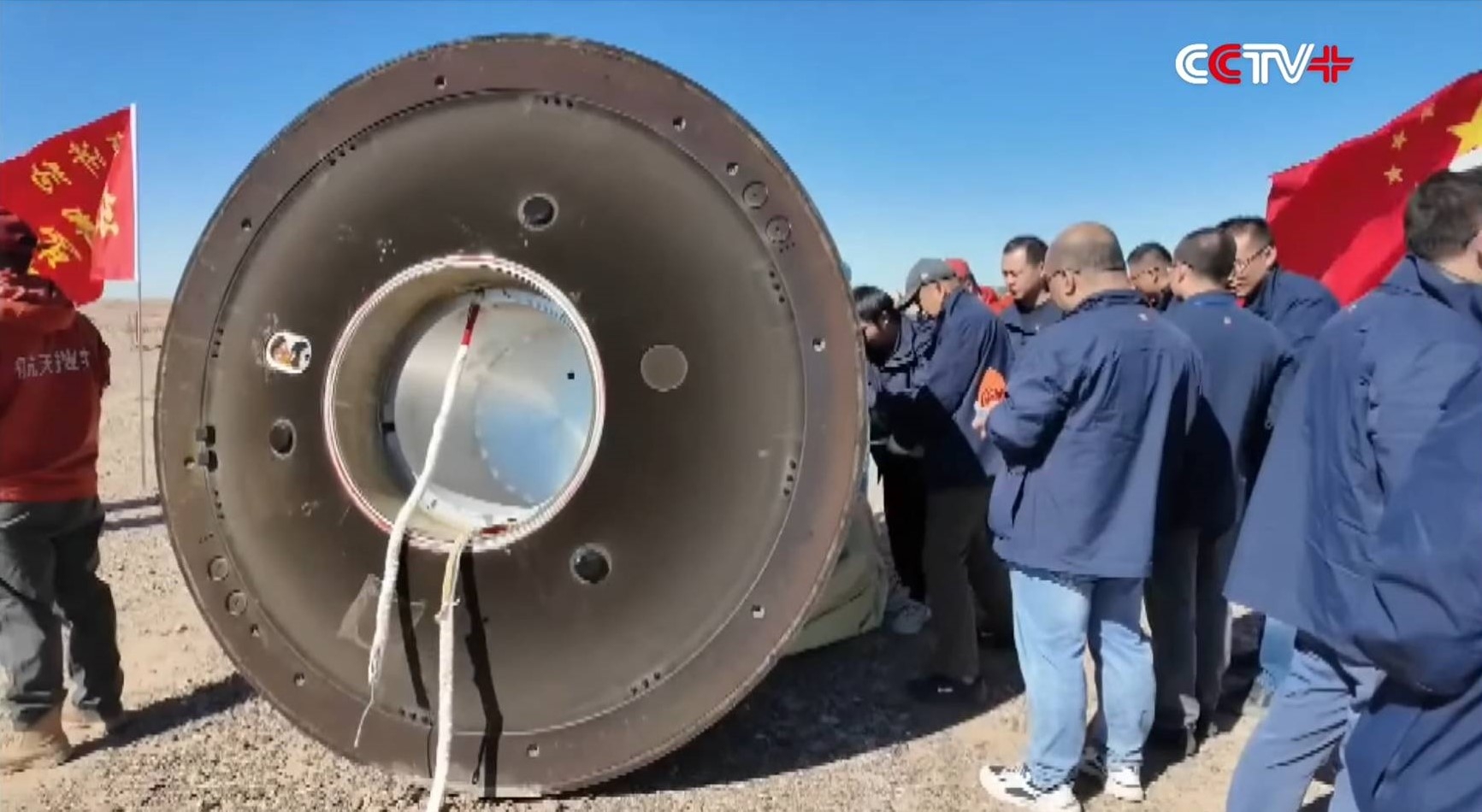
Image credit: CCTV/Inside Outer Space screengrab
Space breeding
A variety of plant seeds were selected from different locations. This space breeding experimentation focused, for example, on high mutation efficiency and shorter breeding cycles.
“This effort aims to elevate China’s space breeding technology and accelerate the innovation of germplasm resources, thereby supporting the nation’s goal of technological self-reliance in seed development,” according an earlier report by China Central Television (CCTV).
“Researchers also plan to capitalize on the Shijian-19’s reusability to conduct space experiments, providing in-orbit testing opportunities for domestic components and materials,” CCTV added.
The Chinese program would appear to mirror Russia’s ongoing Bion satellite effort as well as NASA’s Biosatellite activity, now in retired status.
Go to this video showing recovery operations at:
 Posted in Space News

