 By
By  October 2nd, 2022
Credit: CCTV/Inside Outer Space screengrab
China started the selection of a new batch of astronauts – a fourth batch of reserve astronauts, according to the China Manned Space Agency (CMSA).
Lasting roughly a year and a half, the process will lead to the selection of some 12 to 14 reserve taikonauts, China Central Television (CCTV) reports. That new cadre of individuals is to include seven to eight pilots. Engineers will also be selected as well as two payload experts, reports the China Global Television Network (CGTN).
Space pilots will be selected among active flyers of China’s armed forces. The engineers will be picked from researchers and technicians in aerospace or related industries. And the payload experts will be drafted among those also researching space science, CGTN adds.
Credit: CMSA/CCTV/Inside Outer Space screengrab
For the first time candidates for payload specialists will also be selected from Hong Kong and Macao.
Promotional video
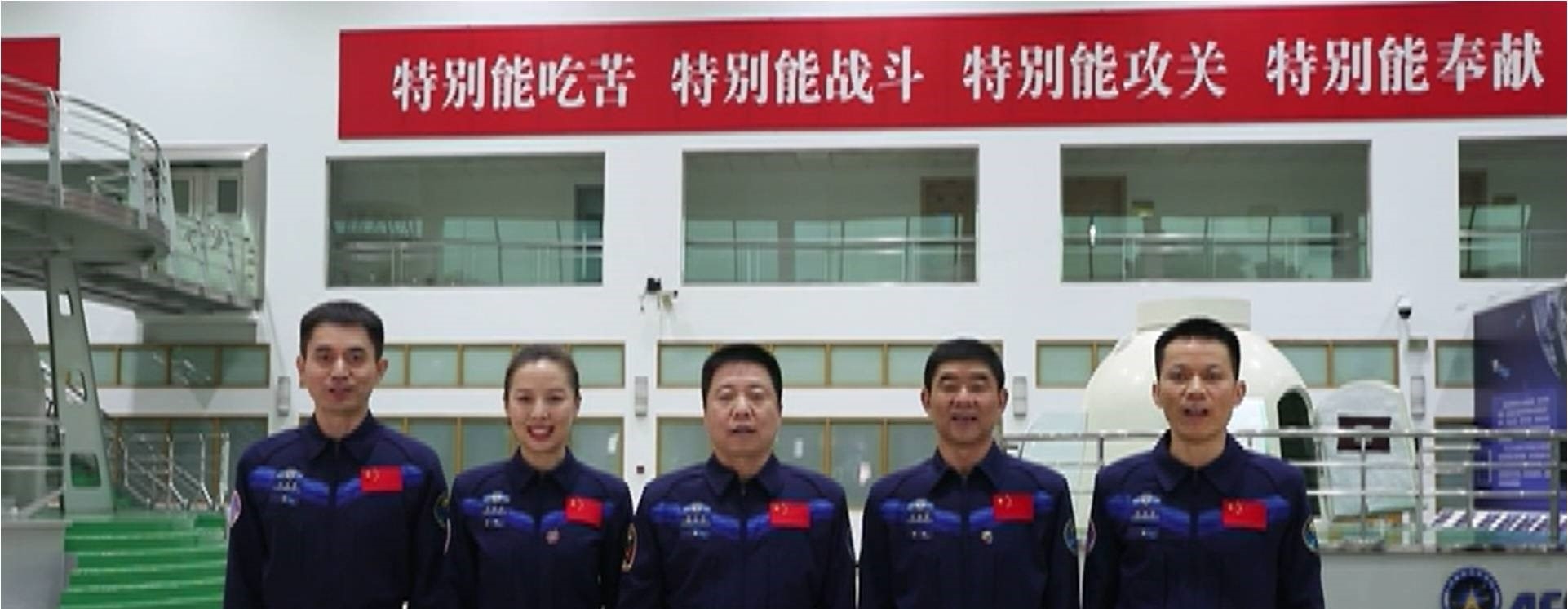
In a bit of a promotional come-on, video of Chinese astronauts are part of the call for more taikonauts:
“Come and join us in pursuing the space dream and building China into a space power. The selection of candidates for the fourth batch of Chinese astronauts is underway. We look forward to the joining of qualified astronauts,” the video explains.
“The Chinese space station is waiting for you to work here,” said Shenzhou-14 taikonauts now living aboard the in-construction Tiangong space station.

Credit: CMSA/CCTV/Inside Outer Space
Transposition maneuver
CMSA released on a video showing the space station lab module Wentian conducting in-orbit transposition. That transposition maneuver of the module took place last Friday, lasting about one hour.
It was the first time China has completed the in-orbit transposition of a large-scale spacecraft cabin by applying transfer facilities, the CMSA said.
During the transposition, the Wentian lab module first completed its state configuration and separated from the space station’s core module Tianhe. Then Wentian conducted transposition and docked with the side port of the space station’s node cabin.

Current configuration of China’s space station. Credit: CMSA/CCTV/Inside Outer Space screengrab
L-shape, T-shape
Through the transposition, the station’s combination of elements has changed from a straight line to L-shape.
When the Mengtian lab module arrives, to be launched later this month, the three-module combination will be maneuvered to take a T-shape.
Go to this newly-issued video showing China’s Space Station Wentian lab module during its in-orbit transposition at:
 Posted in Space News

