 By
By  December 9th, 2025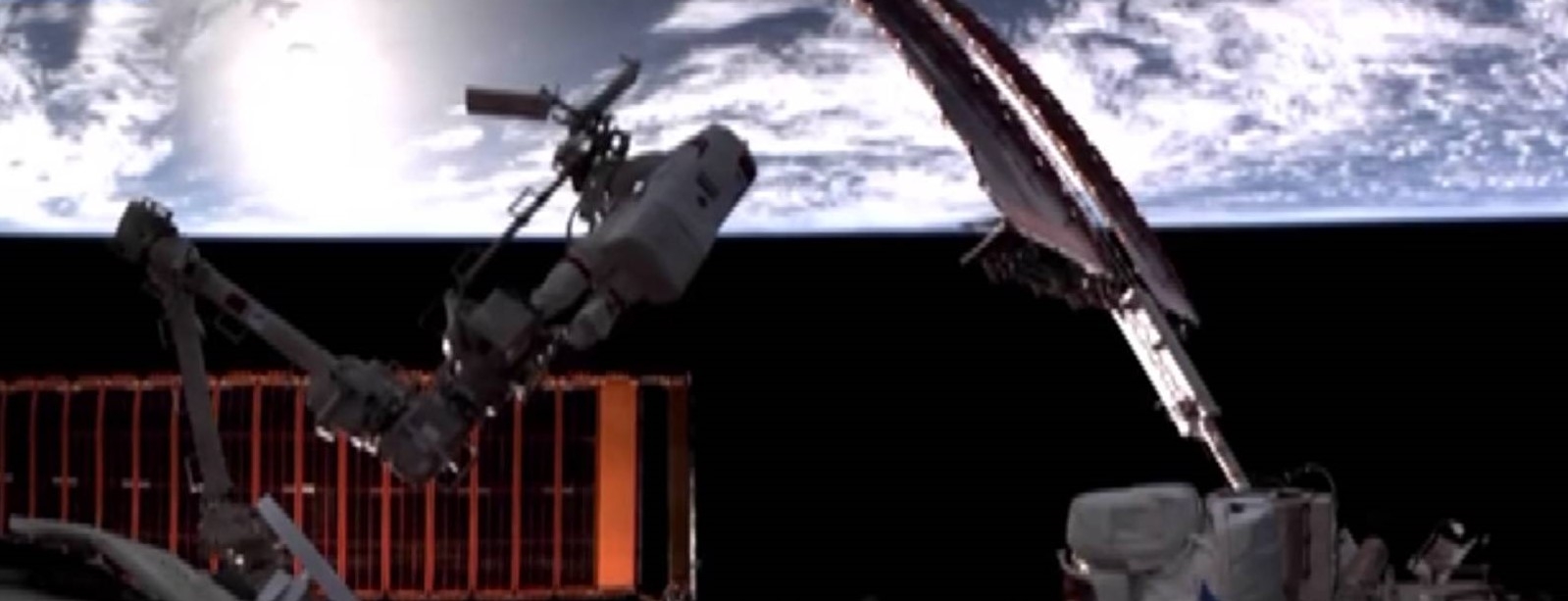
Station crew member carries out spacewalk.
Image credit: CNSA/CCTV/Inside Outer Space screengrab
China’s Shenzhou-21 crew carried out their first spacewalk of the taikonauts projected six-month mission.
The December 9th extravehicular activity (EVA) lasted roughly 8 hours, with astronauts Zhang Lu (commander) and Wu Fei making the space walk. Colleague Zhang Hongzhang assisted them from inside the Tianhe Core Module.
Inspection of viewport window
According to the China National Space Administration (CNSA), the two spacewalkers installed various devices and inspected external equipment, including the viewport window of the Shenzhou-20 spacecraft.
That spacecraft suffered an apparent space debris hit, preventing it from being used for safe return of the Shenzhou-20 crew.

Image credit: CCTV/Inside Outer Space screengrab
Emergency launch
Following that suspected debris strike on Shenzhou-20’s viewport, a trio of astronauts originally scheduled to return to Earth aboard the spacecraft were redirected to Shenzhou-21, which brought them home safely on November 14.
Billed as the first emergency launch in the history of its human spaceflight program, China launched the uncrewed Shenzhou-22 on November 25 to provide a new return vehicle for the now orbiting crew.
The damaged Shenzhou-20 vessel will be later de-docked from the orbiting outpost for an uncrewed re-entry.
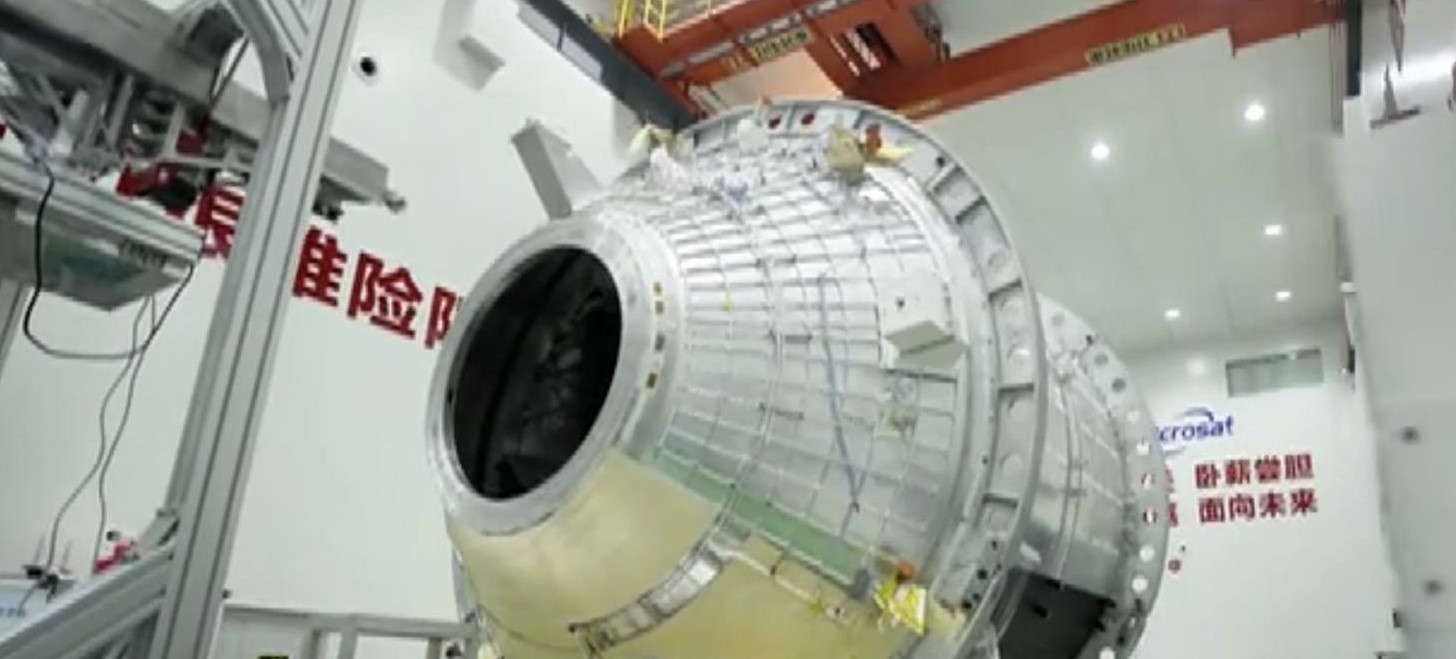
Work progressing on China’s Qingzhou Cargo Spacecraft.
Image credit: CCTV/Inside Outer Space screengrab
New cargo spacecraft
Meanwhile, China Central Television (CCTV) has issued a video spotlighting development of China’s Qingzhou cargo-carrying spacecraft for the country’s future space station operations.
China is to start prototype development of the new cargo spacecraft in 2026.
Earlier this year, China Daily reported that the next-generation cargo spacecraft is designed for future in-orbit supply deliveries, including missions to China’s Tiangong space station.
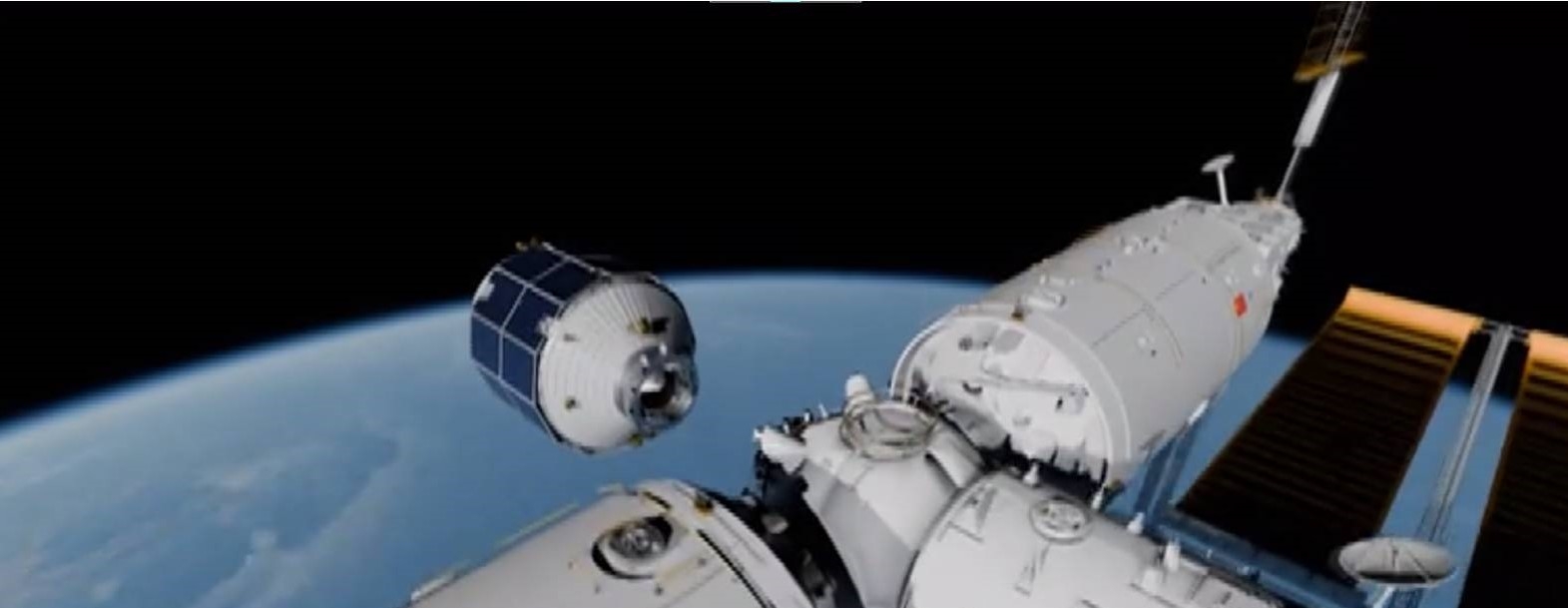
Artwork depicts Qingzhou Cargo Spacecraft docking to China’s space station.
Image credit: CCTV/Inside Outer Space screengrab
Qingzhou is developed by the Innovation Academy for Microsatellites of the Chinese Academy of Sciences.
Meaning “Light Ship” in Chinese, Qingzhou sports a cargo volume of 27 cubic meters and a capacity up to 2 metric tons. It features a four-tier shelving system with 40 compartments and interfaces for special cargo needs, China Daily reported.
 Posted in Space News

