 By
By  November 6th, 2022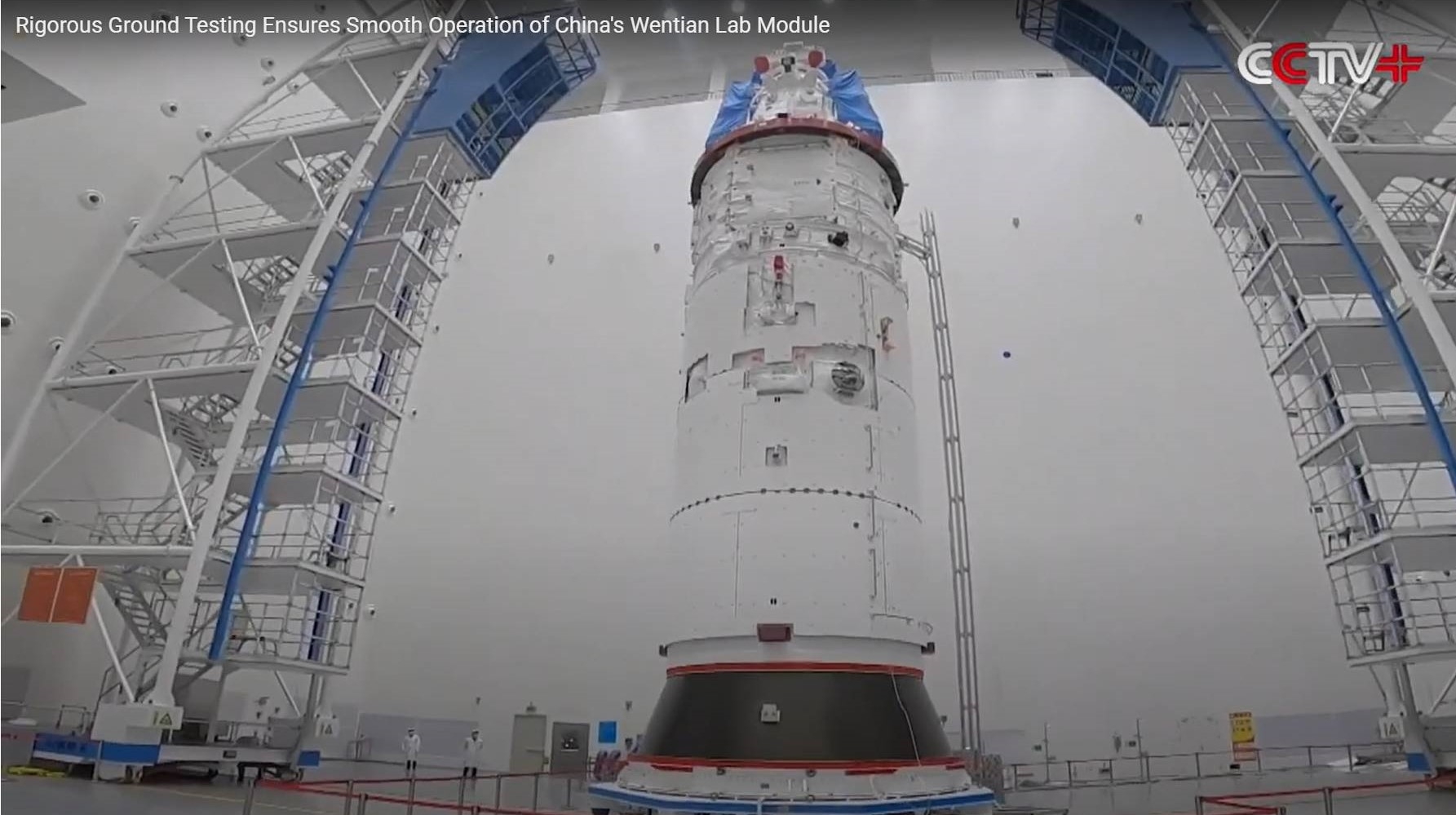
Credit: CCTV/Inside Outer Space screengrab
China’s freshly-docked and transitioned Mengtian lab module has kick-started the country’s Tiangong space station into a final stage of completion.
However, China’s space station could further expand and upgrade from inside to outside, said Tang Yi, head designer of the China Space Station System of China Academy of Space Technology.

Credit: CCTV/Inside Outer Space screengrab
Mengtian, Tiangong’s second lab that docked with China’s Tiangong space station complex is the last “building block.” Tiangong now forms a T-shape structure, the planned layout of the space station.

Station complete is set for year’s end.
Credit: CNAS/CCTV Video News Agency/Inside Outer Space screengrab
Extend and upgrade
“For astronauts, the three-module space station means ample room to roam for three, even six astronauts on board without feeling cramped,” Tang told China Central Television (CCTV). “We’ve also anticipated the space station’s future on the outset: we’ve designed so it can extend and upgrade, including what’s inside the modules. The space station’s equipment can change and upgrade,” Tang said.
With the upcoming launch and arrival of the Shenzhou-15 three-person crew, the Tiangong will increase to six for a short period.
Credit: CCTV/Inside Outer Space screengrab
Ins and outs of airlock cabin
To facilitate the ins and outs of larger cargo and payloads, the airlock cabin of Mengtian is equipped with two square hatches, an internal one and an external one. In addition, the external hatch is electrically driven. This auto door reduces the astronaut’s labor and increases efficiency when transporting cargo out of the cabin, said Bai Hemin, a designer for the space station system at the Shanghai Academy of Spaceflight Technology.
With a larger door, Mengtian is capable of releasing miniaturized satellites into space. Astronauts can install small satellites on a payload transfer device, depressurize the airlock cabin, and then take them out of the cabin, said Meng Yao, a designer of Mengtian.
Credit: CCTV/Inside Outer Space screengrab
Pre-launch testing
When the space station is completed, it’s expected to run for at least a decade, or possibly even longer, according to CCTV.
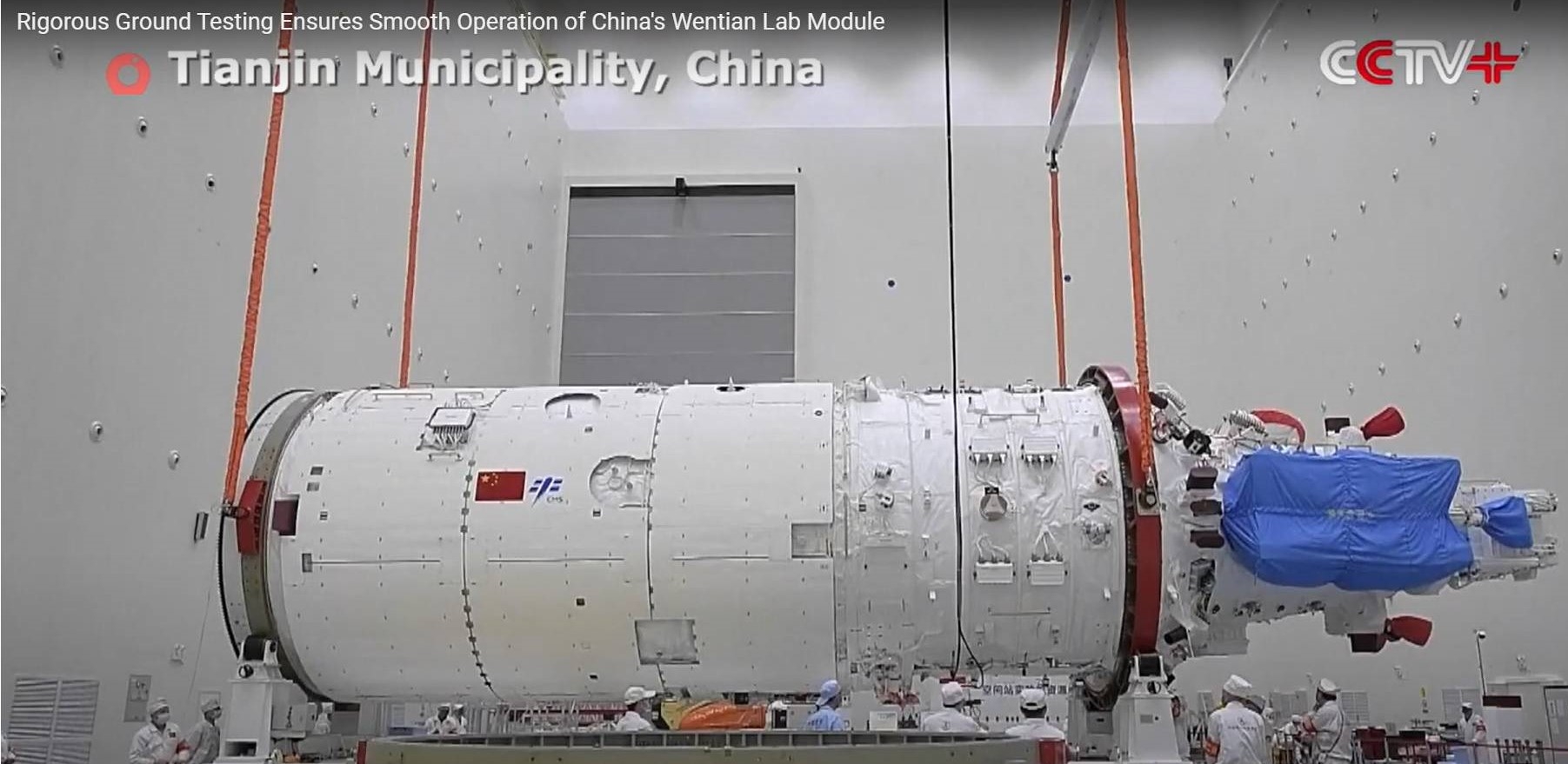
Pre-launch, the Mengtian lab module completed ground tests in the Tianjin base of the China Academy of Space Technology, a subordinate of the China Aerospace Science and Technology Corporation.
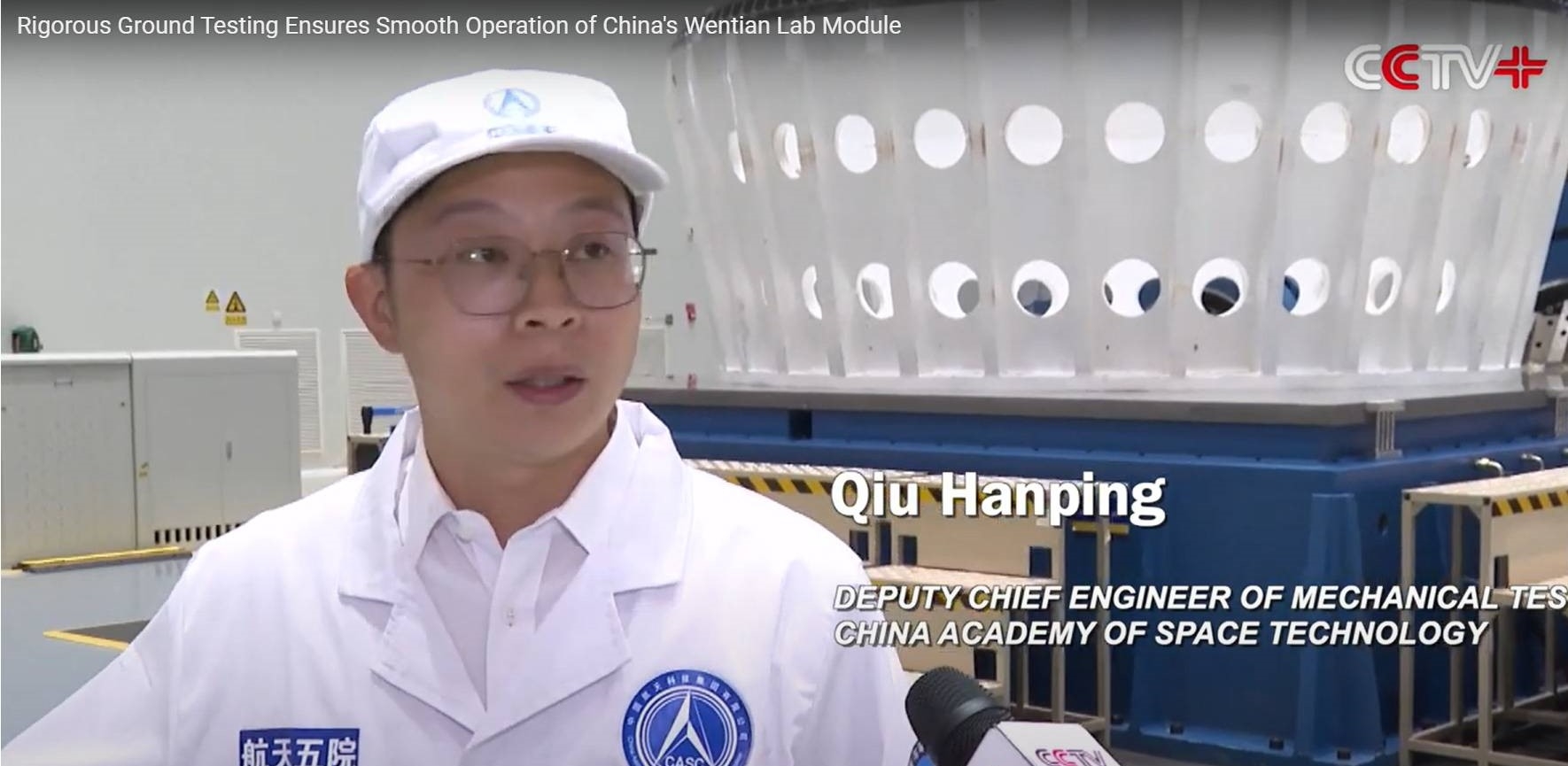
The testing base includes the world’s largest thrust electromagnetic vibration testing system. The Mengtian lab module had previously completed vibration tests in two directions with the help of two electromagnetic shaking tables, “primarily used to simulate the vibration environment generated during the rocket launch and to assess the integrity of module structure and equipment function,” said Qiu Hanping, deputy chief engineer of mechanical test in the General Assembly and Environmental Engineering Department under CAST.
Credit: CCTV/Inside Outer Space screengrab
Thermal testing
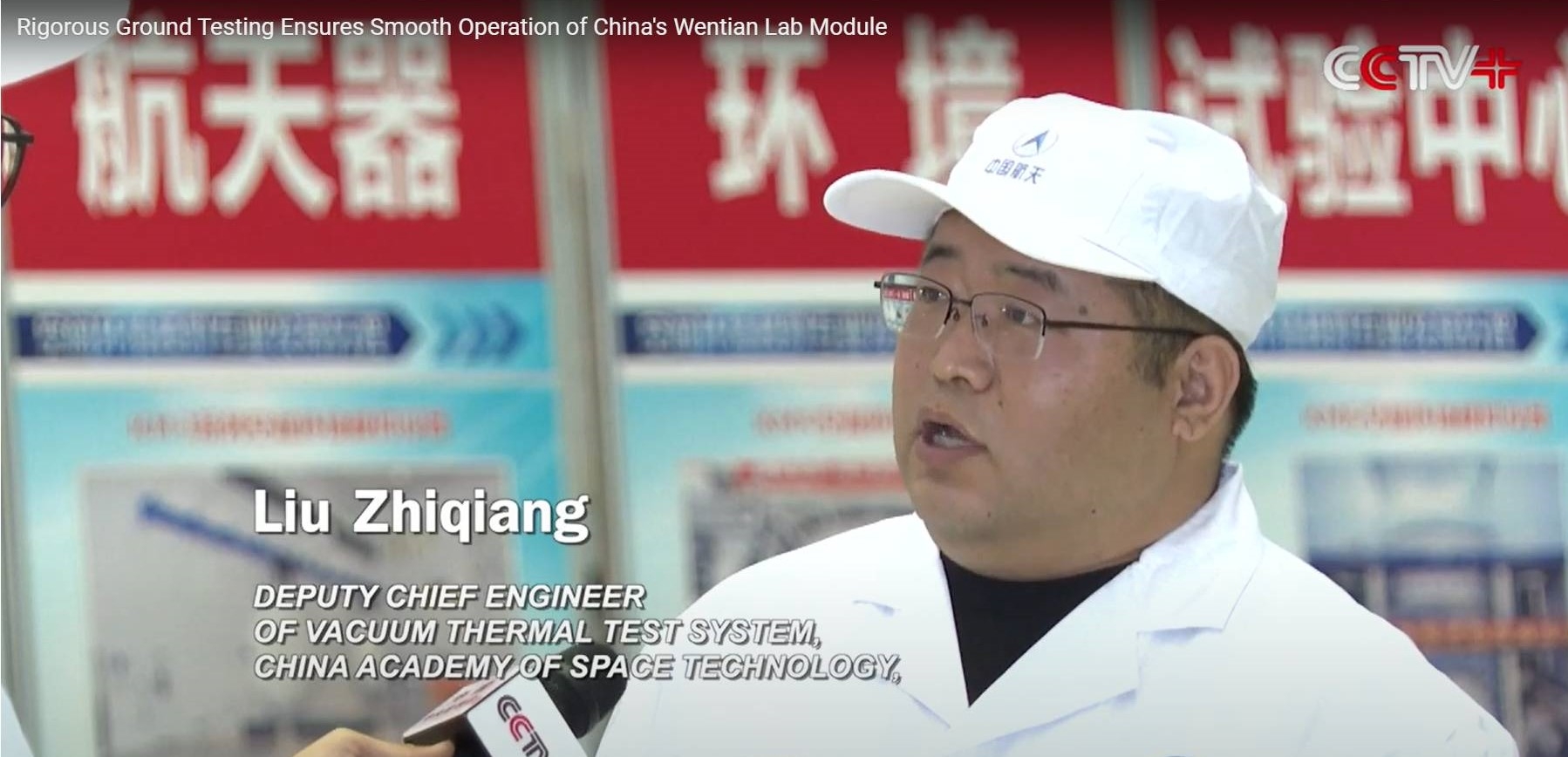
“The temperature of the spacecraft in orbit is always changing as the orbit varies,” reports Liu Zhiqiang, deputy chief engineer of vacuum thermal test system of the General Assembly and Environmental Engineering Department.
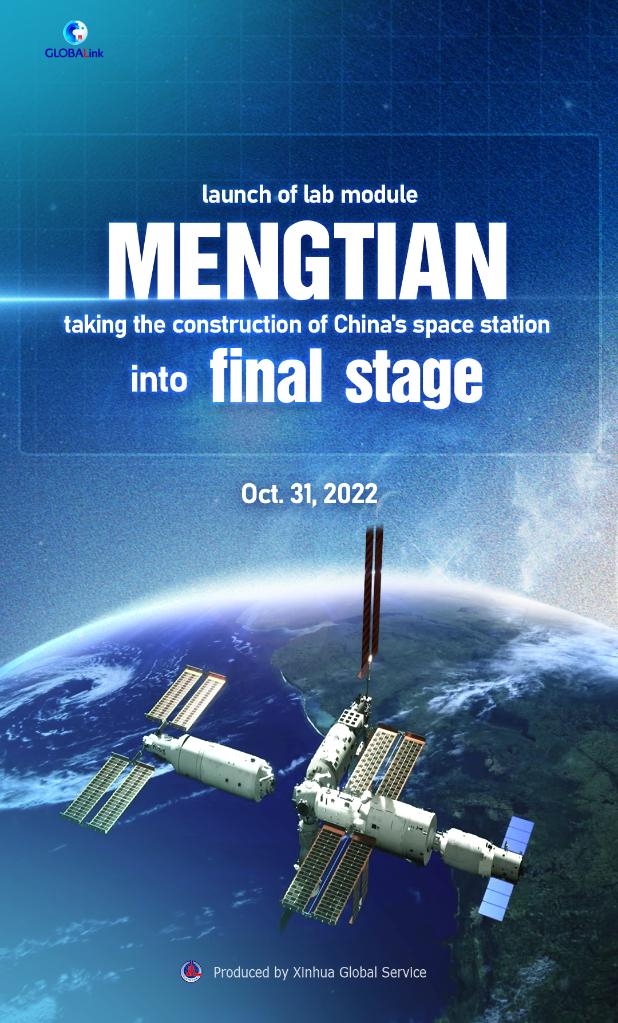
Credit: GLOBALink/Xinhua Global Service
“The KM8 Large Space Environment Simulator needs to simulate environmental tests in which the ambient temperature varies from negative 180 degrees Celsius to positive 100 degrees Celsius for checking whether each system works normally or not and ensuring the normal operation of the spacecraft in orbit and the safety of astronauts,” said Liu.
Go to these newly-issued videos at:
 Posted in Space News


Why viewers still use to read news papers when in this technological world the whole thing is existing on net?
#GGG###
http://www.npk10.com/space-uid-357305.html