 By
By  May 4th, 2026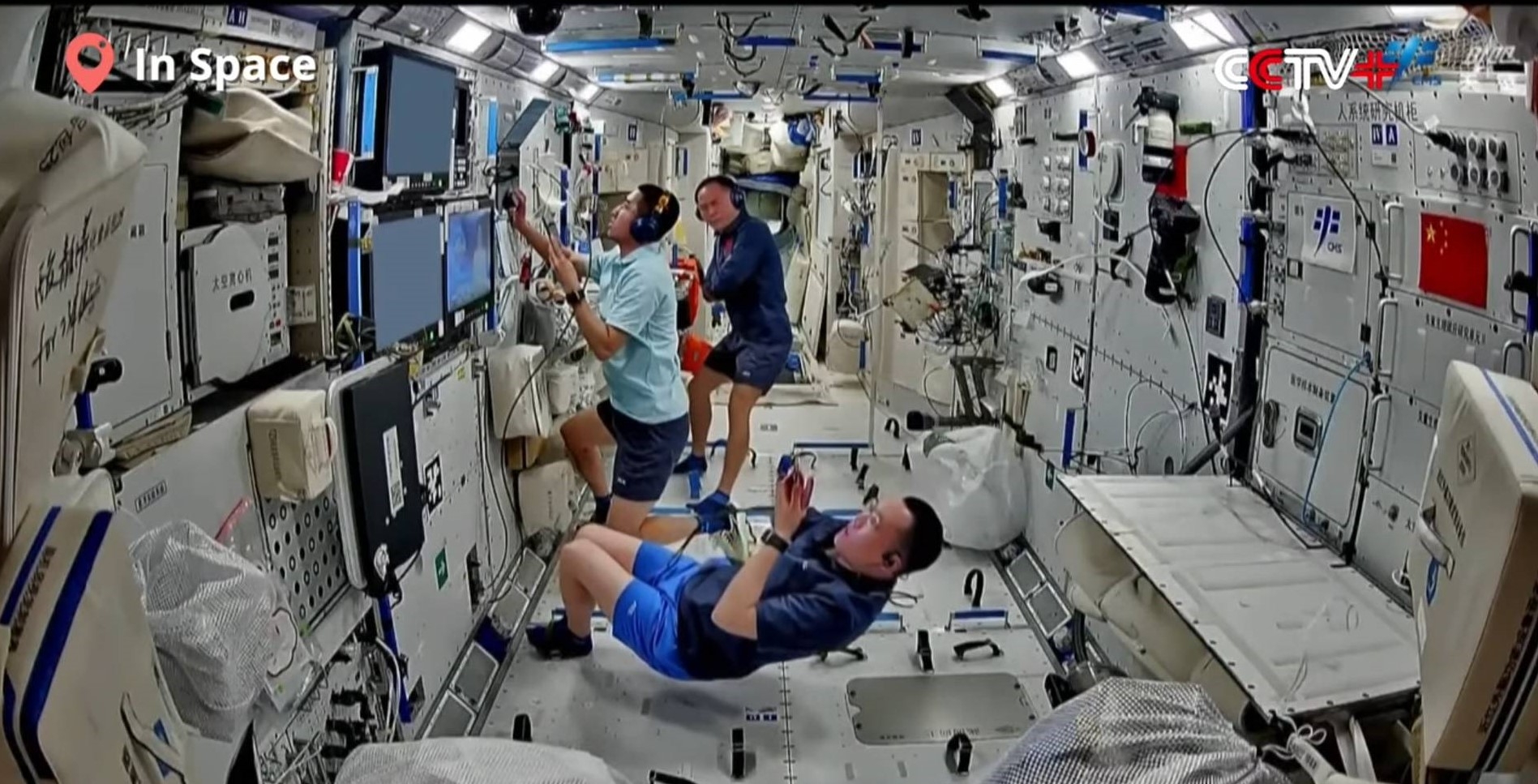
Image credit: CCTV/Inside Outer Space screengrab
China’s Shenzhou-21 crew — Zhang Lu, Wu Fei, and Zhang Hongzhang — has begun their one-month extended mission aboard the country’s Tiangong space station.
The taikonaut trio entered the space station on November 1, 2025. The threesome have completed their initial six-month stay in orbit and are now working an extra month in space.
With this extension, the Shenzhou-21 crew is set to break the previous record of 204 days in orbit set by Shenzhou-20. So far, they have completed three spacewalks and conducted 27 scientific projects.
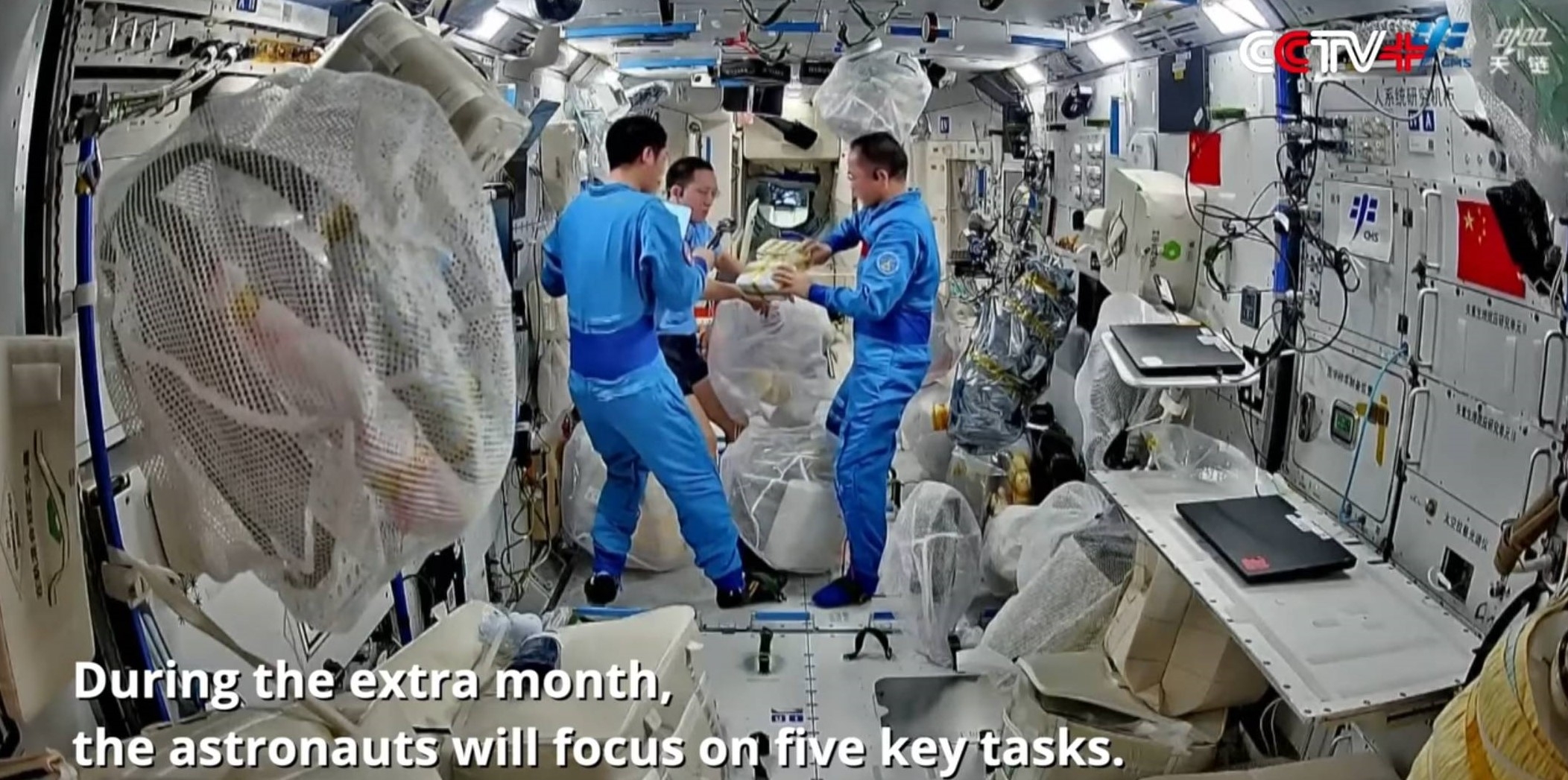
Image credit: CCTV/Inside Outer Space screengrab
Key tasks
During the extra month, the astronauts will focus on five key tasks, reports China Central Television (CCTV).
- they will prepare for handover. This includes wrapping up scientific experiments, sorting data, and thoroughly checking payloads, cabin systems and life support equipment to get prepared for the arrival of the next crew.
- they will pack experimental samples and equipment for return to Earth, while transferring waste to the Tianzhou-9 cargo spacecraft for later disposal.
- they will conduct detailed inspections of the spacecraft. This includes verifying airtight seals on hatches, checking the return module’s life support systems, communication equipment, portholes, and structural integrity to rule out any risks from space debris impacts.
- the crew will intensify physical training to adapt to Earth’s gravity and enhance monitoring of their biorhythms, psychological state, and crew compatibility to support future long-term missions.
- they will review all return procedures to ensure a safe journey.
In the coming month, the crew will also welcome the arrivals of a Tianzhou-10 resupply spacecraft, as well as the Shenzhou-23 crew.
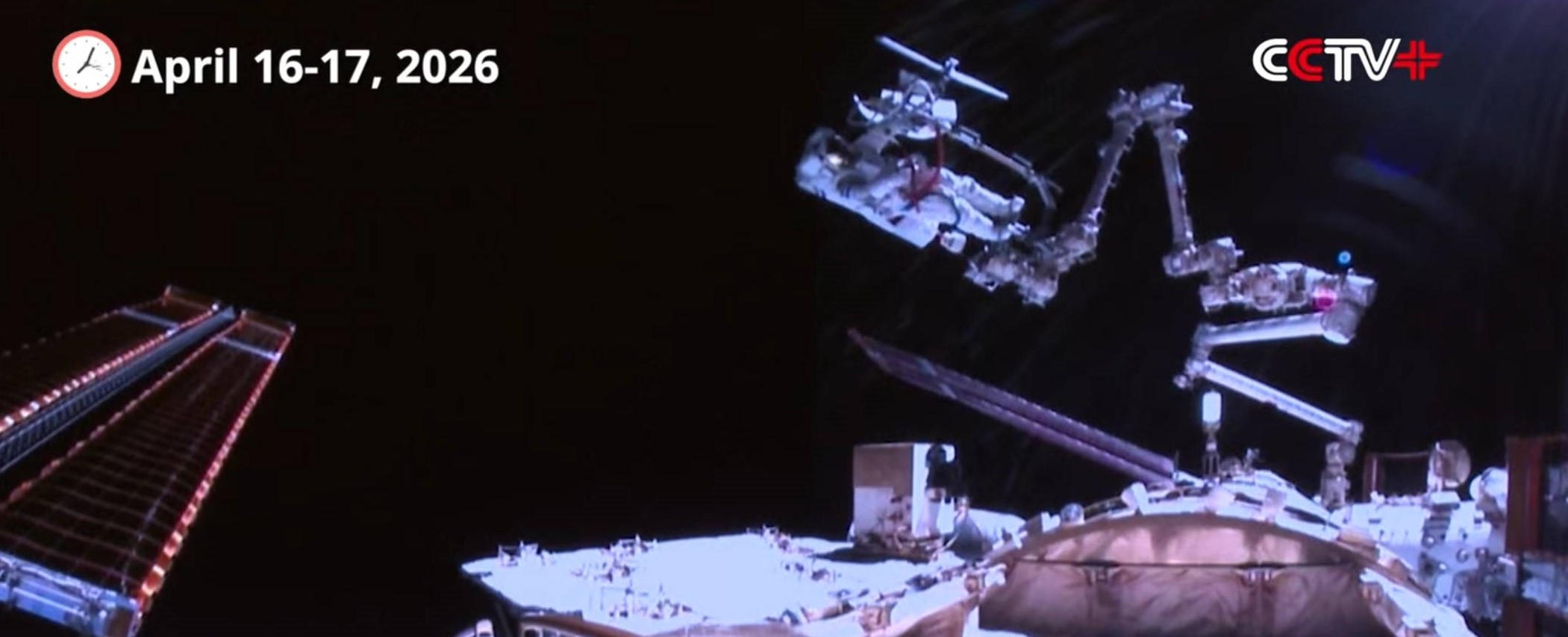
Image credit: CCTV/Inside Outer Space screengrab
On-orbit research
The CCTV reports that the now-in-orbit crew conducted on-orbit electroencephalogram (EEG) research. Using EEG acquisition devices, VR glasses, and other equipment, they conducted multiple experiments, providing relevant data for ground-based researchers for further study.
In the field of behavioral and psychological research, the astronauts performed executive function training by observing images on a laptop and responding via keyboard inputs. They also completed emergency decision-making assessments and emotional state tests, providing valuable data for studying the effects of long-duration spaceflight on decision-making abilities and mental well-being.
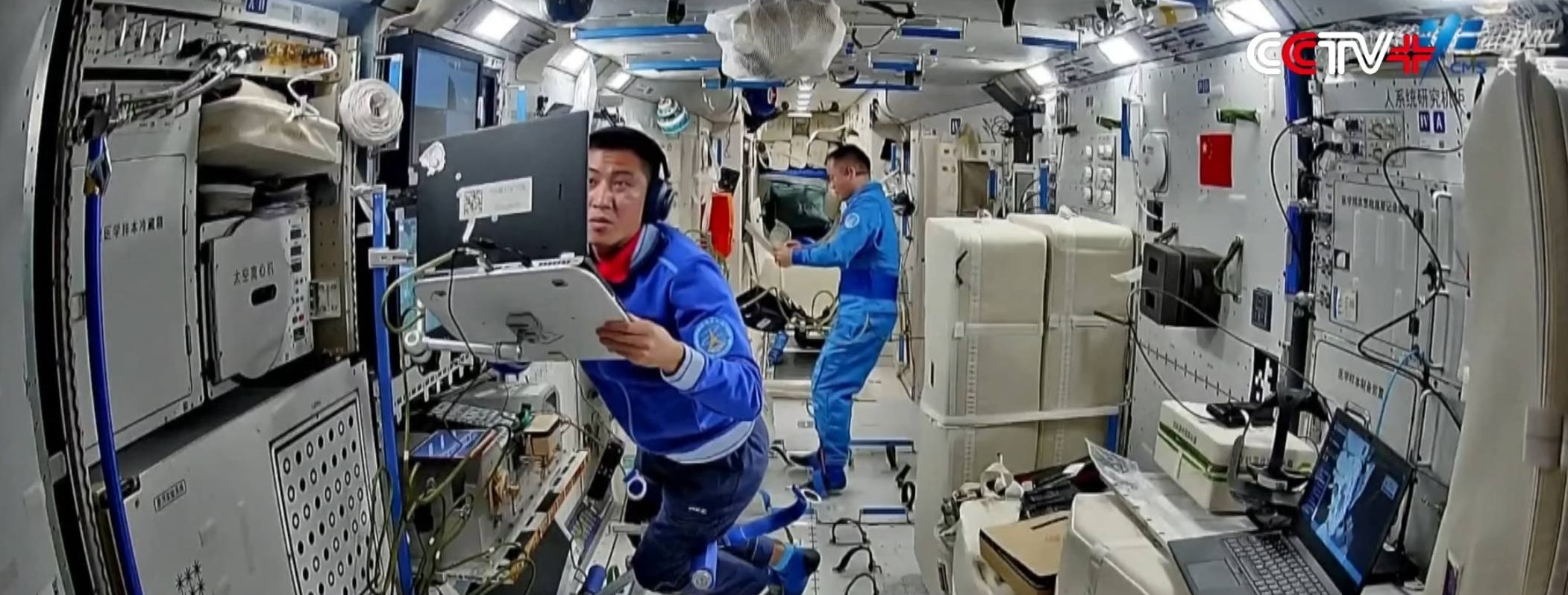
Image credit: CCTV/Inside Outer Space screengrab
Station maintenance
The three space travelers also conducted rendezvous and docking simulation training to maintain operational proficiency.
Also the crew replaced the filters and sampling covers in the combustion science experiment cabinet, conducted research on space fluid storage and transportation and completed tasks such as sample cleaning, and electricity component maintenance.
For space station maintenance, the astronauts inspected and serviced the life support systems, measured cabin noise levels, cleaned the living areas, and organized supplies.
On the health front, they completed routine medical checks such as hearing tests and muscle ultrasound examinations while continuing regular physical exercises.
Go to this video at:
https://www.facebook.com/reel/1334964331808238

China’s Tiangong space station as imaged by MAXAR satellite.
Image credit: MAXAR
 Posted in Space News

