 By
By  August 13th, 2024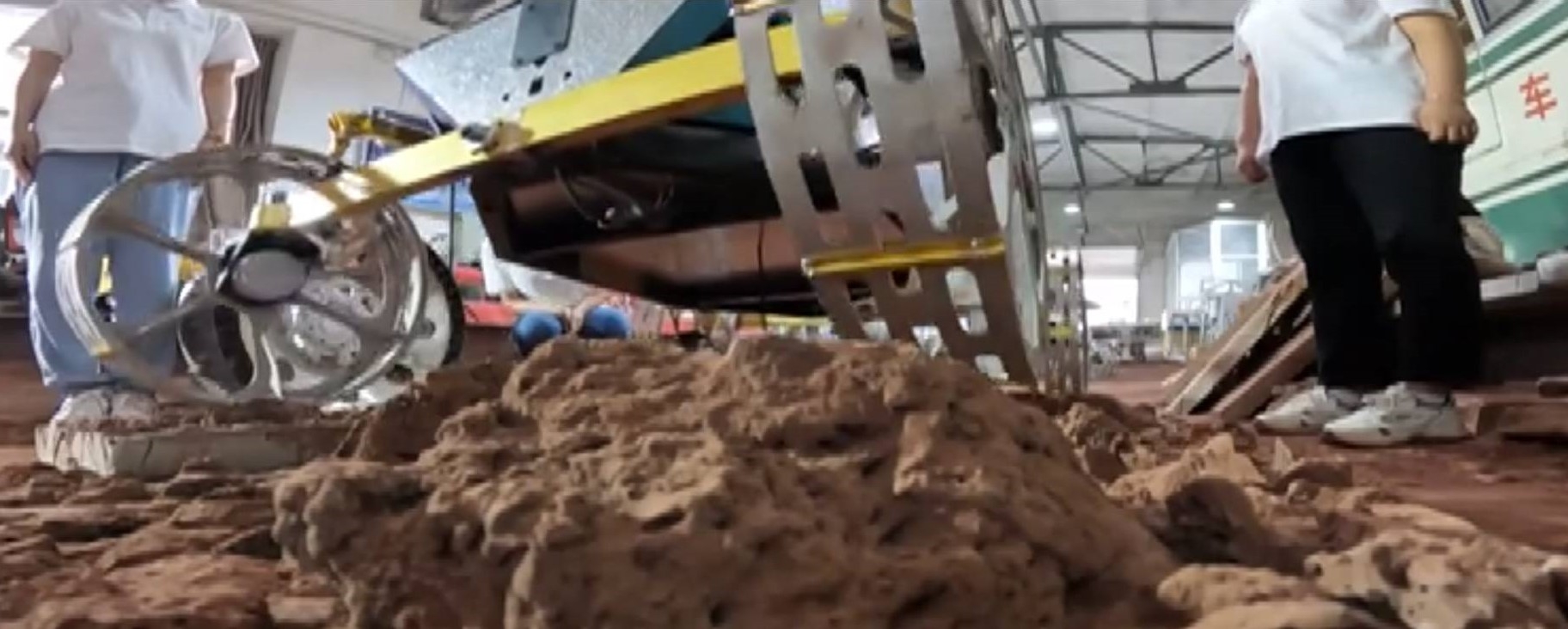
Image credit: CCTV/Inside Outer Space screengrab
\Researchers at Jilin University in northeast China are working on Moon and Mars rovers, ringing out functions of the machines for future missions.
“We are here to test the interaction between the small wheels and lunar soil. Our goal is to make the rover go further and perform better on the surface of the moon,” Zhang Rui, professor at the College of Biological and Agricultural Engineering of Jilin University told China Central Television (CCTV).
Intelligent rover
By resorting to the sensors on the wheels, researchers can accurately analyze the operation of the rover in different environments, which will provide data for the rover’s “intelligent brain”.
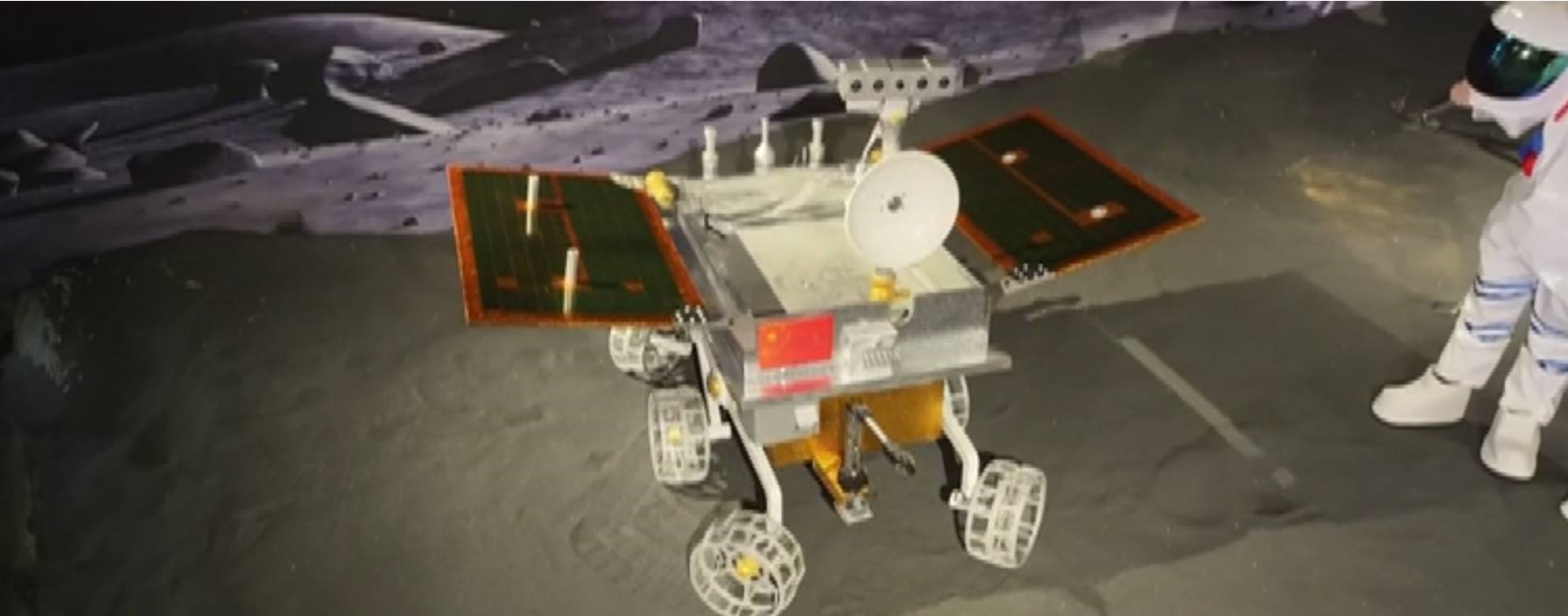
Image credit: CCTV/Inside Outer Space screengrab
A simulated moonscape has been designed, complete with obstacles and pits for day/night trial runs, to train the “intelligent brain” of a vehicle for future lunar tasks.
Road conditions on Mars
Work is also underway on Mars rovers. “A string of road conditions that the future rovers may encounter on Mars was simulated,” a recent CCTV broadcast noted.
“The four-wheel drive vehicle, developed by those Chinese researchers, can travel on soft Martian soil and cross obstacles over 20 centimeters high.”
Used during testing are simulated soils that mimic those found on Mars and the Moon.

Li Xiujuan, senior engineer of the College of Biological and Agricultural Engineering.
Image credit: CCTV/Inside Outer Space screengrab
Core technologies
“We are now working on simulated Martian and lunar soil. Through the research, we can provide a stronger foundation for deep space exploration,” Li Xiujuan, senior engineer of the College of Biological and Agricultural Engineering, explained to CCTV.
“We make the rover or the vehicle carrying the corresponding payload pass through the surface of simulated lunar soil. And we’ll make timely adjustments in accordance with its reactions when it encounters rocks or other obstacles, so that we can cope with all the foreseeable difficulties on the moon,” said Li.

Image courtesy U.S. Defense Intelligence Agency (DIA) in its “2022 Challenges to Security in Space” report.
At the research team lab, core technologies developed were used in the recent retrieval of samples from the Moon’s far side, rocketed back to Earth by the Chang’e-6 mission in June of this year.
Moon-Mars exploits
China is gearing up for development of the International Lunar Research Station (ILRS). That facility projected for the 2030 time frame would involve robotic surrogates as well as human crews. This planned lunar base is being led by the China National Space Administration and Russia’s Roscosmos.
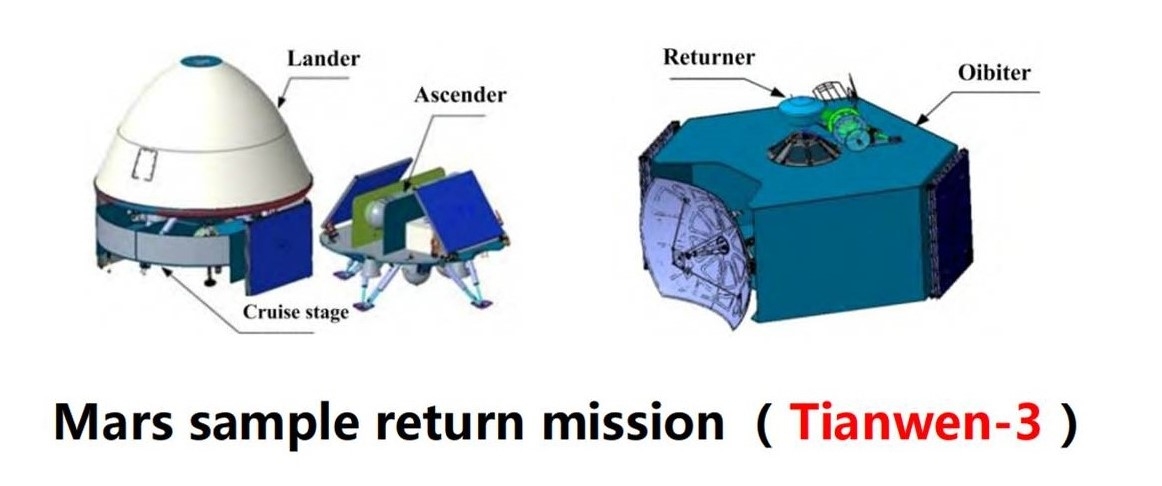
Image credit: Kanyan Xu/COSPAR
Regarding robotic exploration of Mars, China is working on its Tianwen-3 mission. That effort is designed to hurl samples from the Red Planet to Earth, perhaps in the 2030 time period.
Back in 2021, the Tianwen-1 Mars lander mission involved the Zhurong rover that explored Utopia Planitia.
 Posted in Space News

