 By
By  February 17th, 2025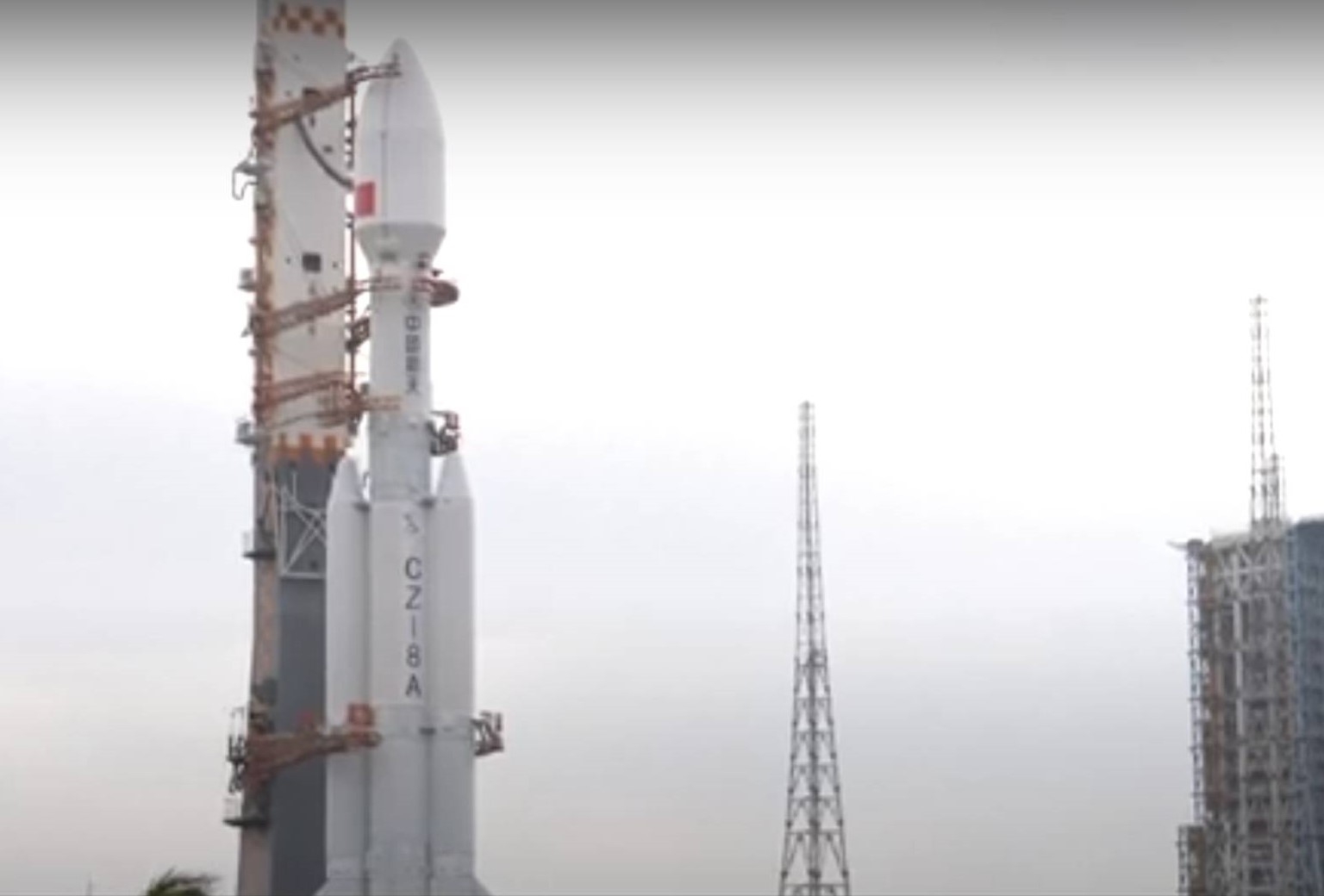
Image credit: China Central Television (CCTV)/China Aerospace Science and Technology Corporation (CASC)
Once again the Philippine Space Agency was on guard for possible rocket debris stemming from China’s recent launch of a Long March 8A rocket from Wenchang Spacecraft Launch Site in Wenchang, Hainan.
The maiden flight of the Long March 8A booster took place on February 11, reportedly hurling into orbit a set of satellites for China’s State-owned internet network.

Drop zones
As posted by the Philippine Space Agency (PhilSA) any expected debris resulting from the rocket launch were projected to fall within identified “drop zones.”
The Philippine Office of Civil Defense (OCD) alerted residents in the provinces of Palawan and Basilan, where parts of China’s Long March 8A rocket were expected to careen into coastal waters:
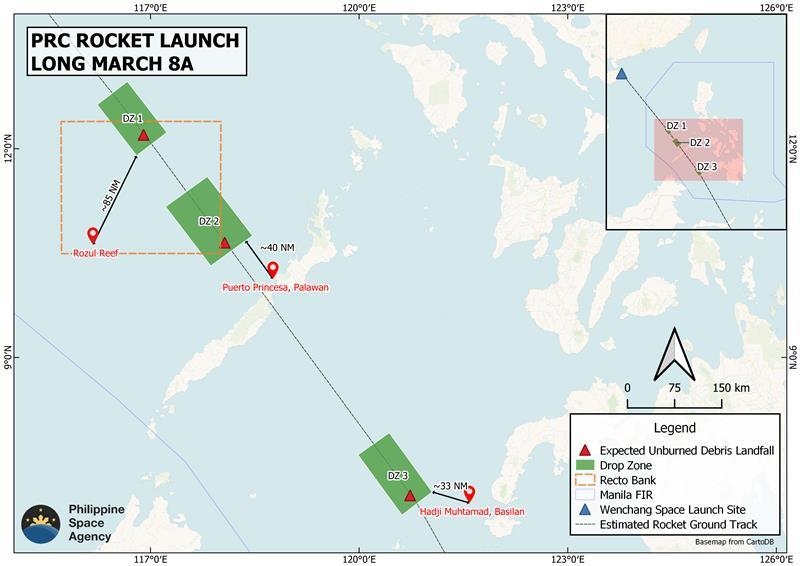
Image credit: PhilSA
Drop Zone 1: Approximate distance: 85 nautical miles from Rozul Reef.
Drop Zone 2: Approximate distance: 40 nautical miles from Puerto Princesa, Palawan.
Drop Zone 3: Approximate distance: 33 nautical miles from Hadji Muhtamad, Basilan.
Danger and potential risk
Meanwhile, the Bureau of Fisheries and Aquatic Resources (BFAR) temporarily barred fishermen from sailing at Rozul Reef in the Drop Zone 1.
In a February 11 PhilSA posted that while not projected to fall on land features or inhabited areas, “falling debris poses danger and potential risk to ships, aircraft, fishing boats, and other vessels that will pass through the drop zone.”
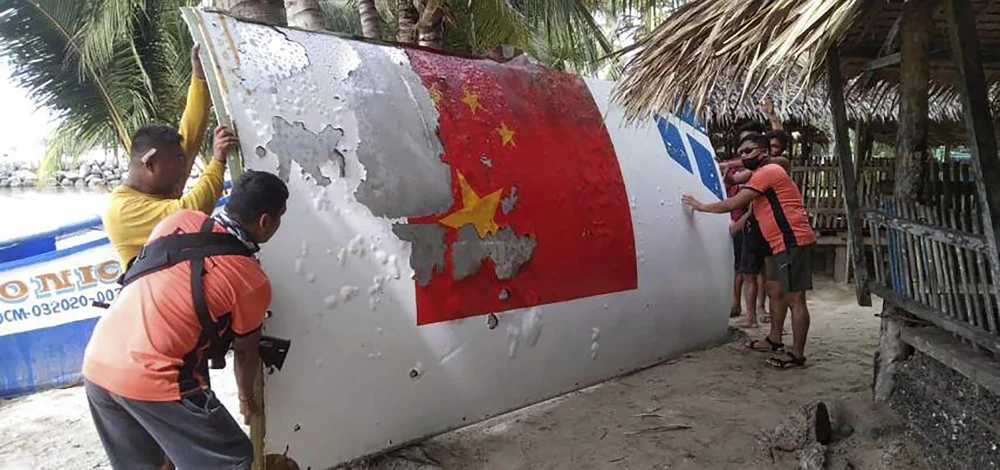
Rocket debris recovered in 2022.
Image credit: Philippine Coast Guard
There is also a possibility, PhilSA added, “for the debris to float around the area and wash toward nearby coasts.”
Toxic fuel
PhilSA reiterated its advice for the public to inform local authorities if suspected debris is sighted. “PhilSA also cautions against retrieving or coming in close contact with these materials that may contain remnants of toxic substances such as rocket fuel,” they stated.
As of Wednesday of this week, the PhilSA has not received reports about Long March 8A debris being found in coastal waters.
“The Long March 8A debris is expected to be from the side boosters and payload fairing of the rocket,” a PhilSA spokesperson told Inside Outer Space, based on the released information of a pre-launch Notices to Air Missions (NOTAMs) advisory.
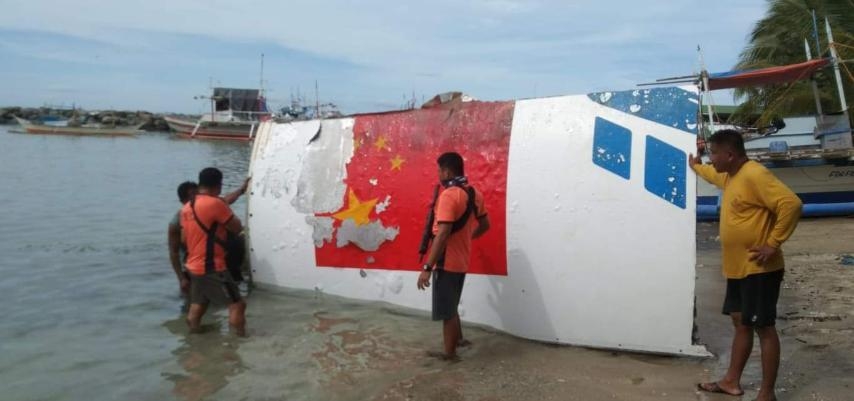
China Long March-5B Y3 rocket remains from July 24, 2022.
Image credit: Philippine Coast Guard/Mamburao
No active search
It is safe to assume that the booster and payload fairing did land on the water within minutes after the launch, the PhilSA official added.
“As there have been no reports of pieces spotted floating in the water, it is also possible that the debris has sunk instead and therefore will not be found,” stated the PhilSA public relations and information division contact.
“Please note that we are not actively seeking out the debris. Our fishermen are not asked to do search parties for it. PhilSA only requests to be informed in case there are any sightings. Historically, the drop zones have been reliable,” said the official of the Philippine Space Agency.
In the past, on multiple occasions, Chinese rocket leftovers have peppered the area, including debris from a Long March 5B rocket launch in 2022. Filipinos later recovered launch litter thought to be parts of that booster plucked from waters off Mamburao, Occidental Mindoro.
 Posted in Space News

