 By
By  September 4th, 2026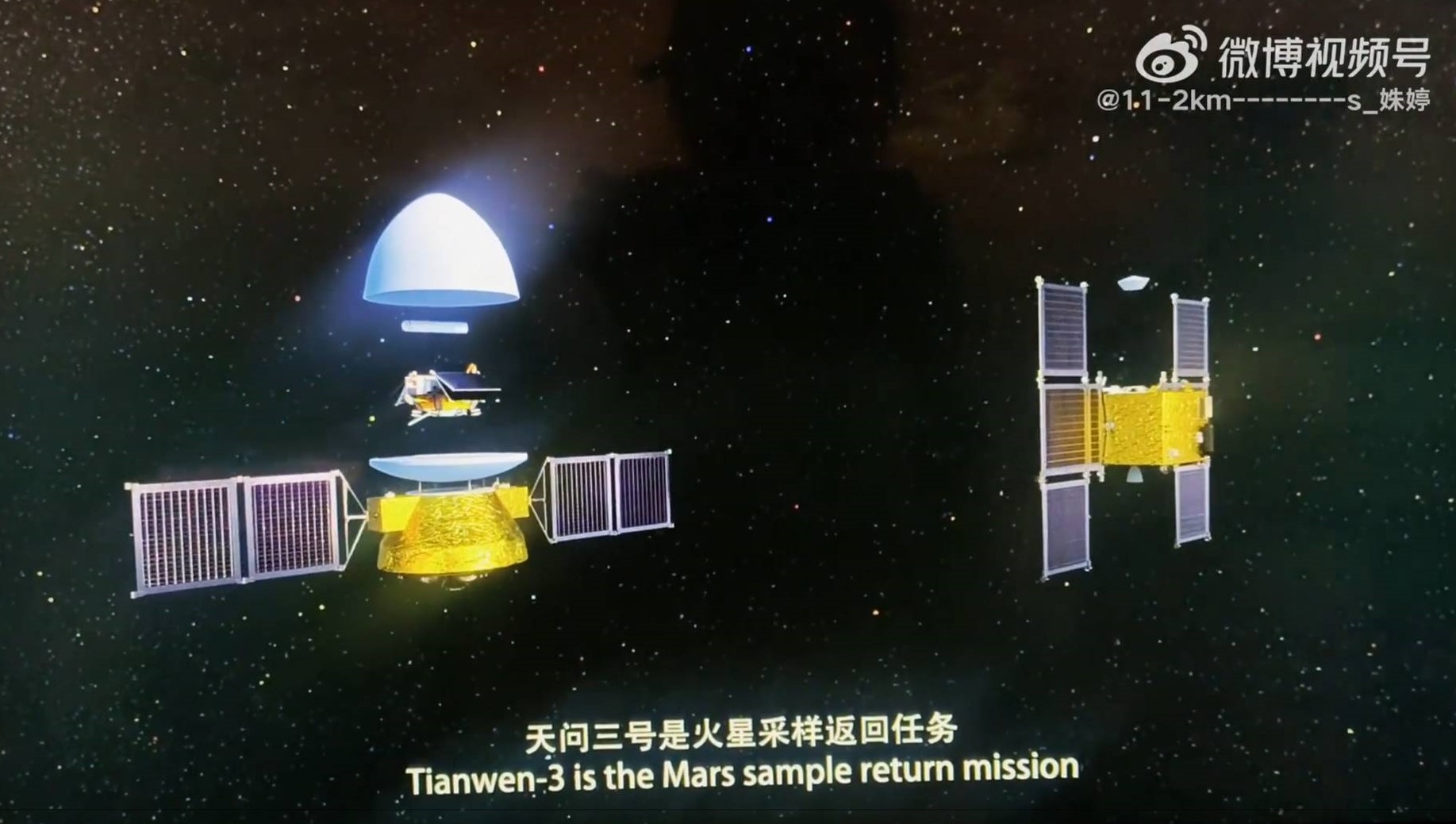
Image credit: Weibo/Inside Outer Space screengrab
China’s Tianwen-3 Mars Sample Return mission appears on track for launch next year, dedicated to return to Earth Red Planet collectibles in 2031.
A new video posted on Weibo is being shown by CNSPACE.dev, a website on China space development, noting that multi-site sampling by drone is not displayed in the video, only sampling done by a robotic arm on the lander.
CNSPACE.dev notes Tianwen-3 is due to launch in 2028, aimed to gather at least 500 grams of Mars samples for return to Earth.
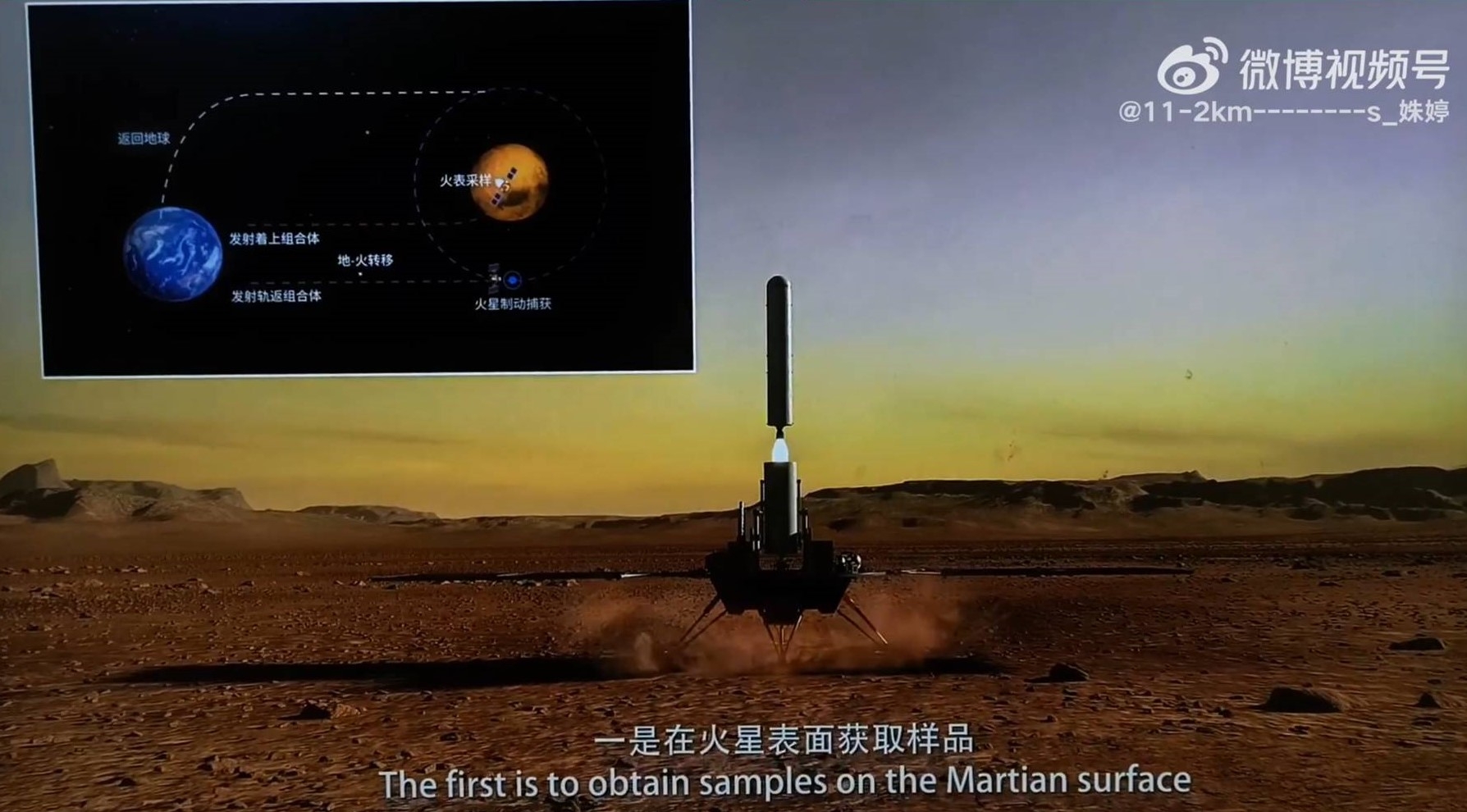
Image credit: Weibo/Inside Outer Space screengrab
Planetary protection lab
Last month, China’s Xinhua news agency, said that a “planetary protection laboratory” is to be built in the first phase of Hefei’s Deep-Space Science City in east China’s Anhui Province, citing the Deep Space Exploration Laboratory (DSEL), which will undertake part of the laboratory’s operation.
“The planetary protection laboratory will implement a two-way protection system that guards both the returning Martian samples and Earth’s biosphere,” Xinhua reports.
The lab’s tasks encompass sample sterilization, unsealing, processing and biological risk assessment. “The facility is designed to support the implementation of major deep-space missions and to enable scientific research on Martian samples,” adds Xinhua.
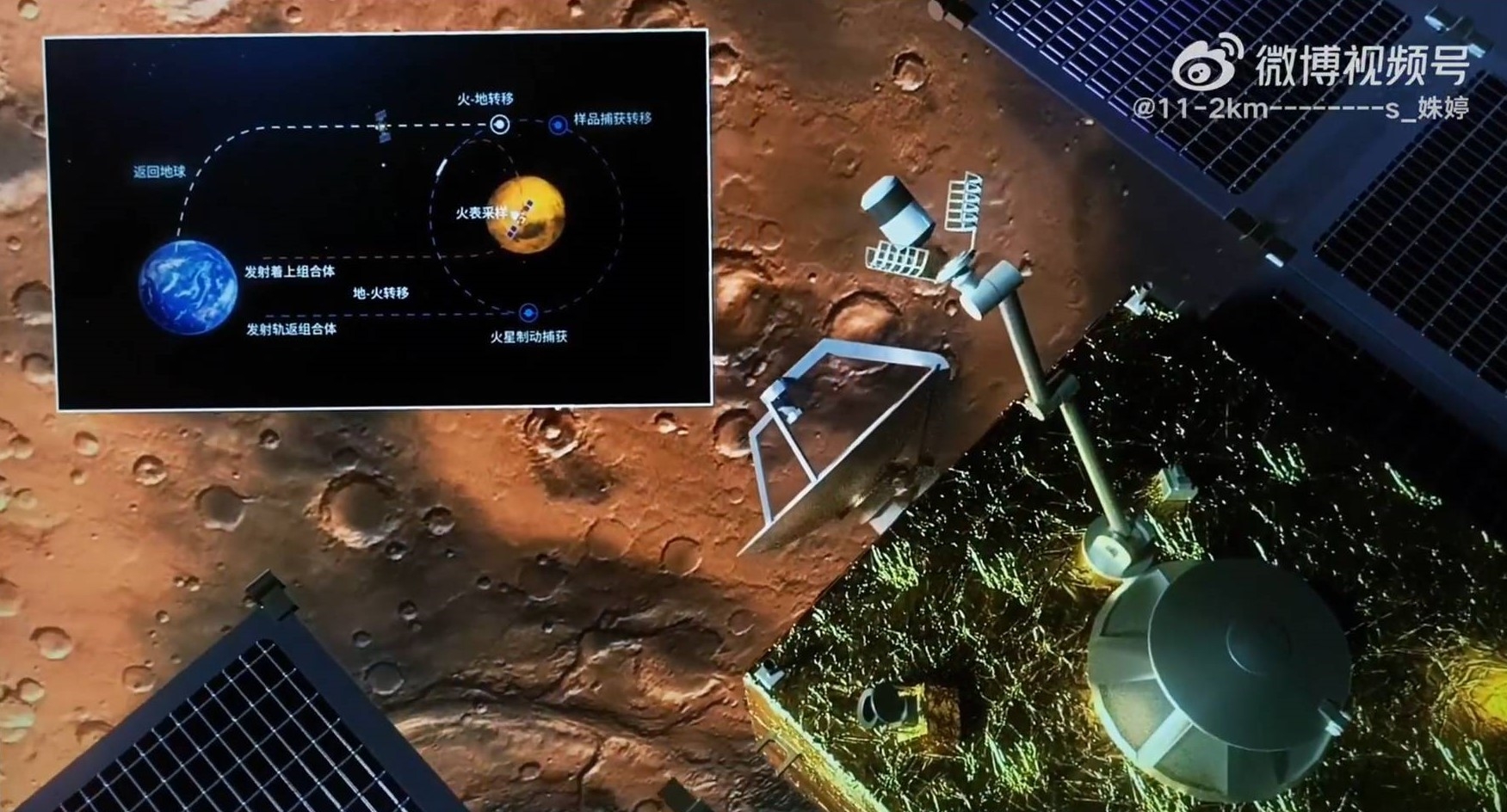
Image credit: Weibo/Inside Outer Space screengrab
Xinhua reports that Li Hang, director of the development planning department at DSEL, said the laboratory will serve scientific research findings from extraterrestrial samples.
Li also confirmed that China “will follow the planetary protection policies of the Committee on Space Research, to prevent biological contamination of Mars by terrestrial organisms and to protect Earth from any potential extraterrestrial life forms that may be carried back in the samples,” Xinhua reports.
Search for signs of life
CCTV/Inside Outer Space screengrab
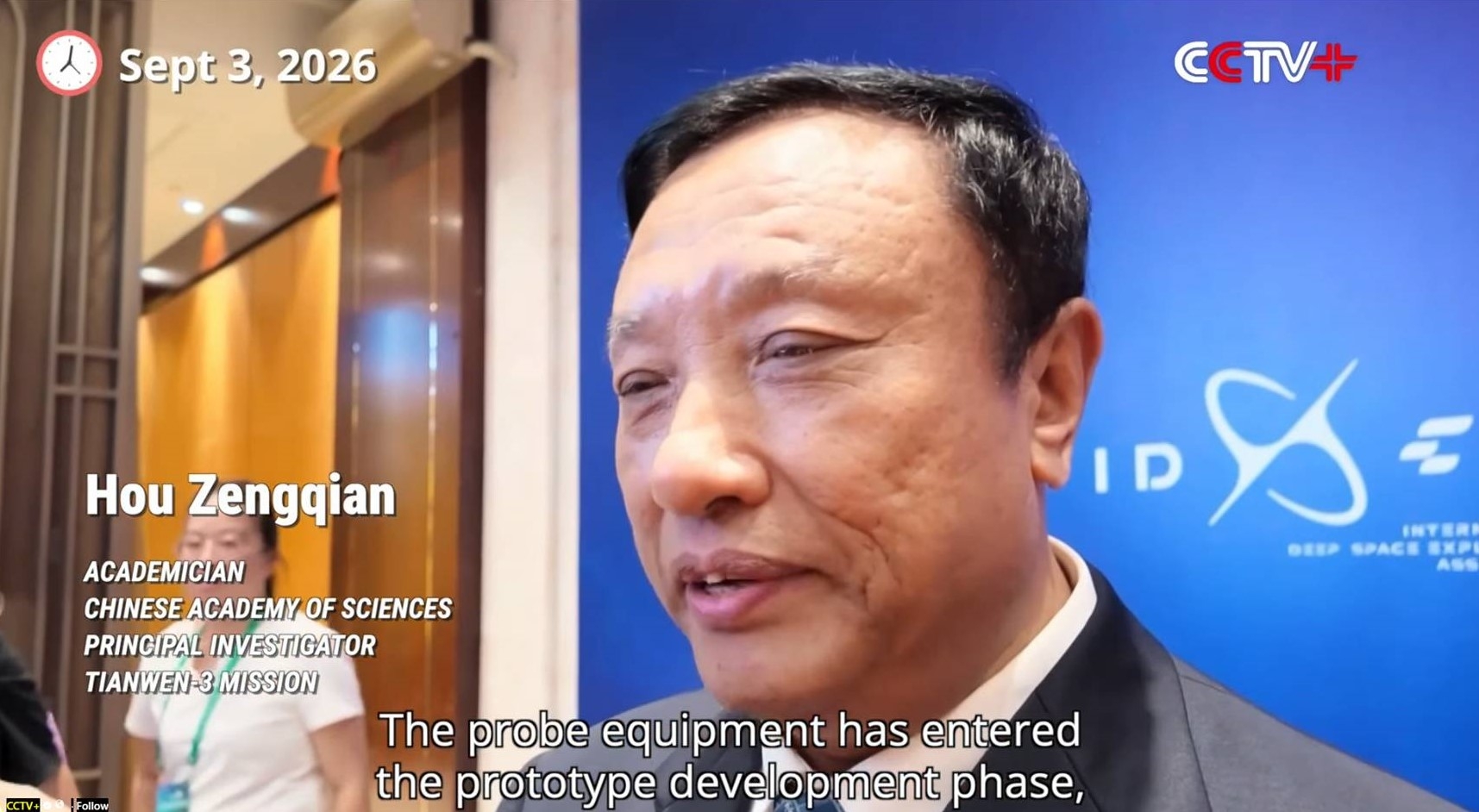
“Tianwen-3’s primary scientific objective is to search for signs of life. Therefore, we must land in a very precisely targeted area, which, both in theory and according to existing records, is the most likely to harbor life,” said Hou Zengqian, an academician with the Chinese Academy of Sciences.
Hou made the remarks on the sidelines of the International Deep Space Exploration Conference 2026, which opened on Thursday in Hefei City of east China’s Anhui Province.
According to the China National Space Administration, the Tianwen-3 probe will have five components — a lander, an ascender, a service capsule, an orbiter, and a reentry module. It will be launched around 2028 on two Long March-5 heavy-lift carrier rockets from the Wenchang Space Launch Site in China’s southernmost island province of Hainan.
To view the video, go to this Weibo-posting at:
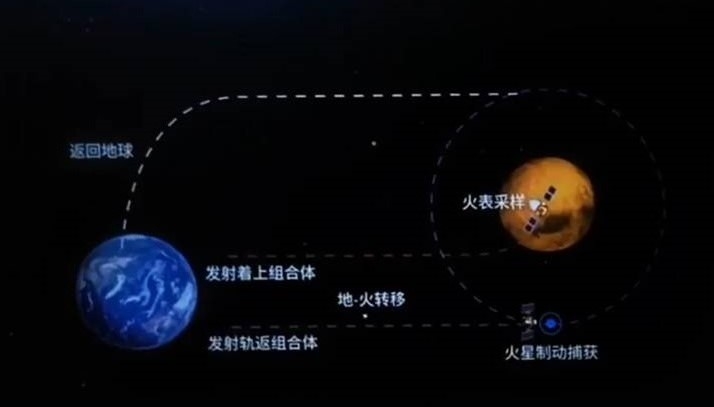
Image credit: Weibo/Inside Outer Space screengrab
 Posted in Space News

