 By
By  July 9th, 2021
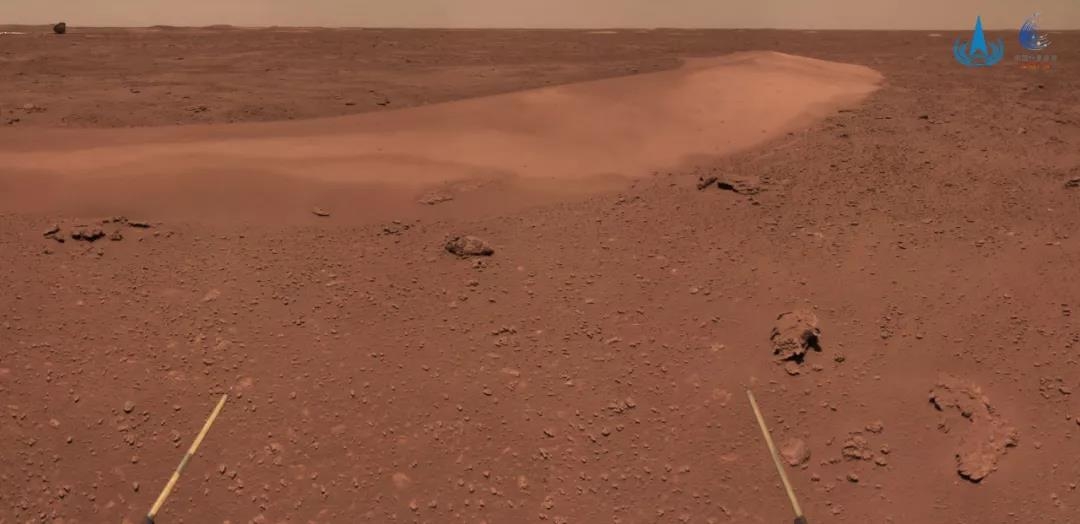
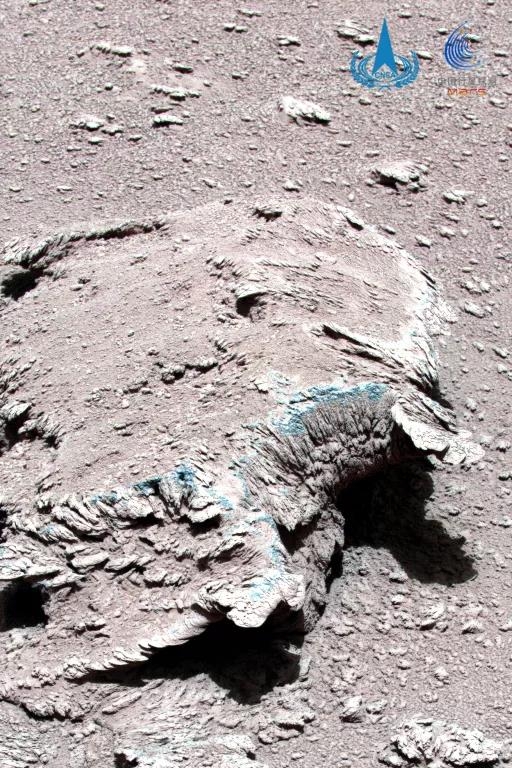
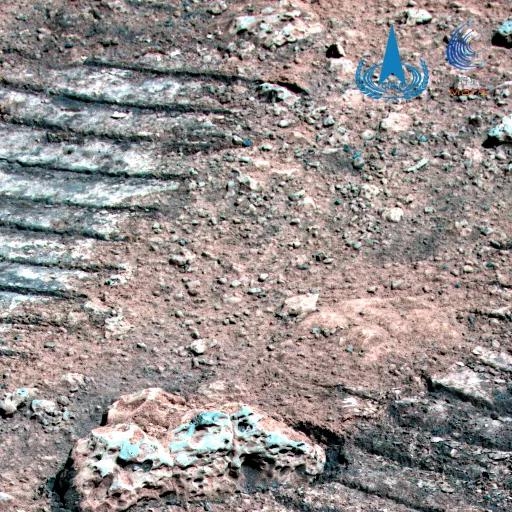
The China National Space Administration (CNSA) on Friday released new photos of the Martian surface captured by the country’s first Mars rover Zhurong.
Zhurong has been working on the red planet for 54 Martian days and has traveled more than 300 meters.

Xiong Wan, et al./Atomic Spectroscopy
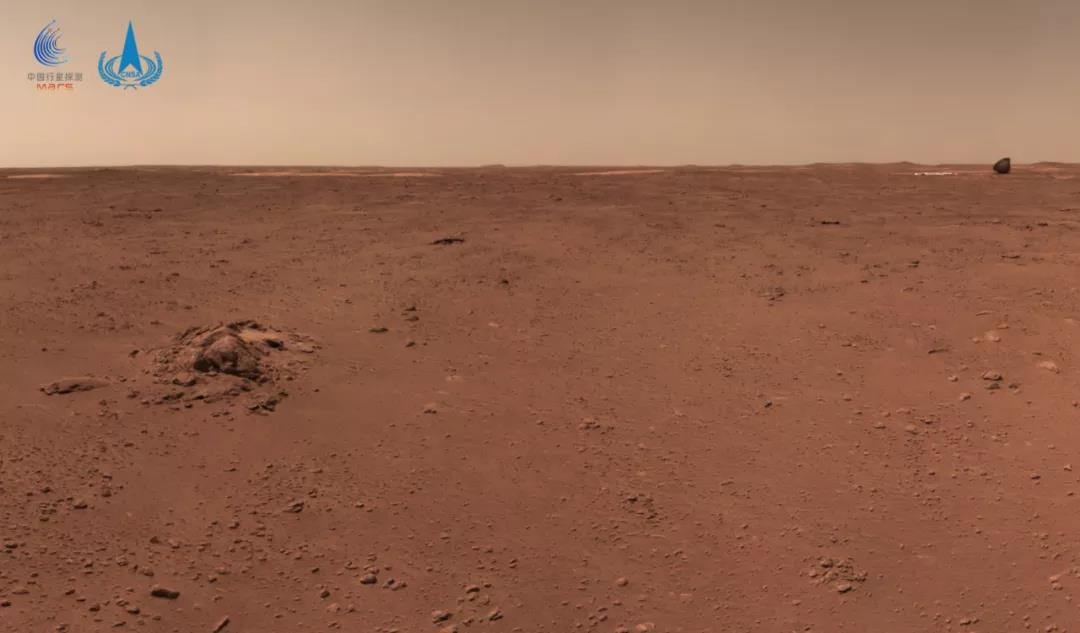
Note aeroshell and parachute in the distance.
 Posted in Space News


The sixth image above from the Zhurong rover bears a striking resemblance to the sedimentary sandstone rocks I have studied from the Ordovician in Western New York which have remnants of Bryozoan fossils in them. The carbonate Bryozoan fossils eventually get eaten away by acid rain or humic acids in the soil leaving only holes where they were once occupied by Bryozoan;s. I wrote and submitted a hypothesis paper about them in 2003 for the SPIE Astrobiology Conference comparing them to the rocks at Viking Lander 2 site (also in Utopia Planitia). Many of the rock images from the Perseverance rover (during landing) show similar oriented holes and other features that could be explained by ancient metazoan sea life. What do these three spacecraft (Viking Lander 2, Perseverance and Zhurong all have in common? All their landing sites are located near a large body of water such as an ocean – Isidis Planitia and Utopia Planitia. I feel my work here continues to demonstrate that Mars may have had metazoan sea life 2 to 3 billion years before the Earth.
Dissolution cavities in upper Ordovician sandstones from Lake Ontario: analogs to vesiculated rocks on Mars?
DiGregorio, Barry E.
Abstract
Fossiliferous sandstones of the Upper Ordovician (Lorraine Group) found along the Erie-Ontario Lowlands represent near-shore marine invertebrate communities which dominated the warm shallow sea that existed in this region 450 my ago. Subsequent glacial scouring and breakup of this ancient seabed during the Pleistocene resulted in its being buried under glacial sediments and soil. Then over a period of thousands of years, mild carbonic acid from rainwater mixed with humic acids from soil percolated through the sandstones and dissolved the entombed fossils leaving only dissolution cavities. This same process is how caves and karst features are formed. Rocks imaged by NASA”s Viking 2 lander in 1976 revealed ubiquitous “vesicles” that to this day remain enigmatic because the mineralogy of Martian rocks has not been adequately analyzed to date. Neither a sedimentary nor a volcanic origin for the rocks has been firmly established. Furthermore, proposed theories on the evolution of the Utopia Basin near the Viking 2 landing site include an ancient shallow ocean and glacial scouring. If Mars did indeed have an ocean at one point in its history, then the question must be asked “Did Martian lakes and oceans also have time enough for the development of life and ultimately to the multicellular stage that may have left traces of their existence as dissolution cavities? In this report, attention is drawn to the morphological similarities of biogenic dissolution cavities in terrestrial sandstones and in the near-field rocks at the Viking 2 landing site on Mars. The Beagle 2 astrobiology lander, part of the ESA”s Mars Express mission in 2003, will once again land in the northern plains of Mars not far from the shoreline of the proposed northern ocean basin. A comparison of the rocks from the Beagle 2 landing site to those at Viking 2 may shed further light on whether they are sedimentary or volcanic in origin, and, of greatest interest, whether the vesicles in the Martian rocks constitute analogs to the biologically formed dissolution cavities in the rocks of the Upper Ordovician on Lake Ontario.
Publication:
Instruments, Methods, and Missions for Astrobiology V. Edited by Richard B. Hoover, Alexei Yu. Rozanov, Roland R. Paepe. Proceedings of the SPIE, Volume 4859, pp. 57-71 (2003).
Pub Date: February 2003 DOI: 10.1117/12.457566 Bibcode: 2003SPIE.4859…57D .