 By
By  May 23rd, 2026
Image credit: CCTV/Inside Outer Space screengrab
China is integrating its robotic Chang’e Moon exploration program with the country’s human spaceflight activities to assure the first Chinese human landing on the lunar surface takes place by 2030.
Zhang Jingbo, spokesman of the China Manned Space Agency (CMSA) agency, made the announcement at a press conference at the Jiuquan Satellite Launch Center in northwest China.
“To fully leverage the technological expertise and practical experience accumulated over decades through the Manned Space Flight Mission and Chang’e program, the existing manned lunar landing and unmanned lunar exploration efforts will be integrated across three areas of missions, resources, and teams,” Zhang said.
“The integrated program is called the Lunar Exploration Program,” said Zhang.
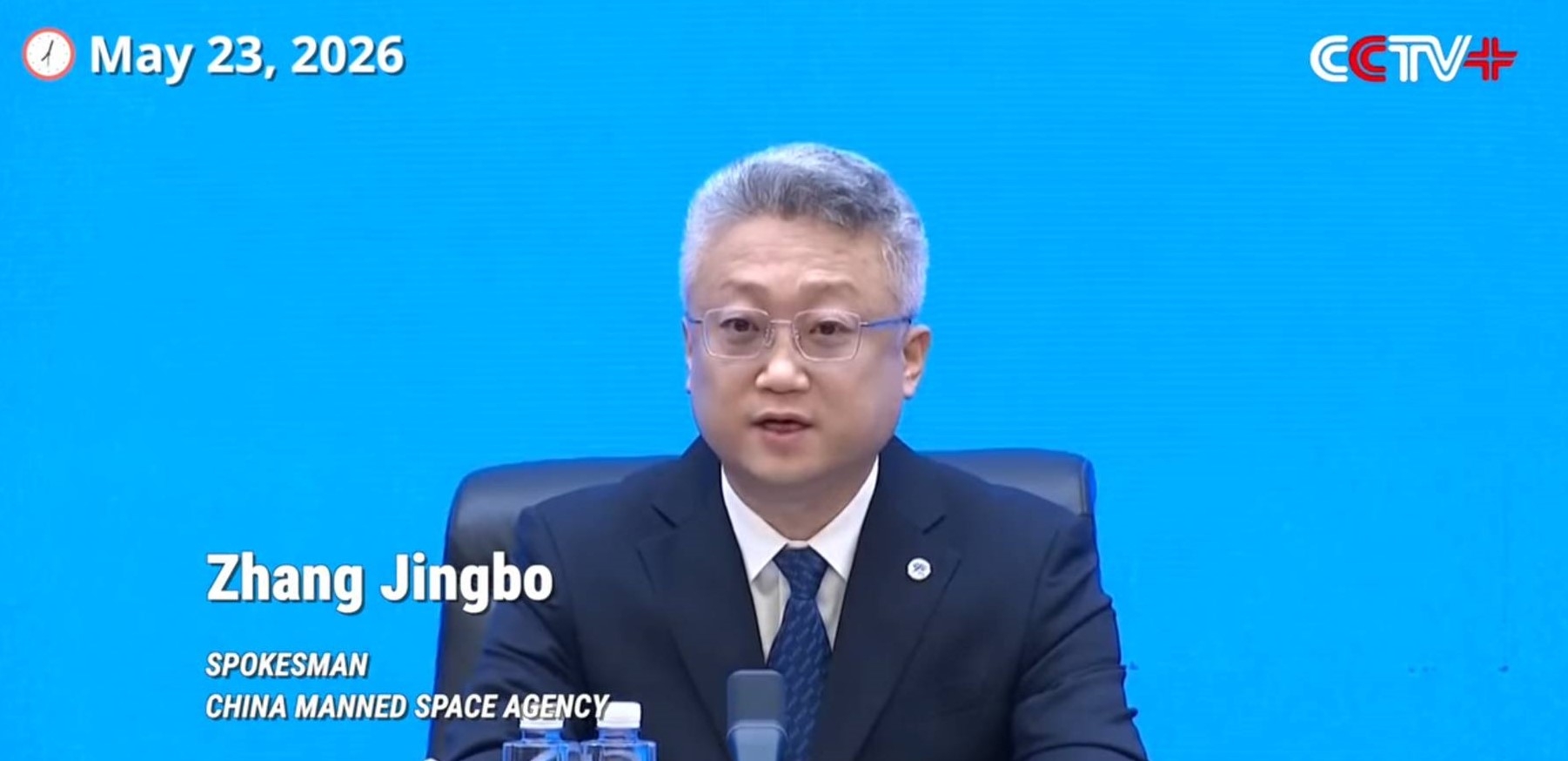
Image credit: CCTV/Inside Outer Space screengrab
Demonstration tests
Zhang pointed to past low-altitude demonstration tests of the Long March-10 carrier rocket system and maximum-dynamic-pressure escape tests of the Mengzhou spacecraft system.
Those tests are paving the way for a reusable crewed transportation system and future crewed lunar landings, said Zhang.
Spare no effort
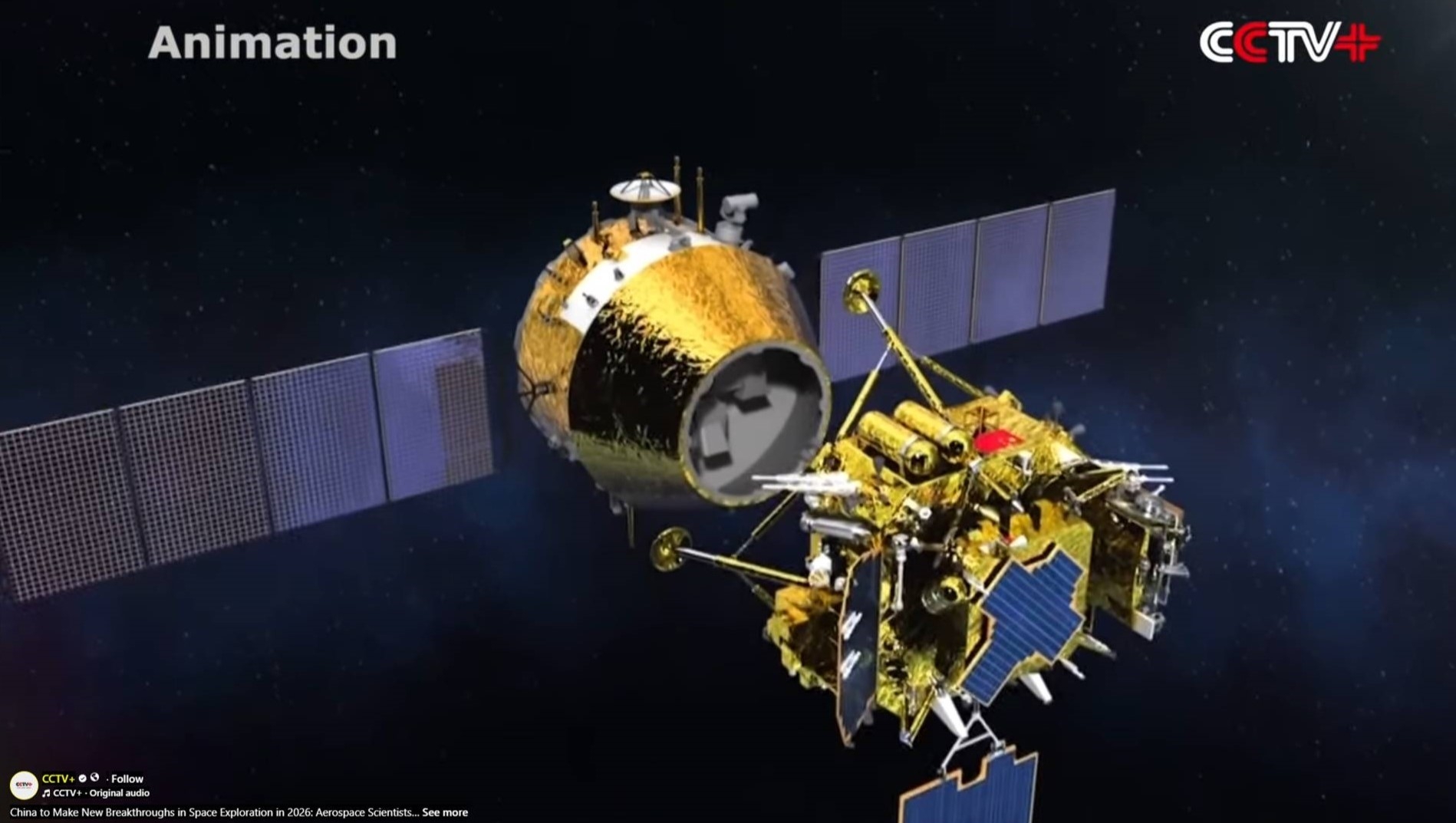
In April this year, China’s Chang’e-7 lunar probe was transported to the Wenchang Space Launch Site.
Preparations for pre-launch testing are now underway, with the mission slated for launch in the second half of the year, reportedly this August.
Chang;e-7 artwork. Image credit: CCTV/Inside Outer Space screengrab
The Chang’e-7 mission will include orbiting, landing, roving, and a lunar hopper to study the environment and resources of the lunar south pole, while also carrying out international cooperation, said Zhang.
“Next, we plan to complete some key missions, including technical verification flights of the Long March-10 carrier rocket and maiden flights of the Mengzhou spacecraft and Lanyue [Moon] lander.
“We will spare no effort to strive for the goal of achieving the first Chinese landing on the Moon by 2030,” Zhang added.
Space station foundation
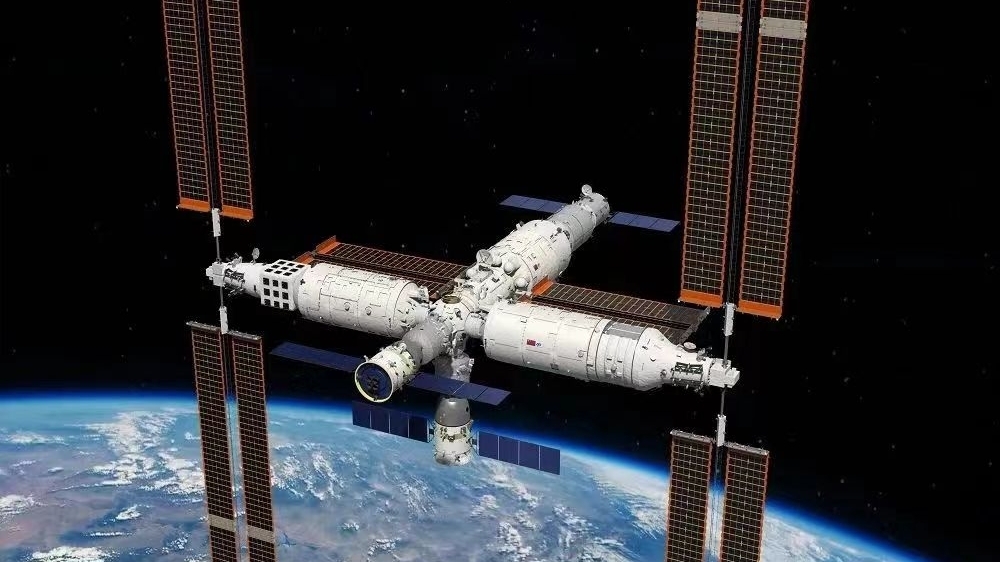
China’s space station missions are intended to lay a solid foundation for the country’s first crewed lunar landing in 2030.
“Our space station has been operating steadily in orbit for nearly four years now, and it has deployed and verified a number of key technologies needed for crewed lunar landing,” said Zhang.
Zhang said that the newly launched Tianzhou-10 cargo supply craft carried an experiment on how liquid sloshes inside a surface tension tank amid microgravity.
Artwork depicts China’s Tiangong space station.
Image credit: China Manned Space Agency
This is to verify the precision and rationality of technical specifications we set for manned lunar landing spacecraft,” Zhang added.
Technical maturity
The Long March-10A carrier rocket and the Mengzhou spacecraft that perform space station missions, shares integrated design and development engineering required for lunar exploration, said Zhang.
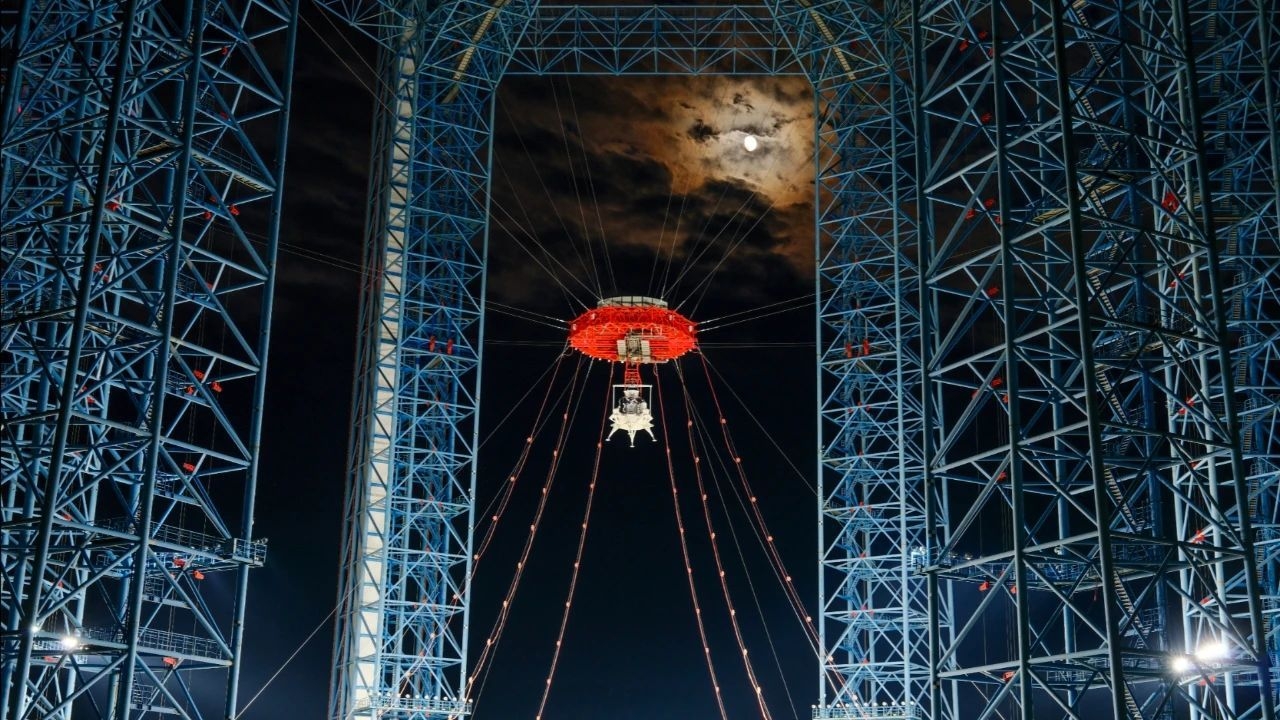
China completed a comprehensive test of its crew-carrying Lanyue lunar lander in north China’s Hebei Province, August 6, 2025. Image credit: CGTN//China Media Group.
“Through verifications in multiple space station flight missions over the next two years,” noted Zhang, “we will comprehensively boost relevant technical maturity and task reliability, so as to lay a solid foundation for China’s first crewed lunar landing.”
In addition, the long-term in-orbit operation of the space station can provide more and larger platforms in space, Zhang said, to support future missions like lunar research and development as well as deep-space exploration.
 Posted in Space News

