Archive for the ‘Wait a Minute!’ Category
 Author:
  August 28th, 2024
Wait-a-Minute!
Image credit: Barbara David
NASA’s Volatiles Investigating Polar Exploration Rover, or VIPER, was cancelled on July 17 by the space agency.
But in a wait-a-minute and ready-to-roll mode the rover continues to inch its way forward.
Commercial/international partners may be selected to fly the moon machine to the lunar south pole. In addition, Congressional lawmakers are taking a budgetary hard-look at the situation, prodded in part, by a save VIPER letter-writing campaign involving 4,800-plus shoot-for-the-Moon supporters.

The VIPER rover heading into the Thermal Vacuum (TVAC) Chamber for testing.
Image credit: Daniel Andrews/LinkedIn
Vacuum chamber
In the interim, VIPER recently entered thermal vacuum chamber testing to be completed by October.
The NASA decision to cancel the VIPER south pole Moon rover continues to stir up lunar exploration advocates, with the open letter to Congress requesting lawmakers to “refuse to authorize” the NASA verdict.

Lights out for NASA’s VIPER ice-hound?
Image credit: NASA
The open letter can be viewed at:
https://forms.gle/bRzoLN5P66Ge2vzN9
At this point in time, NASA had put in $450 million into VIPER.
“Continuation of VIPER would result in an increased cost that threatens cancellation or disruption to other CLPS missions,” the space agency statement explains. “NASA has notified Congress of the agency’s intent.” CLPS IS NASA’s Commercial Lunar Payload Services initiative.

A close-up view of the areas that were to be explored by VIPER, showing a nominal traverse route and highlighting permanently shadowed regions that may contain water ice and other volatiles.
Credit: NASA’s Scientific Visualization Studio/Ernie Wright
Go to the NASA VIPER cancellation statement at:
https://www.nasa.gov/news-release/nasa-ends-viper-project-continues-moon-exploration/
Partnership opportunity
NASA said it’s planning to disassemble and reuse VIPER’s instruments and components for future Moon missions.
Prior to disassembly, NASA’s open to expressions of interest from U.S. industry and international partners for use of the existing VIPER rover system at no cost to the government.
Go to the VIPER Rover Partnership Opportunity request at:
https://sam.gov/opp/ccc3285133aa4dbd877b9dcb53fab99c/view

Wait a Minute!
Image credit: Barbara David
 Posted in
Wait-a-Minute!
Image credit: Barbara David
The high drama of a “stranded” Starliner two-person crew needing “rescue” comes to a head in a wait-a-minute weekend.
NASA Administrator Bill Nelson and leadership will hold an internal Agency Test Flight Readiness Review on Saturday, Aug. 24, for NASA’s beleaguered Boeing Crew Flight Test.
Right after that top leadership gathering, about an hour later, NASA will host a live news conference at 1 p.m. Eastern Time from the agency’s Johnson Space Center in Houston.
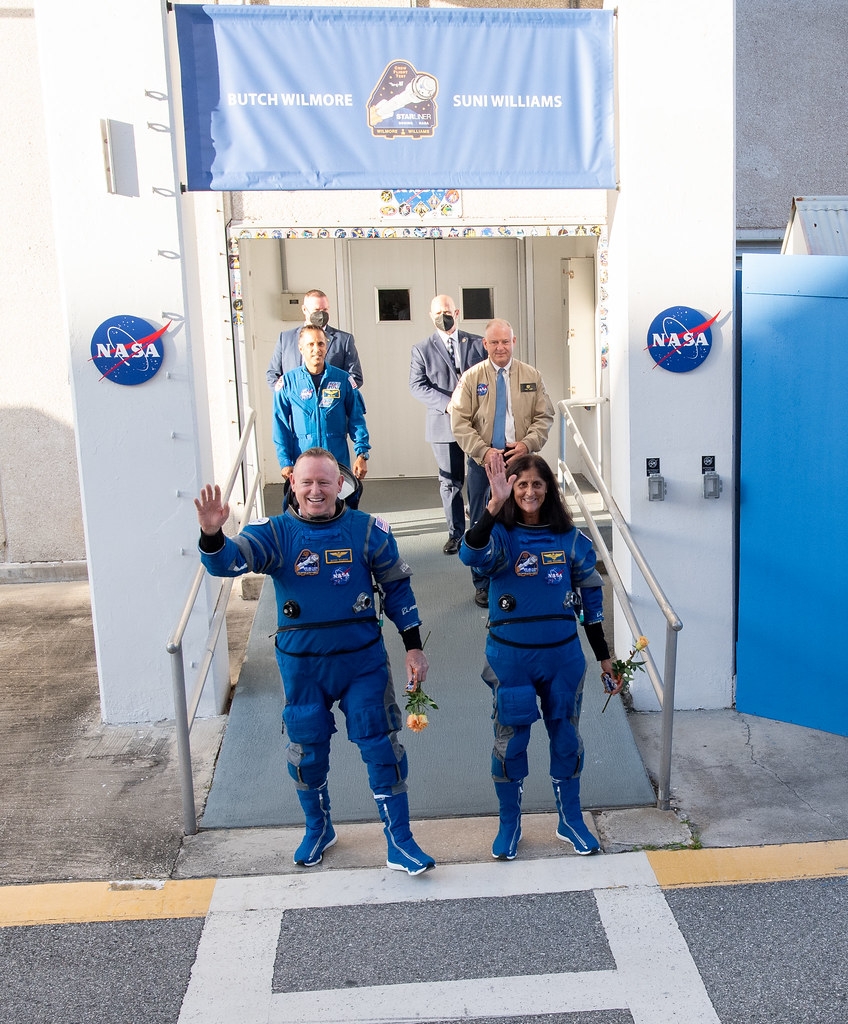
NASA astronauts Butch Wilmore, left, and Suni Williams, wearing Boeing spacesuits, wave to viewers in pre-launch photo.
Image crrdit: NASA/Joel Kowsky
Technical challenges
Both NASA and Boeing experts, as well as safety-of-flight gurus have assessed data. That information has been gathered both in space and on the ground, focused on issues that cropped up with the Starliner’s propulsion and helium systems “to better understand the ongoing technical challenges,” explains NASA.
During Starliner’s flight to the space station, some of the spacecraft’s thrusters did not perform as expected. Furthermore, several leaks were observed in Starliner’s helium system.
“The review will include a mission status update, review of technical data and closeout actions, as well as certify flight rationale to proceed with undocking and return from the space station,” NASA adds.

Boeing Starliner attached to International Space Station. Coming home empty?
Image credit: NASA
Abandon in place?
But will astronauts Butch Wilmore and Suni Williams be onboard the Starliner for a projected land touchdown?
Now safely tucked inside the International Space Station, the twosome were launched aboard Boeing’s Starliner on June 5 for a projected 8 day mission.
There’s chatter about use of the SpaceX Dragon to retrieve the astronauts. But that “abandon in place” decision for the duo means they’d stay put on the ISS until late February of next year.
NASA would replan the agency’s SpaceX Crew-9 mission by launching only two crew members instead of four in late September.

Boeing “Doghouse” unit containing thrusters.
Image credit: Boeing
Wilmore and Williams would then return to Earth after the regularly scheduled Crew-9 increment early next year.
If that’s the path they’ll need SpaceX space suits; the Boeing Starliner space suits are not compatible with the Dragon spacecraft.
Auto-piloting
Also in the decision mix is returning Starliner to Earth on auto-pilot mode, empty of crew next month. Doing so means uploading new software into Starliner for re-entry and a parachute landing, perhaps in New Mexico.

Starliner artwork depicts landing in New Mexico.
Credit: Boeing
So, once again, it’s high drama on the high seas of space.
Early musings
For some early musings about this simple twist of fate flight, go to:
Return of Starliner: Doghouse Deliberations
https://www.leonarddavid.com/return-of-starliner-doghouse-deliberations/
Starliner’s Saga: Tuning in the “Uncertainty Band”
https://www.leonarddavid.com/starliners-saga-tuning-in-the-uncertainty-band/
Boeing Starliner: NASA’s “Deposit, No-return” Decision?
https://www.leonarddavid.com/boeing-starliner-nasas-deposit-no-return-decision/
Watch the media event on NASA+, NASA Television, the NASA app, YouTube, and the agency’s website.
Go to:
Wait-a-Minute!
Image credit: Barbara David
Boeing Starliner attached to International Space Station. Coming home empty?
Image credit: NASA
NASA held another in a series of media briefings on August 14, providing an update on the continuing, complex, and sometimes confusing Boeing Crew Flight Test.
Bottom line from NASA: “Mission managers continue to evaluate the Starliner spacecraft’s readiness in advance of decisional meetings no earlier than next week regarding the return of NASA astronauts Butch Wilmore and Suni Williams.”
Engineering lingo
NASA’s Boeing Crew Flight Test launched on June 5 on a United Launch Alliance Atlas V rocket from Cape Canaveral Space Force Station in Florida.
Boeing “Doghouse” unit containing thrusters.
Image credit: Boeing
Wilmore and Williams arrived at the International Space Station on June 5 for their pre-ordained eight day mission before returning to Earth.
For Boeing, they are literally in the “doghouse” – perhaps unfortunate engineering lingo — because “doghouses” are where Starliner’s control thrusters are located that proved troublesome.
Both Boeing and NASA teams are trying to figure out why multiple thrusters on the good ship “Calypso” failed during docking.
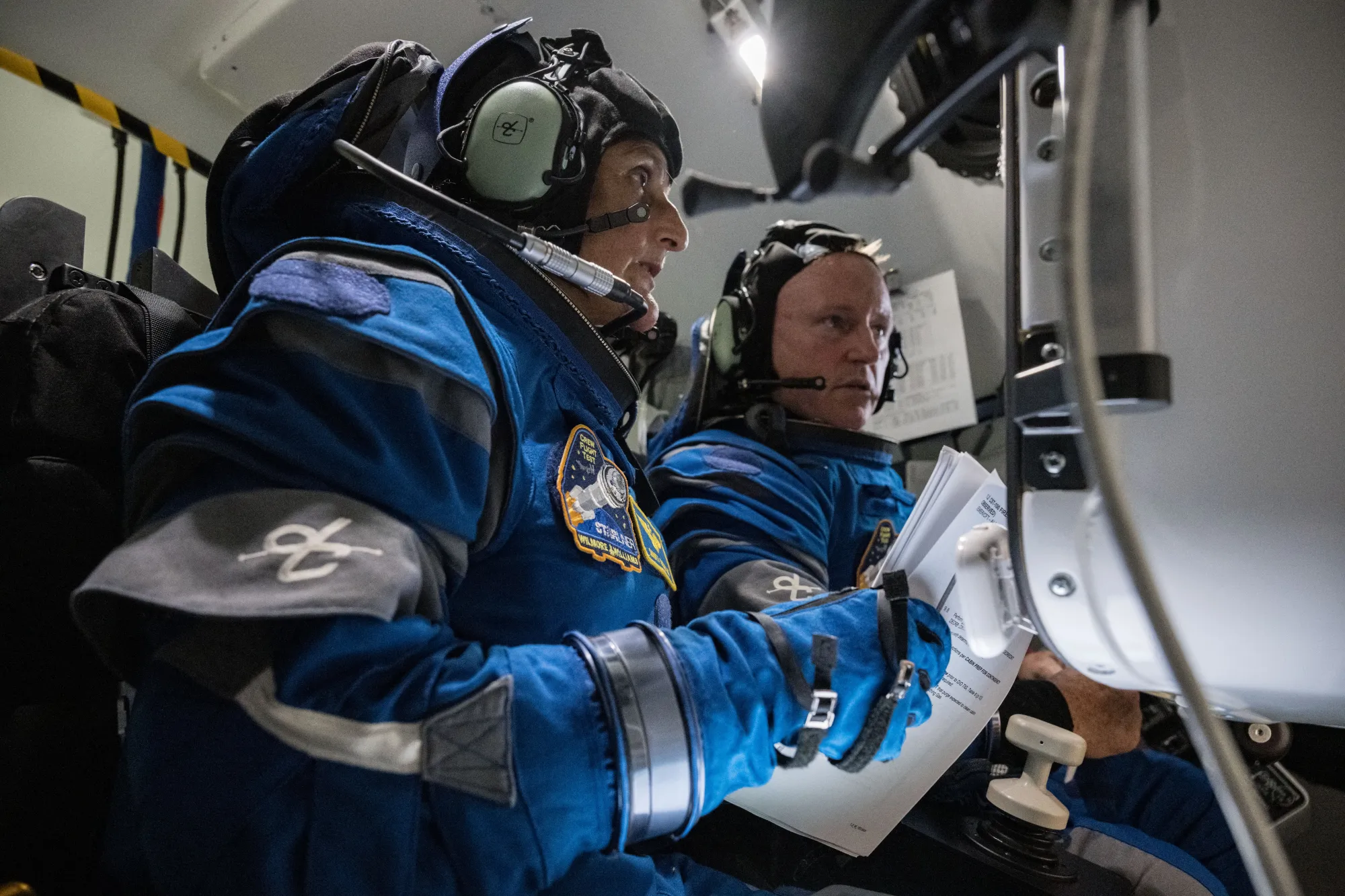
NASA astronauts Suni Williams (left) and Butch Wilmore during pre-launch Boeing Starliner spacecraft simulator workout at NASA’s Johnson Space Center.
Image credit: NASA/Robert Markowitz
Partnership
The Crew Flight Test is an end-to-end test of the Starliner system as part of the agency’s Commercial Crew Program – a partnership with American private industry to open the aperture wider to low Earth orbit and the space station to more people, science, and commercial opportunities.
Yesterday’s briefing by NASA involved:
— Ken Bowersox, associate administrator, NASA’s Space Operations Mission Directorate
— Joel Montalbano, deputy associate administrator, NASA’s Space Operations Mission Directorate
— Russ DeLoach, chief, NASA’s Office of Safety and Mission Assurance
— NASA chief astronaut Joe Acaba
— Emily Nelson, chief flight director, NASA’s Flight Operations Directorate

Image credit: Land landing of Starliner.
Image credit: Boeing
Their titles give you an idea of what’s underway at NASA as it plots a course of action regarding the troubled Starliner and how best to bring back its two-person crew safe and sound back to terra firma.
Go/no-go
Forthcoming is a NASA go/no-go on returning Starliner stuffed with a crew or perhaps empty. Perhaps SpaceX and its Dragon spacecraft might serve as a “rescue option” for returning Wilmore and Williams.
But then there are other complications.
NASA astronauts Butch Wilmore, left, and Suni Williams, wearing Boeing spacesuits.
Image crrdit: NASA/Joel Kowsky
“The Boeing suit is made to work with the Starliner spacecraft and the SpaceX suit is made to work with the Dragon spacecraft. Both were designed to fit the unique nature of their respective spacecraft,” responded NASA spokesperson Steven Siceloff to my Inside Outer Space question via email.
Also, there have been reports that the Starliner can’t fly home without a crew. But that appears not to be the case.
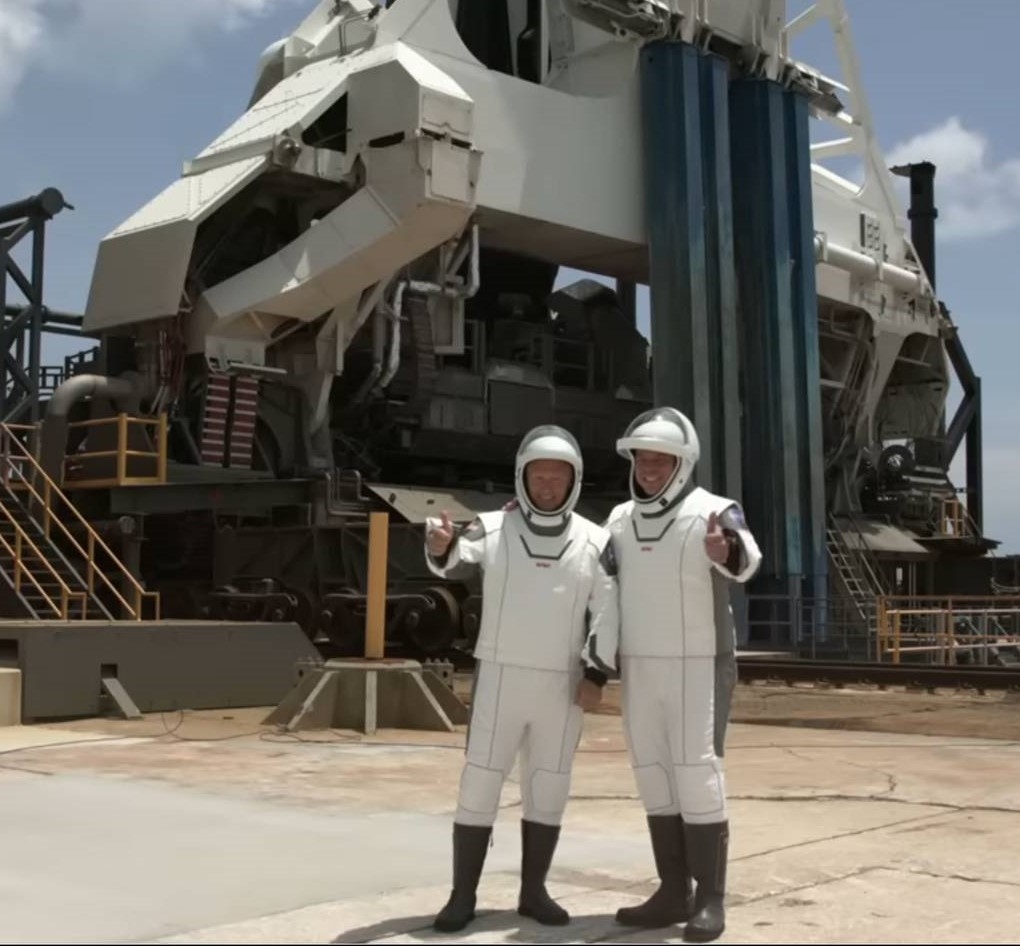
SpaceX Dragon astronauts and their spacesuits. Doug Hurley (left), and Robert Behnken ready for departure on Crew Dragon Demo-2 mission on May 30, 2020.
Image credit: NASA TV/Inside Outer Space
“Starliner flies autonomously and can fly itself back – it did that during OFT-2 [an uncrewed Orbital Flight Test-2 of Starliner back in May 2022.] There are details that are specific to the mission that have to be updated but the overall system is built for the autonomous flight,” Siceloff added.
High drama
All of this high drama is coming to closure, perhaps prior to the end of this month.
So stay tuned…
In the meantime, give a listen to the recent media briefing: NASA’s Boeing Crew Flight Test (Aug. 14, 2024) in replay mode on Youtube at:
BTW: Here are my early musings about this evolving situation looking for a solution:
Starliner’s Saga: Tuning in the “Uncertainty Band”
https://www.leonarddavid.com/starliners-saga-tuning-in-the-uncertainty-band/
Boeing Starliner: NASA’s “Deposit, No-return” Decision?
https://www.leonarddavid.com/boeing-starliner-nasas-deposit-no-return-decision/
Wait-a-Minute!
Image credit: Barbara David
The on-going, unfolding, wait-a-minute drama of the Boeing Starliner and its “stuck or stranded” crew in space was discussed the other day by NASA during a Starliner test mission briefing.
For me, personally, the media gaggle was a late reminder of a wake-up call.
It harkened back to my covering the space shuttle Challenger (O-ring finger pointing) and Columbia accidents (suspected wing damage via foam) and loss of 14 shuttle astronauts. Also, there was a tinge of Apollo-1’s fiery tragedy of a three-person crew.
But more specific to the Boeing Starliner thruster issues, I recalled Gemini-8 – yes, I’m old, but that too was a heart-stopper of a problem.
Retro-fire back to March of 1966.
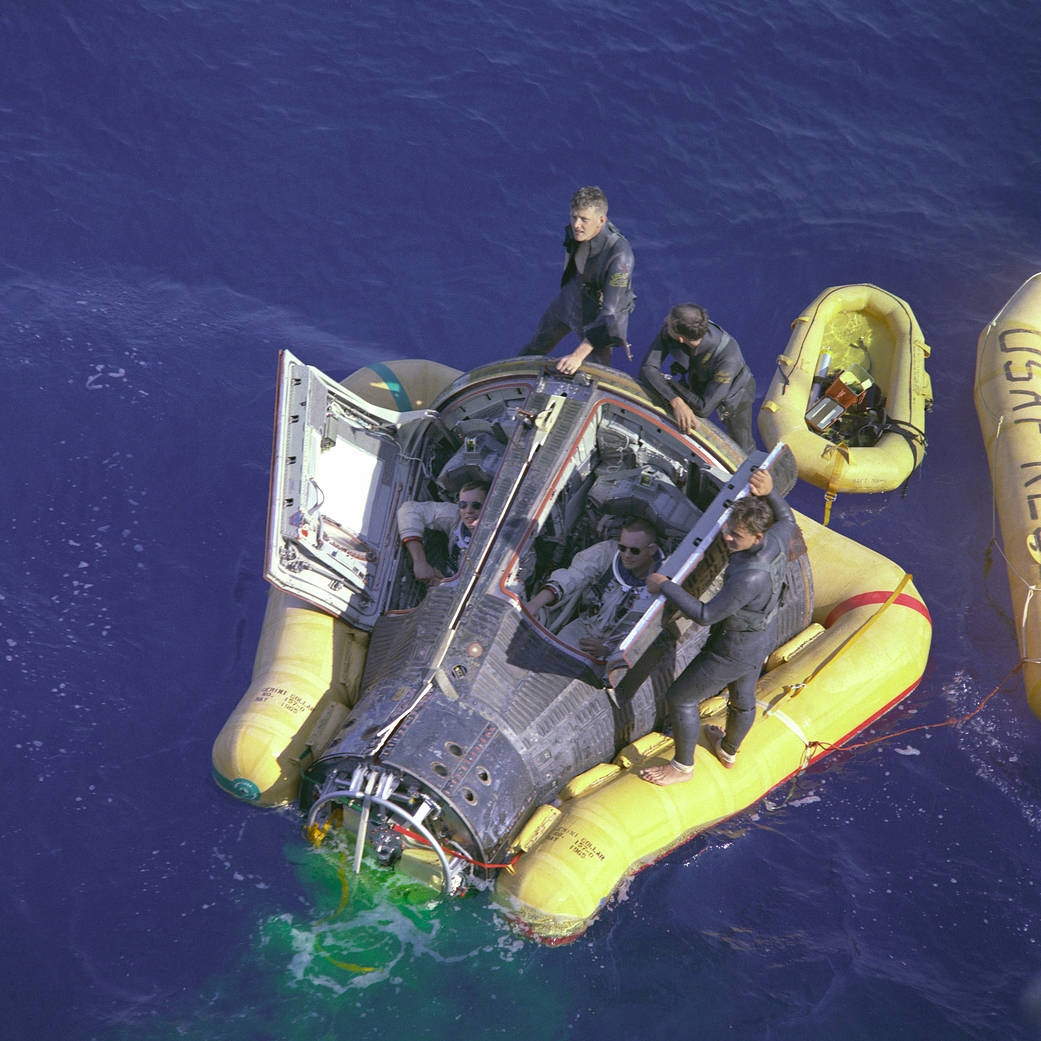
Gemini 8 abort due to stuck thruster issue.
Image credit: NASA
Gemini 8, with Neil Armstrong and David Scott onboard, carried out the first docking of two spacecraft in orbit. A stuck thruster in their Gemini spacecraft’s Orbital Attitude and Maneuvering System threatened their lives and necessitated an immediate abort of the mission. Planned for three days, Gemini 8’s mission lasted less than 11 hours due to spacecraft thruster woes.
Apples and oranges, oranges and apples – I guess.
Uncertainty band
Meanwhile, back to this week’s Starliner briefing.
Words used like “uncertainty band” and not understanding the “physics” of the hardware come to mind – but plenty of other phrases that conjure up memories of the past.
It prompted me to jell in my mind a few questions. Well, those inquiries were left unanswered as the media briefing closed and I was still in the queue.
Boeing Starliner attached to International Space Station.
Image credit: NASA
But to their credit, NASA specialists did respond to my questions later via email.
Starliner questions
Question 1:
At the end of the day – to what degree do Starliner’s crew – Butch and Sunni — have the “final say” on coming home – shouldn’t they be the final go/no go folks?
Answer: “NASA does not commit to flight without a go from the Flight Operations Directorate from which crew readiness is determined. Crew safety is the agency’s top priority. NASA does not fly without the crew’s concurrence.”
NASA astronauts Suni Williams (left) and Butch Wilmore during pre-launch Boeing Starliner spacecraft simulator workout at NASA’s Johnson Space Center.
Image credit: NASA/Robert Markowitz
Question 2:
What I heard today was unnerving in some of the words used, particularly “uncertainty band” and not understanding the “physics” of the hardware. Any additional words to clarify those terms?
Answer: “Often in human spaceflight, engineering teams are working to assess risk for problems in which the root cause is not known or the hardware affected is not recoverable. While much can be done on the ground and in flight to shrink the issue’s band of uncertainty and better understand the physics involved, reasonable individuals can interpret data differently and come to various conclusions. This is a healthy part of any flight rationale development process and it is critical for crew safety.”
Image credit: Land landing of Starliner.
Image credit: Boeing
Question 3:
Lastly, forget the thrusters (for the moment!) – what I wanted to ask is about longevity life-time specs for the heat shield, on-orbit parachutes, gas-generator units for airbag deployment, etc. Has there been an assessment of their operability in the chain of events that must happen to assure safe recovery of the crew and capsule – if that crew scenario is taken?
Answer: “All the components you listed are certified for the standard 210-day crew rotation, however, some systems like the thermal protection system do require on-orbit inspections before being cleared for return.”
Whatever the outcome of upcoming NASA decision-making regarding Starliner, what’s your view?
Also, give a listen to that press briefing at: 800-584-7317
Also (2) Special thanks to NASA spokesperson, Steven Siceloff, for championing my questions and handling my inquiry.

Wait a Minute!
Image credit: Barbara David
I just hung up from a wake-up call.
NASA officials today addressed the on-going saga of the Boeing Starliner test mission to the International Space Station.
NASA provided a Starliner crew flight test and space station mission update to a gaggle of attentive media, including me.
On the end of that media call:
Ken Bowersox, associate administrator, Space Operations Mission Directorate
Steve Stich, manager, Commercial Crew Program
Dana Weigel, manager, International Space Station Program
Boeing Starliner attached to International Space Station.
Image credit: NASA
Why don’t you give a listen yourself to a recorded replay that’s accessible until Nov. 7 by calling: 800-584-7317.
Uncertainty band
As a reporter, sad to say, that covered the space shuttle Challenger (O-rings) and Columbia accidents (wing damage via foam) and loss of 14 astronauts, what I heard today was unnerving.
Words used like “uncertainty band” and not understanding the “physics” of the hardware come to mind – but plenty of other phrases that sparked retro-fire moments of years ago.
For one, at the end of the day – to what degree does Starliner’s crew – Butch and Sunni — have the “final say” on coming home – shouldn’t they give the final go/no go return home decision?
NASA astronauts Suni Williams (left) and Butch Wilmore during pre-launch Boeing Starliner spacecraft simulator workout at NASA’s Johnson Space Center.
Image credit: NASA/Robert Markowitz
In the doghouse
Lastly, forget the Starliner thrusters (for the moment!) that have put, quite literally, Boeing in the doghouse.
What about the longevity/life-time specs for the heat shield, on-orbit parachutes, generator units for airbag deployment, etc. Are these spacecraft systems, and other re-entry gear, all up to snuff?
Has there been an assessment of their operability in the chain of events that must happen to assure safe recovery of the crew and capsule – if that astronaut return to Earth via Starliner is taken?
SpaceX to the “rescue?”
Boeing “Doghouse” unit containing thrusters.
Image credit: Boeing
All in all, the NASA briefing is welcomed, if not worrisome news about a “deposit, no return” astronaut crew.
Meanwhile, the prospect of SpaceX Dragon to the rescue was brought up. But “rescue” is/isn’t a stretch? You decide.
Last month, NASA requested SpaceX to carry out a month-long “Special Study for Emergency Response,” a contract valued at $266,678.00.
The work request was signed on July 15 and that work is to be completed by August 15. This action was signed by a procurement officer at Kennedy Space Center.

Image Credit: Boeing
Contingency options
While there has been speculation that the SpaceX study was related to the Boeing Starliner woes, in response to an Inside Outer Space inquiry, this NASA statement:
“NASA continuously explores a wide range of contingency options with our partners to ensure crew safety aboard the International Space Station. Over the past couple of years, the agency has worked with its commercial partner SpaceX to provide additional return capability on the Dragon spacecraft in the event of a contingency. This is not related to Starliner.”
Whatever the outcome of upcoming NASA decision-making regarding Starliner, what’s your view?
Listen to that press briefing at: 800-584-7317
Wait a Minute!
Image credit: Barbara David
On Mars, it’s a wait-a-minute conundrum.
Question: Has life been found on Mars?
The answer: Well, maybe…maybe not.
Clear as mud.
NASA’s Perseverance rover is busily scouting about Jezero Crater on the Red Planet. Indeed, the Mars machinery is doing its assigned job with a key objective that’s fine-tuned for astrobiology, including caching samples that may contain signs of ancient microbial life.

Ken Farley, project scientist for NASA’s Perseverance Mars rover mission.
Image credit: Caltech/Inside Outer Space screengrab
New discovery
On July 25, Ken Farley, project scientist for NASA’s Perseverance Mars rover mission, shared information about a new discovery that is now tagged as “the most puzzling, complex, and potentially important rock yet investigated by Perseverance.”
Farley spoke to a full auditorium of Mars researchers during the 10th International Conference on Mars at Caltech in Pasadena, California.
“So I call this rock ‘the unknown,’ but also tagged the find as “potentially very important.”
Under Sapphire Canyon skies
The rock outcrop is called Cheyava Falls. Perseverance drilled a core from Cheyava Falls, the rover’s 22nd rock sample on July 21, as the robot probed the northern edge of Neretva Vallis, an ancient river valley.

Image credit: NASA/JPL-Caltech/MSSS/Inside Outer Space screengrab
Perseverance obtained a full-length, 6.2 centimeters long core of the rock, filling an onboard sampling tube. The sample is called Sapphire Canyon.
Farley said that sample is a potential biosignature, carefully defining that term: “A potential biosignature is a substance or structure that might have a biological origin, but requires more data or further study before reaching a conclusion.”

Image credit: Caltech/Inside Outer Space screengrab
The Sapphire Canyon sample has a collection of features, possibly several potential biosignatures.
“So I think it is safe to say,” Farley told the attendees, “this rock constitutes a rock that has potential biosignatures in it,” and a sample that “is the strongest case that we have for why sample return should go forward.”
Rethinking underway
That going forward is now stuck in neutral.
The currently being rethought Mars Sample Return effort, due to cost, complexity, and timeliness, is a joint campaign being blueprinted by NASA and the European Space Agency.
Independent reviews had price-tagged that initiative at a whopping $10 billion, perhaps more. No easy undertaking, rocketing specimens of Mars to Earth is an endeavor that entails multiple missions and components.

Mars sample return to Earth – a major undertaking by NASA, the European Space Agency.
Image credit: NASA/JPL-Caltech
But it’s also a project mantra resolute in bringing Mars rock, loose surface material, and gas samples to Earth for detailed laboratory analysis and study.
By using an array of techniques, those specimens on inspection could, quite literally, de-muddy the question of whether or not the Red Planet was an extraterrestrial address for life…or possibly a comfy home for life today.
To view Ken Farley’s intriguing, fact-filled presentation, along with audience reactions, go to:

“Wait-a-minute”
Image credit: Barbara David
UPDATE: NASA’s Moon News: VIPER CANCELLED
Go to NASA announcement at:
https://www.nasa.gov/news-release/nasa-ends-viper-project-continues-moon-exploration/
“VIPER is 100% built and has completed part of its testing. It is ready to go and NASA is junking a very capable rover and ceding leadership in resource exploration. It is a dark day for lunar science and exploration and maybe the Artemis program,” responds Clive Neal, a lunar exploration expert at the University of Notre Dame.
Posted earlier:
In wait-a-minute style, the Moon exploration community is holding its collective breath for the news stemming from today’s “Exploration Science Program Update” by NASA.
Nobody is quite sure what’s coming, but on the rocket docket is Nicola Fox, associate administrator, Science Mission Directorate at NASA Headquarters.
Perhaps a tip on things to come, joining Fox is NASA’s Joel Kearns, deputy associate administrator for exploration, Science Mission Directorate.
Kearns also leads the Commercial Lunar Payload Services initiative, the CLPS space agency/private sector activity.
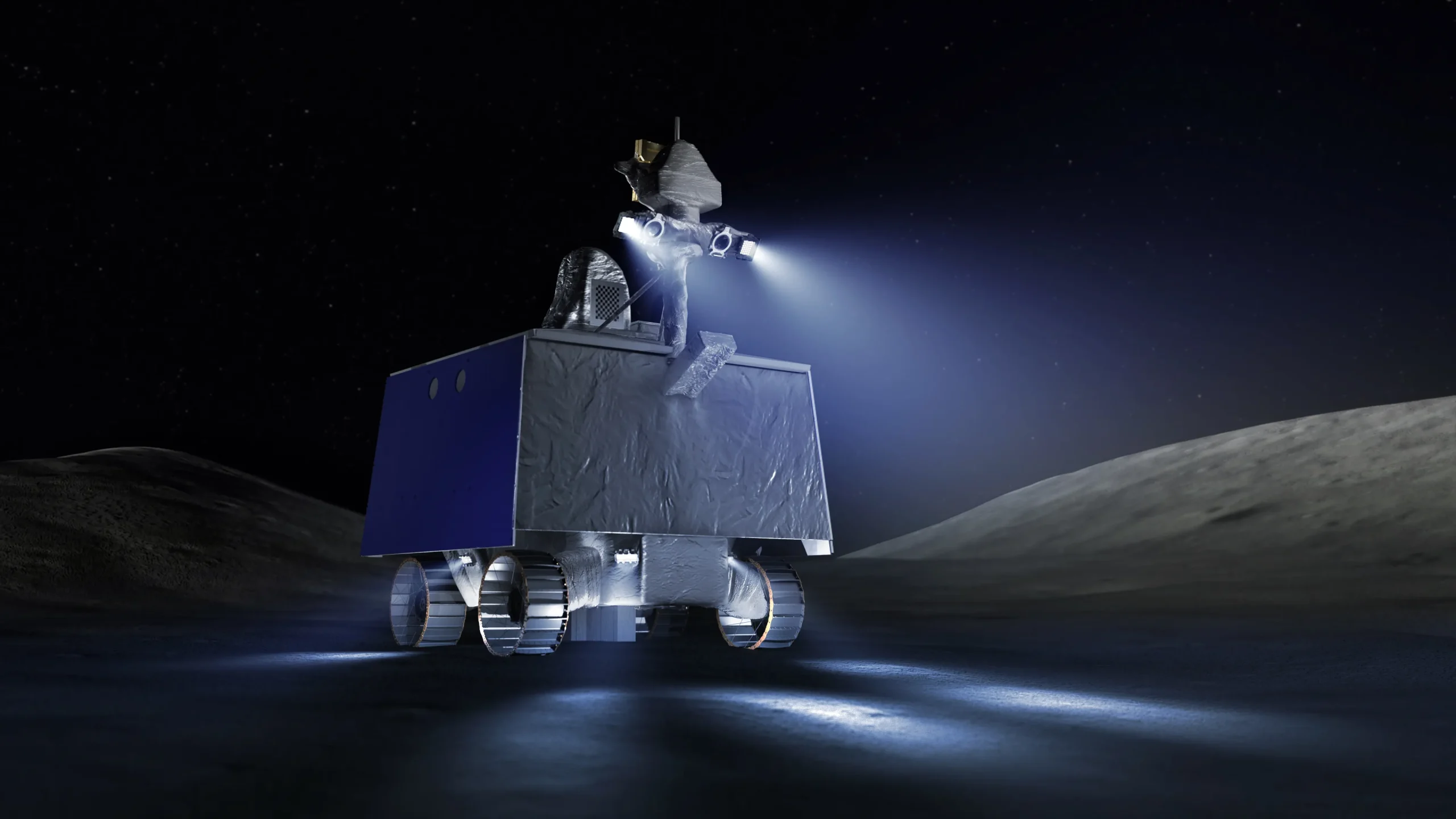
Oh dear, caught in the headlights? NASA’s VIPER Moon rover?
There is some speculation that an update will be given on the status of CLPS, particularly the NASA contracted Astrobotic delivery of the agency’s Volatiles Investigating Polar Exploration Rover (VIPER).
VIPER bite?
VIPER is a key part of NASA’s Artemis lunar exploration plan, a robotic endeavor in search of Moon ice and other potential resources.
Astrobotic is on tap to use its Griffin lunar lander to deliver VIPER to the Moon’s south pole, supposedly by year’s end. But the company experienced a rough-and-tumble start with CLPS.
In January of this year, the Astrobotic Peregrine Mission One to the Moon failed due to an in-space propulsion glitch.

Earth’s Moon as viewed from the International Space Station.
Image credit: NASA
So, perhaps, news on the whereabouts and timing of a VIPER sendoff?
Then, on the other hand, maybe no.
But stay tuned later today for some sort of Moon news.
Image credit: Barbara David
Wait-a-minute: A misbehaving SpaceX Falcon 9 upper stage has led to Starlink satellites each taking destructive dives, willy-nilly style, into the Earth’s atmosphere.
The July 11 liftoff of the SpaceX Starlink Group 9-3 from Vandenberg Space Force Base in California was a definite dud, with several of the 20 Starlinks already nearing their plunge to oblivion according to The Aerospace Corporation’s Center for Orbital and Reentry Debris Studies (CORDS).
To keep an eye on incoming Starlinks associated with the rare SpaceX upper stage mishap, go to https://aerospace.org/cords

Misbehaving upper stage. Image credit: SpaceX/Inside Outer Space screengrab
Eccentric orbit
As explained in a SpaceX posting, Falcon 9’s second stage performed its first burn nominally, “however a liquid oxygen leak developed on the second stage.”
After a planned relight of the upper stage engine to raise the lowest point of orbit, that stage’s Merlin Vacuum engine experienced an anomaly and was unable to complete its second burn.
“Although the stage survived and still deployed the satellites, it did not successfully circularize its orbit,” SpaceX explained, but the stage did passivate itself, a step normally performed at the end of each mission.
This left the satellites in an eccentric orbit, SpaceX added, with a very low perigee to Earth of under 85 miles (135 kilometers) altitude, which is less than half the expected perigee altitude.
Incident investigation
“No public injuries or public property damage have been reported,” reports the Federal Aviation Administration that is now requiring an investigation of the incident.
“An investigation is designed to further enhance public safety, determine the root cause of the event, and identify corrective actions to avoid it from happening again,” states the FAA.
Furthermore, the FAA must approve SpaceX’s final report, including any corrective actions.
“A return to flight is based on the FAA determining that any system, process, or procedure related to the mishap does not affect public safety,” the FAA explains. “In addition, SpaceX may need to request and receive approval from the FAA to modify its license that incorporates any corrective actions and meet all other licensing requirements.”

Load of Starlink satellites in doomed deployment.
Image credit: SpaceX via CelesTrak
I’ll raise you
According to SpaceX, the satellites were left in an enormously high-drag environment as they circuited the Earth.
At that level of drag, “our maximum available thrust is unlikely to be enough to successfully raise the satellites.”
The Starlink satellites will re-enter Earth’s atmosphere and “fully demise,” SpaceX added. “They do not pose a threat to other satellites in orbit or to public safety.”
Fully demise
The term “fully demise” is worth a note here.
Evidence is mounting that the high-heating of spacecraft materials as they plow through the atmosphere at high speeds do off-load chemistry into the Earth’s upper stratosphere. How destructive to the atmosphere that process is remains in research mode.
Then there’s the issue of spacecraft pieces that do find their way to Earth’s surface, be it ocean or land.

Image credit: NOAA
Increased activity
Meanwhile, satellite tracker T.S. Kelso and the CelesTrak chief, has been monitoring all 20 Starlink spacecraft, eyeing their individual decay rates as they circle Earth.
“At least geomagnetic activity is low (normal) right now,” Kelso told Inside Outer Space, but NOAA’s Space Weather Prediction Center is forecasting increased activity today.
CelesTrak ‘s mission is focused on making data and other resources freely available to the space community “to facilitate understanding of our orbital environment and how to use it safely and responsibly.”

Confirmed SpaceX debris found in Australia.
Photo courtesy: Brad Tucker
Uptick in skyfall
All in all, SpaceX and company leftovers falling from the heavens have garnered increased attention.
Last May, the remainders of a SpaceX Dragon “trunk” from its Crew-7 mission peppered separate sites in North Carolina.
While Starlink’s construction and the Dragon trunk design are worlds apart, the uptick from uncontrolled riff-raff coming down is a growing, worrisome trend.
For one, the list of other trunk dumps that survived their fiery skyfall also includes Australia, as well as Canada.
As reported by Canada’s CBC News, SpaceX employees visited a farm near Ituna, Saskatchewan, northeast of Regina, whisking away a number of trunk fragments in a U-haul trailer.

SpaceX Dragon “trunk” Image credit: SpaceX
The farmer that owns the property where the clutter came to full-stop was later compensated by SpaceX, CBC reports, for an undisclosed amount. Some of that money was subsequently donated to installation of a new local hockey rink.
Hot-lines
For its part, SpaceX has established a “SpaceX debris hot line” call-in number, as well as a “recovery@spaceX.com” email address.
“If you believe you have identified a piece of debris, please do not attempt to handle or retrieve the debris directly. Instead, please either email or leave a voice mail here with your name, number, and a brief description of what you have discovered and where,” the hot-line phone message explains.
“Teams are actively monitoring both message boxes and will ensure the notification is handled appropriately,” the recording adds. “If you have concerns about an immediate hazard, please contact your local law enforcement agency. Thank you, your assistance is greatly appreciated.”
Not sure if any recovered Starlink bits and pieces can use these same hot lines, but why not?
“I wish I may, I wish I might…Have the wish I wish tonight.”
Image credit: Barbara David
Wait-a-Minute!
It turns out – one group’s space junk is another person’s viewing hot spot.
The Glamping Collective in North Carolina was on the receiving end last May of leftovers from the SpaceX Dragon Crew-7 mission to the International Space Station.

Image credit: Rae Anne/The Glamping Collective
On May 22, a member of the Glamping Collective landscaping crew discovered the space clutter. “The debris was discovered about a half mile up our Sunset Summit Trail,” according to a Collective posting. “We invite you to come experience this yourself!”
In early June, the Clyde, North Carolina-based organization began displaying the space clutter.

Image credit: Glamping Collective
Snack pack
“The Glamping Collective has long been known as an incredible place to enjoy the night sky and stargazing! The Milky Way Galaxy can be even be seen around our fire pits, or on the Sunset Summit Trail on clear summer nights.”
Also, when completing your booking look for their Galactic Glamping Snack Pack “to complete your out of this world experience!”
Go to: https://www.theglampingcollective.com/
Image credit: SpaceX
NASA later issued a release confirming the re-entry of the Dragon spacecraft trunk hardware following its service mission to the International Space Station.
“Most recently, the trunks that supported SpaceX’s 30th commercial services resupply and Crew-7 missions re-entered over Saudi Arabia and North Carolina, respectively,” the NASA release stated. “NASA is unaware of any structural damage or injuries resulting from these findings.”
SpaceX hot line
For its part, SpaceX has established a “SpaceX debris hot line” as well as a “recovery@spaceX.com” email address.
“If you believe you have identified a piece of debris, please do not attempt to handle or retrieve the debris directly. Instead, please either email or leave a voice mail here with your name, number, and a brief description of what you have discovered and where,” the phone message explains.

Dragon Trunk debris recovered in Canada. Image credit: CTV/Inside Outer Space screengrab
“Teams are actively monitoring both message boxes and will ensure the notification is handled appropriately,” the recording adds. “If you have concerns about an immediate hazard, please contact your local law enforcement agency. Thank you, your assistance is greatly appreciated.”
Confirmed SpaceX debris found in Australia.
Photo courtesy: Brad Tucker
Trunk deliverables
For more details on this North Carolina incident, as well as other findings of Dragon trunk deliverables in Canada and Australia, go to:
1)
More SpaceX Space Trunk Debris Found?
https://www.leonarddavid.com/42221-2/
2)
More Trunk Space: New SpaceX Debris Found?
https://www.leonarddavid.com/trunk-space-new-spacex-debris-found/
3)
SpaceX Dragon Debris – Trunk Junk Recovered in Canada?
https://www.leonarddavid.com/spacex-dragon-debris-trunk-junk-recovered-in-canada/
4)
For a view of my recent SpaceNews story – “Uncontrolled reentry of space debris poses a real and growing threat” – go to:
https://spacenews.com/uncontrolled-reentry-of-space-debris-poses-a-real-and-growing-threat/
“Wait-a-minute”
Image credit: Barbara David
In classic “wait-a-minute” style, back in mid-April, NASA requested proposals from industry to do a double-take on the costly Mars Sample Return (MSR) initiative to return samples of the Red Planet in the 2030s.
NASA is now moving forward with 10 studies to examine more affordable and faster methods of bringing samples from Mars’ surface back to Earth.

Image credit: NASA
The MSR seven
As part of this re-look, NASA will award a firm-fixed-price contract for up to $1.5 million to conduct 90-day studies to seven industry proposers.
Additionally, the go-ahead has been given to NASA centers, NASA’s Jet Propulsion Laboratory (JPL) and Johns Hopkins’ Applied Physics Laboratory (APL) to also crank out MSR re-evaluation studies in the hopes of improving MSR’s price tag and schedule.
Mars sample return to Earth – a major and multi-billion dollar undertaking by NASA, the European Space Agency.
Image credit: NASA/JPL-Caltech
Alterations or enhancements
Once all the studies are in hand, NASA will assess them to consider alterations or enhancements to the Mars Sample Return architecture, tagged by independent assessment groups as perhaps costing upwards of $11 billion to carry out.
NASA has announced that the following companies and their proposals were selected from among those that responded to the April 15 request for help in re-shaping the MSR undertaking. They are:
Lockheed Martin, Littleton, Colorado: “Lockheed Martin Rapid Mission Design Studies for Mars Sample Return”
SpaceX, Hawthorne, California: “Enabling Mars Sample Return With Starship”
Aerojet Rocketdyne, Huntsville, Alabama: “A High-Performance Liquid Mars Ascent Vehicle, Using Highly Reliable and Mature Propulsion Technologies, to Improve Program Affordability and Schedule”
Blue Origin, Monrovia, California: “Leveraging Artemis for Mars Sample Return”
Quantum Space, Rockville, Maryland: “Quantum Anchor Leg Mars Sample Return Study”
Northrop Grumman, Elkton, Maryland: “High TRL [Technology Readiness Level] MAV [Mars Ascent Vehicle] Propulsion Trades and Concept Design for MSR Rapid Mission Design”
Whittinghill Aerospace, Camarillo, California: “A Rapid Design Study for the MSR Single Stage Mars Ascent Vehicle”

The Mars Ascent Vehicle (MAV) is a major and costly component of NASA’s robotic Holy Grail mission, a sample return effort to haul to Earth Martian collectibles.
Image credit: NASA/JPL-Caltech
Dumpster fire
All of this activity was sparked last September when an independent review board (IRB) released its findings after taking a diligent and detailed look at the flagship MSR project.
The IRB was established by NASA to judge the technical requirements, cost and calendar plans of the task. It was a thorough sanity check on how things were going for MSR…and things were found not to be going well.
For more information, go to my Scientific American story – “NASA’s Troubled Mars Sample Mission Has Scientists Seeing Red – NASA’s Mars Sample Return program is the agency’s highest priority in planetary science, but projected multibillion-dollar overruns have some calling the plan a “dumpster fire”” – at:

