 By
By  October 16th, 2021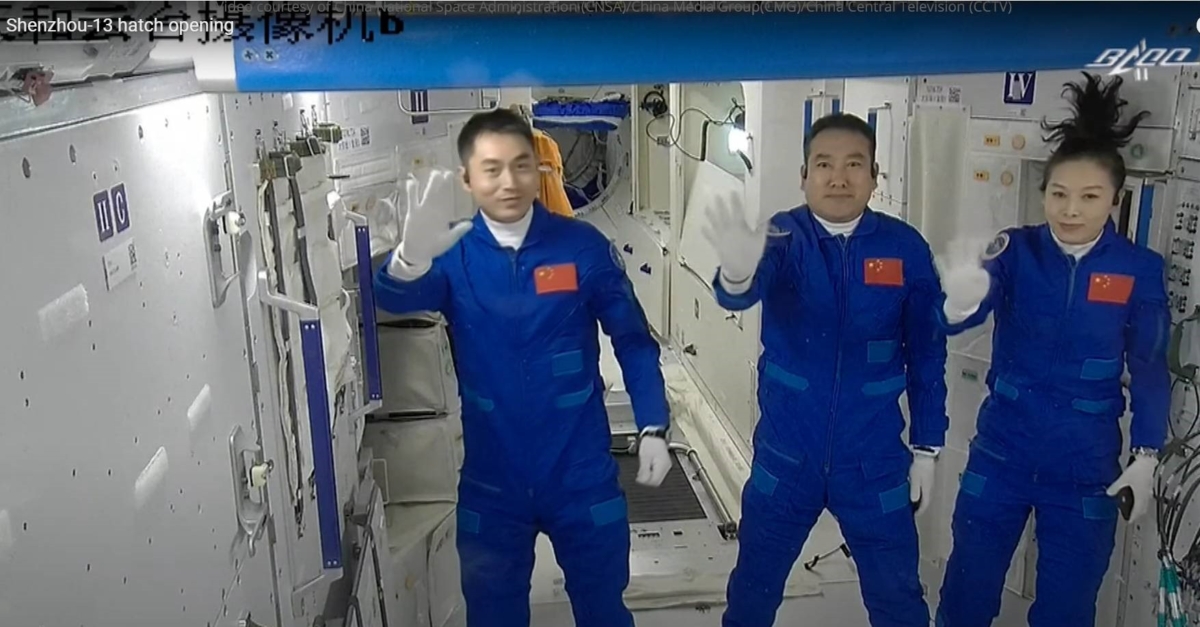
Credit: China National Space Administration (CNSA)/China Media Group(CMG)/China Central Television (CCTV)/Inside Outer Space screengrab
China’s newest space crew has docked with and then entered the Tiangong space station on Saturday morning, embarking on a six-month stint inside the core module of their “Heavenly Palace.”
Projected to become the longest spaceflight for a Takionaut team, the three-member crew – Shenzhou-13 mission commander Zhai Zhigang, Wang Yaping and Ye Guangfu — floated into the module, named Tianhe, or “Harmony of Heavens” around three hours after the automated docking of their spacecraft with the space station complex.
Credit: China National Space Administration (CNSA)/China Media Group(CMG)/China Central Television (CCTV)/Inside Outer Space screengrab
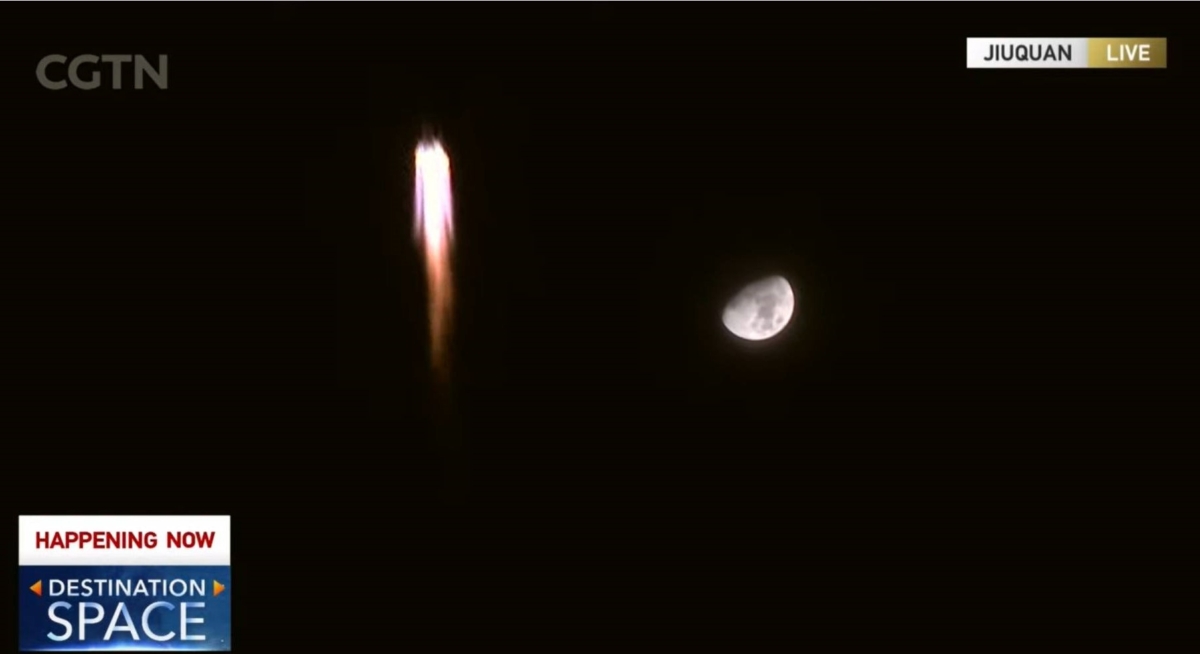
Shenzhou-13 was launched by a Long March-2F carrier rocket, from the Jiuquan Satellite Launch Center in northwest China’s Gobi Desert at 00:23 local time on Saturday (16:23 GMT on Friday).
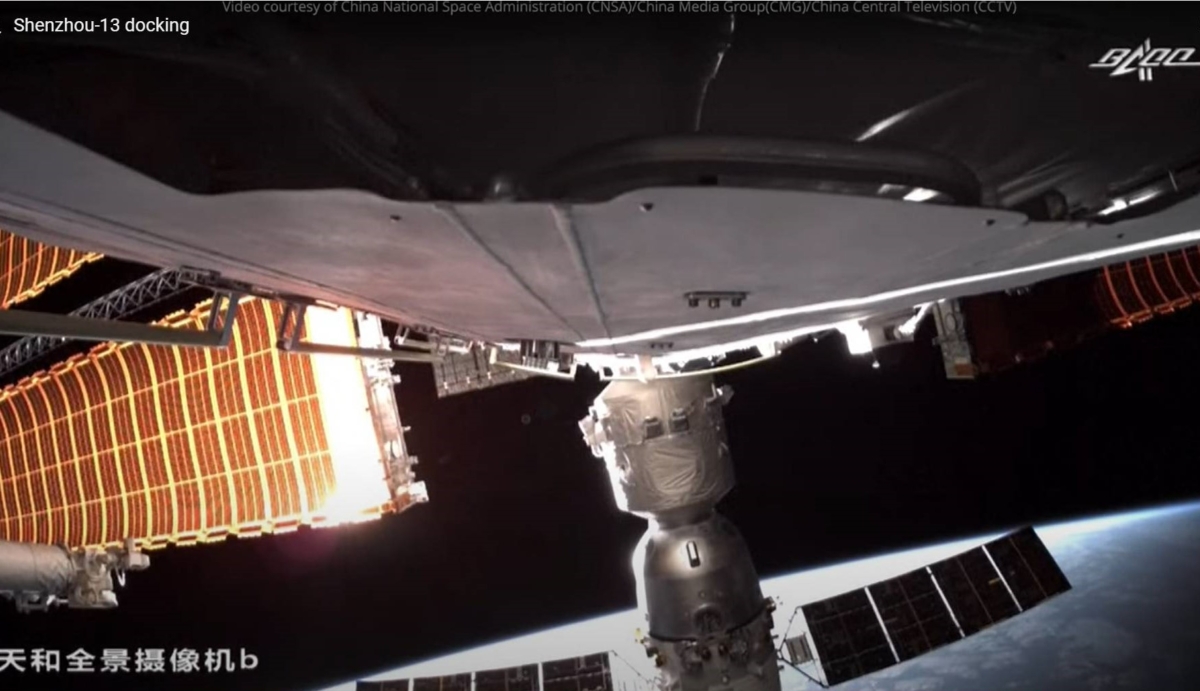
Following a 6.5 hour post-launch journey, the crewed spaceship docked with the radial port of the space station core module Tianhe, thereby forming a complex together with the previously docked Tianzhou-2 and Tianzhou-3 cargo crafts.
Wide range of tasks
The Shenzhou-13 crew is tasked with a wide range of tasks, including: performing two to three spacewalks to install a small robotic arm onto a larger one and verifying key procedures and technologies like manual control of the robotic arms and robotic arm-assisted movement of station modules.
Also, the new crew will check the performance and capability of devices inside the station, and test support instruments for astronauts’ life and work in long-term flights, said Lin Xiqiang, deputy director of the China Manned Space Agency (CMSA), at a news conference on Thursday at the Jiuquan center.
Life saving preparations
Viewed as one of China’s most challenging and sophisticated space endeavors, the Tiangong space station will eventually comprise three main components; the Tianhe core module and two large space labs.
Circling Earth, the complex will then have a combined weight of nearly 70 metric tons. The entire station is set to operate for about 15 years in a low-Earth orbit about 250 miles (400 kilometers) above our planet.
Credit: CGTN/Inside Outer Space screengrab
The mission has also prepared for emergency life saving actions. A Shenzhou-14/ Long March-2F carrier rocket can be launched in quick order to dock with the space station and bring the Taikonaut team back in a timely manner.
While docked, the Shenzhou-13 spaceship will be powered off, but some other systems will keep powering on, ready at all times for an emergency return to the ground.

Credit: CCTV
Radial direction
Rendezvous and docking between the Shenzhou-13 piloted spaceship and the port of the space station core module Tianhe in the radial direction was termed as intricate.
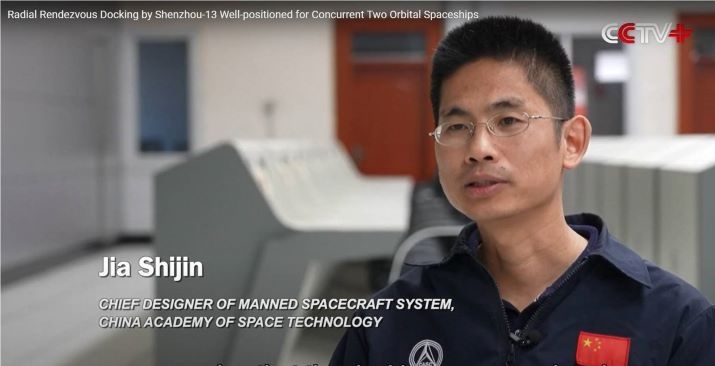
“The difficult point in the rendezvous and docking process in the radial direction mainly lies in control actually,” Jia Shijin, chief designer for the manned spacecraft system of China Aerospace Science and Technology Corporation (CASC) told China Central Television (CCTV).
Credit: CCTV/Inside Outer Space screengrab
“The process in the horizontal direction happens only when the spacecraft and the space station are at the same orbital altitude,” Jia said.
The spacecraft should stay upwards if it docks with the space station in the radial direction. “If the spacecraft stays upwards, first, the control scheme of the spacecraft is different from that when it flies in the horizontal direction. So, we have to adjust it. Second, the direction of antenna for measurement and control is also different from that when it flies in the horizontal direction,” Jia added.
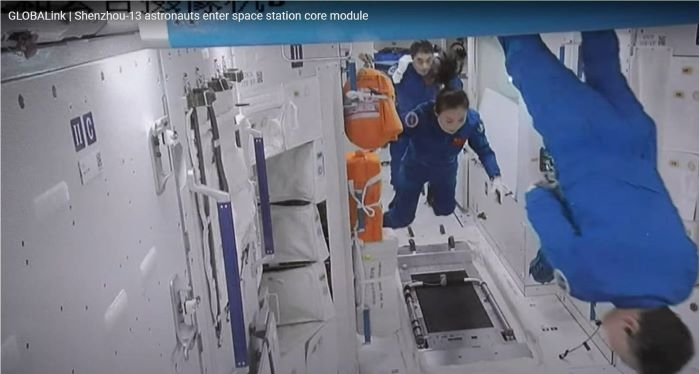
Credit: GLOBALink/Inside Outer Space screengrab
Supply craft
China’s uncrewed Tianzhou-3 carried supplies for the Shenzhou-13 crewed mission, and was launched and docked at the rear docking port of Tianhe on September 20.
That supply craft was stuffed with nearly six-tons of goods and materials, including living supplies for the astronauts, one extravehicular spacesuit for back-up, supplies for extravehicular activities, space station platform materials, payloads and propellants.

China’s space station is projected to be completed in late 2022.
Credit: CAST
The Shenzhou-13 trio is the second crew to work on the evolving Chinese space station. Wang Yaping is the first woman astronaut on board the station. She is also slated to perform a spacewalk during the projected six-month cruise.
With additional modules and follow-on crews to come, China anticipates the fully outfitted station to be operational by the end of 2022.
To view newly-released videos focused on the Shenzhou-13 crew and mission, go to:
 Posted in Space News

