 By
By  March 5th, 2025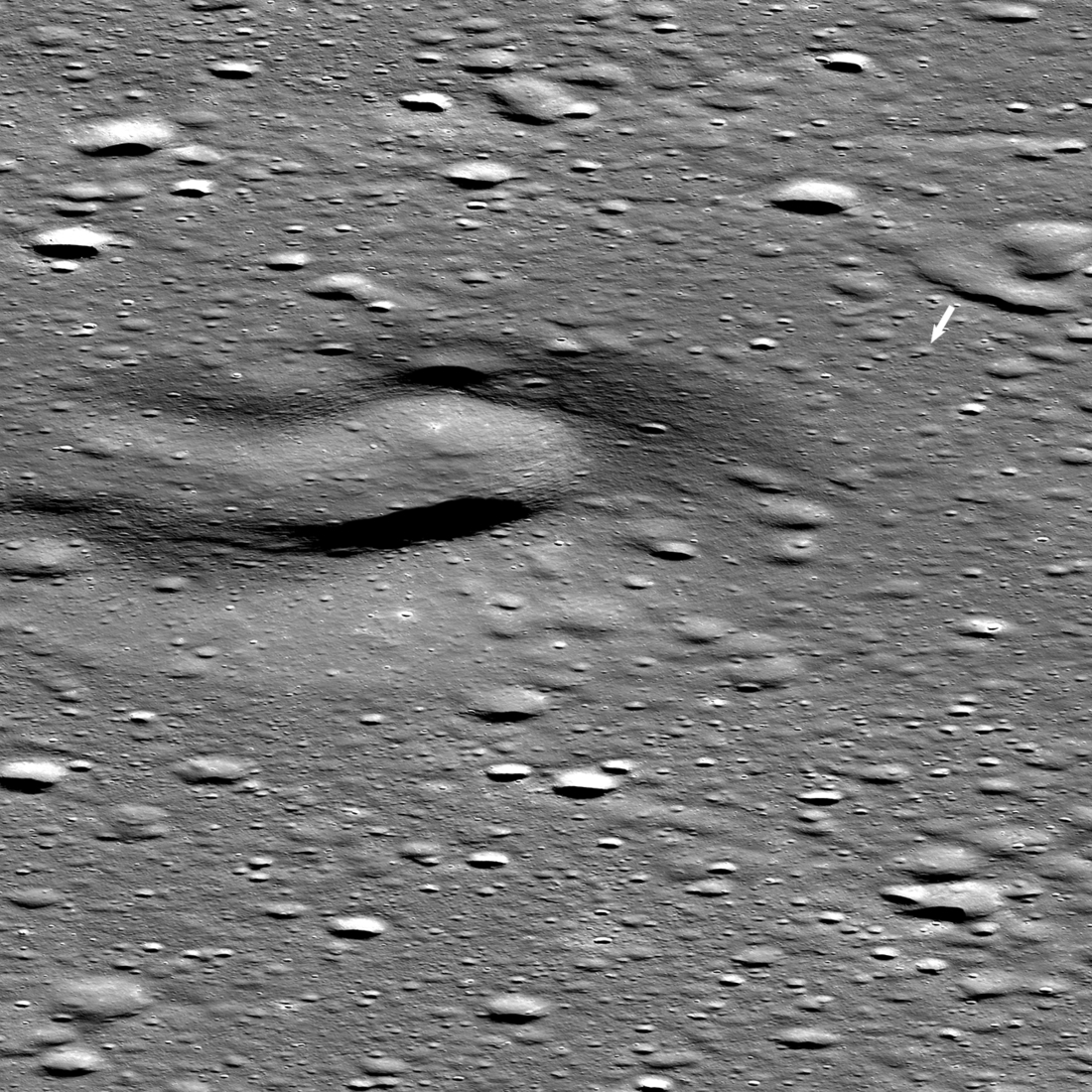
The Firefly Blue Ghost lunar lander set down on the Moon March 2nd. The landing site (arrow) is about 4,000 meters from the center of Mons Latreille, a large volcanic cone.
Image credit: NASA/GSFC/Arizona State University
The sharp-shooting camera system onboard NASA’s Lunar Reconnaissance Orbiter (LRO) has spotted the landing locale of the commercial Blue Ghost lander.
Firefly Aerospace’s Blue Ghost lander safely touched down in the eastern part of the Moon’s Mare Crisium at 19 degrees north and 62 degrees east reports Mark Robinson, leader of the LROC system.

NASA’s Lunar Reconnaissance Orbiter (LRO).
Credit: NASA’s Goddard Space Flight Center Conceptual Image Lab
The Lunar Reconnaissance Orbiter Camera, or LROC, is a system of three cameras mounted on the Lunar Reconnaissance Orbiter (LRO) that capture high resolution black and white images and moderate resolution multi-spectral images of the lunar surface.
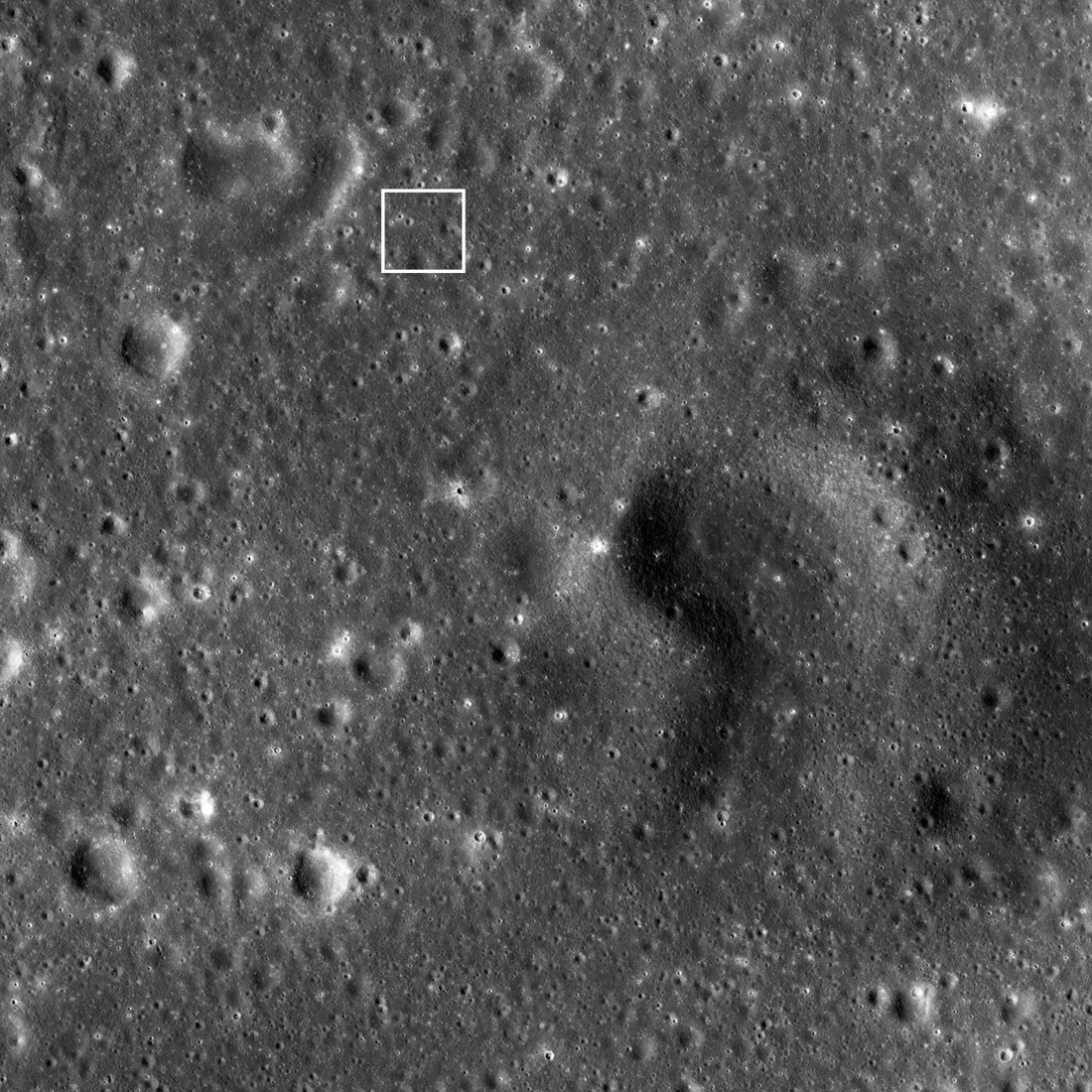
Blue Ghost landing region (white box) is 220 meters wide). North is up.
Image credit: NASA/GSFC/Arizona State University
Impact basin
Mare Crisium is an impact basin formed about four billion years ago when an asteroid roughly 40 kilometers in size struck the northeastern part of the Moon’s near side.
Earlier visitors
Blue Ghost is not alone in reaching this region.
In 1969, the former Soviet Union probe, Luna 15, crash-landed in Mare Crisium.
In November 1974, Luna 23, landed there but tipped over. That attempt to rocket samples from the area was followed in August 1976 by Luna 24 that successfully returned 170 grams of lunar material to Earth.

Firefly Aerospace’s Blue Ghost lander safely touched down in the eastern part of the Moon’s Mare Crisium.
Image credit: ASU/NASA GSFC
To inspect the LRO imagery on your own, go to:
https://www.lroc.asu.edu/images/1400
 Posted in Space News

