 By
By  March 7th, 2025
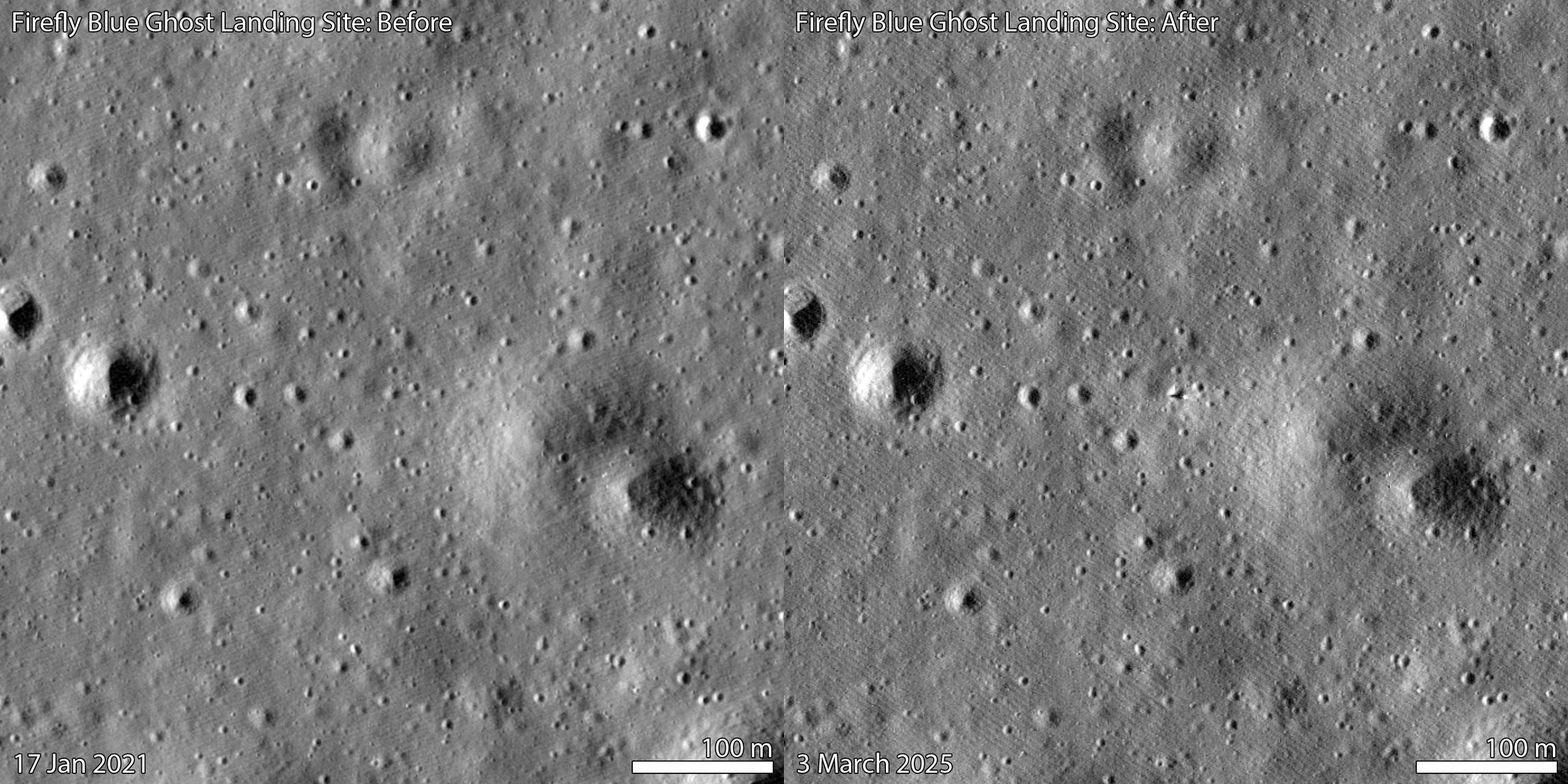
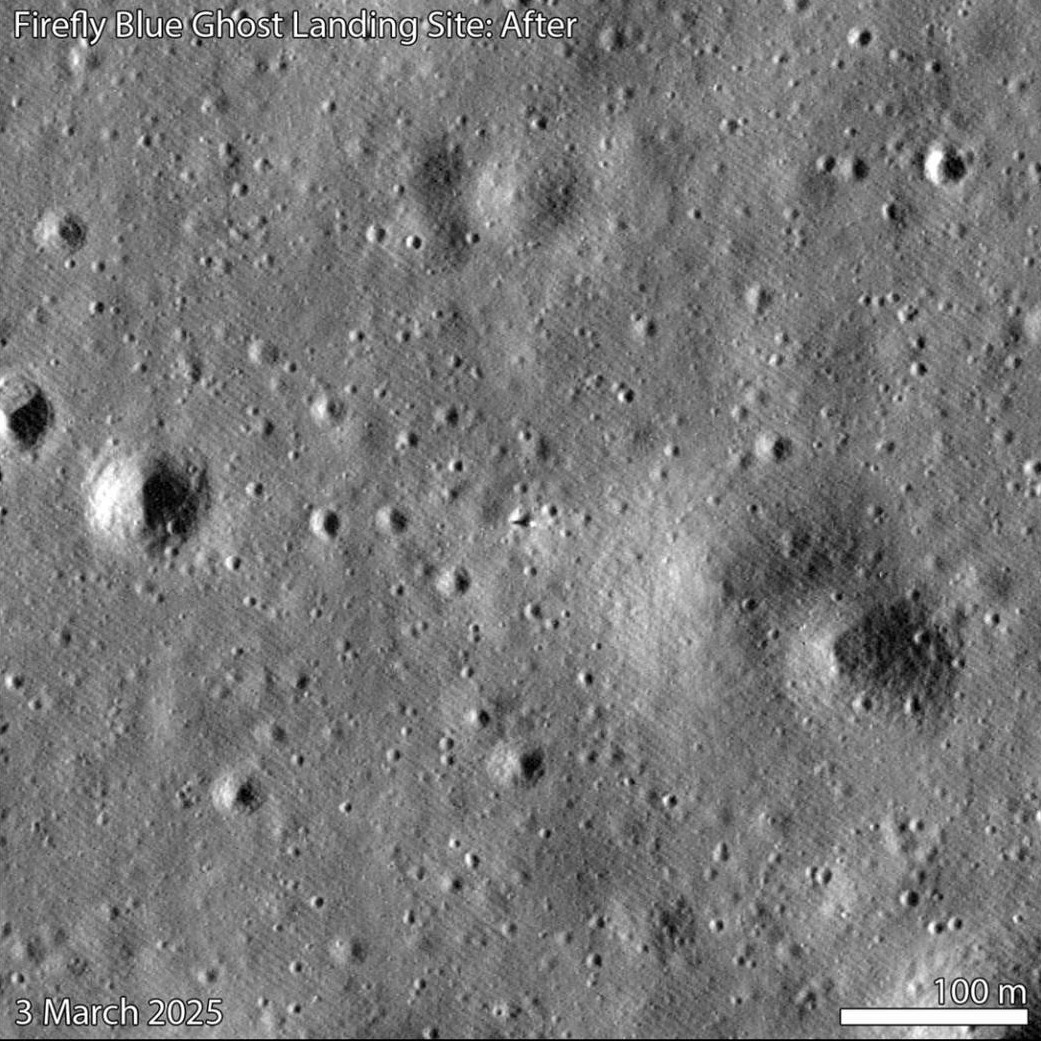
Firefly Aerospace’s Blue Ghost lander safely touched down in the eastern part of the Moon’s Mare Crisium.
Image credit: ASU/NASA GSFC
The Firefly Aerospace Blue Ghost lunar lander continues to check off operations of its science experiments.
Blue Ghost successfully landed in Mare Crisium on March 2 and is now operating payloads for a complete lunar day (about 14 Earth days).
Firefly Aerospace reports that eight out of ten NASA-sponsored payloads have met their mission objectives – “with more action to come.”

Image credit: Firefly Aerospace
Science activities
Those reported science activities on the Moon are:
Surface Access Arm deployment of the Lunar PlanetVac (LPV): Honeybee Robotics, a Blue Origin company
Electrodynamic Dust Shield (EDS): NASA Kennedy Space Center
Next Generation Lunar Retroreflector (NGLR): University of Maryland
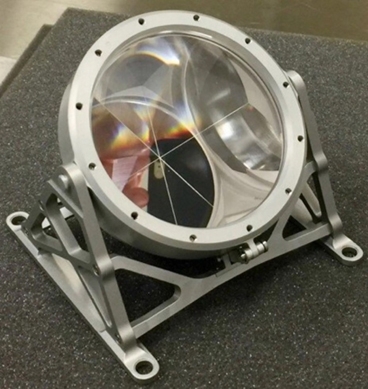
A Next Generation Lunar Retroreflector (NGLR) sits on an adjustable multidirectional mount.
Image credit: International Laser Ranging Service
Regolith Adherence Characterization (RAC): Aegis Aerospace
Radiation Tolerant Computer (RadPC): Montana State University
Lunar GNSS Receiver Experiment (LuGRE): Italian Space Agency (ASI); NASA Goddard Space Flight Center
Lunar Instrumentation for Subsurface Thermal Exploration with Rapidity (LISTER): Texas Tech University
Stereo CAmera for Lunar Plume-Surface Studies (SCALPSS): NASA Langley Research
In a video, the Lunar PlanetVac is shown successfully collecting, transferring, and sorting lunar soil from the Moon using pressurized nitrogen gas.
Go to: https://youtu.be/5drBYiUCCsg?si=TVuWcbyRomBkqmi4
Also, before-and-after image blink emphasizes the Blue Ghost engine plume disturbance of the surface. Images taken by NASA’s Lunar Reconnaissance Orbiter (LRO).
Image credit: NASA/GSFC/Arizona State University
Go to: https://www.lroc.asu.edu/ckeditor_assets/pictures/1493/content_FireflyBlink_v2.gif
 Posted in Space News


