Author Archive
 Author:
  November 26th, 2025
Image credit: CCTV/Inside Outer Space screengrab
More details are available regarding the saga of engineers and ground staff in China’s first-ever emergency launch – the plight and flight of the uncrewed Shenzhou-22 spacecraft.
The crewless spaceship – including an escape tower — sat atop a Long March-2F Y22 carrier rocket, lifting off shortly after noon local time on November 25 from the Jiuquan Satellite Launch Center in northwest China.
That launch demonstrated the carrier rocket’s rapid-response capability for any space station emergency, space officials explained.

Image credit: CCTV/Inside Outer Space screengrab
Onboard the spaceship were caches of food, medicine, spare parts and other essential supplies – reportedly including devices for treating the cracked spaceship window – quickly prepared for the Shenzhou-21 astronauts that are now living on China’s Tiangong space station.
First-ever emergency
The emergency mission was necessitated by suspected space debris damage to the Shenzhou-20 spacecraft, rendering it not qualified for a safe re-entry to Earth. That delayed the scheduled departure on November 5 of the three Shenzhou-20 astronauts. They used the newly-arrived Shenzhou-21 to return to Earth on November 14.
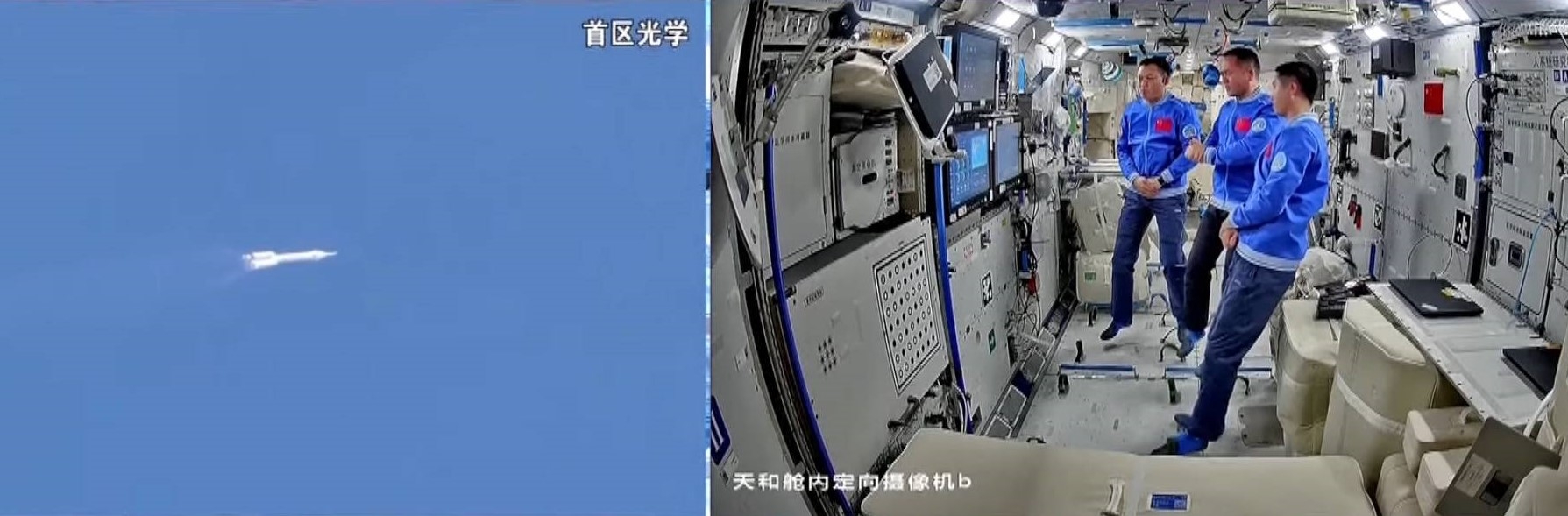
Shenzhou-21 on-orbit crew monitors emergency Shenzhou-22 launch.
Image credit: CCTV/Inside Outer Space screengrab
As the first-ever emergency operation to be launched at short notice in the history of China’s human spaceflight program, there was limited time for preparation, with engineers working around the clock to prepare the Shenzhou-22 and its booster.
Test-to-launch cycle
According to Zeng Yaoxiang, an engineer for CASC, the team reduced a normal test-to-launch cycle of more than 30 days to just 16.

Image credit: CCTV/Inside Outer Space screengrab
That whole period from tests to launch was considered a very short launch window, Zeng told China Central Television (CCTV).
Zeng said that the next rocket in the series, the Long March-2F Y23, is undergoing assembly and test in Beijing. It will be transferred to the launch site upon completion of related work and will be on standby status for emergency response for the Shenzhou-22 mission now underway.
Clearing and sealing process
Yan Wei, an engineer with CASC, told CCTV that at three hours prior to the launch, a “clearing and sealing” process was in action.

Image credit: CCTV/CMSA/Inside Outer Space screengrab
This process is considered the most critical safety inspection immediately before launch.
Unlike the standard mission preparation cycle, which typically lasts over 30 days, this emergency operation took place under a heavily condensed timeline, with the team having only around half of the normal time to get everything ready for the urgent spaceflight, adds CCTV.
Double-checking
“It was 16 straight days. Work that usually takes five days was compressed into two,” said Wang Peng, another CASC engineer. To ensure the Shenzhou-22 mission would be successful, the team also turned to several veteran engineers that were recalled to provide technical support.
“We needed to come and help reinforce the frontline [of the mission]. As an old team member, I’ve come here to work with everyone, double-checking everything and filling in wherever I’m needed,” said Meng Qingfeng, one of the engineers drafted in by the CASC.
One hour before launch, the last group of on-site engineers started to withdraw from the launch tower.
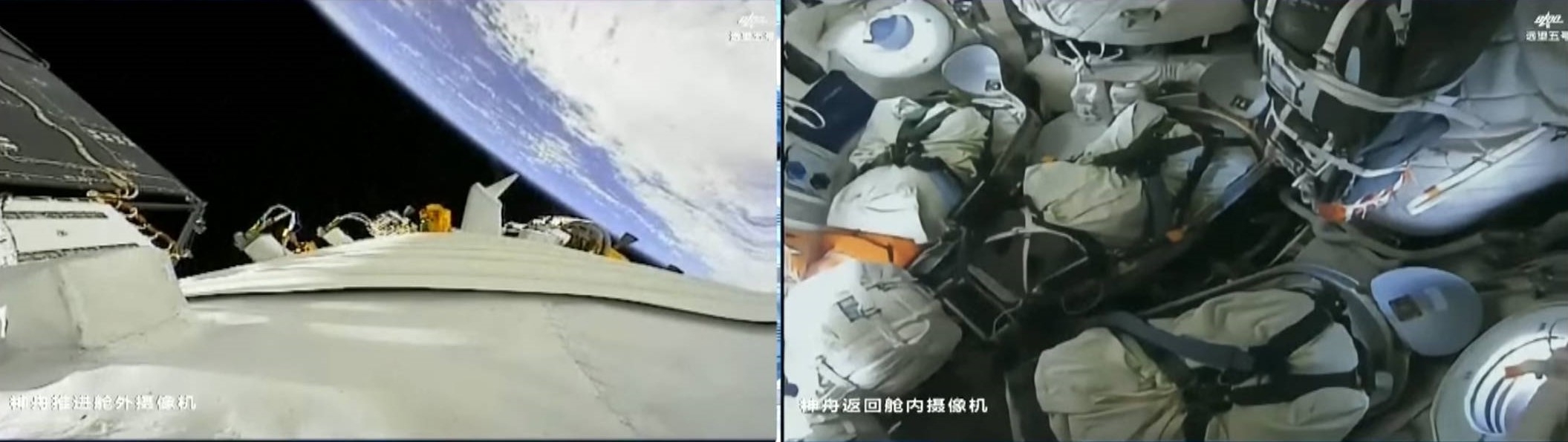
Uncrewed Shenzhou-22 loaded with supplies.
Image credit: CCTV/Inside Outer Space screengrab
Critical situation
“The spacecraft performed very well, and my team performed very well. We withstood the test of this mission,” said He Yu, commander in chief of the Shenzhou spacecraft at the CASC. He said the emergency flight placed a spotlight on the capabilities of China’s space industry.
“We have come through a real critical situation this time. We must be extremely responsible for the lives of the astronauts, and this mission was the best practice of that commitment,” said Jing Muchun, commander in chief of the Long March-2F carrier rocket project at the CASC.
Alternative return procedure
Given the damaged Shenzhou-20 spacecraft, emergency protocols were activated, and a comprehensive simulation analysis, testing and safety assessment of the vessel was conducted to determine the safest course for the astronauts’ return.

As the first-ever emergency operation to be launched at short notice in the history of China’s human spaceflight program, there was limited time for preparation, with engineers working around the clock to prepare the Shenzhou-22 and its booster.
Image credit: CCTV/Inside Outer Space screengrab
Following that review, the CMSA announced that the Shenzhou-20 spacecraft “no longer meets the stringent safety standards required for re-entry,” reported CCTV.
This emergency event, said the CMSA marked the first successful implementation of an alternative return procedure in the country’s space station program history.
Tasks ahead
The trio of on-orbit space crew members are in good condition and are carrying out their tasks as planned, the China Manned Space Agency (CMSA) said, adding that the damaged Shenzhou-20 spaceship will remain in orbit to continue its assigned experiments.
During their projected six-month stay in orbit, the Shenzhou-21 crew members are slated to carry out a total of 27 new in-orbit experiments, including in space life sciences and biotechnology, space medicine, space material science, microgravity fluid physics and combustion, and new space technologies.
 Posted in
Image credit: CCTV/Inside Outer Space screengrab
Billed as the first emergency launch mission in China’s human spaceflight program, an uncrewed, cargo-loaded Shenzhou-22 spaceship was launched on November 25.
Shenzhou-22 later docked with the front port of China’s Tiangong space station’s Tianhe core module.
Flying without a three-person crew aboard, the vessel carried a cargo of space food, medical supplies, fresh fruit and vegetables, as well as devices for treating the cracked window on the Shenzhou-20 spaceship.
Shenzhou-21 on-orbit crew monitors emergency Shenzhou-22 launch.
Image credit: CCTV/Inside Outer Space screengrab
Life and safety
“The success of this mission fully demonstrated the strengths of China’s new system for mobilizing resources nationwide, comprehensively interpreted the principle of ‘prioritizing life and safety above anything else’ in China’s manned space program, said Zhou Jianping, chief designer, China’s manned space program.

Credit: CCTV/Inside Outer Space screengrab
Zhou said the emergency launch “verified the scientific, reliable and safe nature of the ‘one launch, one standby, rolling backup’ strategy for China’s space station missions.”
In addition, Zhou added that it “rigorously tested all personnel’s rapid response and emergency handling capabilities in real-world scenarios,” overcoming hardships, working with a fighting morale, solving technical bottlenecks, and remaining dedicated.
Debris hit
The Shenzhou-22 launch followed the postponed return of the Shenzhou-20 crew aboard the Shenzhou-21 spacecraft on Nov. 14. The Shenzhou-20 spacecraft was struck by space debris, delaying its return originally scheduled to take place on November 5.

Image credit: CCTV/Inside Outer Space screengrab
The spaceship performed a fast, automated rendezvous and docked with the front port of Tiangong’s core module Tianhe in about 3.5 hours after entering orbit, the CMSA said.
The Shenzhou-22 will later serve as the return vessel for the three Shenzhou-21 astronauts currently in orbit.
The damaged Shenzhou-20 spaceship “will remain in orbit to continue relevant experiments,” stated the China Manned Space Agency (CMSA).

Diao Weihe, an engineer for the China Aerospace Science and Technology Corporation.
Image credit: CCTV/CGTN/Inside Outer Space screengrab
Shenzhou-22 upgrades
According to Diao Weihe, an engineer for the China Aerospace Science and Technology Corporation, the Shenzhou-22 launch marks the first emergency launch in the history of the Shenzhou spacecraft program.
“Its preparation-to-launch cycle has been compressed to 16 days, significantly shorter than a standard mission timeline, Diao told China Central Television (CCTV).
Shenzhou-22 is the first spacecraft of a new production batch, and has undergone comprehensive upgrades aimed at enhancing capability, reliability, and crew comfort,” said Diao.
Uncrewed Shenzhou-22 loaded with supplies.
Image credit: CCTV/Inside Outer Space screengrab
“These include upgraded and redesigned instruments for improved operability and accessibility. Additionally, the spacecraft’s downward payload capacity has been significantly increased through optimized cabin layout and miniaturized instrument panels,” Diao noted. “Furthermore, some components have been upgraded to further enhance the spacecraft’s autonomous and control capabilities.”
Go to these CCTV launch videos at:
https://www.facebook.com/reel/1611092220061856
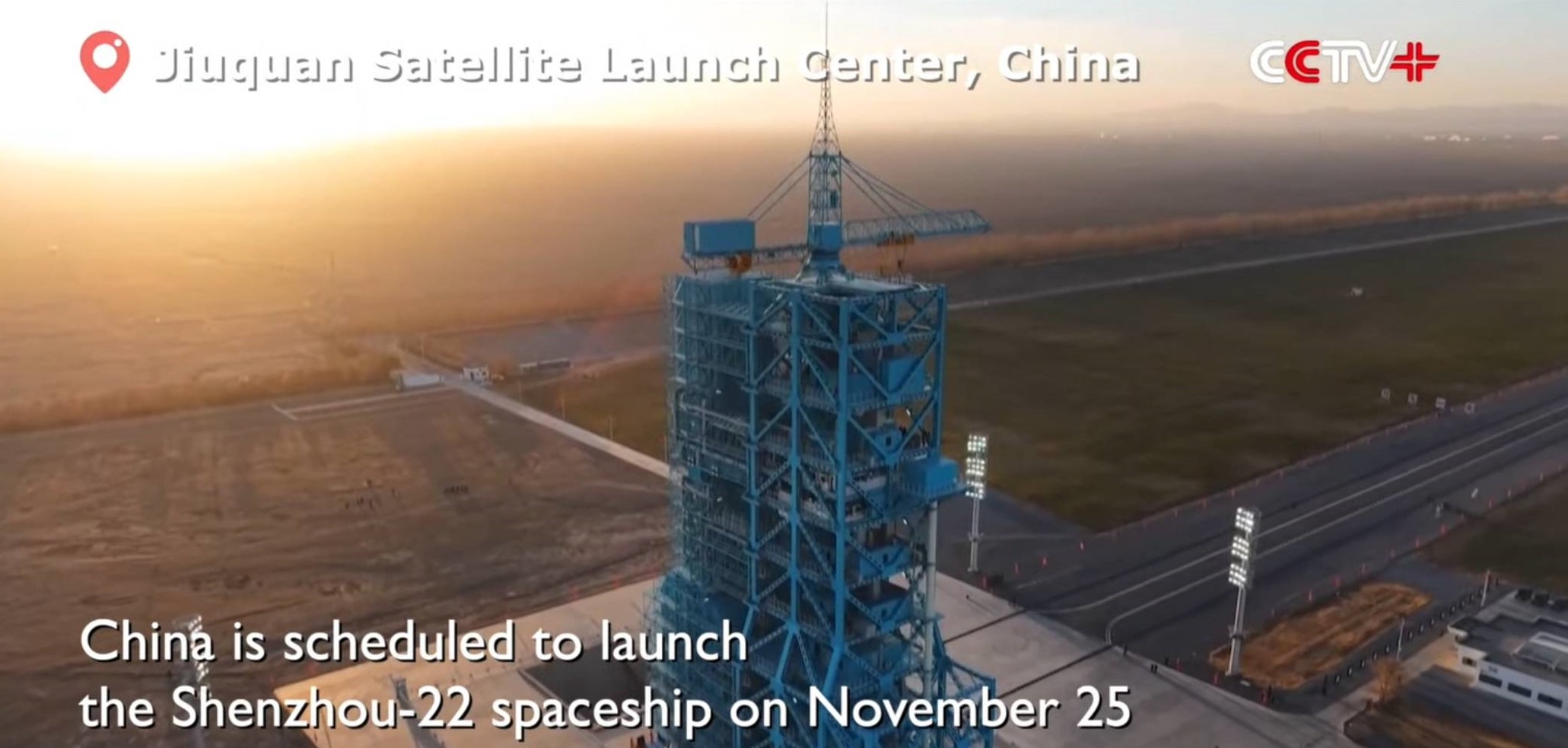
Image credit: CCTV/Inside Outer Space screengrab
Word today from the China Manned Space Agency (CMSA): The launch of the Shenzhou-22 spaceship is set for November 25 Beijing time from the Jiuquan Satellite Launch Center in the northwest.
Currently, the Long March 2F Y22 carrier rocket has completed propellant loading.
The now in orbit Shenzhou-21 astronaut crew is working normally and in good condition in orbit, adds the China Manned Space Engineering (CMSE) office.

Image credit: CCTV/Inside Outer Space screengrab
Space debris hit
China purposely delayed the return of its Shenzhou–20 crew for roughly a week due to a suspected impact of space debris that compromised the crew’s return vessel’s window.
The trio of taikonauts did return to Earth in a fresh but “borrowed” Shenzhou-21 spacecraft on November 14. But doing so left the current on-orbit, three-person space station crew with a damaged and docked vehicle that has been deemed unsafe for re-entry.

Image credit: CCTV/Inside Outer Space screengrab
Space officials in that country labeled the November 5 wave-off of the crew’s return to Earth as the first successful implementation of an “alternative return procedure” in China’s space station program history.
Cargo supplies
The use of the Shenzhou-22 spacecraft and launcher were in standby mode, originally manifested for launch in 2026.
In an earlier statement, Zhou Yaqiang, an official with the China CMSA, told China Central Television (CCTV) that the mission for launching the Shenzhou-22 spacecraft “has been initiated, with preparations for all systems in full swing, including testing the spacecraft and rocket components and preparing the cargo.

Image credit: CCTV/Inside Outer Space screengrab
“The Shenzhou-22 spacecraft is sure to carry supplies. The spacecraft’s cargo-carrying capacity is a highly valuable resource for the manned space program,” Zhou said, “so we will make full use of every opportunity. The Shenzhou-22 spacecraft will mainly deliver food supplies for the astronauts and some equipment for the space station.”
Logo embodies safety of astronauts
With the launch of Shenzhou-22 imminent, CMSE also released the mission logo.
“The Shenzhou-22 mission logo blends Chinese aerospace elements with traditional cultural symbols. Based on the Great Wall, it embodies the solemn commitment to the safety of astronauts,” the CMSE reports.

Image credit: CMSE office
The bow and arrow shape, along with the Long March 2F carrier rocket and the Shenzhou spacecraft, forms the visual core, showcasing a sense of “ready to launch” and a steadfast belief in “mission accomplished.”
Twenty-two arrows surround the logo, precisely corresponding to the mission number.
Swiftness of emergency rescue
In the color scheme, blue represents the foundation of aerospace technology, red represents mission responsibility, and orange “highlights the swiftness of emergency rescue,” notes the CMSE.
The overall design not only continues the aesthetic heritage of Chinese aerospace logos but also innovatively incorporates “emergency rescue elements,” perfectly interpreting the core value of “protecting life with aerospace power” and demonstrating China’s technological strength and humanistic care in the aerospace field, explains the CMSE.
For a short video, go to:
https://www.facebook.com/share/v/17nxoKJ9FT/
Additionally, go to my recent Space.com story – “Space junk strike on China’s astronaut capsule highlights need for a space rescue service, experts say” – at:
Image credit: CCTV/Inside Outer Space screengrab
China purposely delayed the return of its Shenzhou–20 crew from the country’s space station. The reason: a suspected impact of space debris that compromised the crew’s return vessel’s window.
Space officials in that country labeled the November 5 wave-off of the crew’s return to Earth as the first successful implementation of an “alternative return procedure” in China’s space station program history.
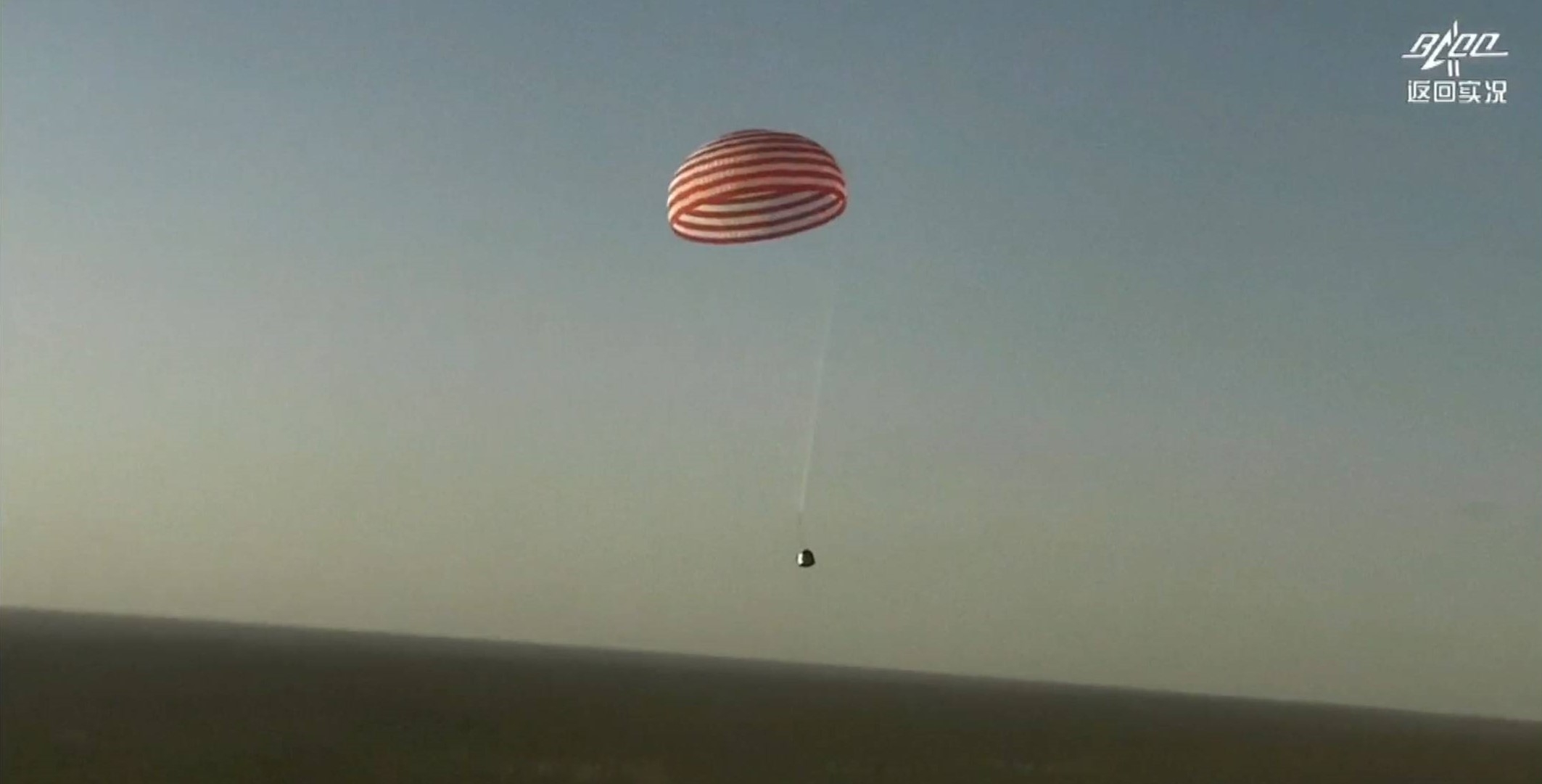
Shenzhou-20 crew back on Earth on November 14. Image credit: CCTV/Inside Outer Space screengrab
The trio of taikonauts did return to Earth in a fresh but “borrowed” Shenzhou-21 spacecraft on November 14. But doing so left the current on-orbit, three-person space station crew with a damaged and docked vehicle that has been deemed unsafe for re-entry.
This incident is a wake-up call by advocates of a space rescue capability, and also a call for an organization to shape that capacity.
Go to my new Space.com story – “Space junk strike on China’s astronaut capsule highlights need for a space rescue service, experts say” – at:

Frank Wolf, a Republican Congressman from Virginia.
Credit: Office of Frank Wolf
The Aerospace Corporation and the Space Policy Institute at George Washington’s Elliott School of International Affairs held a lively debate on “Should the Wolf Amendment be Repealed?”
As background, nearly 15 years after its inclusion in a 2011 annual appropriations bill in the U.S. Congress, the Wolf Amendment remains a hotly debated topic.
It reflects many of the core geopolitical and philosophical issues at the heart of the debate over the U.S.-China relationship on matters of space and more.
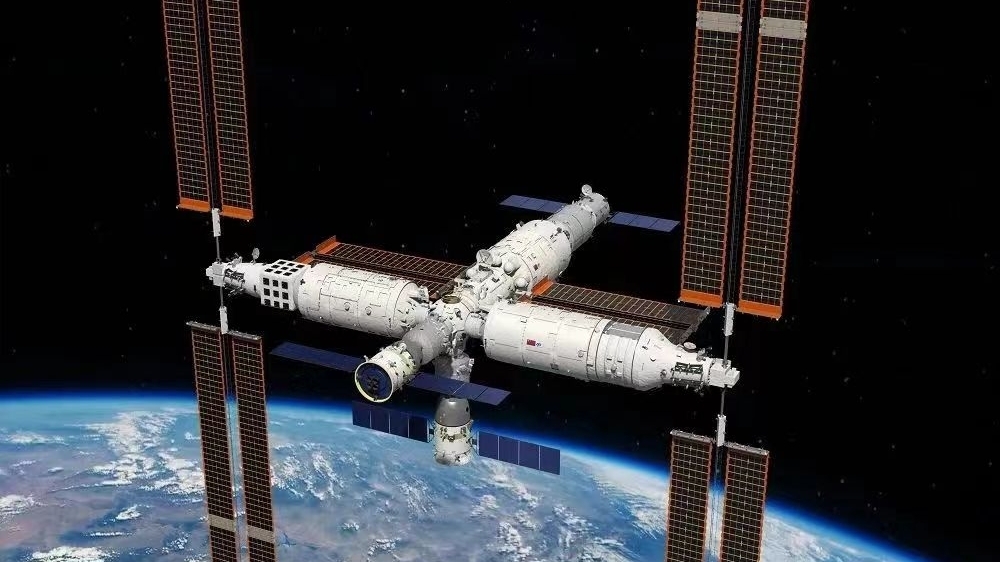
Artwork depicts China’s Tiangong space station.
Image credit: China Manned Space Agency
Contrasting views
Indeed, there are contrasting views on the efficacy and relevance of the Wolf Amendment.
One view argues for retaining the amendment, clarifying its limits and pointing out possible consequences repeal could initiate.
The opposing view recommends repeal of the amendment, calling it a vestige from an earlier time that only creates more bureaucracy and waste while over-politicizing space engagements between the United States and China.

Panel participants
Dan Hart, nonresident Senior Fellow at the Atlantic Council and President of HarTechnologies
Dean Cheng, nonresident Senior Fellow at the Potomac Institute for Policy Studies
Remarks from Space Policy Institute Director Scott Pace, as well as Professor of Practice of International Affairs, Robert Sutter.
The panel was moderated by Brian Weeden, Director of Civil and Commercial Policy, the Aerospace Corporation’s Center for Space Policy and Strategy.
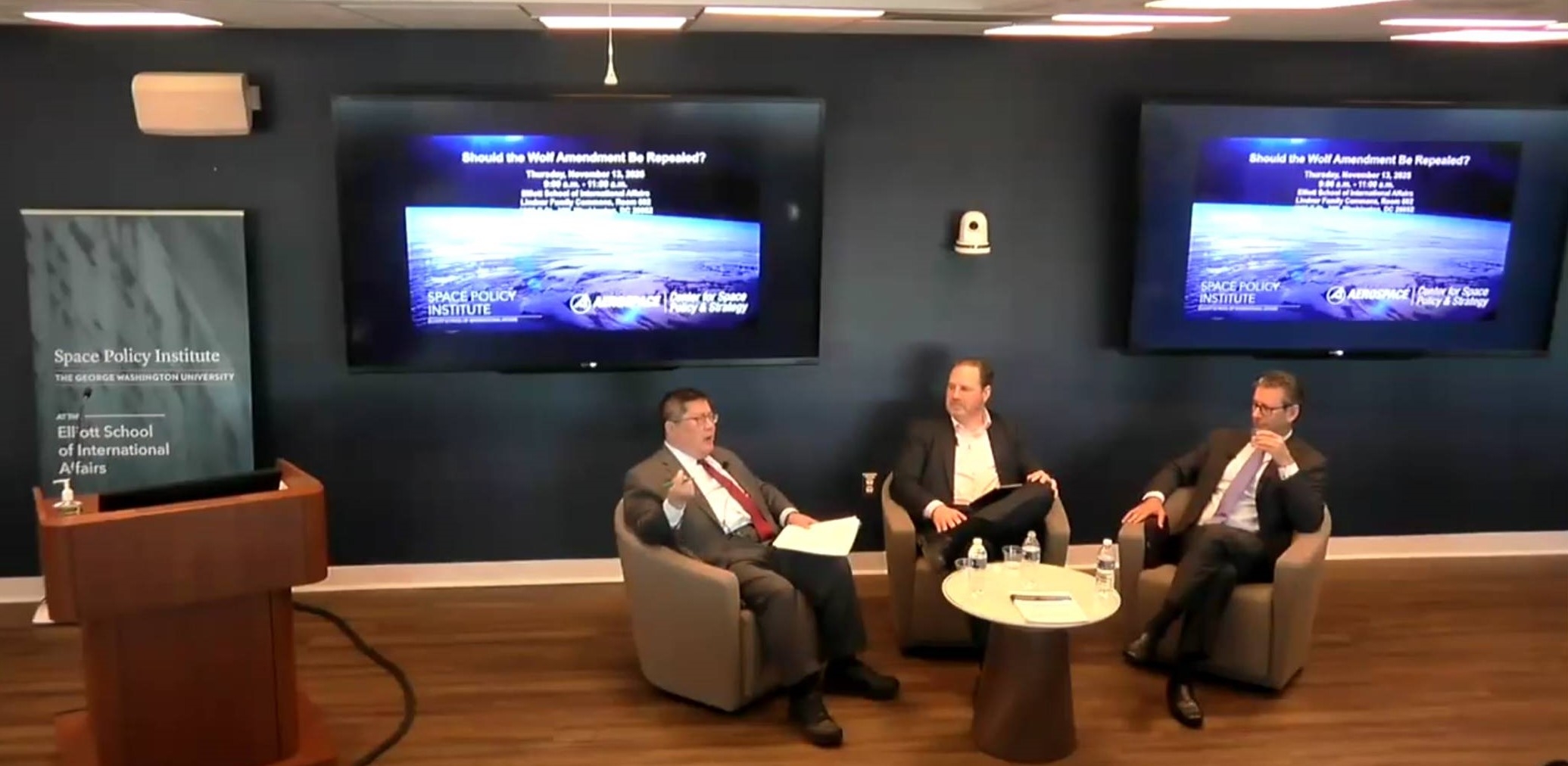
Image credit Space Policy Institute/Inside Outer Space screengrab
A video view of this informative event — held on November 13th — is now available at:
Note: Special thanks to George Leaua for the link!
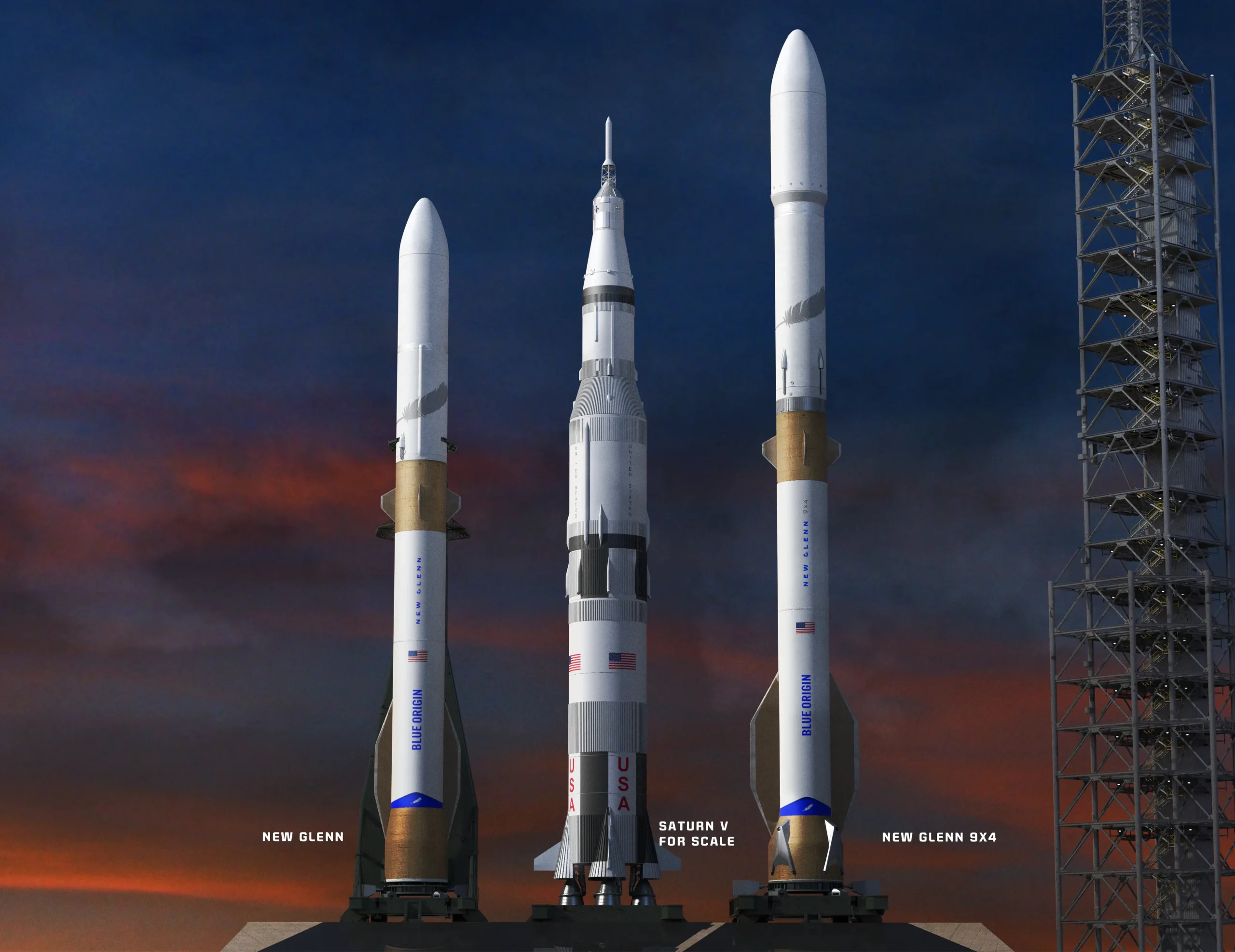
Image credit: Blue Origin
Fresh from its successful New Glenn (NG-2) flight on November 13, an update has been posted by Blue Origin.
The group has announced a series of upgrades designed to increase payload performance and launch cadence of the New Glenn.
According to Blue Origin, the enhancements span propulsion, structures, avionics, reusability, and recovery operations. These enhancements will start to show in upcoming New Glenn missions, starting with the launch of the NG-3.
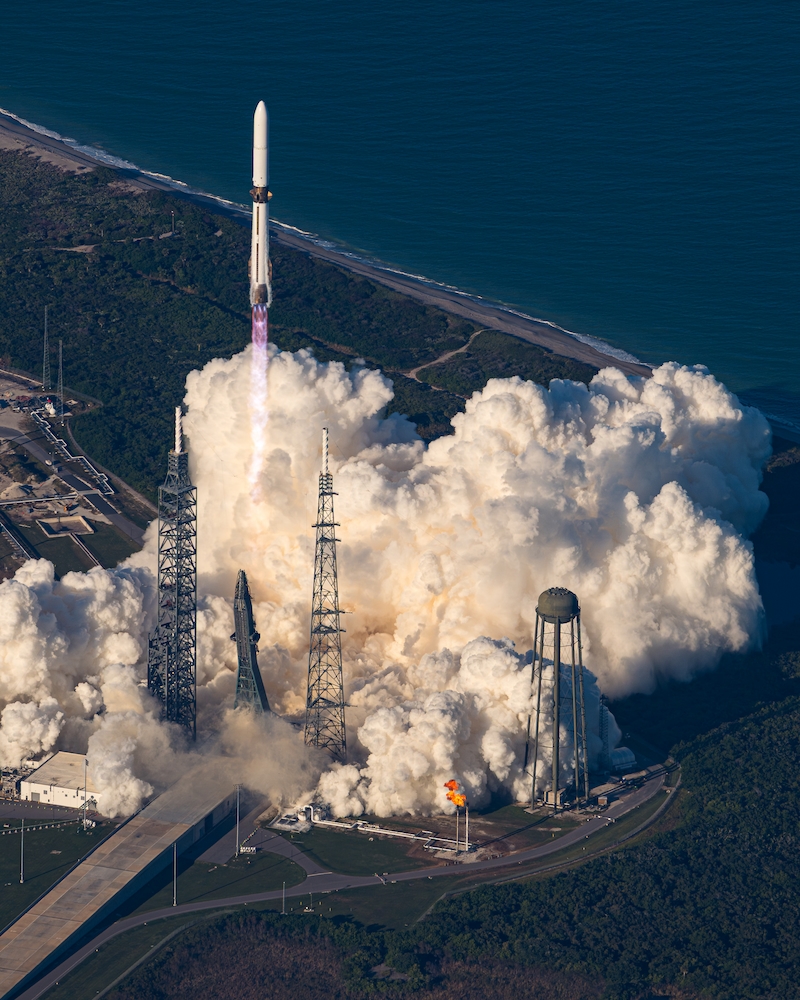
NG-2 liftoff.
Image credit: Blue Origin
Improvements
Blue Origin points to these improvements:
- Higher-performing engines on both stages. Total thrust for the seven BE-4 booster engines is increasing from 3.9 million lbf (lbf = pounds thrust) to 4.5 million lbf). BE-4 has already demonstrated 625,000 lbf on the test stand at current propellant conditions and will achieve 640,000 lbf later this year, with propellant subcooling increasing the current thrust capability from the existing 550,000 lbf.
- The total thrust of the two BE-3Us powering New Glenn’s upper stage is increasing from the original design of 320,000 lbf to 400,000 lbf thrust over the next few missions. BE-3U has already demonstrated 211,658 lbf on the test stand.
- A reusable fairing to support increased flight rates.
- An updated lower-cost tank design
- A higher-performing and reusable thermal protection system to improve turnaround time.
“These enhancements will immediately benefit customers already manifested on New Glenn to fly to destinations including low-Earth orbit, the Moon, and beyond,” notes the Blue Origin posting.
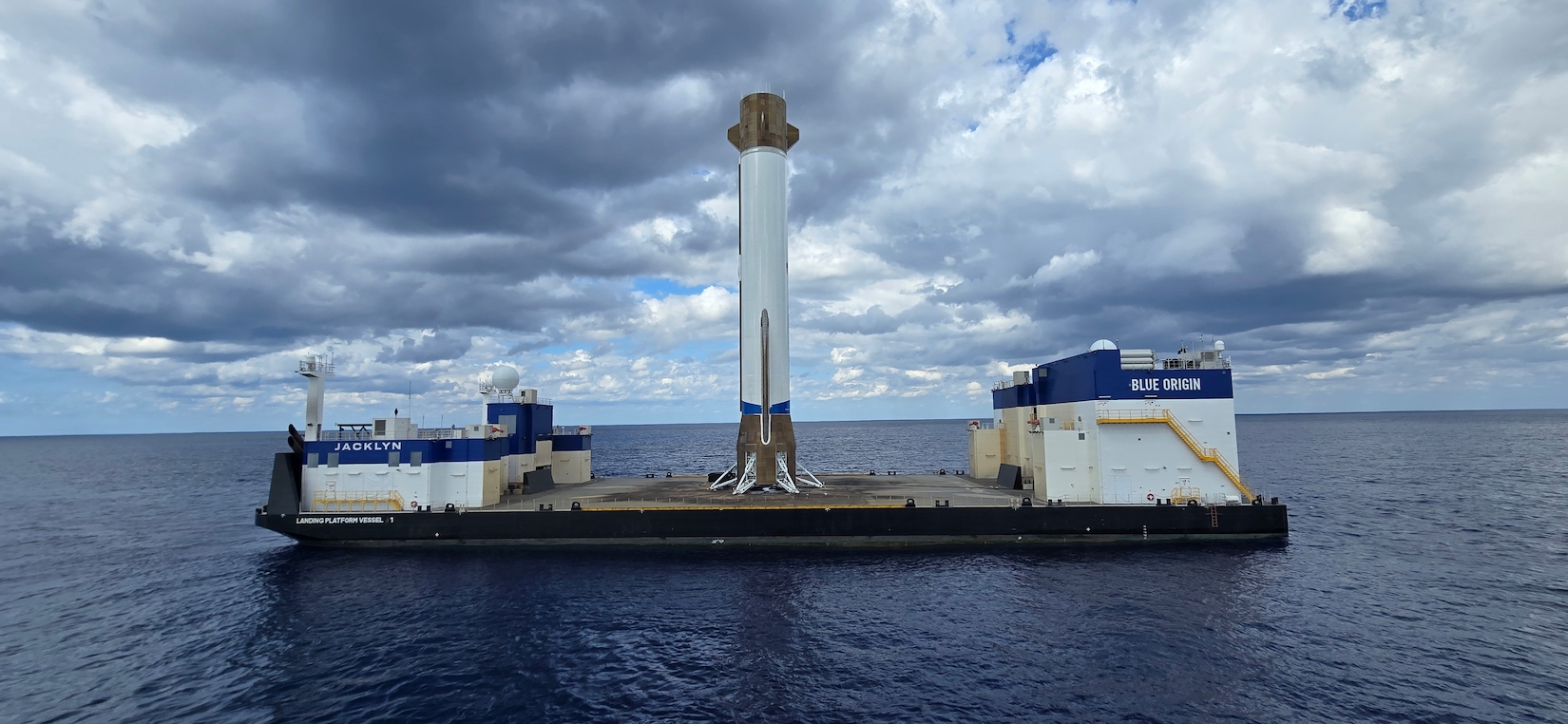
The New Glenn booster after landing on Jacklyn in the Atlantic Ocean during NG-2 flight on November 13, 2025.
Image credit: Blue Origin
Super-heavy class rocket
On the New Glenn’s roadmap is a new super-heavy class rocket, New Glenn 9×4, named after the number of engines on each stage.
New Glenn 9×4 can loft over 70 metric tons to low-Earth orbit, over 14 metric tons direct to geosynchronous orbit, and over 20 metric tons to trans-lunar injection.
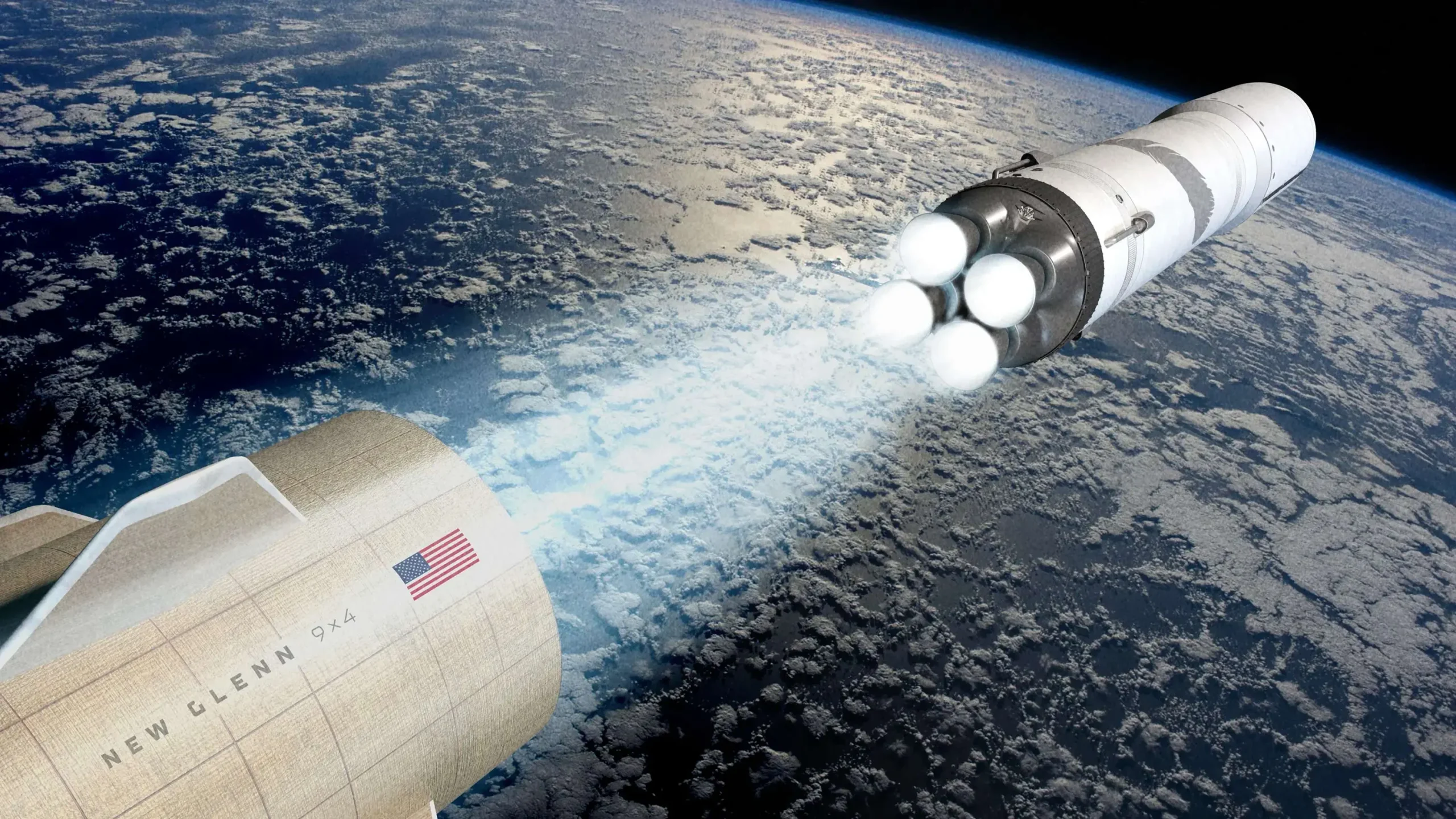
Image credit: Blue Origin
Additionally, the 9×4 vehicle will feature a larger 8.7-meter fairing.
Both vehicles, 9×4 and Blue Origin’s current variant, 7×2, “will serve the market concurrently, giving customers more launch options for their missions, including mega-constellations, lunar and deep space exploration,” the company explains, as well as national security projects such as the Trump Administrations Golden Dome – a proposed multi-layer missile defense system for the United States.

Chinese team on lunar habitat construction is led by Ding Lieyun. He is an academician of the Chinese Academy of Engineering and chief scientist of the National Center of Technology Innovation for Digital Construction (NCTI-DC) at central China’s Huazhong University.
Image credit: CCTV/Inside Outer Space screengrab
One of the items returned by the landing of China’s Shenzhou-20 crew were “lunar soil bricks” intended to further the country’s construction technology for the Moon.
The Xinhua news agency reports that the first set of experimental bricks were returned to Earth after a year-long exposure to the space environment.
The experiment began in November 2024, when China’s Tianzhou-8 cargo ship ferried the simulated lunar-soil samples up to the space station.
A total of 74 small bricks were designed to be mounted on an external exposure platform on the station’s exterior, Xinhua reports.

Ding Lieyun, a scientist at Huazhong University of Science and Technology.
Image credit: Huazhong University
Three year study
The project is led by Ding Lieyun, a scientist at Huazhong University of Science and Technology. Planned as a three-year study, Ding and colleagues will study sample batches exposed for extended periods to the harshness of space.
By analyzing the chemical fingerprint of authentic lunar specimens brought back by China’s Chang’e-5 mission, Ding’s team engineered a regolith simulant and pressed it into bricks through hot-press sintering.
That selected simulant was volcanic ash from Changbai Mountain in northeast China’s Jilin Province, material that closely mirrors the composition of lunar regolith.
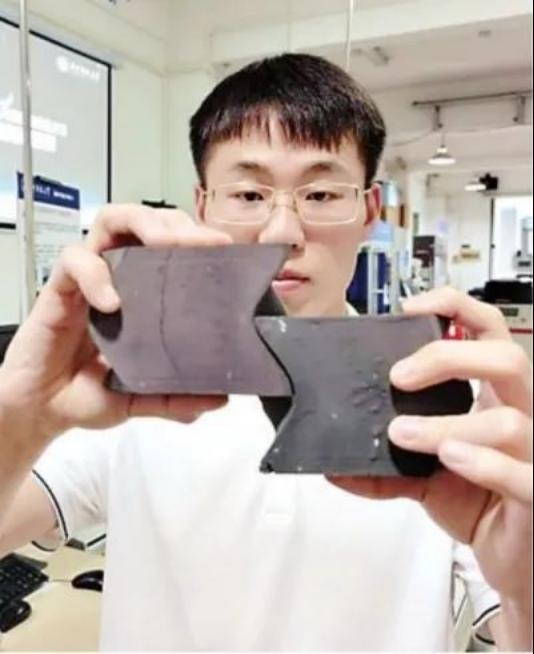
Image credit: Huazhong University
The research team has developed a way to sinter simulated lunar dust into bricks of various sizes. The sintering process is expected to be powered by concentrated solar energy on the Moon.
They also developed a robotic system to handle assembly of lunar structures like LEGO blocks, with the final step involving the use of 3D printing to reinforce the structure.
China’s long-term lunar program includes landing astronauts on the Moon by 2030 and building a basic model of the International Lunar Research Station (ILRS) by 2035.

Image credit: Huazhong University
For more information, go to these earlier stories:
Building Blocks: China to Test Moon Construction Bricks on Space Station
Moon Dwellings: China Taps 7,000 Year Old Building Technique
https://www.leonarddavid.com/moon-dwellings-china-taps-7000-year-old-building-technique/
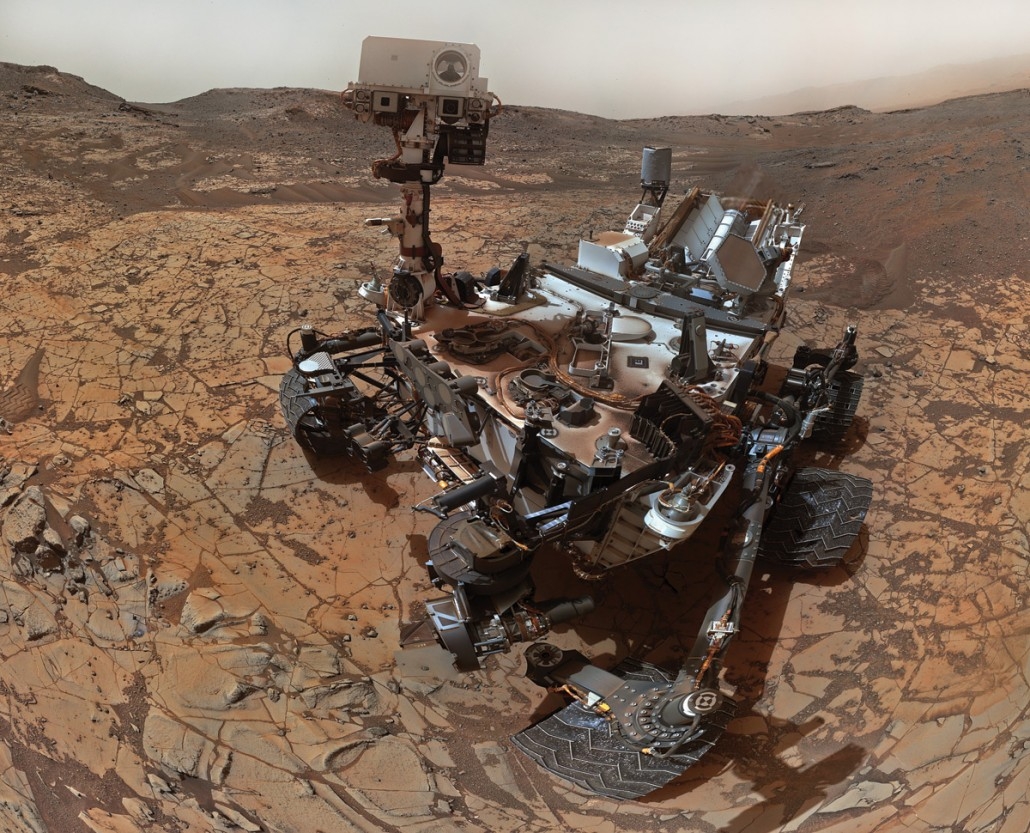
Image credit: NASA/JPL-Caltech
Scientists have uncovered new evidence that water once flowed beneath the surface of Mars. If so, the Red Planet may have remained habitable for life much longer than previously thought.
That’s the view of researchers from New York University Abu Dhabi (NYUAD).
An intriguing study has been published in the Journal of Geophysical Research – Planets.
Rock formations – Earth and Mars
The research shows that ancient sand dunes in Gale Crater, a region now being explored by NASA’s Curiosity rover, gradually turned into rock after interacting with underground water billions of years ago.
That Mars machinery has been on the prowl since August 6, 2012, wheeling about Gale crater and Mount Sharp.

Image credit: Utah Geological Survey
Led by Dimitra Atri, principal investigator of NYUAD’s Space Exploration Laboratory, with research assistant Vignesh Krishnamoorthy, the research team compared data from the Curiosity rover with rock formations in the United Arab Emirates (UAE) desert that formed under similar conditions on Earth.
Protected environments
The scientists found that water from a nearby Martian mountain once seeped into the dunes through tiny cracks, soaking the sand from below and leaving behind minerals such as gypsum, the same mineral found in Earth’s deserts. These minerals, they report, can trap and preserve traces of organic material, making them valuable targets for future missions seeking evidence of past life.
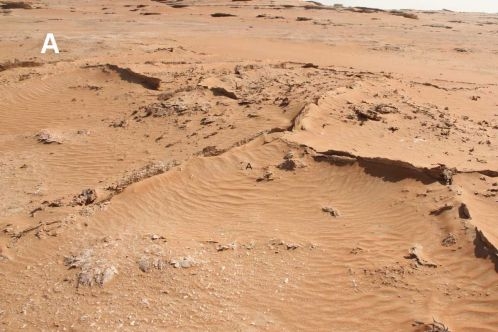
A: This is the surface of the UAE desert.
Image credit: New York University Abu Dhabi
“Our findings show that Mars didn’t simply go from wet to dry,” said Atri. “Even after its lakes and rivers disappeared, small amounts of water continued to move underground, creating protected environments that could have supported microscopic life.”
This research provides new insight into how Mars evolved over time and highlights the potential of subsurface environments as promising sites to search for signs of ancient life.
Complementary field studies
According to the paper: “Ancient Mars had stable and abundant aqueous environments; however, due to the gradual loss of most of its atmosphere, the environment evolved into cold and dry landscapes that we see today. The surface of Mars shows signs of wet and dry environments as captured by NASA’s Curiosity rover.”
The study group investigated the solidified dunes in the Stimson formation of the Gale crater.
“Using data from various instruments on the rover, we study the interaction between dry aeolian environments with groundwater and surface water, along with complementary field studies in the United Arab Emirates. We find that water interactions with dunes could be prime targets for the search for life on Mars,” they report.

Surface of Mars. Image credit: NASA/JPL-Caltech
UAE: global space exploration
Supported by the NYUAD Research Institute, the study was conducted at NYUAD’s Center for Astrophysics and Space Science. NYU Abu Dhabi is a partnership between New York University and the emirate of Abu Dhabi, contributing to the UAE’s growing role in global space exploration.
This study was conducted in collaboration with James Weston of NYUAD’s Core Technology Platform and Panče Naumov’s research group.
To access the study – “Aeolian Sediment Lithification From Late-Stage Aqueous Activity in the Gale Crater: Implications for Habitability on Mars” – go to:
https://agupubs.onlinelibrary.wiley.com/doi/10.1029/2024JE008804
Image credit: CCTV/Inside Outer Space screengrab
New reports based on restricted aviation zones, known as Notice to Air Missions (NOTAMs), appear to indicate that China intends to loft a Shenzhou-22 spacecraft atop a Long March 2F rocket in the coming days. Its destination is China’s Tiangong space station.
This craft would serve as a replacement vehicle for the window-damaged Shenzhou-20 spaceship. Once docked with the station, that craft would ensure the now-orbiting crew a safe and sound return home.
That’s the word from Andrew Jones at SpaceNews, citing that the launch would occur at approximately 11:10 p.m. Eastern Nov. 24 (0410 UTC, Nov. 25) from the Jiuquan Satellite Launch Center in the Gobi Desert.
Image credit: CCTV/Inside Outer Space screengrab
Window cracks
The Shenzhou-20 vessel was damaged by space debris, with cracks discovered in its window, forcing use of Shenzhou-21 to recently return a trio of taikonauts. Doing so left the now-in-orbit crew without a viable spacecraft for a secure way back to terra firma.
The Shenzhou-22 spacecraft and launcher were in standby mode, originally manifested for launch in 2026.
Shenzhou-20 crew back on Earth on November 14. Image credit: CCTV/Inside Outer Space screengrab
Chinese space officials labeled the wave-off and delay to bring the Shenzhou-20 crew back to Earth as the first successful implementation of an “alternative return procedure” in China’s space station program history.
Valuable resource
As of this posting, there has been no official word from the China Manned Space Agency (CMSA) on any upcoming launch of Shenzhou-22.
However, Zhou Yaqiang, an official with the China CMSA told China Central Television (CCTV) that the mission for launching the Shenzhou-22 spacecraft “has been initiated, with preparations for all systems in full swing, including testing the spacecraft and rocket components and preparing the cargo.
Image credit: CCTV/Inside Outer Space screengrab
“The Shenzhou-22 spacecraft is sure to carry supplies. The spacecraft’s cargo-carrying capacity is a highly valuable resource for the manned space program,” Zhou said, “so we will make full use of every opportunity. The Shenzhou-22 spacecraft will mainly deliver food supplies for the astronauts and some equipment for the space station.”
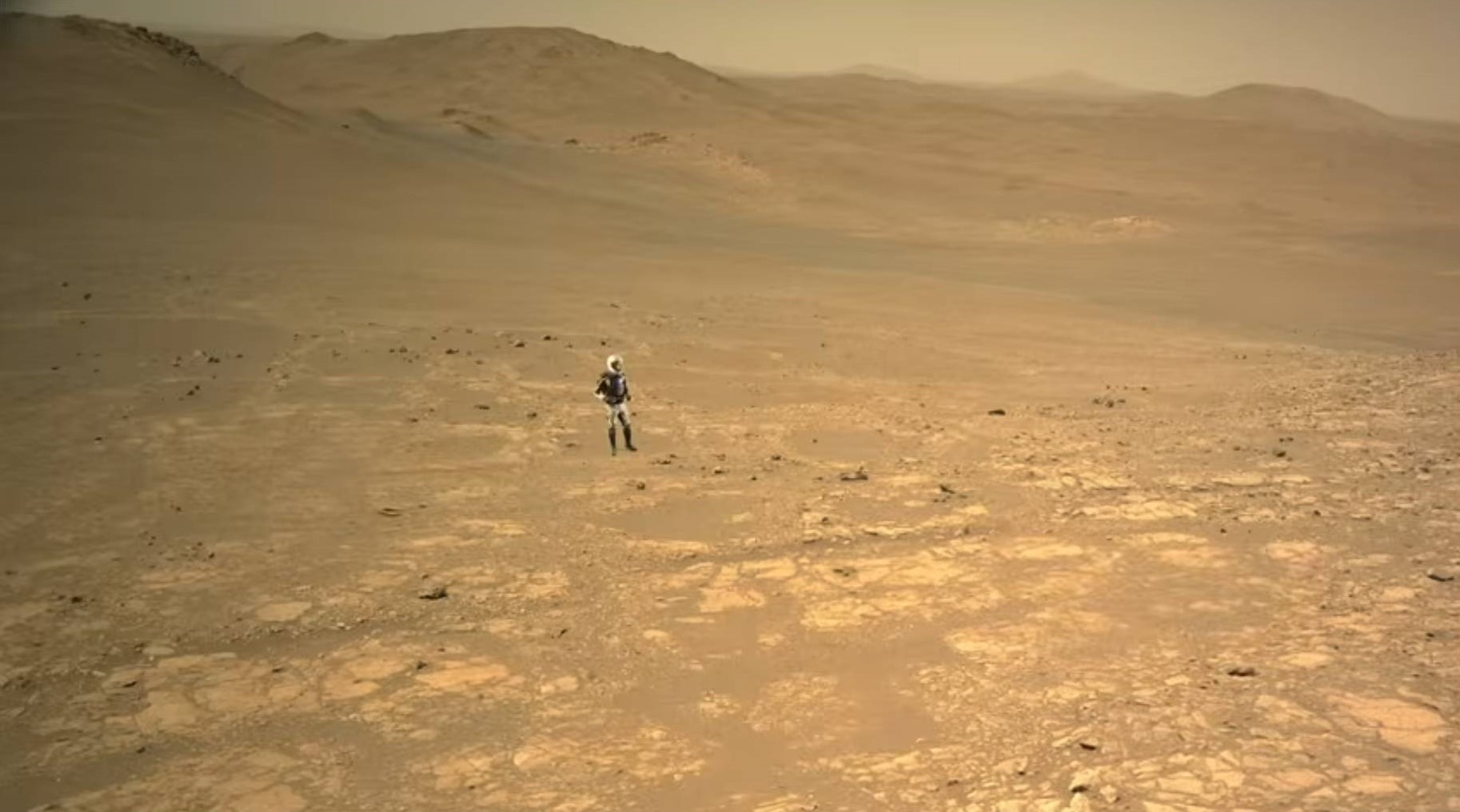
Image credit: Mars Guy/NASA JPL-Caltech/Inside Outer Space screengrab
Mars Guy notes that NASA’s Perseverance Mars rover has arrived among some truly enigmatic rocks – pockmarked with holes.
“In places they display little knobby protuberances while nearby they have circular holes. Maybe they’re unrelated to each other,” Mars Guy explains, “or maybe some holey rocks on Earth can help explain both.”

Image credit: Mars Guy/NASA JPL-Caltech/Inside Outer Space screengrab.
Mosaic credit: Neville Thompson
Go to this new and informative video at:

