 By
By  February 3rd, 2026
Image credit: NASA/Inside Outer Space screengrab
NOTE: Agency leaders will discuss initial results from the wet dress rehearsal during a news conference, now set for 1 p.m. Eastern time today, February 3. Go to:
https://www.youtube.com/@NASA/streams
“With the conclusion of the wet dress rehearsal today, we are moving off the February launch window and targeting March for the earliest possible launch of Artemis II,” explained NASA head, Jared Isaacman.
“With more than three years between SLS [Space Launch System] launches, we fully anticipated encountering challenges. That is precisely why we conduct a wet dress rehearsal. These tests are designed to surface issues before flight and set up launch day with the highest probability of success.”
Hydrogen leak
Isaacman added that during the wet dress rehearsal (WDR) test, teams worked through a liquid hydrogen leak at a core stage interface during tanking. That leak required pauses to warm hardware and adjust propellant flow.
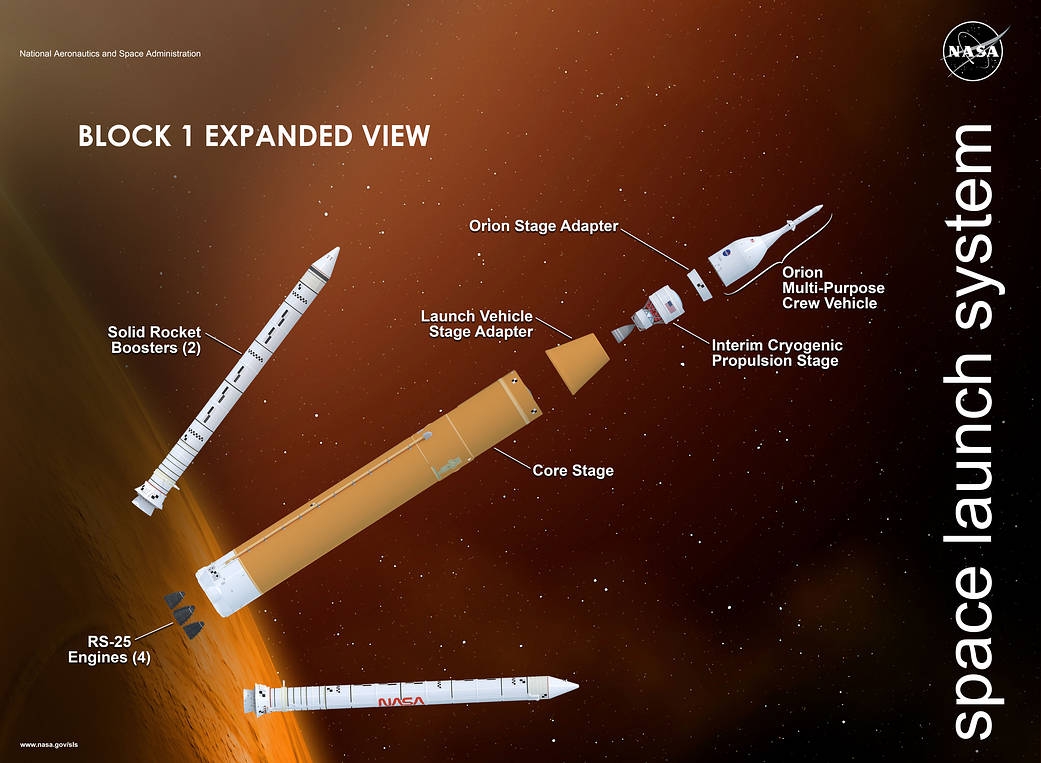
Image credit: NASA
“All core stage and interim cryogenic propulsion stage tanks were successfully filled, and teams conducted a terminal countdown to about T-5 minutes before the ground launch sequencer halted operations due to an increased leak rate.”

Image credit: ULA
Other factors
The NASA Administrator also stated that there were additional factors in the decision to delay.
They included extended Orion closeout work, intermittent ground audio dropouts, and cold-weather impacts to some cameras.
There was a successful demonstration of updated Orion closeout purge procedures to support safe crew operations.
“As always, safety remains our top priority, for our astronauts, our workforce, our systems, and the public. As noted above, we will only launch when we believe we are as ready to undertake this historic mission,” Isaacman stated.
Getting this mission right
“This is just the beginning. It marks the start of an Artemis program that will evolve to support repeated and affordable missions to the Moon, in line with President Trump’s national space policy. Getting this mission right,” Isaacman emphasized, “means returning to the Moon to stay and a future to Artemis 100 and beyond.”

Image credit: Jared Isaacman
In conclusion, the NASA chief thanked the talented workforce at NASA, along with our industry and international partners, who are working tirelessly on this effort.
“The team will fully review the data, troubleshoot each issue encountered during WDR, make the necessary repairs, and return to testing. We expect to conduct an additional wet dress rehearsal and then target the March window,” noted Isaacman. “We will continue to keep the public and the media informed as readiness progresses.”

Image credit: NASA
 Posted in Space News

