 By
By  October 13th, 2022
Credit: UCF
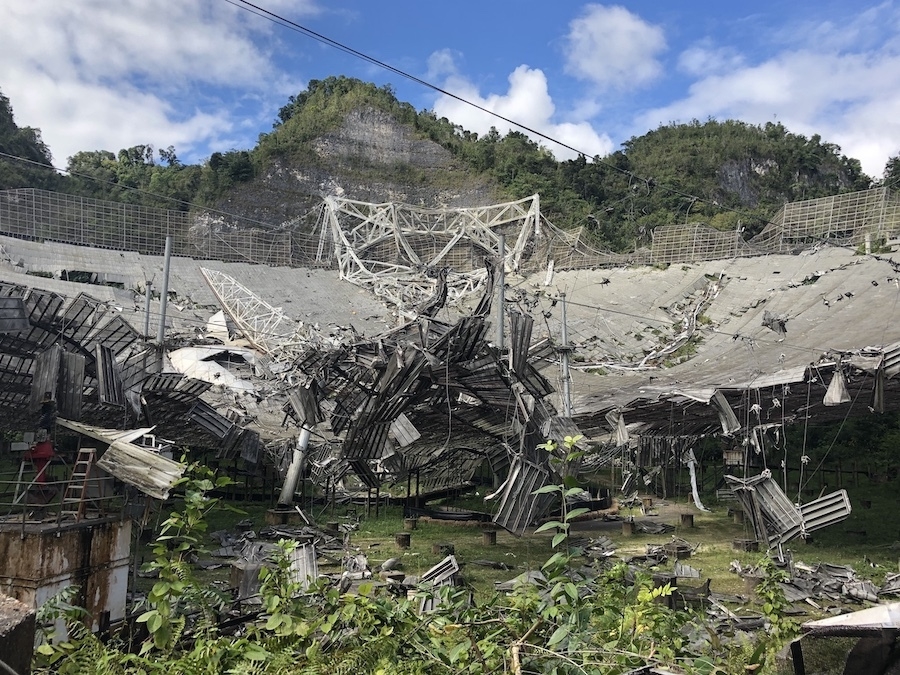
Back in December 2020, the iconic instrument platform of the 305-meter telescope at Arecibo Observatory in Puerto Rico collapsed.
The unique observatory contributed to scientific discoveries including the demonstration of gravitational waves from a binary pulsar and the first discovery of an extrasolar planet, as well as radar scanning of asteroids. Loosing Arecibo was a loss for the scientific community.
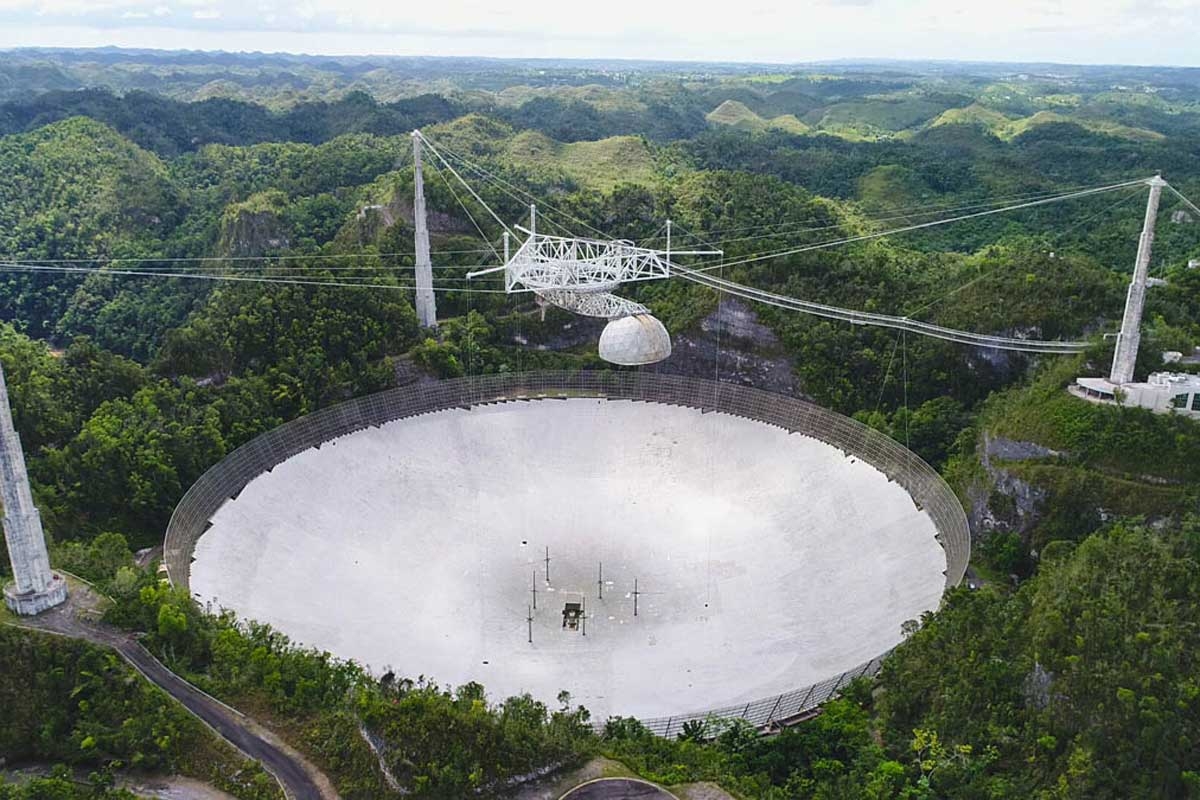
Arecibo radio telescope, pictured here in the spring of 2019.
Credit: UCF
Credit: Michelle Negron, National Science Foundation
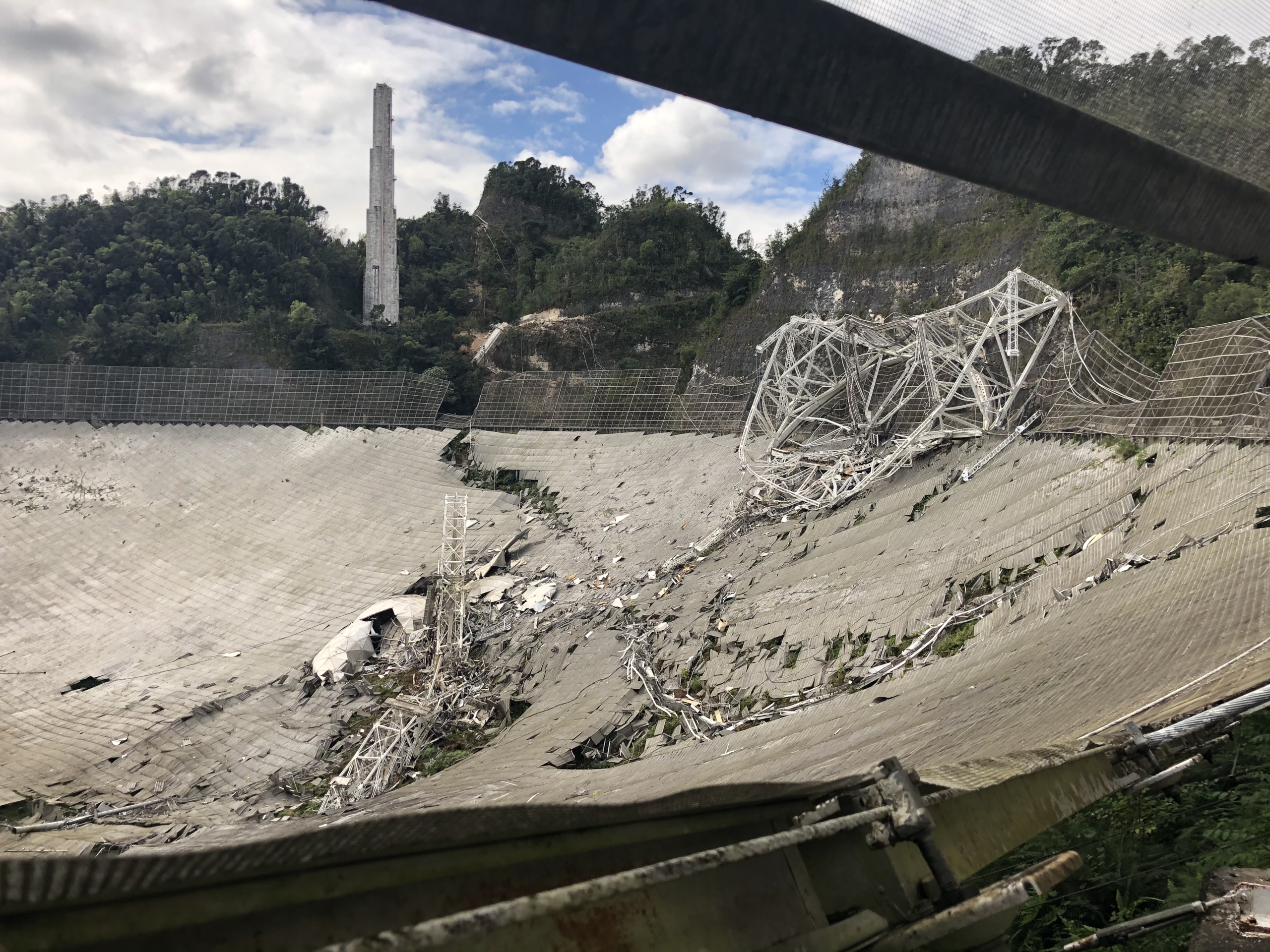
Damage to the 305-meter telescope at Arecibo Observatory, after its collapse on Dec. 1, 2020. The remains of the instrument platform are visible on the telescope’s dish.
Credit: Michelle Negron, National Science Foundation
But now a new multidisciplinary, world-class educational center at the Arecibo Observatory in Puerto Rico is on tap, aiming to serve as a hub for science, technology, engineering, and math (STEM) education and outreach.
Science Act of 2022
The U.S. National Science Foundation (NSF) issued a solicitation October 13 for the center, expected to open in 2023. This new educational center is consistent with guidance provided in the CHIPS and Science Act of 2022.
That act “encourages the National Science Foundation, in consultation with other Federal agencies, to explore opportunities for strengthening and expanding the role of the Arecibo Observatory in Puerto Rico through education, outreach, and diversity programs, and future research capabilities and technology at the site.”

Asteroid 2014 HQ124 appears to be an elongated, irregular object that is at least 1,200 feet (370 meters) wide on its long axis.
Image credits:
NASA/JPL-Caltech
Arecibo Observatory
USRA/NSF
Stewarded by NSF since the 1970s, the Arecibo Observatory is operated under cooperative agreement by the University of Central Florida.
Outreach
The new center would expand upon existing education and outreach opportunities currently in place at the Arecibo Observatory site, while also implementing new STEM programs and initiatives.
The NSF solicitation calls for proposals to manage the education, STEM research, and outreach aspects of the center. Resources available on site include: a learning center, the Ángel Ramos Science and Visitor’s center, exhibition space, laboratory space, auditorium, cafeteria, office space, and dormitories.
The solicitation does not include rebuilding the 305-meter telescope or operational support for current scientific infrastructure, such as the 12-meter radio telescope or Lidar facility at the site.
Further information and a link to the solicitation is available at:
 Posted in Space News

