 By
By  January 29th, 2026
Image credit: Amazon Leo
The Amazon low Earth orbit (LEO) constellation — formerly named Project Kuiper – is a worrisome initiative, particularly for astronomers, given that 3,232 satellites are planned to orbit the Earth.
The state-of-the-art satellite technology is to deliver reliable, high-speed connectivity.
The Amazon mega-constellation will potentially impact astronomical research and aesthetic appreciation of the night sky, according to a new research paper led by Anthony Mallama of the International Astronomical Union’s (IAU) Center for the Protection of the Dark and Quiet Sky.
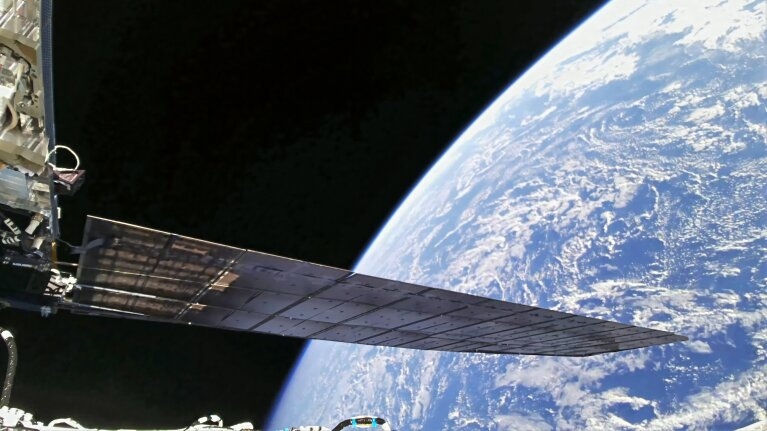
Image credit: Amazon Leo
Reflected sunlight
Satellite attitude determines how sunlight is reflected and influences brightness.
The new research paper focuses on Amazon low Earth orbit satellites at roughly 390 miles (630 kilometers) altitude.
Mallama and colleagues note that future Amazon spacecraft are expected to orbit at lower altitudes and therefore will be brighter.
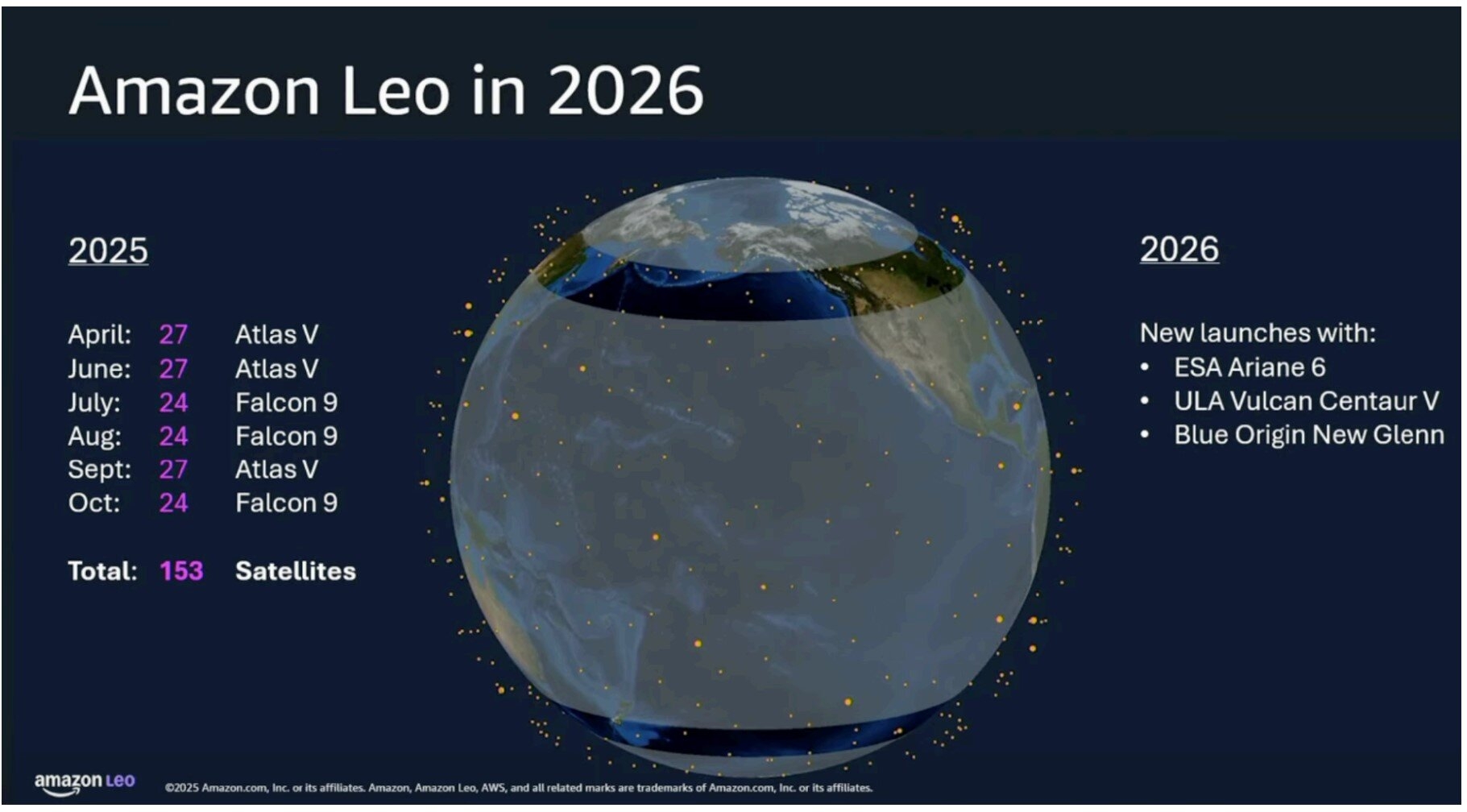
Image credit: Amazon Leo
Ground-based observatories
Amazon Leo, the paper adds, has recently stated that it is deploying ground-based observatories to measure reflectivity brightness. The intent of doing so is to improve performance through block upgrades.
“The mean apparent magnitude of all Amazon Leo satellites is 6.28 based on 1,938 observations. For spacecraft in their operational mode, 92% exceeded the IAU brightness limit for interference with research, while 25% distract from aesthetic appreciation of the night sky,” the paper explains.
What’s the SCORE?
Meanwhile, a Satellite Constellation Observation Repository (SCORE) has been developed and maintained by the IAU Center for the Protection of the Dark and Quiet Sky.
SCORE serves as a centralized repository for satellite brightness observations. Its primary function is to provide a comprehensive and organized platform for researchers to contribute, store, and access observational data of artificial space objects.
To access the research paper – “Brightness Characterization and Modeling for Amazon Leo Satellites” – go to:
 Posted in Space News

