 By
By  January 4th, 2016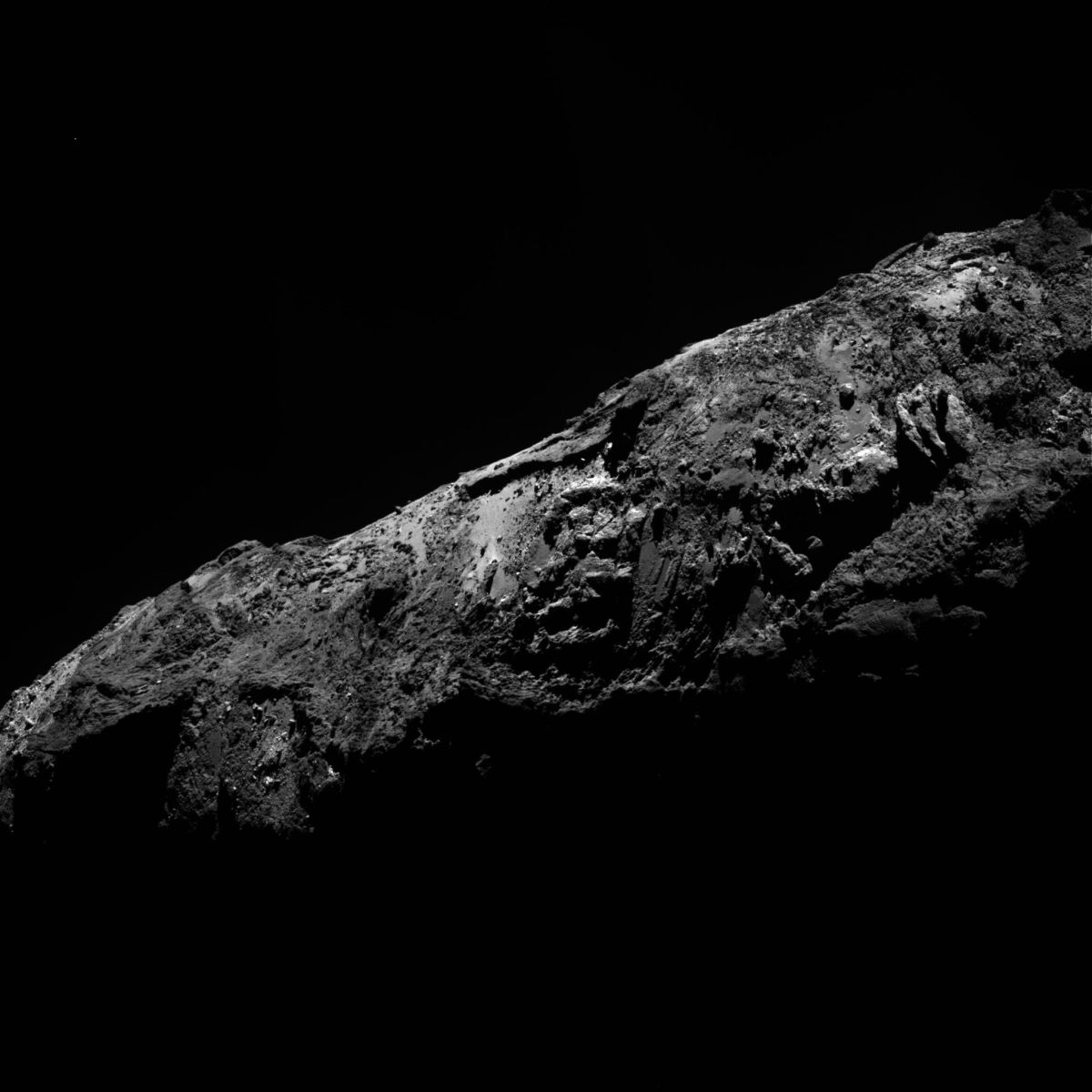
Rosetta image of comet taken on December 31, 2015 by the spacecraft’s OSIRIS narrow-angle camera from a distance of roughly 49 miles (79.6 kilometers) from the object.
Credits: ESA/Rosetta/MPS for OSIRIS Team MPS/UPD/LAM/IAA/SSO/INTA/UPM/DASP/IDA
The European Space Agency’s (ESA) Rosetta arrived at Comet 67P/Churyumov–Gerasimenko back in August 2014. After an initial survey and selection of a landing site, Rosetta unleashed the Philae probe on November 12 that bounced to a full-stop on the comet.
Still cruising along with the comet, ESA’s Rosetta spacecraft continues to produce outstanding images of the object, riding along with the celestial traveler through the Solar System.
“Now that we’re closer to the comet again we’re looking forward to seeing its surface in more detail. We’re also looking forward to sharing a fantastic view as Rosetta descends to the surface of the comet next September,” says Matt Taylor, ESA’s Rosetta project scientist.
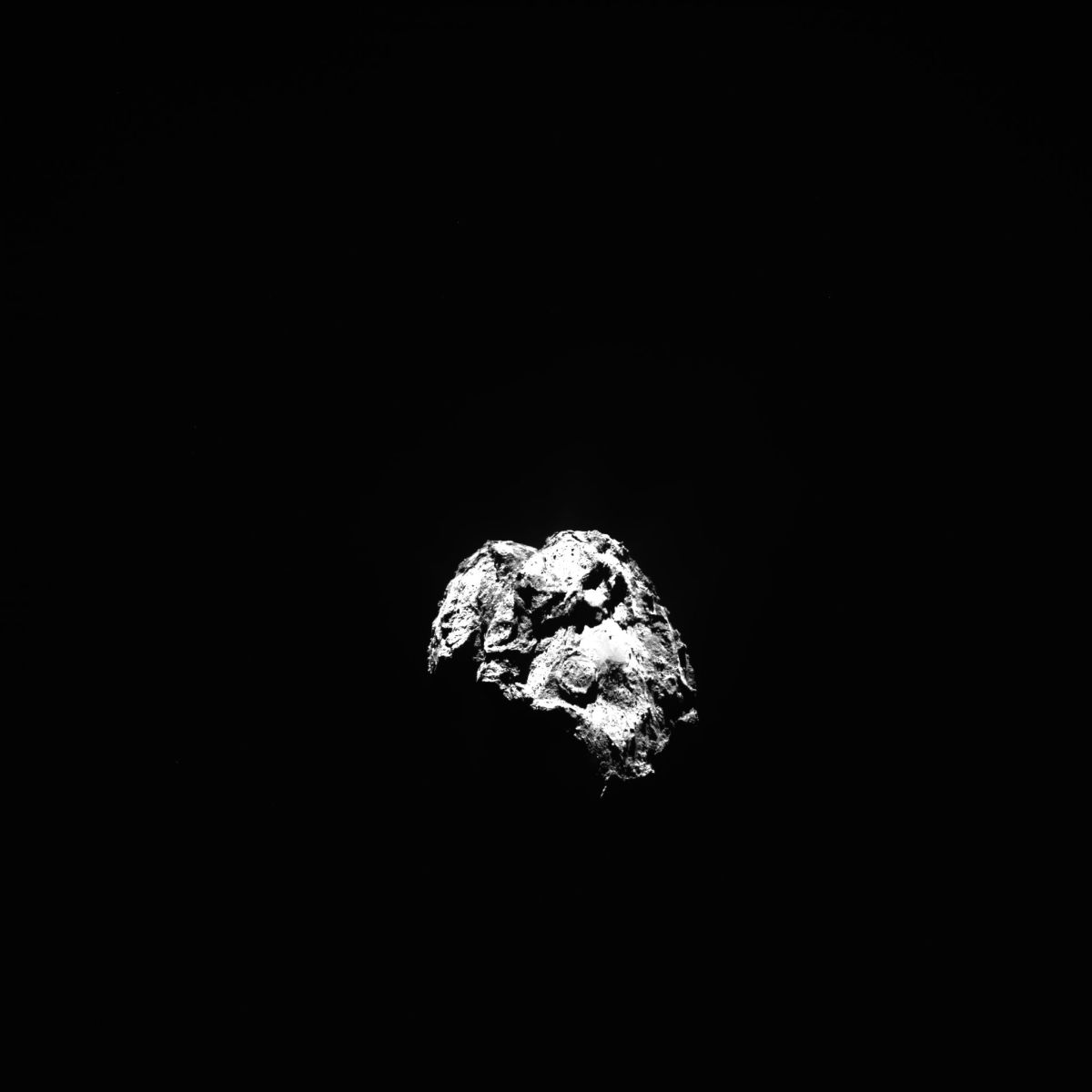
January 1, 2016 image of Comet 67P/ Churyumov–Gerasimenko taken by Rosetta’s Wide Angle Camera at roughly 50 miles (80 kilometers) distance from the object.
Credits: ESA/Rosetta/MPS for OSIRIS Team MPS/UPD/LAM/IAA/SSO/INTA/UPM/DASP/IDA
Rosetta was launched on March 2, 2004 by an Ariane-5 from Europe’s Spaceport in Kourou, French Guiana.
Check out this new video that pulls together details about Philae’s fall onto the comet at:
http://www.esa.int/spaceinvideos/Videos/2015/11/Reconstructing_Philae_s_flight
 Posted in Space News

