 By
By  September 14th, 2020
A composite image of the planet Venus as seen by the Japanese probe Akatsuki. The clouds of Venus could have environmental conditions conducive to microbial life.
Credit: JAXA
A global team of astronomers today announced the discovery of a rare molecule – phosphine – in the clouds of Venus.
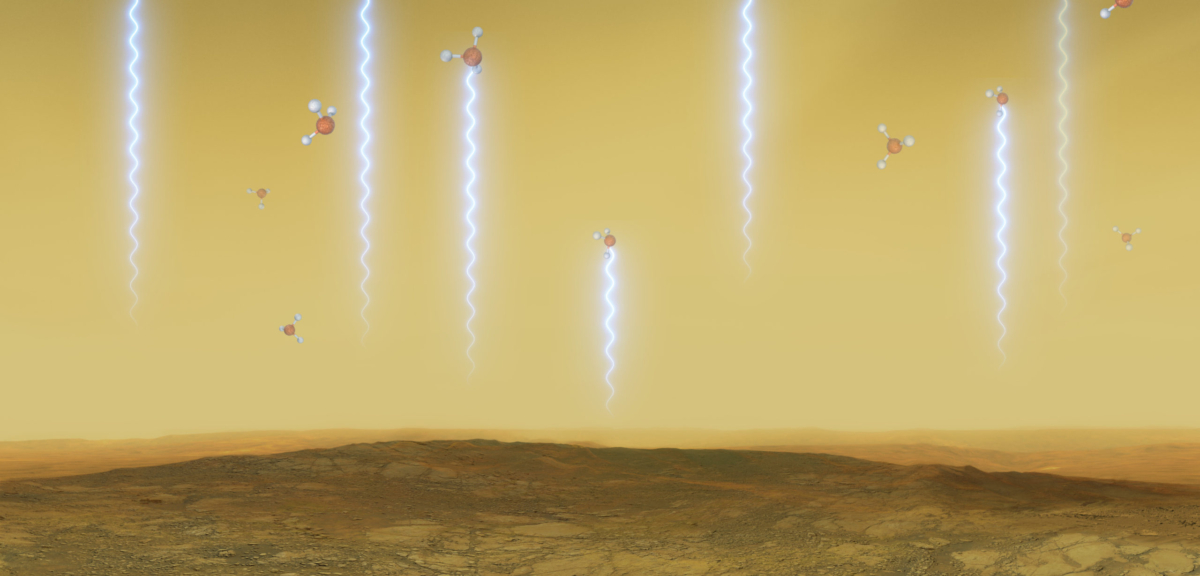
Artistic illustration depicts the Venusian surface and atmosphere, as well as phosphine molecules. Credit: ESO/M. Kornmesser/L. Calçada
Here on Earth, this gas is only made industrially, or by microbes that thrive in oxygen-free environments. So does the detection of phosphine point to extra-terrestrial “aerial” life on Venus?

James Clerk Maxwell Telescope located near the summit of Maunakea on the Big Island of Hawaiʻi.
Source: Joint Astronomy Centre

A few of the antenna of the Atacama Large Millimetre/submillimeter Array (ALMA) in the Chajnantor Plateau of Chile. Credit: ALMA (ESO/NAOJ/NRAO)
This new finding used data collected by the James Clerk Maxwell Telescope in Hawaii and the ALMA observatory in Chile.
Venusian viewing – resources
Go to this Royal Astronomical Society (RAS) press event that details the intriguing new findings at:
Also, view this European Southern Observatory (ESO) video at:
Go to this paper:
https://www.nature.com/articles/s41550-020-1174-4
Here’s the news from Cardiff University on the announcement:
https://www.cardiff.ac.uk/news/view/2445204-hints-of-life-on-venus
Check out this older Inside Outer Space story at:
https://www.leonarddavid.com/venus-clouds-a-depot-for-life/
Lastly, from Rocket Lab: “Well hello there Venus. Congrats to the teams behind this exciting research! Rocket Lab is planning a private mission to Venus in 2023, using Electron to launch a Photon satellite to the planet’s atmosphere in the hopes of providing more data in the search for life.”
Take a look at this Rocket Lab clip discussing a private astrobiology Venus mission in 2023:
 Posted in Space News

