 By
By  April 1st, 2017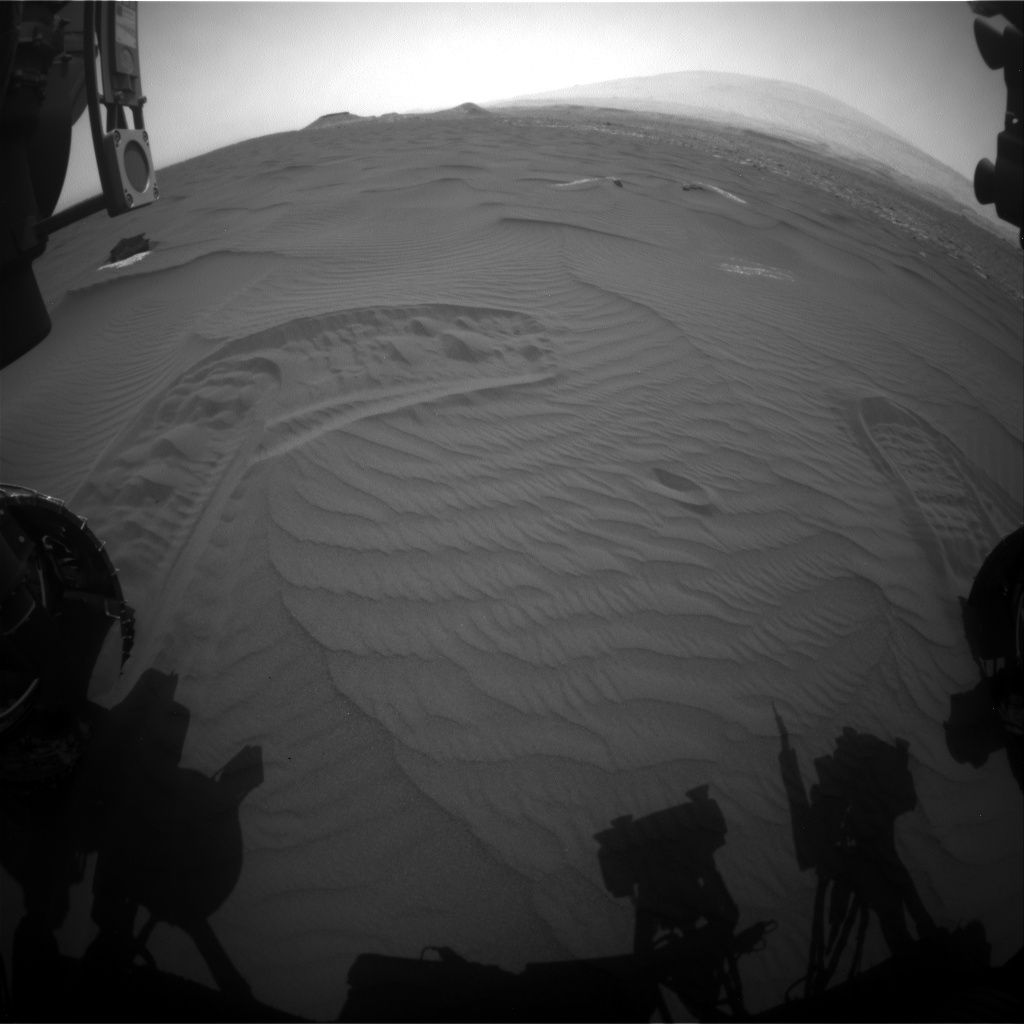
Curiosity Front Hazcam Left B image taken on Sol 1653, March 31, 2017.
Credit: NASA/JPL-Caltech
NASA’s Curiosity rover on Mars is now performing science duties during Sol 1654.
A three-sol plan has been scripted that involves the Mars Hand Lens Imager (MAHLI) photo shoot of the first scoop location (OG1). The fine-grained portion of “Ogunquit Beach” Scoop #1 (now named “OG1”).
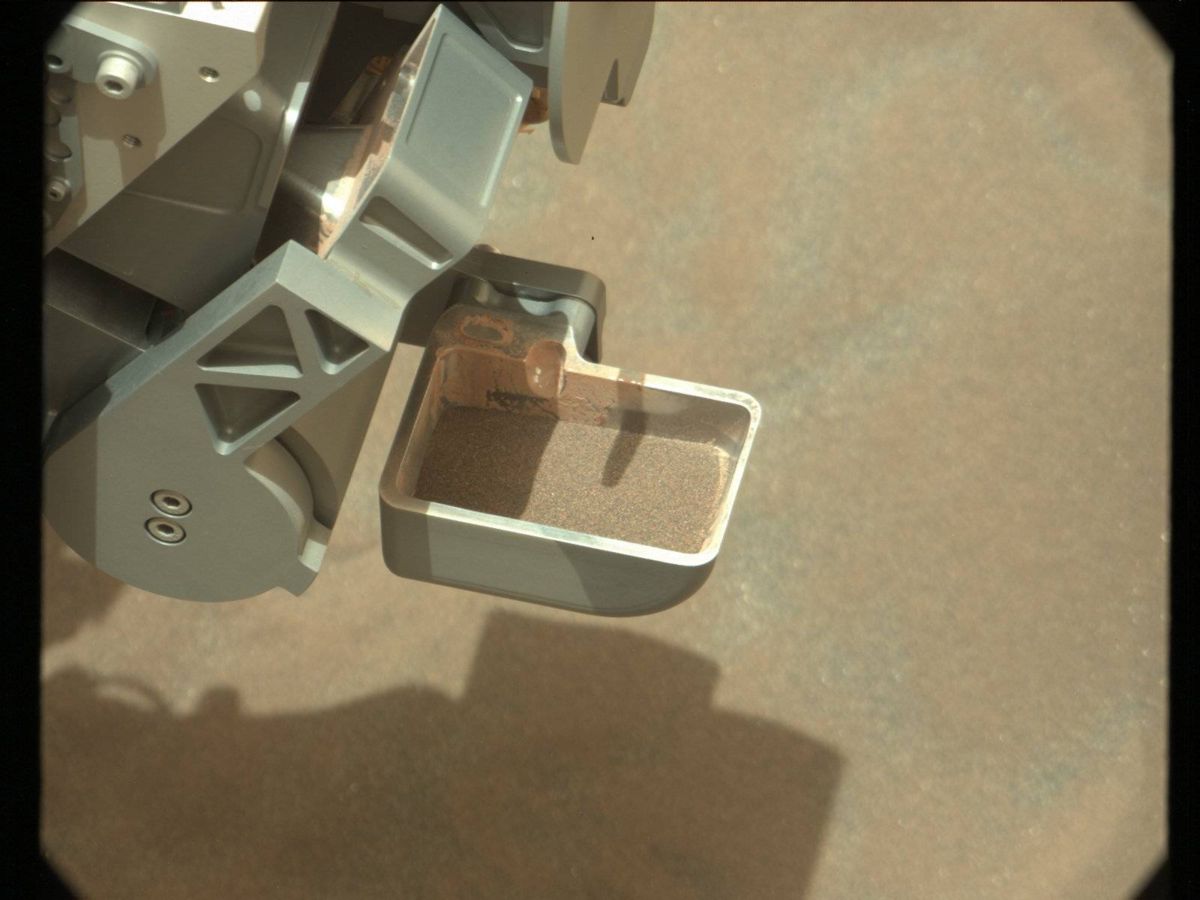
Here’s the scoop! Curiosity Mastcam Right image taken on Sol 1651, March 29, 2017.
Credit: NASA/JPL-Caltech/MSSS
Imaging suites
First sol work calls for use of Mastcam and Mars Descent Imager (MARDI) imaging for change detection. The second sol involves a number of remote sensing activities, starting with a long morning imaging suite for environmental monitoring observations, reports Lauren Edgar, a research geologist at the USGS Astrogeology Science Center in Flagstaff, Arizona and Michael Battalio, a Ph.D. candidate in atmospheric science at Texas A&M.
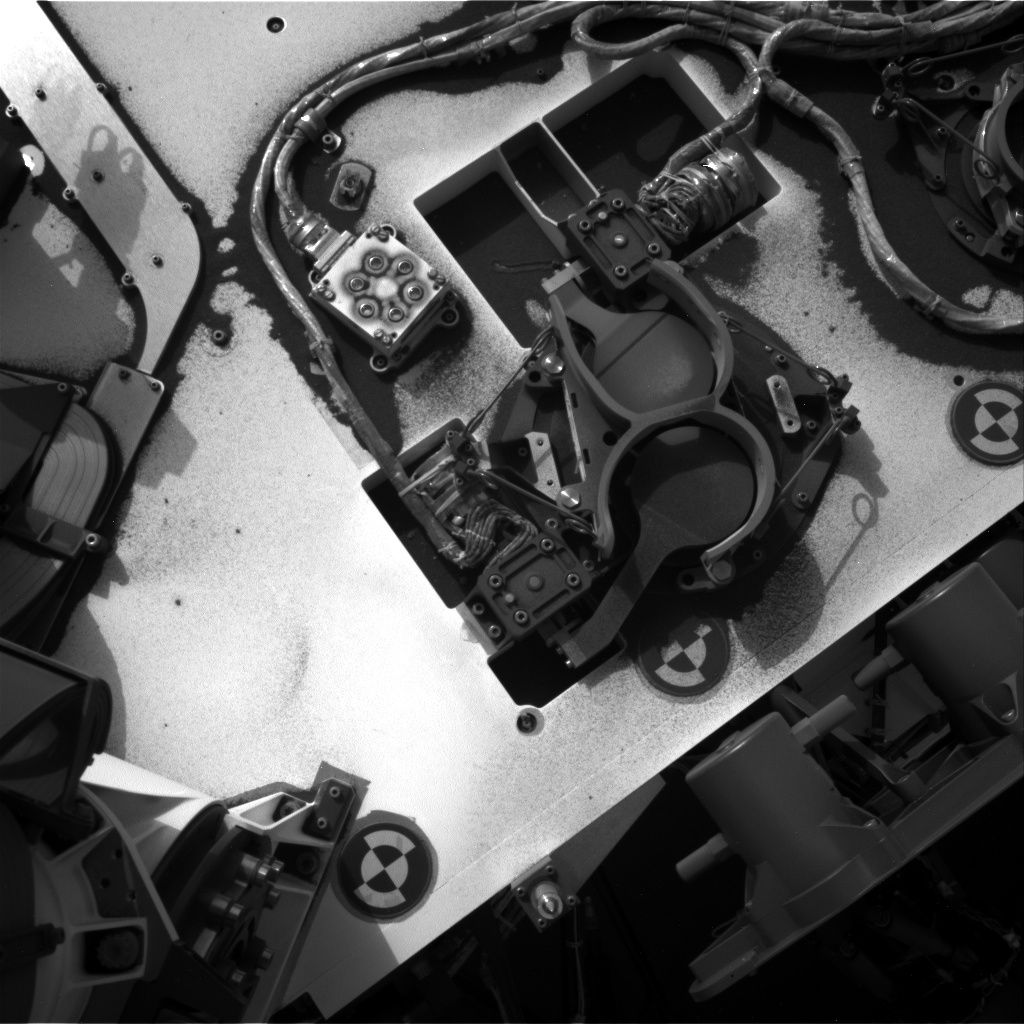
Sand laden topside of Curiosity rover. Navcam Right B image taken on Sol 1653, March 31, 2017.
Credit: NASA/JPL-Caltech
“The imaging suites are special observations that include Navcam cloud movies and dust opacity measurements from both Navcam and Mastcam at an early morning time, when the rover is usually asleep and recharging,” they report.
Mosaic of Vera Rubin Ridge
On the schedule, the sol 1655 imaging suite is a long version that also includes a Chemistry & Camera (ChemCam) passive sky measurement, which seeks to determine the chemical composition of the air near Curiosity.
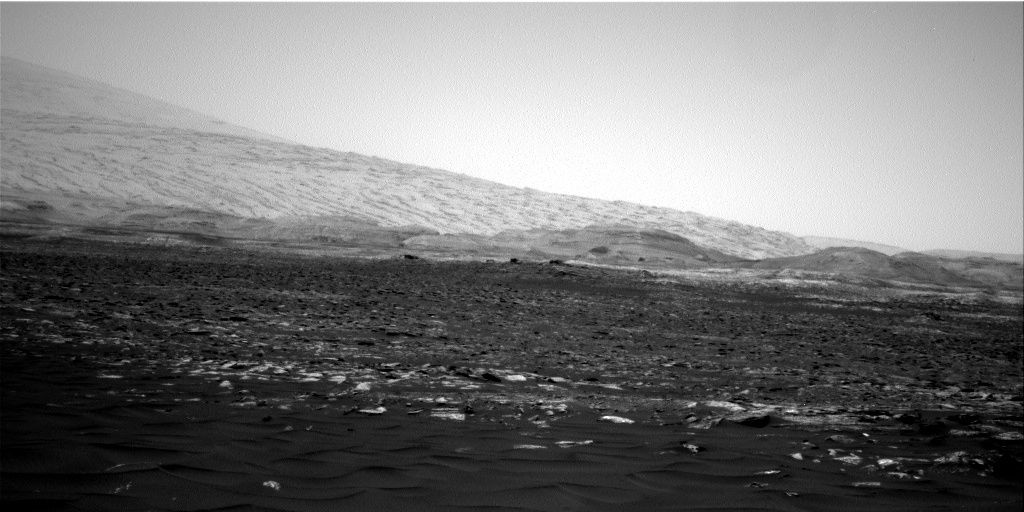
Curiosity Navcam Right B image taken on Sol 1653, March 31, 2017.
Credit: NASA/JPL-Caltech
All of these measurements are duplicated in the afternoon to check for diurnal variability. Later in the afternoon, the script calls for taking a large Mastcam mosaic of “Vera Rubin Ridge,” for both stereo and multispectral analysis of the prominent ridge at the base of Mt. Sharp.
“We’ll also acquire a multispectral Mastcam image of the area observed by the Ground Temperature Sensor (GTS) to help with thermal modeling and grain size determination,” Edgar and Battalio report. The plan also includes the usual Rover Environmental Monitoring Station (REMS) and Dynamic Albedo of Neutrons measurements.
Additional REMS observations have been added to the plan to determine if the REMS GTS is affected by an increase in winds in the afternoon.
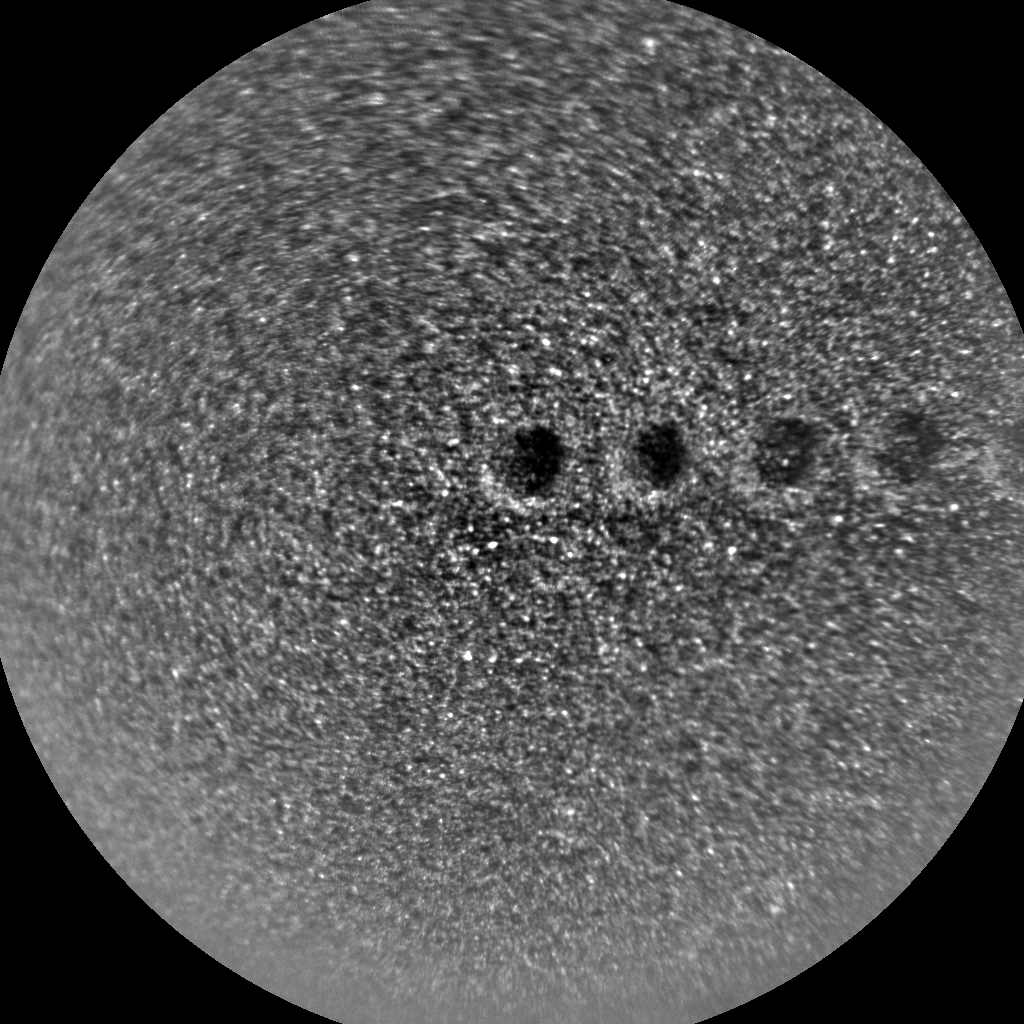
Laser pulses in Mars sand. Curiosity ChemCam Remote Micro-Imager photo acquired on Sol 1653 March 31, 2017.
Credit: NASA/JPL-Caltech/LANL
Dust devil movie
The second sol also includes more Mastcam change detection observations, and a large Navcam 15-frame dust devil movie to attempt to capture movement in individual dust devils and to estimate the amount of dust lifted by a range of vortex sizes.
Edgar and Battalio report that on the third sol, ChemCam will perform some calibration activities and analyze targets “Kamankeag” and “Hamlin Peak” to assess the composition of Murray bedrock and a small ripple.
Next week, look for more dune campaign activities.
 Posted in Space News

