 By
By  March 2nd, 2017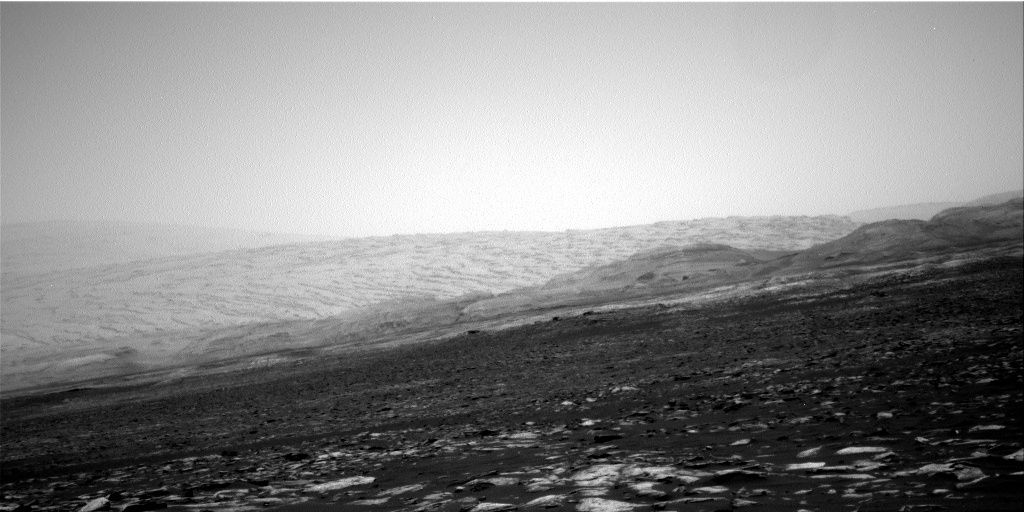
Curiosity Navcam Right B image taken on Sol 1624, March 1, 2017.
Credit: NASA/JPL-Caltech
NASA’s Curiosity Mars rover is now completing tasks during Sol 1625 operations.
Lauren Edgar, a research geologist at the USGS Astrogeology Science Center in Flagstaff, Arizona reports: “We’re still at the second stop of the Bagnold Dune campaign,” with the robot running a few more Mars Hand Lens Imager (MAHLI) diagnostics and focusing on targeted remote sensing.
Mt. Sharp observation
Curiosity has on the task list Chemistry and Camera (ChemCam) observation of a ripple crest and a long distance Remote Micro-Imager (RMI) look for changes on the slope of Mt. Sharp.
“We’ll also use Navcam to search for dust devils, and Mastcam will survey the color and opacity of the atmosphere,” Edgar reports.
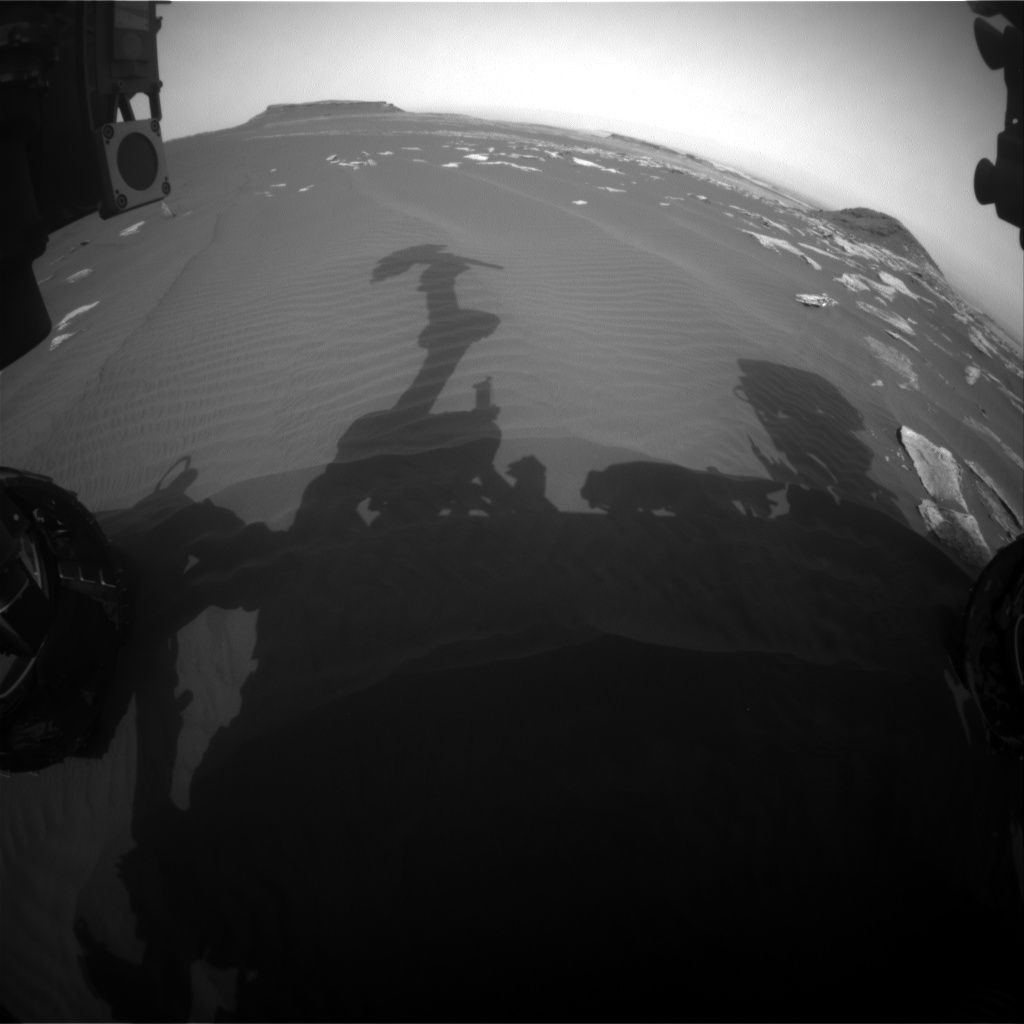
Curiosity Front Hazcam Left B image taken on Sol 1624, March 1, 2017.
Credit: NASA/JPL-Caltech
Also on tap are ChemCam observations of “Allagash” and “Hersey” to investigate some bedrock with interesting color variations.
Mastcam and Navcam will also be used to monitor the atmosphere and search for dust devils.
Ripple activity
On the schedule is use of the robot’s Alpha Particle X-Ray Spectrometer (APXS), continuing to collect data for thermal characterization.

Curiosity Mastcam Right image taken on Sol 1623, February 28, 2017. Robot’s self-inspection of its Mars Hand Lens Imager (MAHLI) system.
Credit: NASA/JPL-Caltech/MSSS
Throughout the plan, Curiosity will repeat several Mastcam and Mars Descent Imager (MARDI) images to monitor changes in sand movement.
“These change detection observations have produced a great dataset that shows some awesome ripple activity,” Edgar concludes.
 Posted in Space News

