 By
By  February 8th, 2017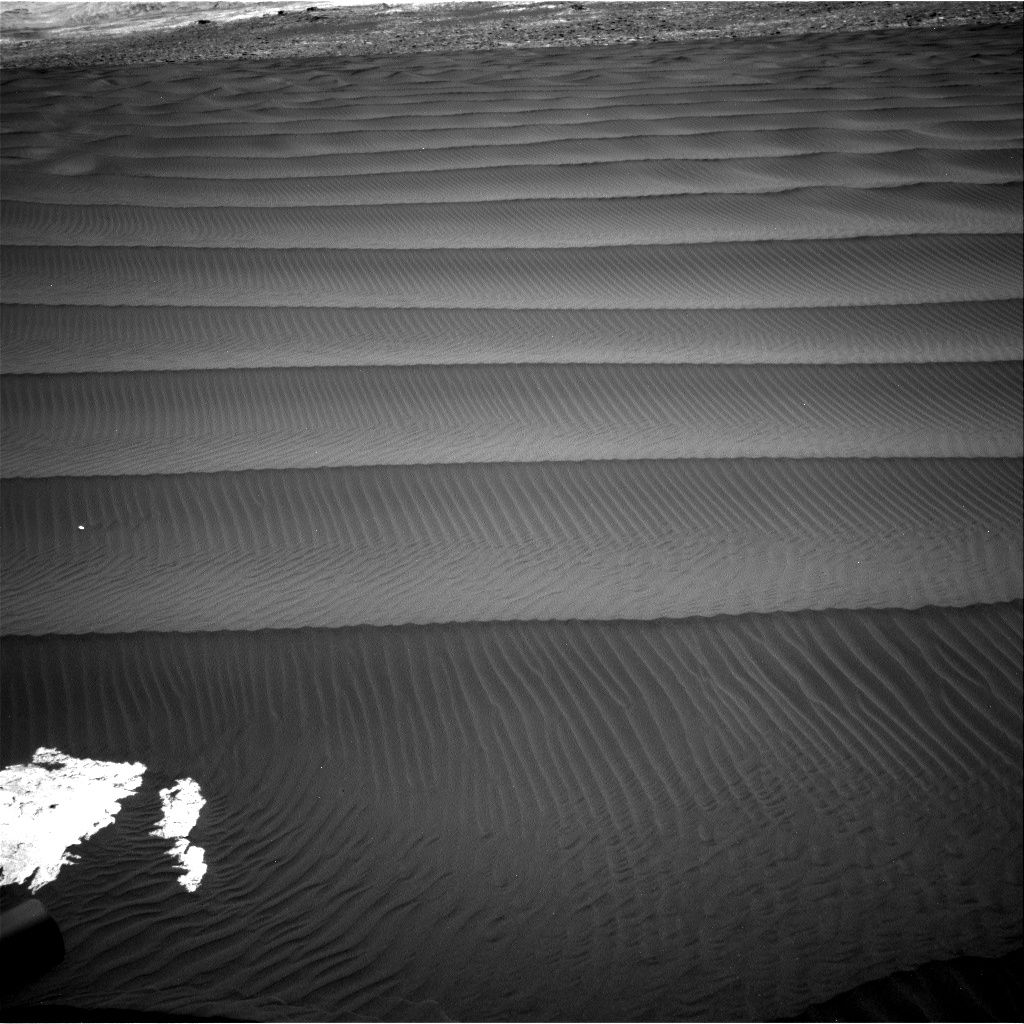
Curiosity Navcam Right B image taken on Sol 1601, February 2, 2016.
Credit: NASA/JPL-Caltech
The second half of the Curiosity Mars rover’s campaign to study the “Bagnold Dunes” is well underway.
Now in Sol 1603, the robot is conducting Mastcam mosaics of the dunes, which will be repeated several times to watch for changes, reports Ryan Anderson, a planetary scientist at the USGS Astrogeology Science Center in Flagstaff, Arizona.
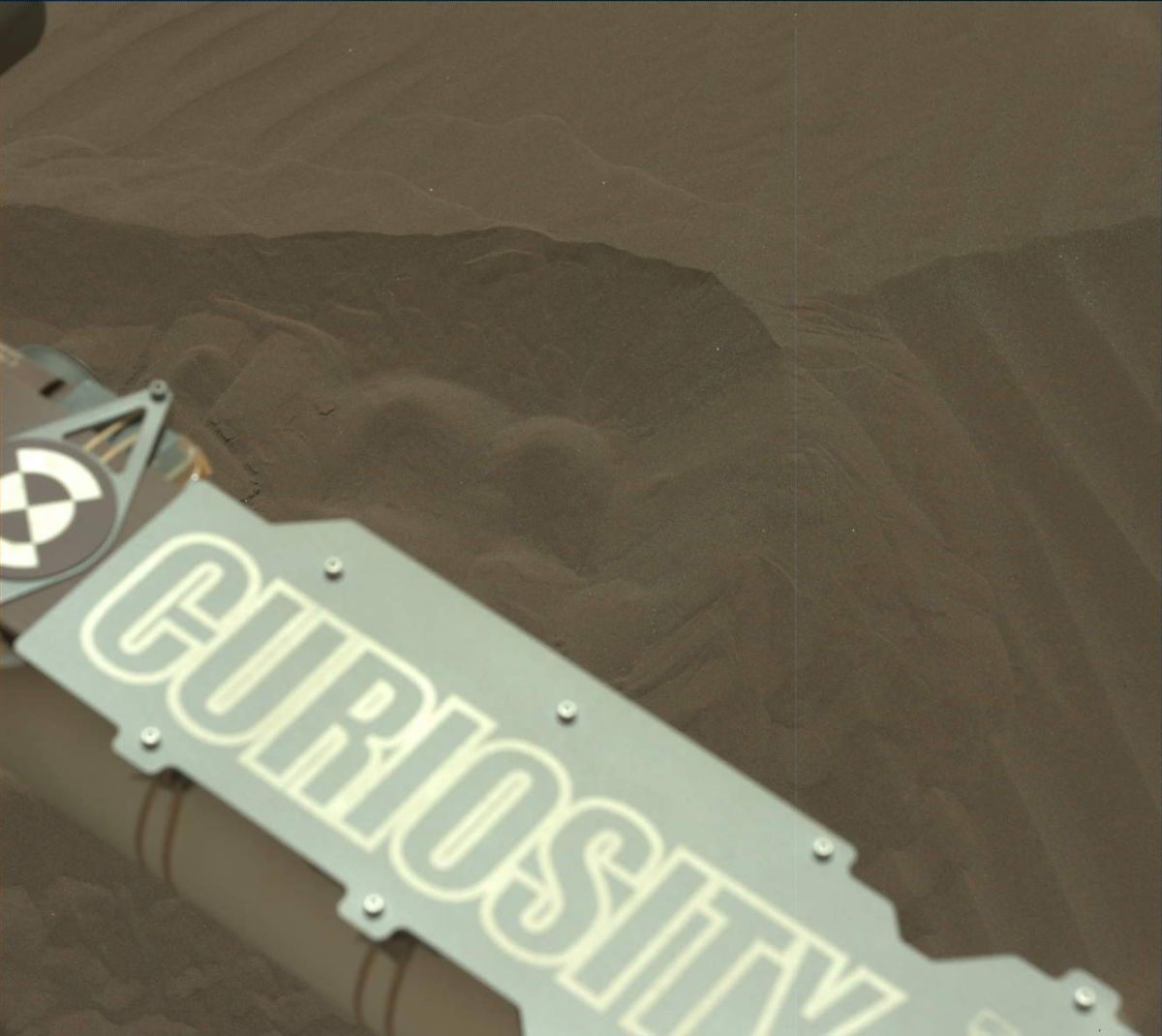
Curiosity Mastcam Left image taken on Sol 1601, February 6, 2017.
Credit: NASA/JPL-Caltech/MSSS
Return to active duty
Mastcam is also to do a couple of measurements to determine the amount of dust in the atmosphere. Navcam was to perform a dust devil monitoring observation.
Curiosity’s Chemistry & Camera (ChemCam) was set to do an active laser-induced breakdown spectroscopy (LIBS) observation of the soil target “Mapleton” as the final step in the diagnostics that will allow it to return to active duty.
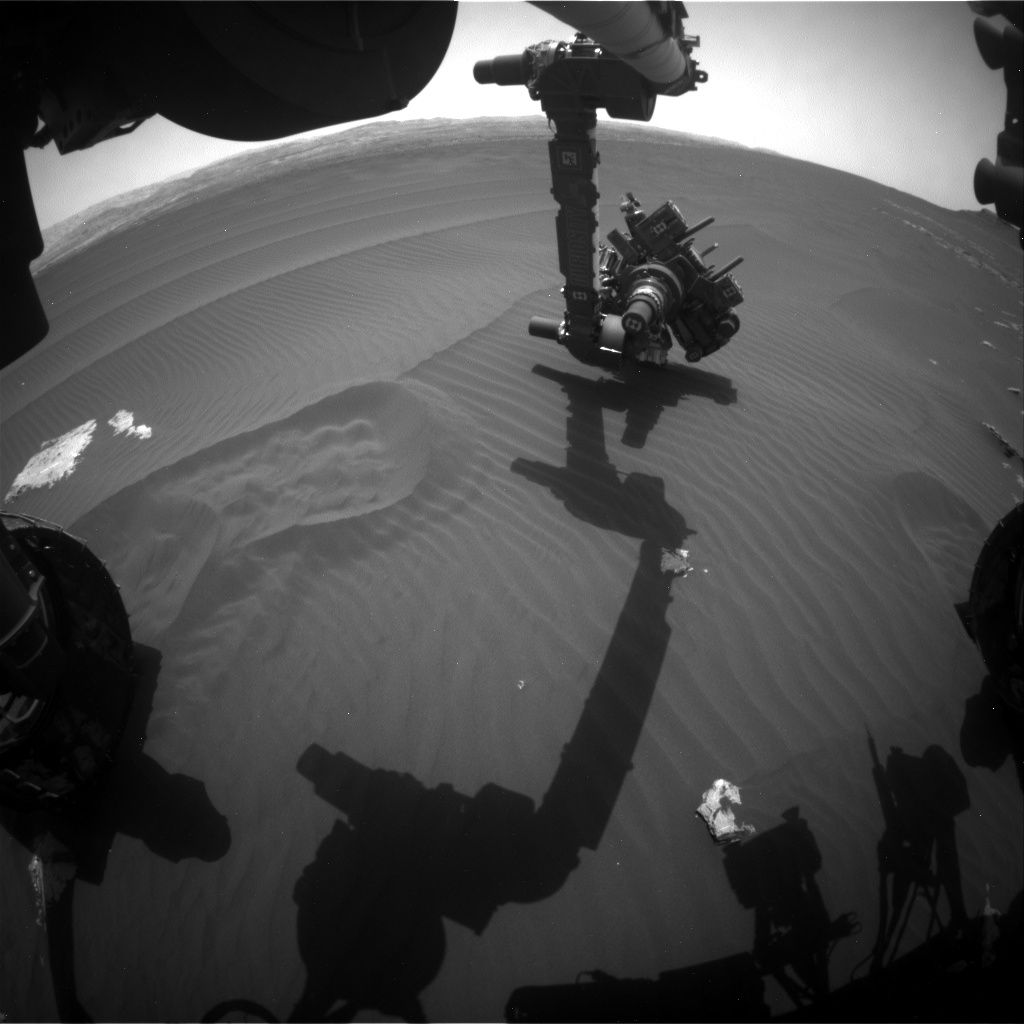
Curiosity Front Hazcam Left B image taken on Sol 1603, February 8, 2017.
Credit: NASA/JPL-Caltech
Having a field day
In addition to change detection, Anderson notes that the rover’s Mastcam has a stereo image of some bedforms at “Flume Ridge,” a 9×2 mosaic of the interesting nearby dune field, and a 3×2 observation in support of the campaign to watch for dust devils.
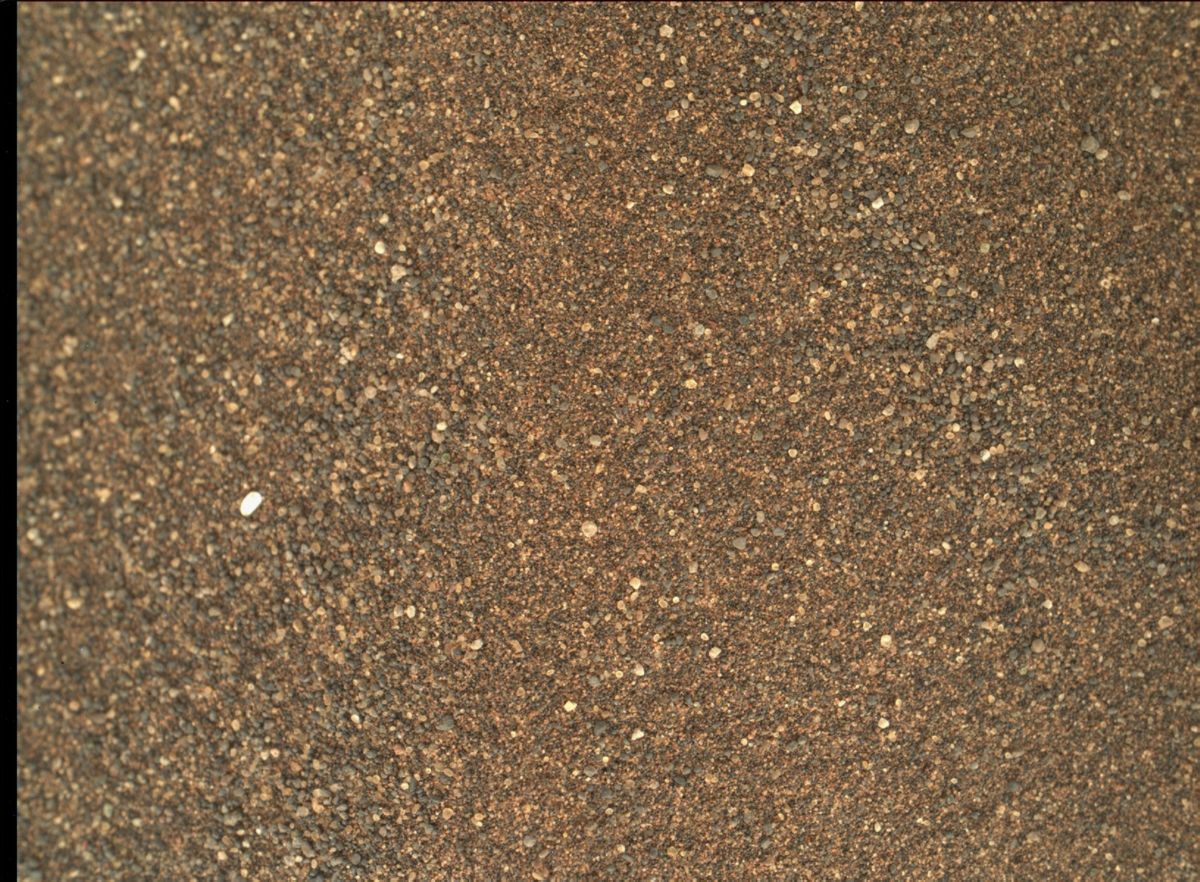
Curiosity Mars Hand Lens Imager (MAHLI) image taken on February 7, 2017, Sol 1602.
Credit: NASA/JPL-Caltech/MSSS
Mars Hand Lens Imager (MAHLI) is having a field day, observing the targets “Scarboro”, “McKenny”, “Matagamon”, “Flume Ridge”, “The Forks”, and “West Branch”.
Sol 1602 duties also included repeating the Mastcam change detection observations, going all the way into the evening hours on Mars.
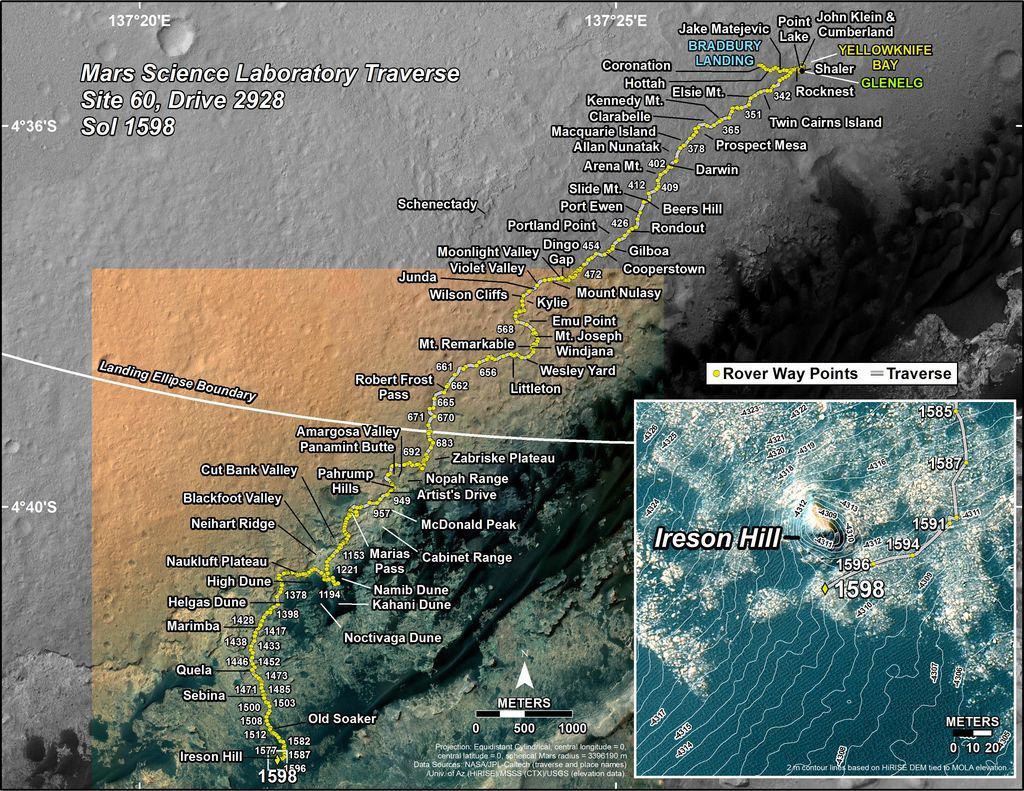
This map shows the route driven by NASA’s Mars rover Curiosity through the 1598 Martian day, or sol, of the rover’s mission on Mars (February 03, 2017). Total odometry for the mission at this point was 9.58 miles (15.42 kilometers). The base image from the map is from the High Resolution Imaging Science Experiment Camera (HiRISE) in NASA’s Mars Reconnaissance Orbiter.
Credit: NASA/JPL-CALTECH/UNIV. OF ARIZONA
 Posted in Space News

