 By
By  December 1st, 2016
Credit: ISECG
The International Space Exploration Coordination Group (ISECG) has just published the summary of its upcoming Science White Paper: “Scientific Opportunities Enabled by Human Exploration Beyond Low-Earth-Orbit.”
The science white paper will inform the next edition of the Global Exploration Roadmap, expected in late 2017.
The paper was developed by ISECG agencies together with a Science Advisory Group, including representatives from the international scientific community and reflecting the views and inputs from an open interaction with this community.
Ideal location
According to the white paper, the next step beyond low-Earth orbit and the International Space Station is the Moon.
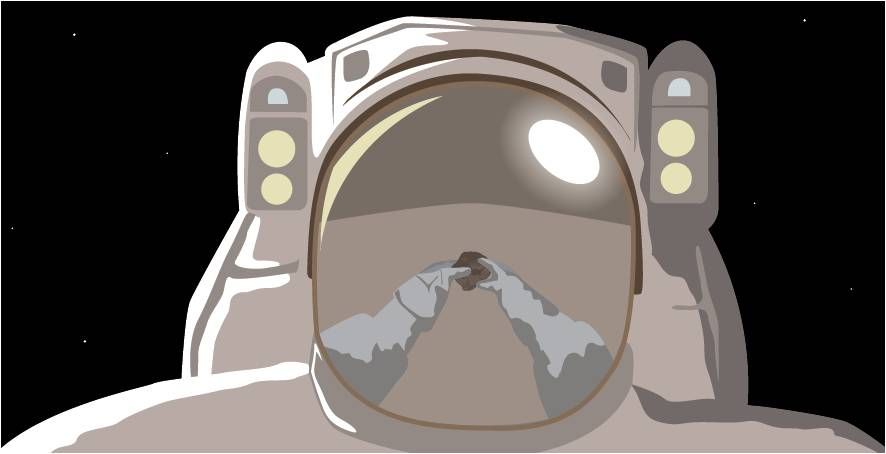
“The vicinity of the Moon is the ideal location as the next step in the expansion of human space activity from the International Space Station leading to investigations of the Moon, asteroids, and Mars,” the document states.
“This deep space environment enables testing and validation of habitation systems and related operations techniques, while remaining close enough to Earth as we learn to manage exploration mission risks. Increasingly longer duration missions to a habitat in the deep space environment enable study of the interplay of radiation, microgravity and isolation on human health, valuable for future spaceflight to more distant destinations, notably Mars, as well as health research on Earth.”
Credit: ISECG
Exploration infrastructure
As explained in the white paper, that type of infrastructure can support cubesats and small satellites by providing services such as deployment and communication relay.
Furthermore, it can facilitate remote controlled robotic exploration on the lunar surface. It can also be used for investigations in areas such as astronomy, fundamental physics, collecting interplanetary materials, and heliophysics.”
Shared horizon goal
The newly released document notes that Mars is the “shared horizon goal” driving sustainable human exploration.
Mars has the greatest similarity to Earth in past and current planetary processes, and may have the best record of when life started in our Solar System and of catastrophic change in planetary evolution,” the document explains.
Asteroid research
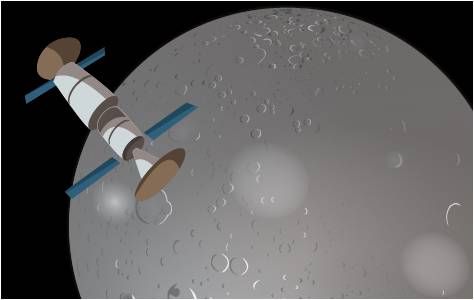
Regarding asteroids, the documents observes that “the presence of humans, whether on a returned asteroid boulder in the lunar vicinity or on an asteroid in its native orbit, will permit placement of complex instruments on the asteroid surface, as well as the ability to sample surface and subsurface sites to obtain information on the ancient history of the Solar System which larger, evolved planetary bodies have lost.”
Credit: ISECG
The document adds that the ISECG “will also work to better understand the internal structures of Near-Earth Asteroids, a vital part of the puzzle needed in order to develop mitigation strategies for addressing threats from an Earth-bound asteroid.
ISECG agencies
Participating space agencies in the ISECG are:
In alphabetical order: ASI (Italy), CNES (France), CNSA (China), CSA (Canada), CSIRO (Australia), DLR (Germany), ESA (European Space Agency), ISRO (India), JAXA (Japan), KARI (Republic of Korea), NASA (United States of America), NSAU (Ukraine), Roscosmos (Russia), UKSA (United Kingdom).
For more information on the ISECG, go to:
 Posted in Space News

