 By
By  August 18th, 2016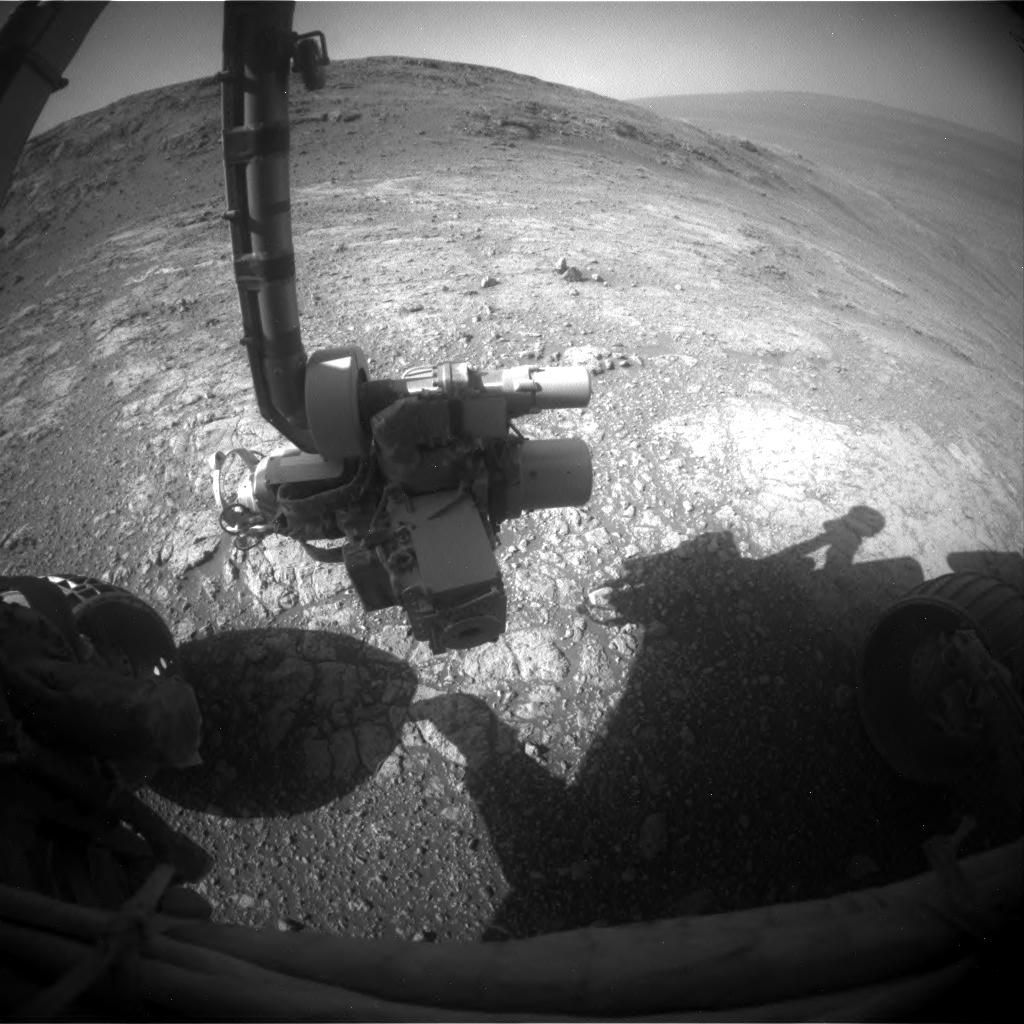
Opportunity image taken by rover’s Front Hazcam on Sol 4461.
Credit: NASA/JPL-Caltech
Following over a year of exploration at Marathon Valley on the rim of Endeavour crater, scientists and engineers operating the long-lived Opportunity Mars rover are wrapping up their final work at that site.
“We are finishing up in Marathon Valley…investigating some interesting grooves with red zone fractures,” notes Ray Arvidson, Mars Exploration Rover deputy principal investigator at Washington University St. Louis.
The rover’s activities there should be done by the end of the week with the robot then heading south to Lewis and Clark Gap to leave Marathon Valley.
Gully channel
There is an on-going search for more of the Matijevic formation – a group of rocks at a site called Cape York that suggest mild conditions on Mars long ago, Arvidson adds. “The formation predates Endeavour crater and underlies the crater’s Shoemaker formation impact breccias.”

Opportunity’s Navigation Camera image taken on Sol 4467.
Credit: NASA/JPL-Caltech
Opportunity is to then drive to Cape Byron, “the next rim segment south and a gully that looks like it formed by fluvial processes,” Arvidson explains. “We expect to drive right down the gully channel to check out evidence for ancient fluid flow.
Spectacular spot
The solar powered Opportunity arrived at Marathon Valley in August 2015, wheeling itself across the planet since landing at Meridiana Planum over 12 years ago in January 2004. Not bad for Mars machinery given a 90-day warranty.
“Basically, we’re still finishing up work before we say goodbye to this spectacular spot,” Arvidson told Inside Outer Space.
Schiaparelli entry
Arvidson said that Opportunity will try to image the European Space Agency’s ExoMars 2016 Schiaparelli entry craft. “It depends on where we are relative to a site view to the entry zone.”

ESA’s Schiaparelli landing at Meridiani Planum on Mars on October 19, 2016.
Credit: ESA/ATG medialab
Now en route to the Red Planet, the ExoMars 2016 — the orbiter and Schiaparelli landing vehicle — were launched together on March 14, 2016 on a Russian Proton rocket.
Three days before reaching the atmosphere of Mars, Schiaparelli will be ejected from the orbiter towards the Red Planet.
October sky show
Schiaparelli will coast towards its destination, enter the Martian atmosphere, decelerate using aerobraking and a parachute, and then brake with the aid of a thruster system before landing on the surface of the planet.
The entire entry, descent and landing sequence will be complete in less than six minutes.
Schiaparelli is set to touch down on Meridiani Planum, a relatively smooth, flat region on October 19, 2016 – with the possibility that the Opportunity rover will have a ring-side seat to the sky show.
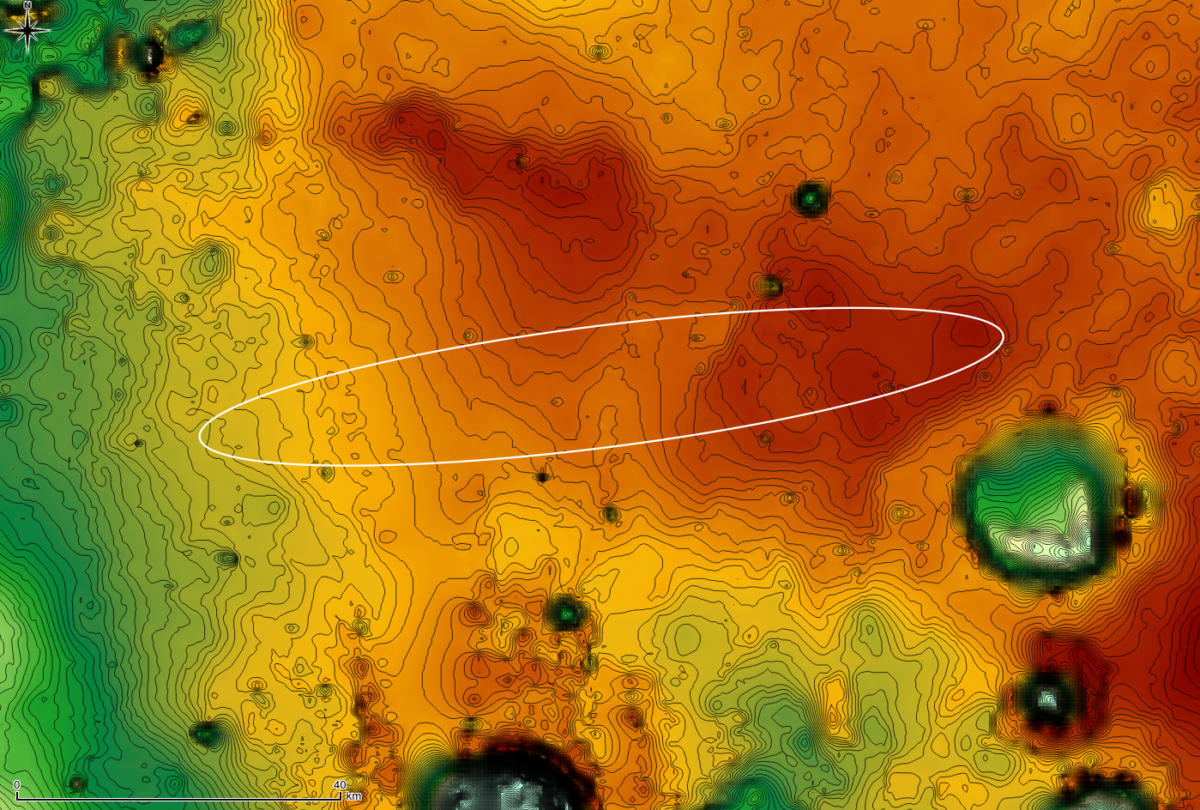
Projected landing zone for ESA’s Schiaparelli lander.
Credit: IRSPS/TAS-I
Road cut
“The past week we have been investigating some super interesting grooves carved into the valley floor,” explains James Rice, a Mars Exploration Rover Project Science Team Member at the Planetary Science Institute in Tucson, Arizona.
Rice said the robot is slated to drive southward, carrying out imaging and collect science data on bedrock targets.
“The highlight of our final days in Marathon Valley will be imaging stops of Wharton Ridge followed by the Lewis and Clark Gap,” Rice told Inside Outer Space. The Lewis and Clark Gap is located between two very different looking ridges – Knudsen and Wharton, he said.
“The Lewis and Clark Gap may permit us to get a ‘road cut’ view of these two ridge systems and if traversable it will be our exit route from Marathon Valley to points south for our extended mission,” Rice explained.
Name calling
Opportunity’s lengthy survey of the area has led to a special celebratory salute to earlier Mars landers from four decades ago: The U.S. Viking 1 and 2 spacecraft.

Big Joe I at Viking landing site.
Credit: NASA/JPL
“We have been using Viking rock names with the Roman numeral II in order to differentiate these rock targets from the Viking ones,” Rice said.
So far rock targets have been dubbed Big Joe II, Sponge II, Bashful II, Sleepy II, Rocky Flats II, Badger II, Notch II, Gibraltar II, Rice said.
 Posted in Space News

