 By
By  April 1st, 2016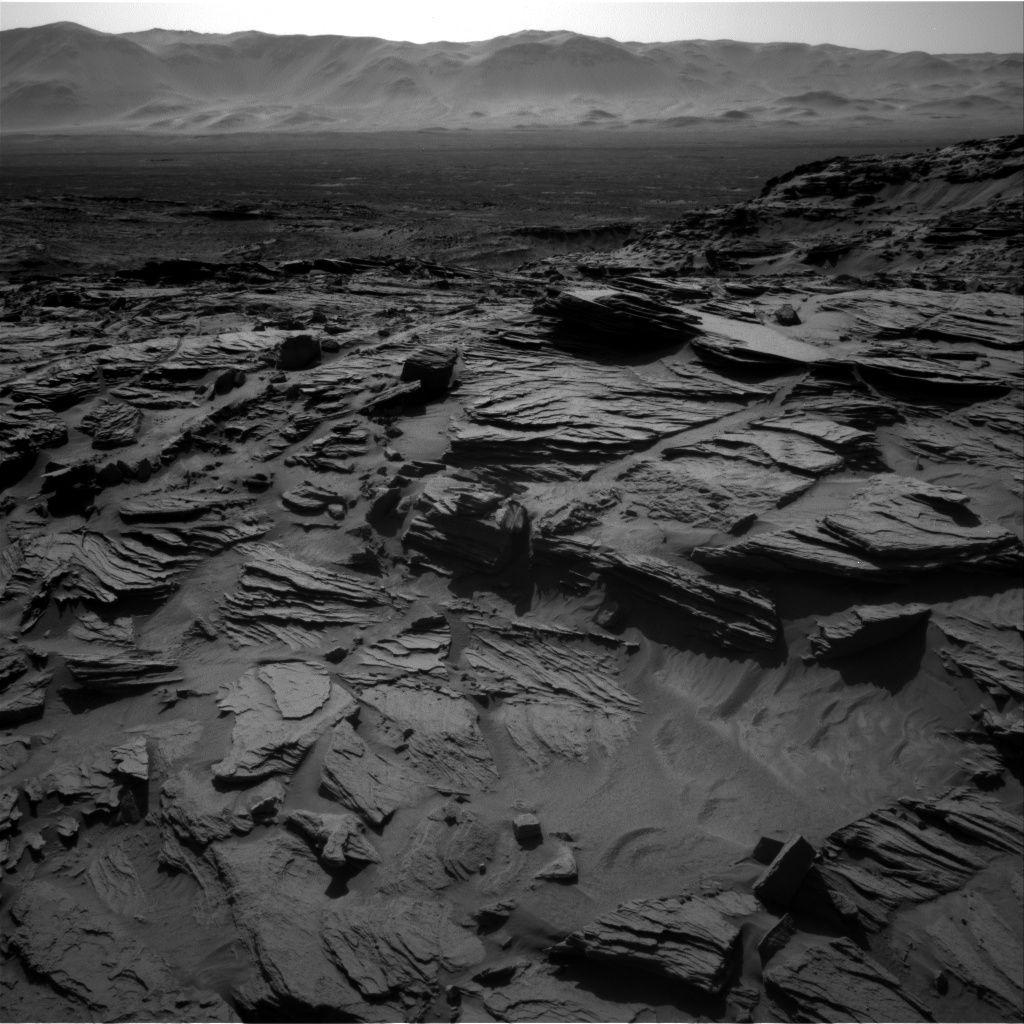
Curiosity rover’s Navcam Right B image taken on Sol 1298 March 31, 2016.
Credit: NASA/JPL-Caltech
The Curiosity rover on Mars has entered Sol 1299.
A drive of the machinery on Sol 1296 was halted after just (13 feet) 4 meters of progress, reports Ken Herkenhoff of the USGS Astrogeology Science Center in Flagstaff, Arizona. The reason for the halt was due to the rover’s suspension on its left side was more tilted than expected, he explains.
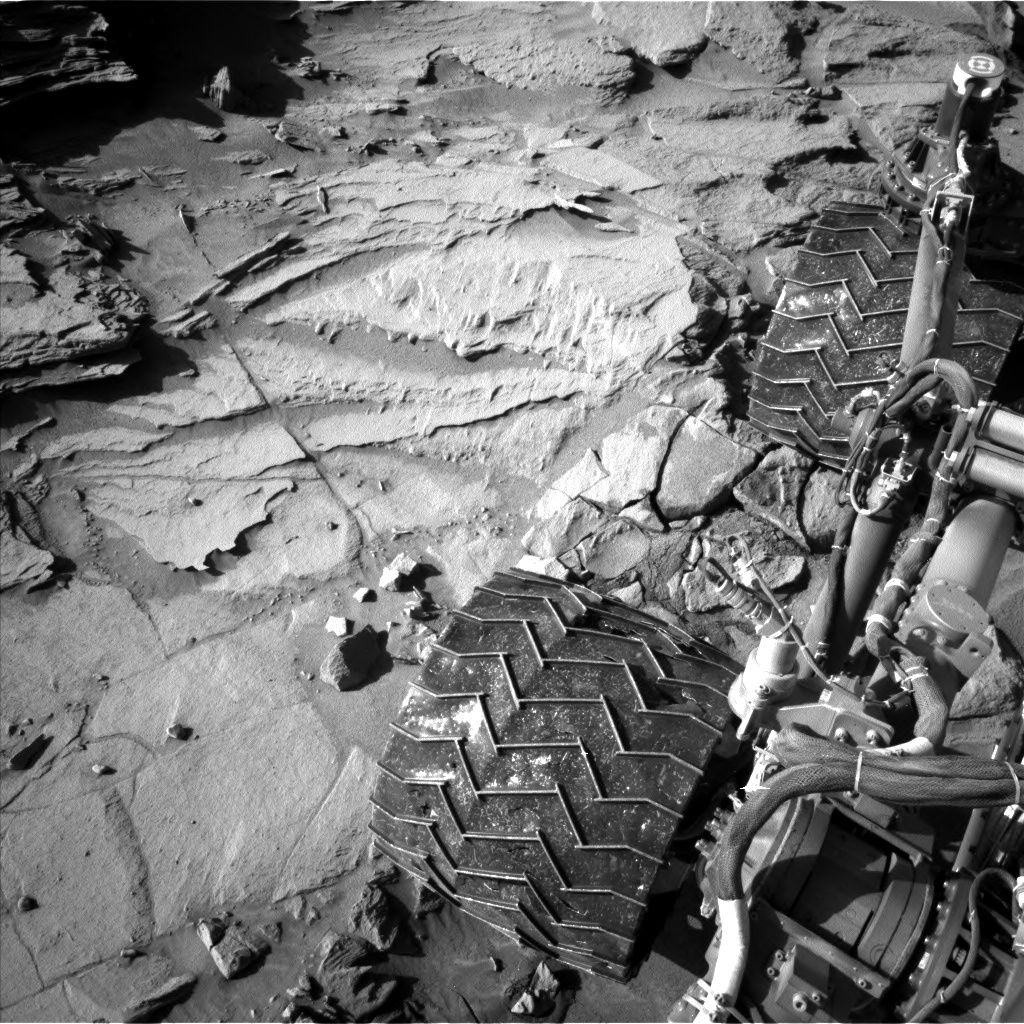
Curiosity Navcam Left B image taken on Sol 1298, March 31, 2016.
Credit: NASA/JPL-Caltech
“Suspension checks are routinely included in drive sequences, to keep the vehicle safe,” Herkenhoff says, and Curiosity is indeed safe.
The Sol 1298 plan included a drive to the same location as previously orchestrated.
Rock targets

Curiosity Mastcam Right image taken on Sol 1296, March 29, 2016.
Credit: NASA/JPL-Caltech/MSSS
“We were also able to squeeze in some pre-drive remote science: Chemistry and Camera and Mastcam were slated to observe rock targets named “Blaubock 2” and “Chapeu Armado.”
Herkenhoff also notes that Sol 1299 observations were to be untargeted because they will occur after the drive, and include Mastcam, ChemCam, and Navcam measurements of the sun and sky.
Steep slope
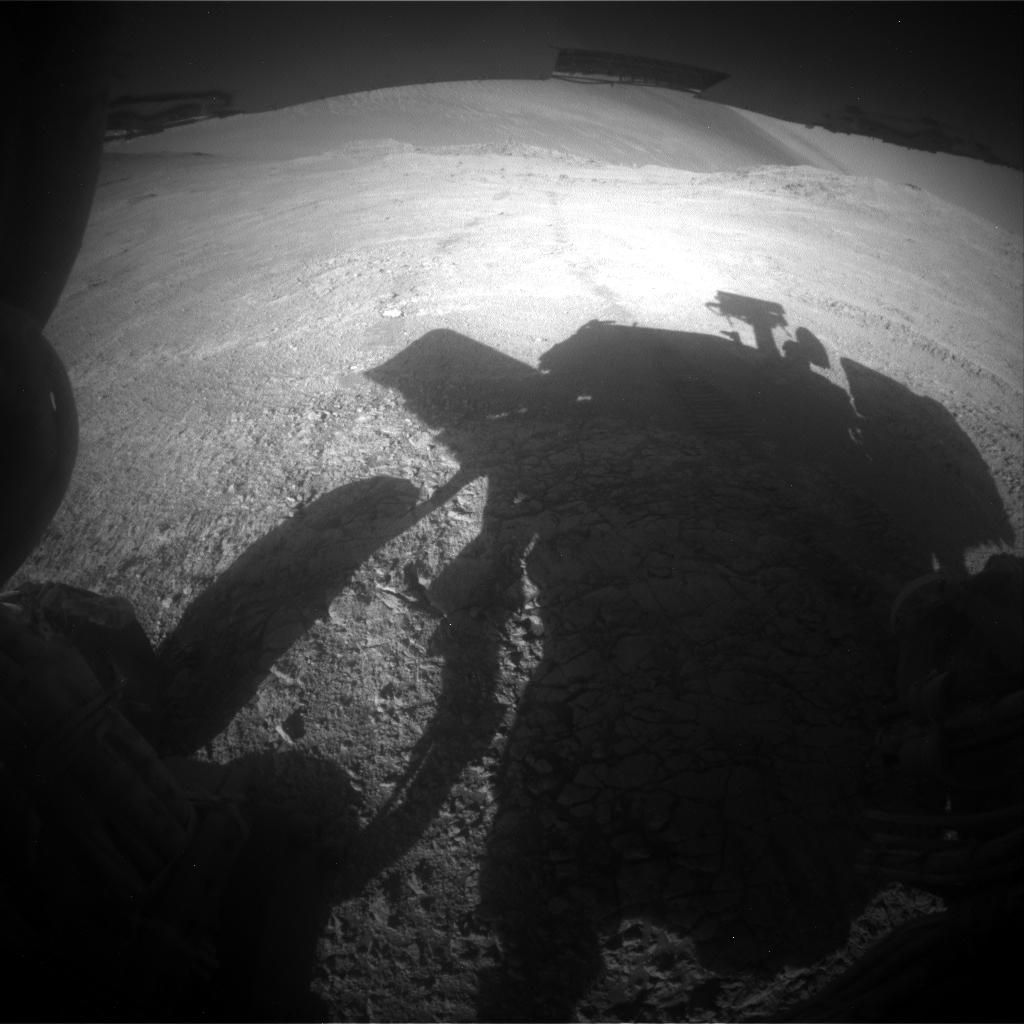
Opportunity Mars rover’s Rear Hazcam Sol 4323 image shows shadow and tracks of the veteran robot, taken on March 22, 2016. The hillside descends to the left into “Marathon Valley.” The floor of Endeavour Crater is seen beneath the underside of a solar panel.
Credit: NASA/JPL-Caltech
Meanwhile, NASA’s Opportunity Mars rover — the veteran Red Planet prowler that has been working hard since landing in January 2004 – tackled a climb on the steepest slope ever undertaken by any Mars machine.
The March 10 drive surpassed Opportunity’s own previous record for the steepest slope ever driven by any Mars rover. This was the third attempt to reach a science target and came up a few inches short.
Wheel rotations
Ground teams commanded Opportunity to carry out more wheel rotations than would usually be needed to travel the intended distance. But wheel slippage was so great that the vehicle traveled just a few inches.

This March 21, 2016 image from the navigation camera on NASA’s Mars rover Opportunity shows streaks of dust or sand on the vehicle’s rear solar panel after a series of drives during which the rover was pointed steeply uphill. The tilt and jostling of the drives affected material on the rover deck.
Credit: NASA/JPL-Caltech
The rover team decided to skip that target and move on.
According to a Jet Propulsion Laboratory statement, in eight drives between the steepest-ever drive and March 31, Opportunity first backed downhill, northward, for about 27 feet (8.2 meters), then drove about 200 feet (about 60 meters) generally southwestward and uphill, toward the next target area.
 Posted in Space News

