 By
By  January 22nd, 2016
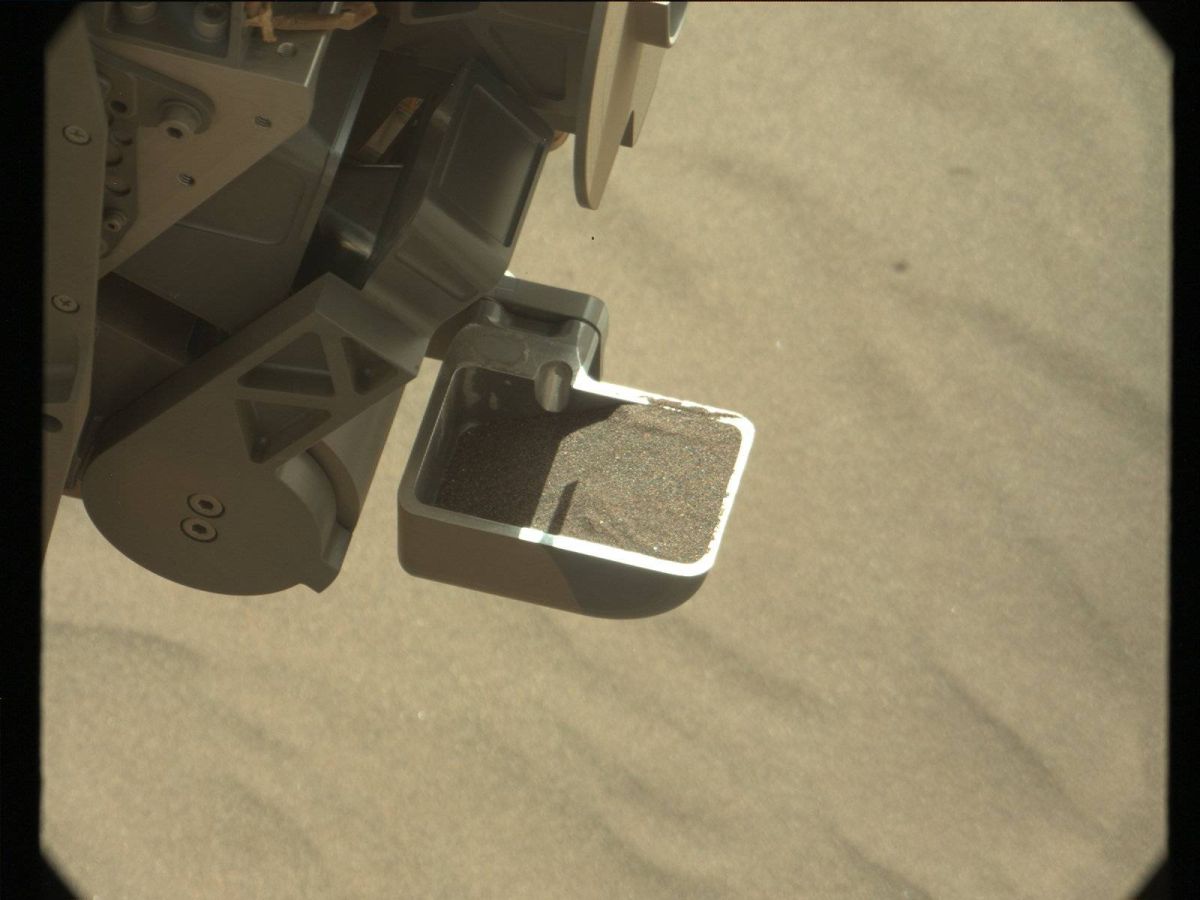
Curiosity Mastcam Right image taken on Sol 1228 January 19, 2016.
Credit: NASA/JPL-Caltech/MSSS
Today, the Curiosity rover on Mars is at work on Sol 1231.
Mars researchers are continuing their campaign to analyze “Namib Dune” – geared to dropping off a specimen of collected sand in the rover’s Sample Analysis at Mars (SAM) Instrument Suite.
Earlier, the sol 1230 plan called for a science block with some Chemistry & Camera (ChemCam), Mastcam, and Navcam observations.
“But unfortunately that had to be cut to save power, so those observations will have to happen over the weekend,” reports Ryan Anderson, a planetary scientist at the USGS Astrogeology Science Center and a member of the ChemCam team on the Mars Science Laboratory (MSL).
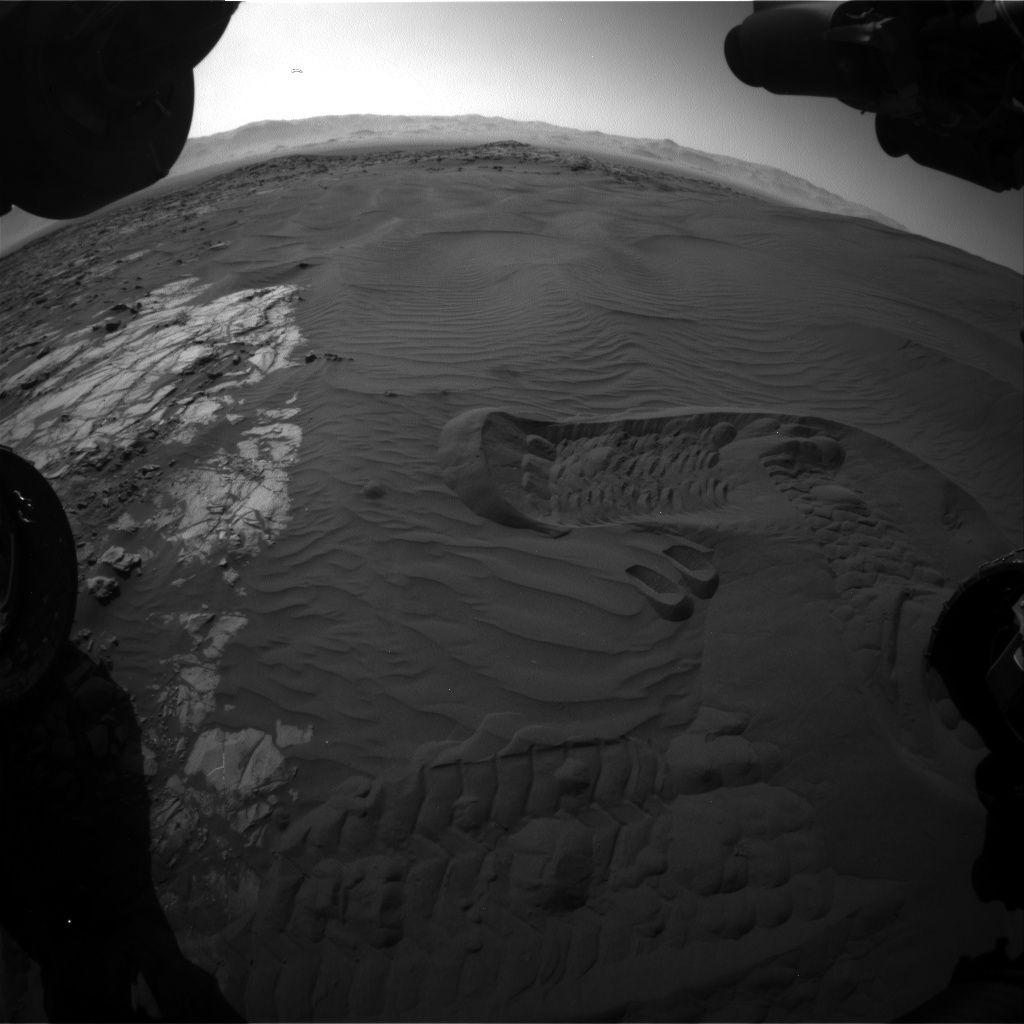
New image from Curiosity’s Front Hazcam Right B camera, taken on Sol 1230, January 22, 2016.
Credit: NASA/JPL-Caltech
Inlet outlook
With the science block removed, Anderson adds, the first activity on Sol 1230 was a Mastcam observation of the SAM inlet.
After this, the rover was slated to drop off a sample of sand for SAM to analyze.
Then while the arm is active, the Mars Hand Lens Imager (MAHLI) was to observe the dump piles, including some night-time observations using the built-in LEDs to illuminate the piles.
Curiosity’s Alpha Particle X-Ray Spectrometer (APXS) was also on tap to carry out a couple of overnight measurements on two of the dump piles, Anderson notes.
Sample handling system
On Sol 1231, the schedule was to start off with some Navcam and Hazcam images to document where the APXS was making its measurements, plus Mastcam observations of the SAM inlet again.
This is to be followed by some arm activities to clean out the components of the sample handling system.
“Then we’ll dive back in and collect another scoop of material from the dune, sieve it, and deliver it to SAM too. Finally, APXS will be placed on another of our dump piles for an overnight measurement. And of course [Rover Environmental Monitoring Station] REMS and [Dynamic Albedo of Neutrons] DAN will be collecting data each sol of the plan as usual,” Anderson concludes.
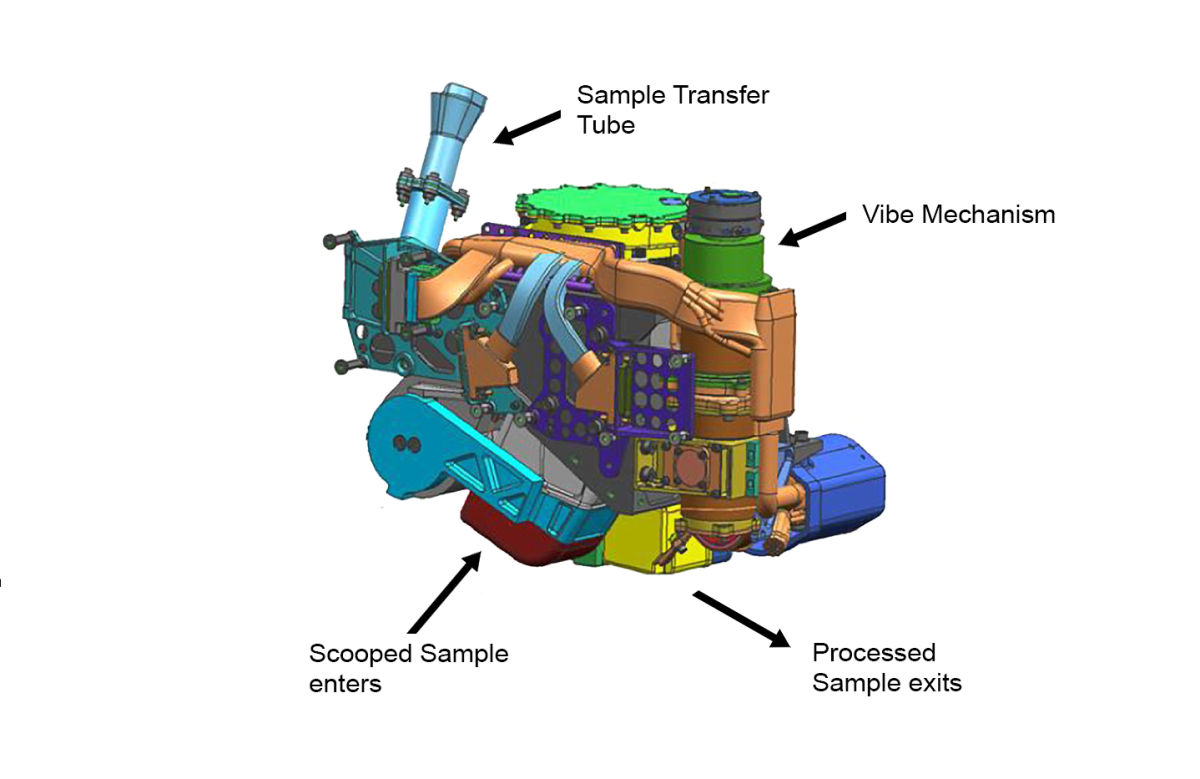
This false-color engineering drawing shows the Collection and Handling for In-Situ Martian Rock Analysis (CHIMRA) device. It scoops, sieves and delivers samples. CHIMRA is attached to the turret at the end of the robotic arm on NASA’s Curiosity Mars rover.
Credit: NASA/JPL-Caltech
Moves not previously used
According to the Jet Propulsion Laboratory Curiosity website, Curiosity’s current work is the first close-up study of active sand dunes anywhere other than Earth.
Furthermore, at its current location for inspecting an active sand dune, NASA’s Curiosity Mars rover is adding some sample-processing moves not previously used on Mars.
“Sand from the second and third samples the rover is scooping from ‘Namib Dune’ will be sorted by grain size with two sieves,” the JPL site adds. “The coarser sieve is making its debut, and using it also changes the way the treated sample is dropped into an inlet port for laboratory analysis inside the rover.”
Curiosity’s study of dunes is providing information about how wind moves and sorts sand particles in conditions with much less atmosphere and less gravity than on Earth, the JPL website explains.
 Posted in Space News

