 By
By  January 19th, 2016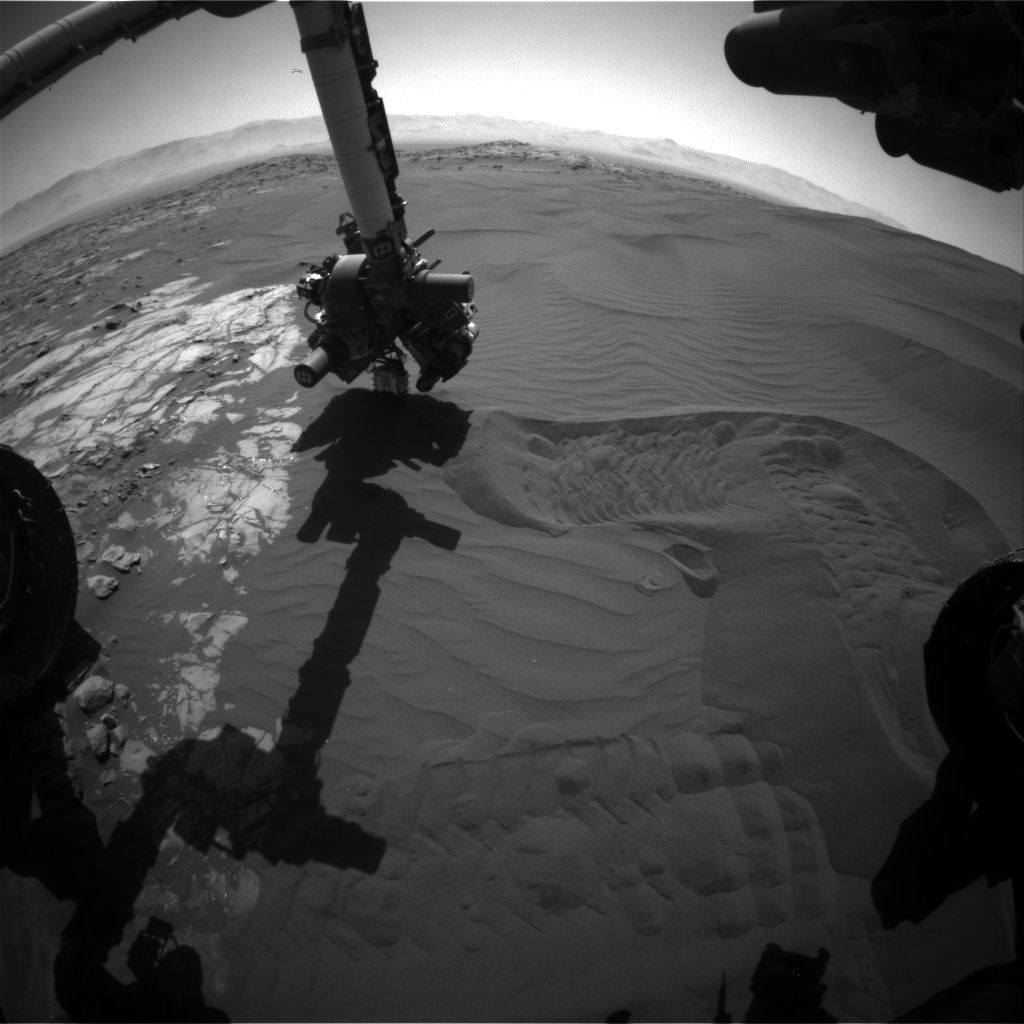
Curiosity Front Hazcam Right B image taken on Sol 1227, January 18, 2016.
Credit: NASA/JPL-Caltech
NASA’s Curiosity Mars rover is now in Sol 1228 and Ryan Anderson, a planetary scientist at the USGS Astrogeology Science Center in Flagstaff, Arizona, reports the campaign to analyze the Bagnold dunes continues!
This dune field is along the northwestern flank of Mount Sharp.
Sand dune selfie
The plan for Sol 1228 involves extensive rover arm activity, starting with Curiosity taking a “selfie” in front of the sand dune, Anderson explains. That duty will be followed by scooping up and sieving a sample of sand.
The robot’s Mastcam and the Mars Hand Lens Imager (MAHLI) will both thoroughly document the scooping process. Mastcam also has a change detection observation of the target “Hebron,” Anderson adds.
Dump piles
Looking toward Sol 1229, Curiosity’s Mastcam will repeat that the previous change detection observation two more times.
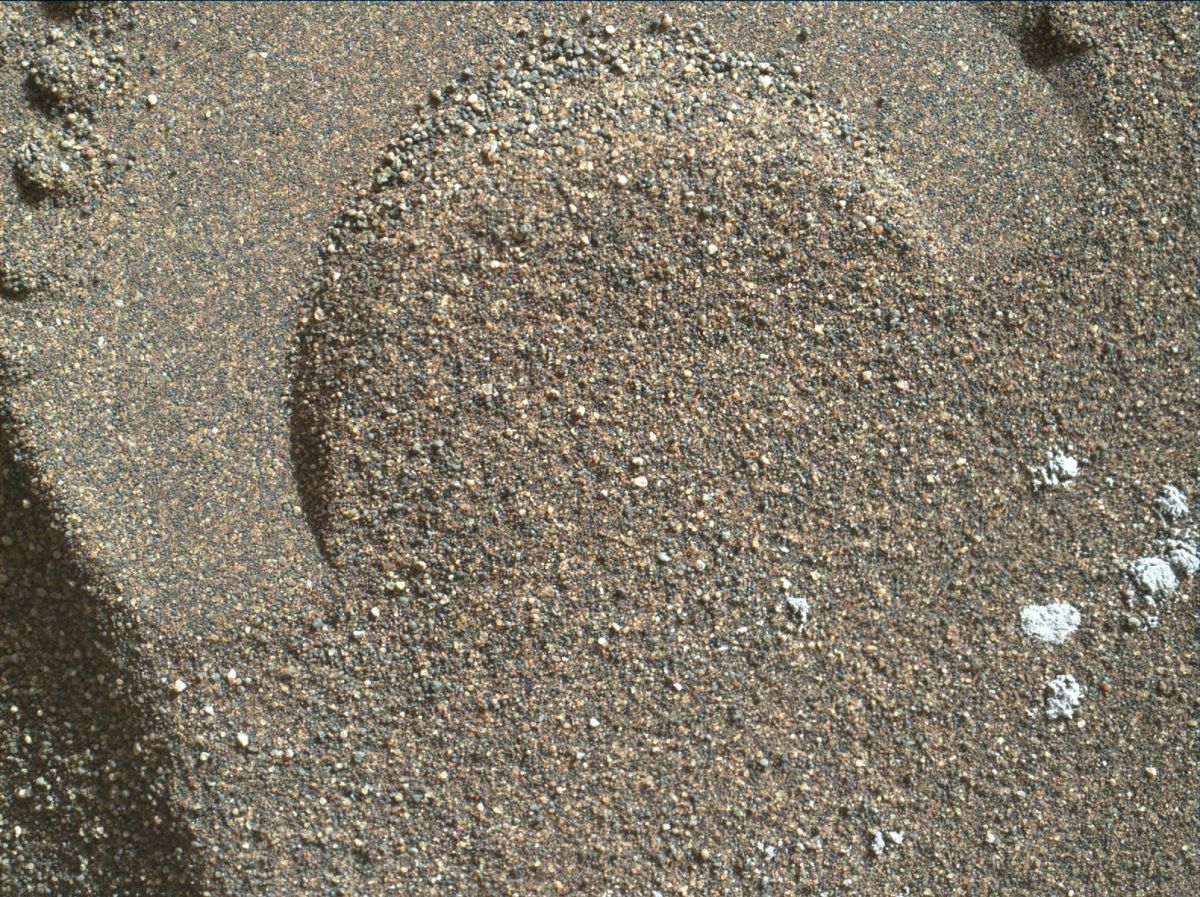
Curiosity’s Mars Hand Lens Imager (MAHLI) — located on the turret at the end of the rover’s robotic arm — snagged this image on January 19, 2016, Sol 1228.
Credit: NASA/JPL-Caltech/MSSS
Mastcam also has observations of the dump piles from the scoop target “Gobabeb”, Anderson notes, plus a Mastcam and Navcam photometry experiment.
Curiosity’s Chemistry & Camera (ChemCam) is slated to take passive spectra of the Gobabeb dump piles, followed by active analysis of dump pile A. That will be followed by atmospheric observations by Mastcam and Navcam.
In the afternoon on Sol 1229, Anderson says, ChemCam will analyze dump pile B, and Mastcam will take another change detection image of Hebron. The Mastcam and Navcam photometry experiment will also collect a few more images on sol 1229.
These planned rover activities, as always are all subject to change due to a variety of factors related to the Martian environment, communication relays and rover status.
 Posted in Space News

