 By
 November 8th, 2026

In the mission operations center at the University of California, Berkeley’s Space Sciences Laboratory (SSL), Robert Lillis, ESCAPADE’s principal investigator (bottom right), awaits a signal after the first spacecraft performed an engine burn that initiated a powered Earth gravity assist on Nov. 7, 2026.
Image credit: Alan Toth/UC Berkeley Space Sciences Laboratory
The just-released word from NASA is that the two ESCAPADE (Escape and Plasma Acceleration and Dynamics Explorers) spacecraft have each successfully completed a powered Earth flyby. They have used Earth’s gravity in combination with a sustained engine burn to slingshot themselves toward Mars.
With these successful maneuvers complete, the twin spacecraft are on target to reach the Red Planet in September 2027.
NASA’s twins – dubbed Blue and Gold — each performed the “powered” flyby of Earth, combining Earth’s gravity with an engine burn, to individually slingshot toward Mars.
The first spacecraft flyby and engine burn happened around 5 a.m. Eastern Standard Time on Saturday, Nov. 7. The second probe did its flyby around 6 a.m. EST on Monday, Nov. 9.
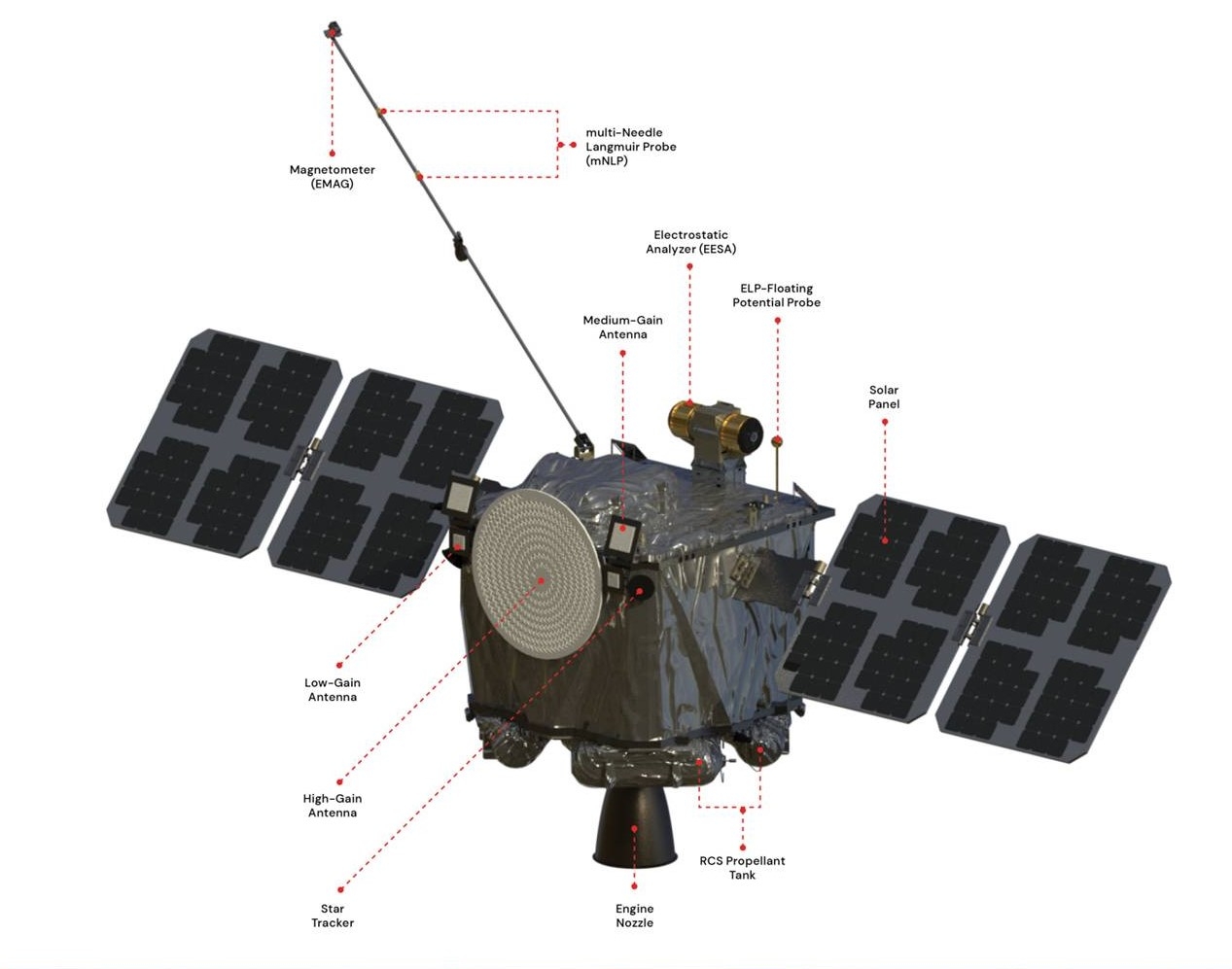
Identical Blue and Gold probes. Image credit: NASA
Planetary position
The Mars-bound ESCAPADE twins were lofted November 13, 2025 by the Blue Origin New Glenn 2 launcher from Cape Canaveral, Florida.
But here’s the kicker.
The dual craft weren’t placed on your standard operating procedure of a route to reach the Red Planet.
At liftoff last year, Earth and Mars were not in planetary position for a direct trip by the probes. So, the twin ESCAPADE probes were sent into a “loiter” orbit, one that loops around Earth’s Lagrange point 2 (L2), roughly a million miles away, opposite the sun.
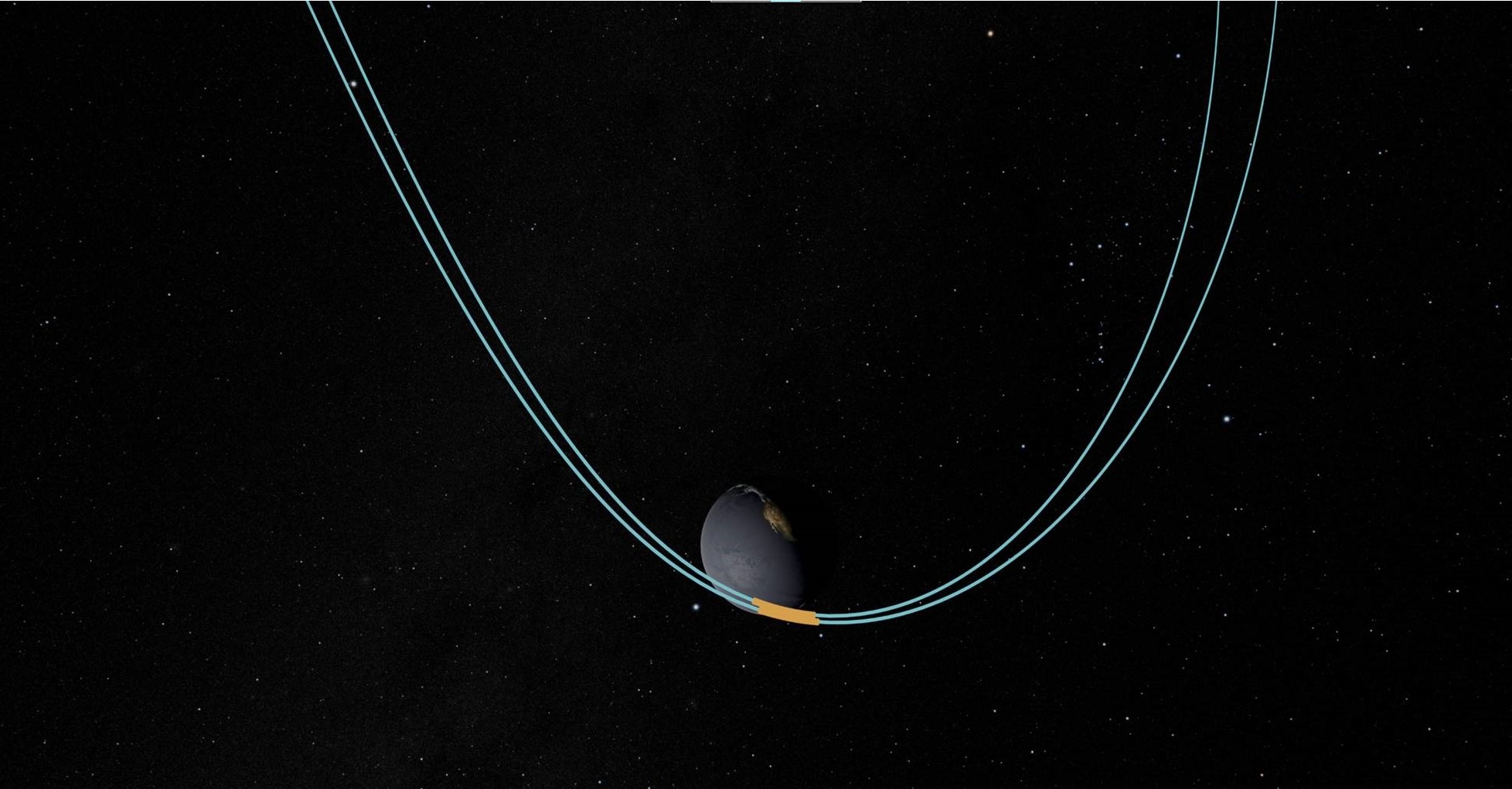
Each of the ESCAPADE spacecraft are to execute a powered flyby of Earth, combining Earth’s gravity with an engine burn, to slingshot itself toward Mars. That approximately 9-minute trans-Mars injection burn appears as an orange arc along the spacecraft’s trajectory.
Credit: Matt Bolliger/Advanced Space
Long-haul cruises
For ESCAPADE twins, the next major mission move is this month, when Earth and Mars aligned, the two probes needed to use Earth’s gravity to slingshot toward Mars.
With engines firing, both spacecraft would then embark on a trans-Mars injection.
After completing successful powered flybys of Earth, the two spacecraft would then take a 10-month cruise to Mars, arriving at the Red Planet on Sept. 7 and Sept. 9, 2027, respectively.
Following their long-haul cruises, the twins would be set to carry out Mars orbit insertion maneuvers in September 2027.
Critical insights
The intent of the ESCAPADE mission is analyzing how the solar wind interacts with Mars’ magnetic environment and how this interaction drives the planet’s atmospheric escape.
That’s a blustery way to say the mission will provide critical insights into Mars’ climate history and evolution.
The ESCAPADE mission is led by the Space Sciences Laboratory at the University of California, Berkeley.
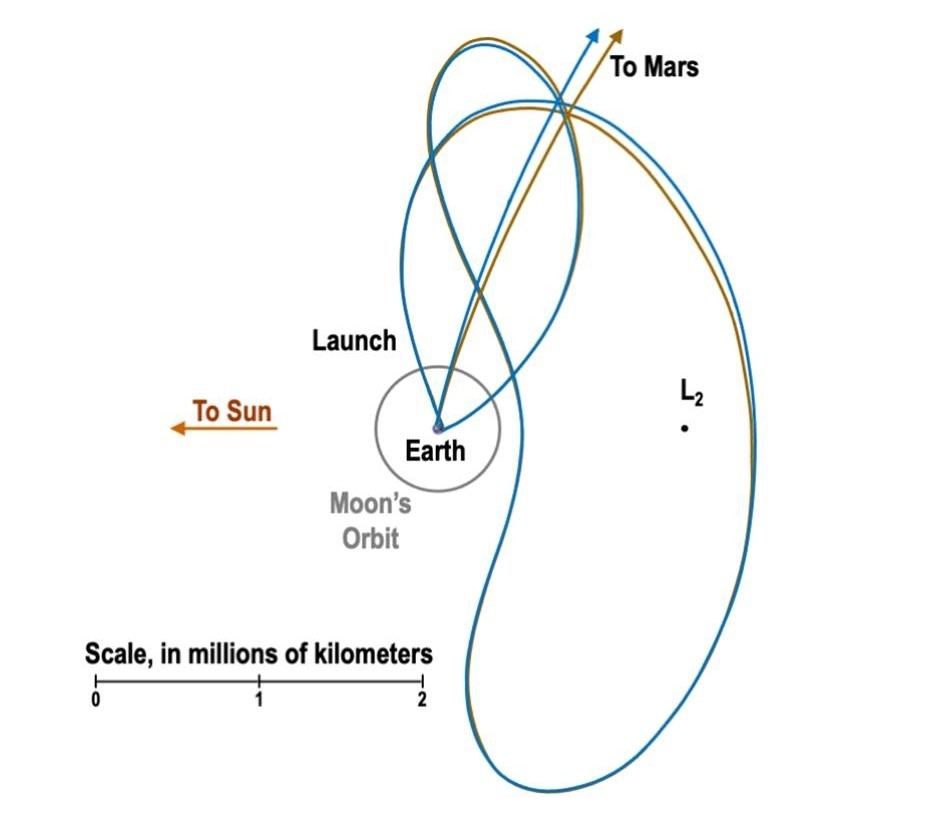
ESCAPADE mission trajectory.
Image credit: Advanced Space
Higher risk posture
Rocket Lab, the private space entrepreneurial firm, designed, built, integrated, and tested the ESCAPADE probes at its space systems production complex in Long Beach, California.
ESCAPADE is a product of NASA’s Small Innovative Missions for Planetary Exploration (SIMPLEx) program, an endeavor geared to showcase low-cost science spacecraft.
But to maintain a lower overall cost, SIMPLEx missions have a higher risk posture and lighter requirements for oversight and management notes the space agency.
To date, it has already been a long and winding road to the Red Planet – with more mileage to chalk up.
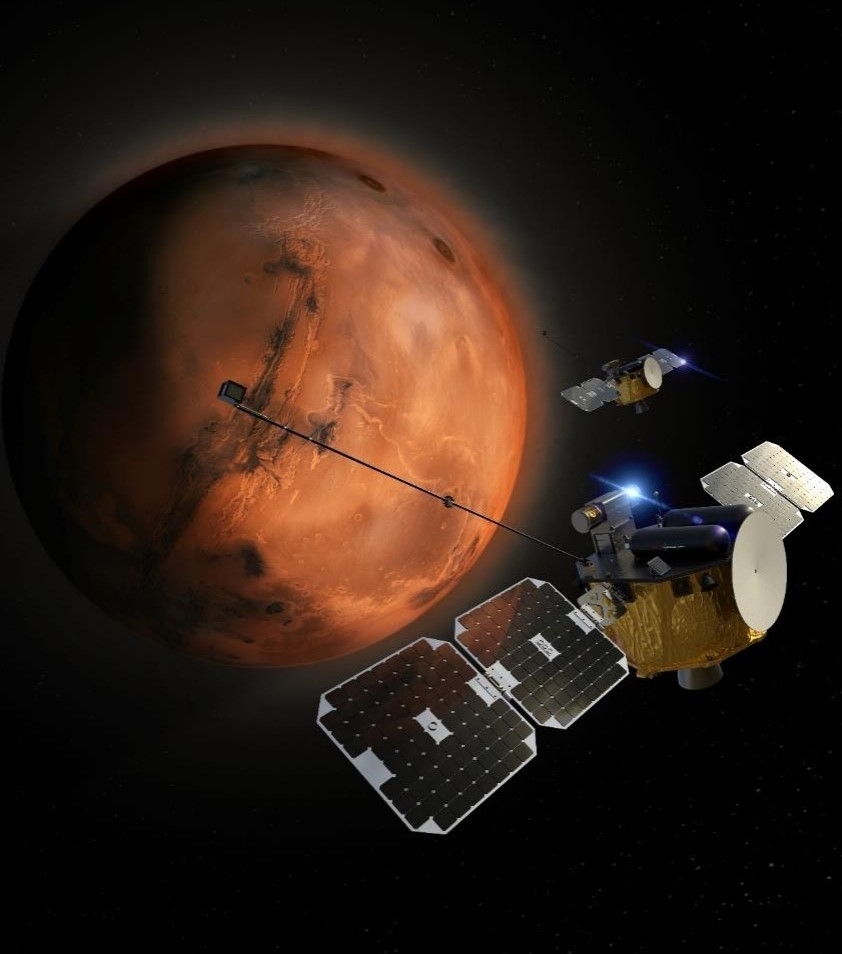
Red Planet arrival.
Image credit: Rocket Lab USA/UC Berkeley
 Posted in

