 By
 October 22nd, 2026
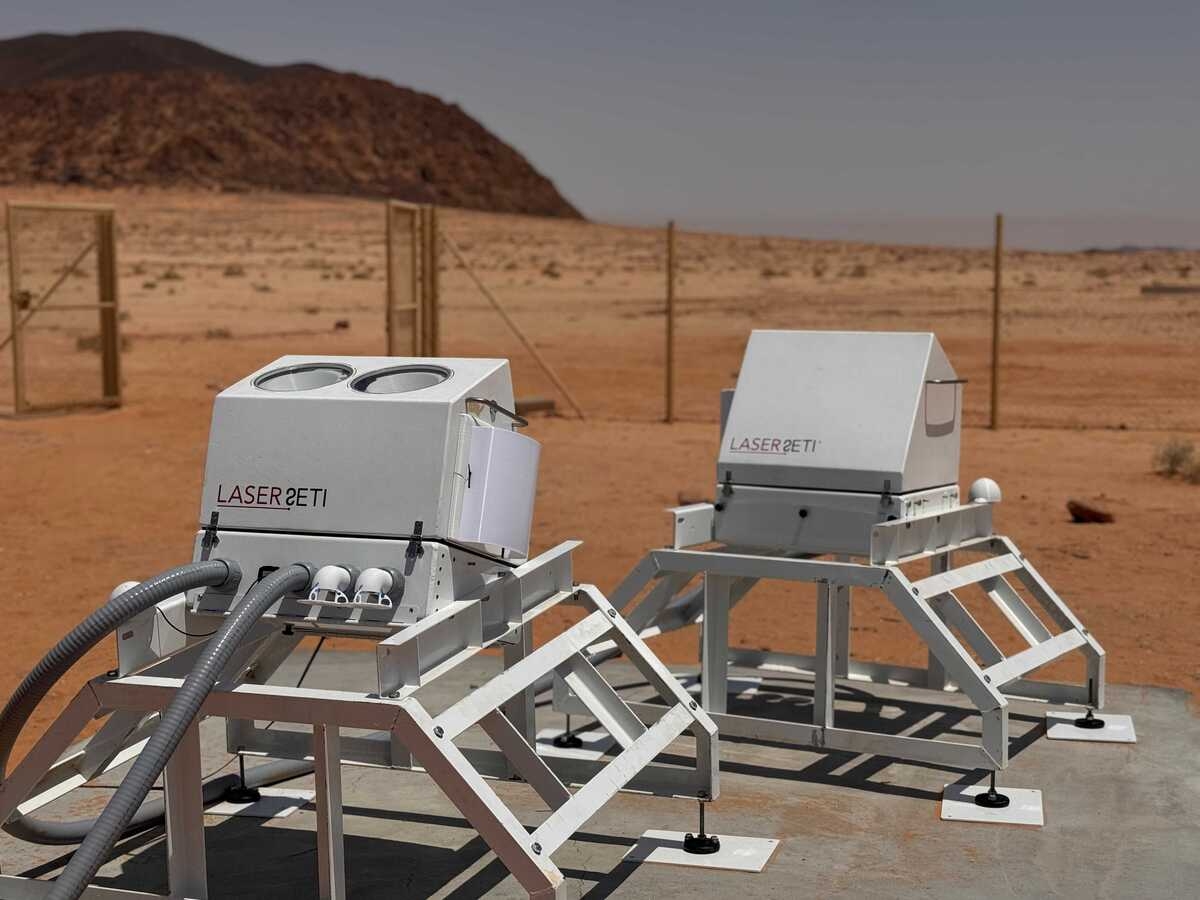
Image credit: SETI Institute
The SETI Institute has designed LaserSETI, technology to keep a constant watch on large parts of the sky, looking for very brief flashes of light.
“LaserSETI was designed from the beginning as a global observatory rather than a single telescope,” said Eliot Gillum, Director of LaserSETI at the SETI Institute in Mountain View, California.
The SETI Institute and the Royal Commission for AlUla (RCU) announced today the installation and commissioning of two LaserSETI stations at AlUla Manara in northwest Saudi Arabia.
AlUla Manara — “the lighthouse” in Arabian — is an initiative that now features a 4-meter primary telescope alongside two 2-meter telescopes, plus a world-class research center, observation platforms, and interactive exhibitions.
As a nature reserve the site has been accredited as International Dark Sky Park.
New geographic vantage point
With these new stations, AlUla becomes LaserSETI’s first and only observing site in Asia and its fifth site worldwide, joining others in California, Hawai’i, Arizona and Puerto Rico.
“AlUla gives LaserSETI an important new geographic vantage point and connects this remarkable astronomical site to a growing global network,” adds Franck Marchis, Senior Planetary Astronomer and Director of Citizen Science at the SETI Institute. This is exactly what LaserSETI needs, “instruments distributed around the world, observing continuously and together.”
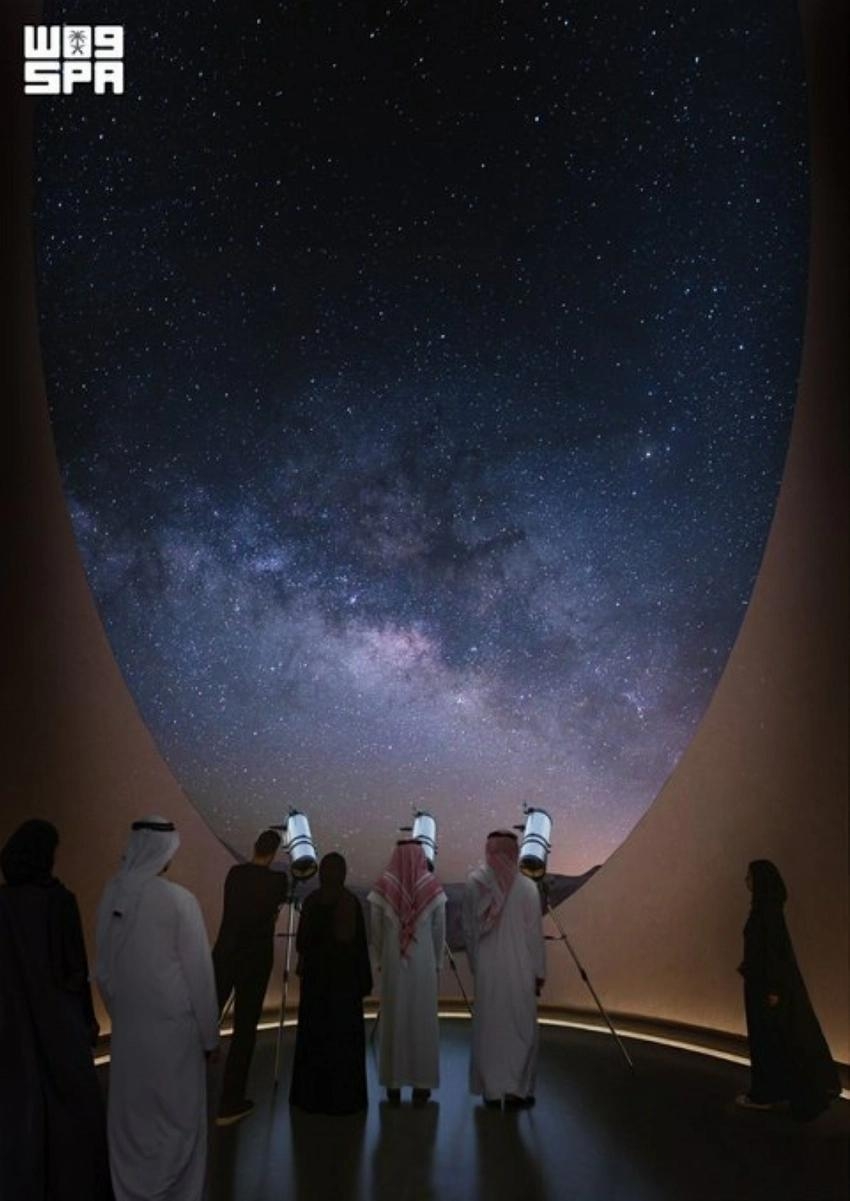
Image creidt: Saudi Press Agency
Laser technology beyond Earth
The two stations were installed on August 19 at the AlUla Manara Astronomical Site Monitor (ASM) Site and are now fully operational and actively collecting astronomical data, from short-lived cosmic events, unusual astronomical phenomena or, potentially, laser technology beyond Earth.
As noted by the SETI Institute, LaserSETI is a project creating a global network of optical instruments to watch the night sky for brief flashes of light and other short events.
By observing large parts of the sky continuously from different locations, “LaserSETI makes it possible to spot short-lived astronomical events and expand the search for possible signs of technology beyond Earth,” the group explains.
 Posted in Space News

