 By
By  September 15th, 2026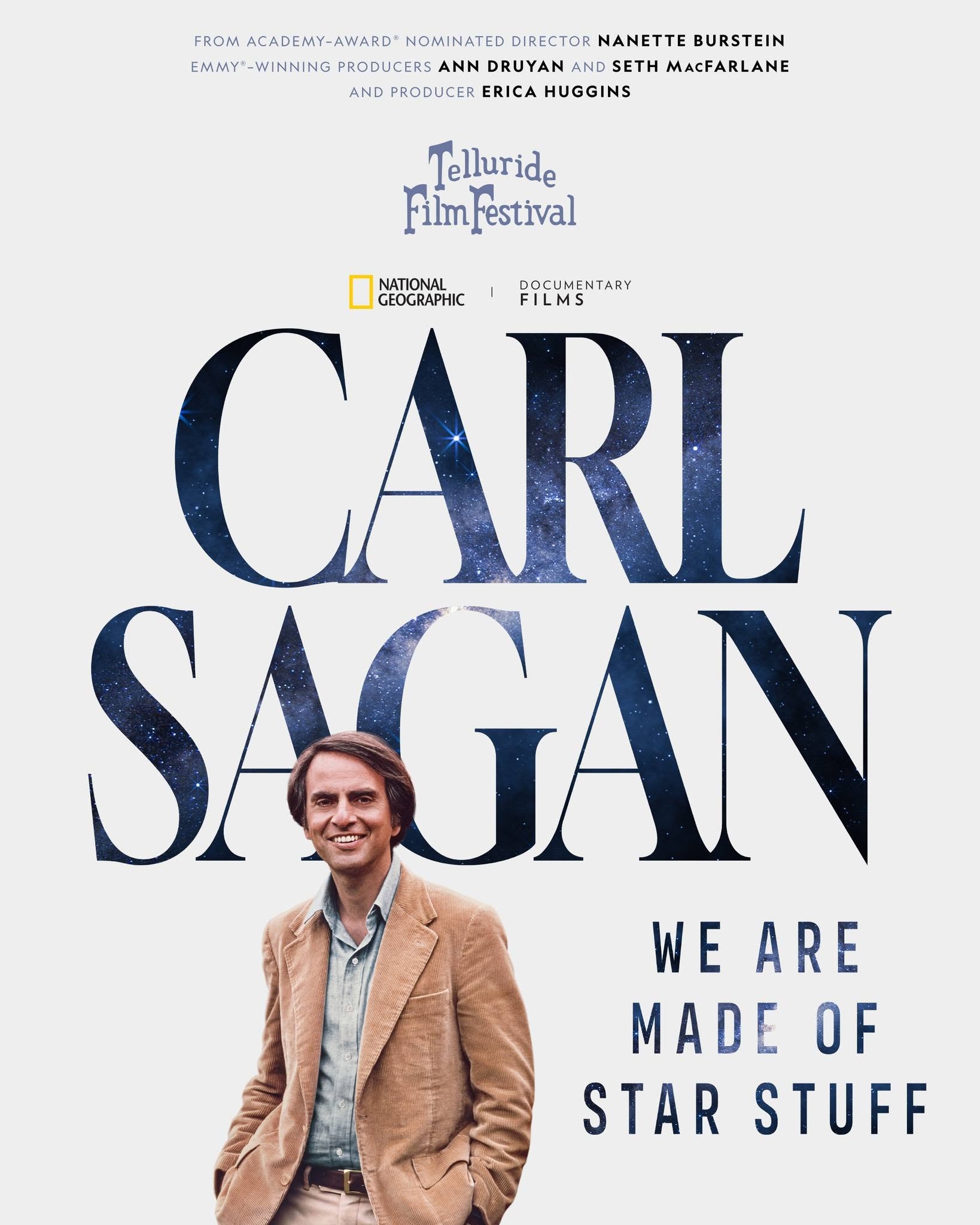
This is a new documentary film that had its world premiere at the 2026 Telluride Film Festival, held September 4-7.
The director of this film, Nanette Burstein, is well known for her other biopics, including one featuring Hillary Clinton.
This Carl Sagan film is roughly half about Sagan’s professional career and half about his personal life — as a child, as the husband of three different women (including a messy divorce), and dealing with the illness from which he died at a relatively young age.
Burstein relied a lot on the assistance of Sagan’s last wife, Ann Druyan, whom he met while they were working on the Voyager golden records and who assisted with the PBS series and accompanying book “Cosmos,” which made Sagan perhaps the best known scientist worldwide in the last half of the 20th century.
Druyan’s role in assisting Burstein almost made the film as much about her as about Sagan and she is interviewed at length in the biopic. Others interviewed include family members, space artist Jon Lomberg, and several of Sagan’s scientific colleagues.
Popularizer, philosopher, career shaping professor
My view is that Sagan is well known, and worthy of being the subject of a major film, because of his career as a scientist, as a popularizer of science, and as a philosopher about the interaction between science and popular/political culture. So devoting roughly half of the film to his personal life, with all the kinds of issues that affect normal people in their lives, is misplaced. Some important elements of Sagan’s professional life are overlooked as a result.
For example, there is no mention of Sagan’s early career — and later banishment — at Harvard, including his unique collaboration with the Russian astronomer I.S. Shklovskii in writing Intelligent Life in the Universe in the 1960s.
While Sagan was not quite the most creative planetary science researcher of his time — I would give that credit to Sagan’s younger (but never mentioned) collaborator Jim Pollack – his scientific research is underplayed in this movie, which emphasizes instead his important roles shaping NASA missions and science-related political issues like nuclear winter.
There is almost zero reference of Sagan’s role as a university professor in shaping the graduate-student careers of many who became leading planetary scientists in subsequent decades.
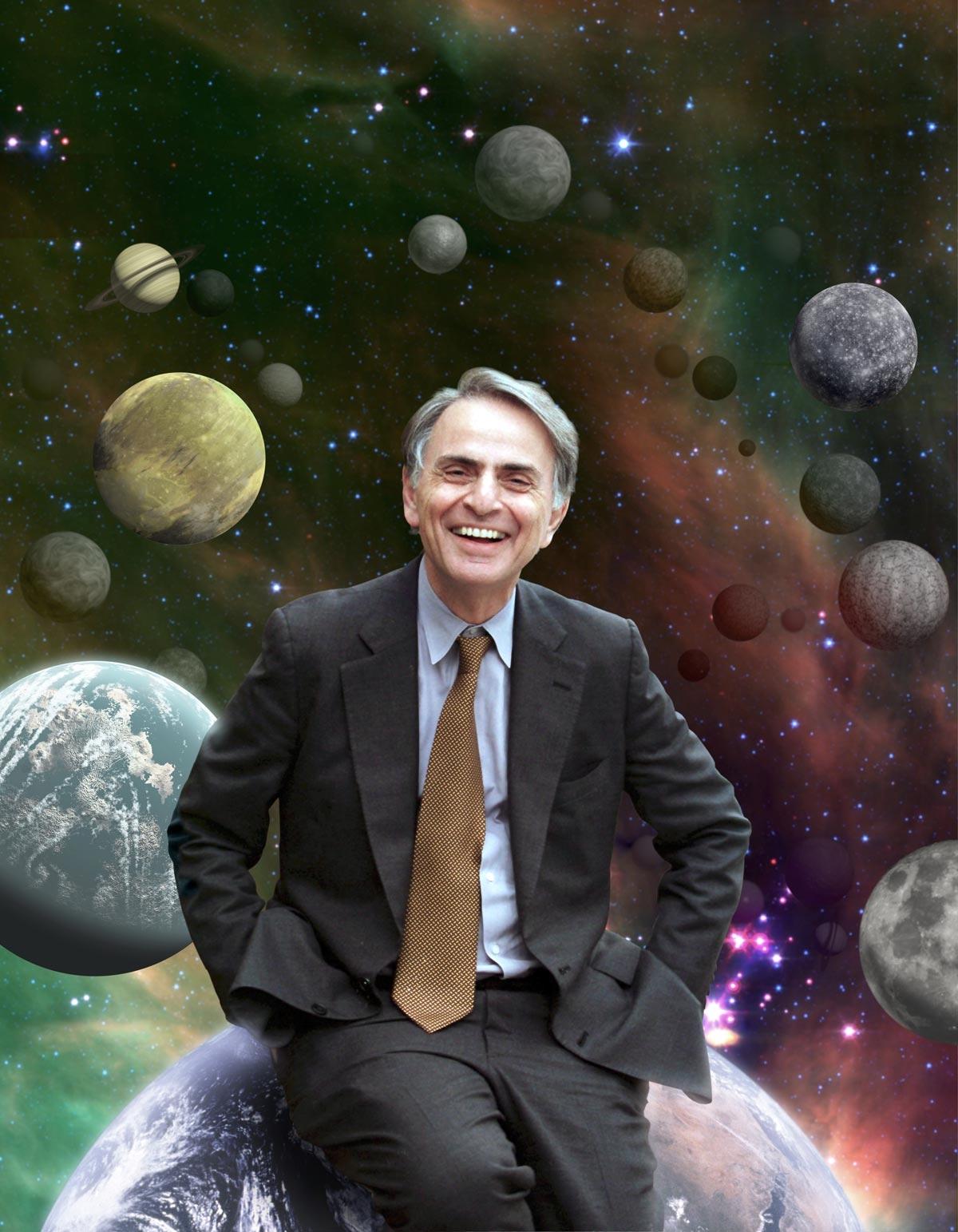
Image credit: NASA
Leading skeptic
Sagan’s later interest in the asteroid impact hazard, and debating Edward Teller on the matter, is omitted. His role as a leading skeptic is barely mentioned, except obliquely in reference to his penultimate major book, “The Demon-Haunted World”.
Sagan played other important roles, not treated in the movie, such as editor of the primary technical journal in planetary science, “Icarus”, and co-founder of the Planetary Society.
Nevertheless the treatment of Sagan explaining space to the public is well-done and moving and is accompanied by spectacular images.
Clark R. Chapman is a retired senior scientist for the Southwest Research Institute, Dept. of Space Studies, in Boulder, Colorado. Among numerous accolades, Chapman is recognized for establishing the scientific foundations of asteroid impact hazard assessment and planetary defense.
 Posted in
