 By
By  September 13th, 2026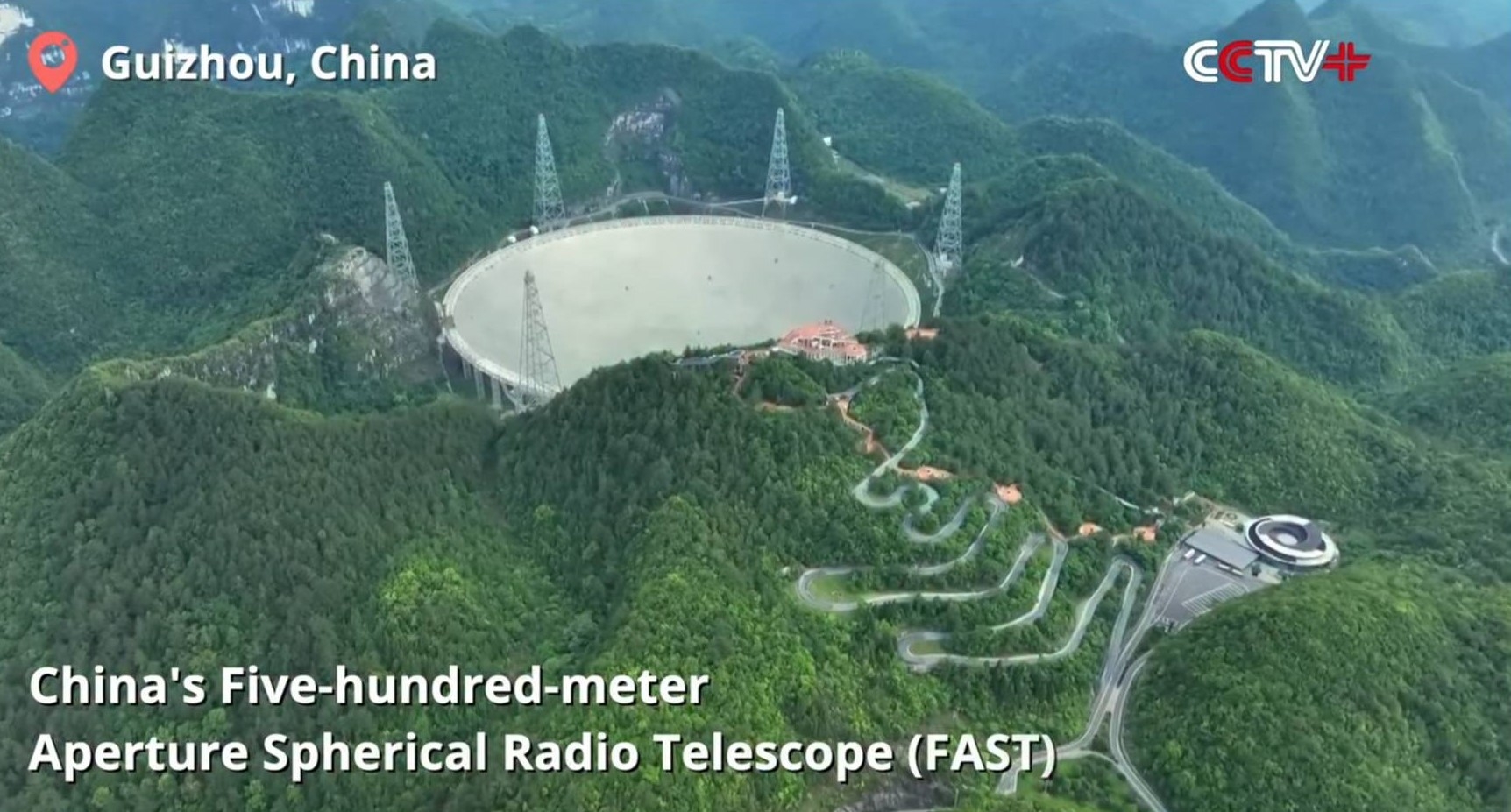
Image credit: CCTV/Inside Outer Space screengrab
Viewed as a major breakthrough in radio astronomy, China’s Five-hundred-meter Aperture Spherical Radio Telescope (FAST) has detected 156,411 neutral hydrogen sources across nearly half the sky.
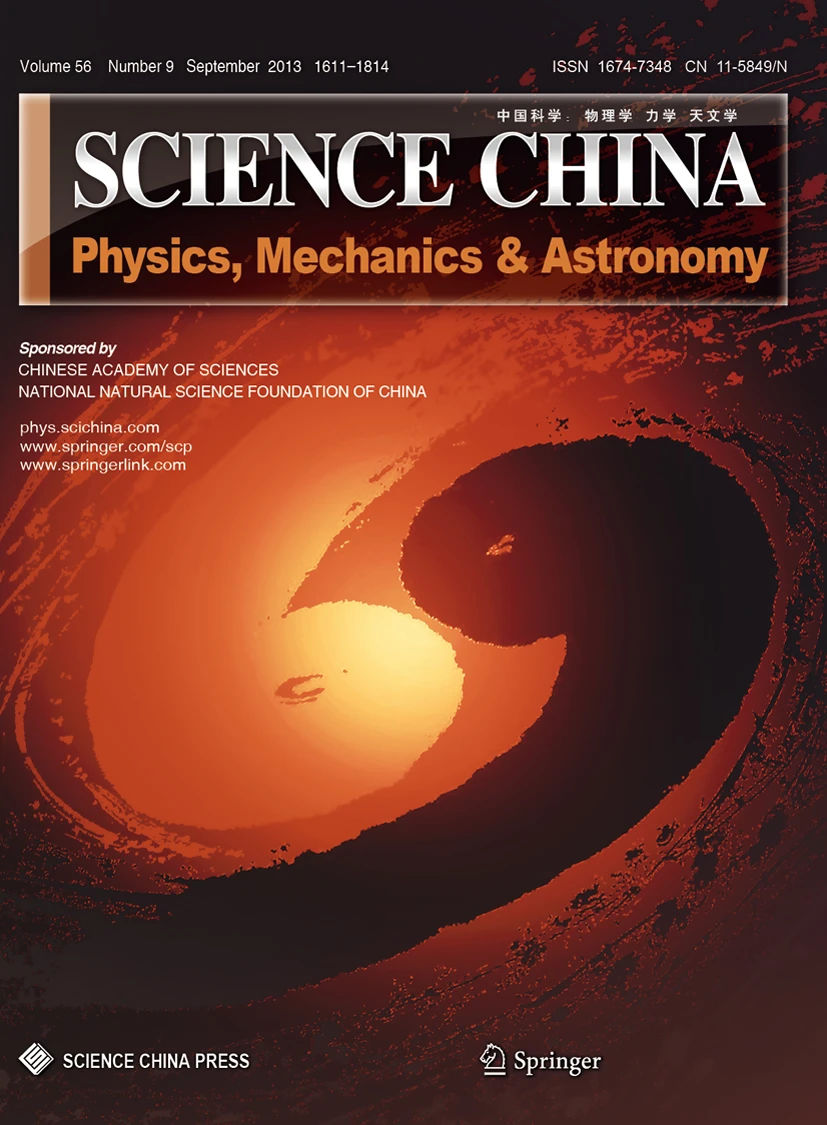
The findings, published as a cover story in the journal Science China Physics, Mechanics & Astronomy, position FAST as the new global reference in hydrogen survey research.
Identity cards
As reported by China Central Television (CCTV): The 156,411 galactic “identity cards” are expected to advance multiple frontier fields, including galaxy formation and evolution, dark matter distribution and large-scale cosmic structures, said Chuan-Peng Zhang, lead author of the study and associate researcher at the National Astronomical Observatories of the Chinese Academy of Sciences.
“Neutral hydrogen, the most abundant element in the universe, formed about 13.8 billion years ago when the post-Big Bang universe cooled enough for protons and electrons to combine. It serves as the raw material for stars and galaxies and carries critical information about the universe’s transition from darkness to light,” noted CCTV.
Sensitivity
The element emits a distinct 21-centimeter spectral line that penetrates interstellar dust and travels billions of light-years to Earth. Given the sensitivity of FAST, the observatory is uniquely equipped to capture these faint cosmic signals.
Located in a naturally deep and round karst depression in southwest China’s Guizhou Province, FAST has a reception area equal to 30 standard football fields. As the world’s largest single-dish radio telescope, FAST started formal operations in January 2020 and was officially opened to the world in March 2021.
For details, go to “The FAST all sky H i survey DR2: The FASHI catalog and the H i mass function” at:
https://www.sciengine.com/sci-open/api/v1/open/file/pdf/9B5560F7C1AF4E74BADFF47C5B0092DA
Go to this video at:
 Posted in Space News

