 By
By  September 8th, 2026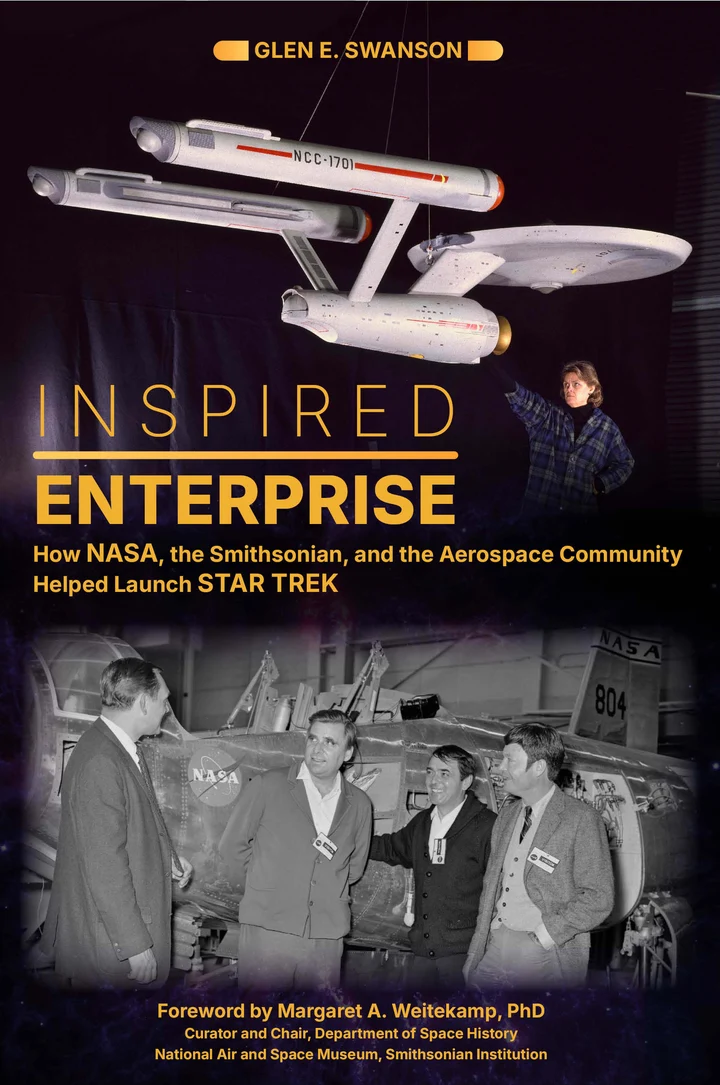
Inspired Enterprise: How NASA, the Smithsonian, and the Aerospace Community Helped Launch Star Trek by Glen E. Swanson and Foreword by Margaret A. Weitekamp of the Air and Space Museum; 2025; 288 pages (Hardcover); $35.00
Put aside the issue of cranky sliding doors on the USS Enterprise. Level out those pointy Spock ears and discount your own troubling encounters with tribbles.
But live long and prosper by reading this book. Also, your timing is great: Star Trek was first launched on the NBC Television Network on Sept. 8, 1966 – 60 years ago!
Swanson, a former chief historian at the NASA Johnson Space Center, has detailed how NASA, the Smithsonian, and aerospace businesses helped shape, legitimize, and popularize the now-beloved television show Star Trek, even including looks at the merchandising of the TV show and its syndication.
This is a scholarly look at Star Trek’s helmsman, Gene Roddenberry, and the science fiction world he created that drew upon smart storylines, visual effects, as well as plausible science and technology.
“As a baby boomer, Star Trek was a big part of my childhood,” an inspirational adventure, Swanson explains. “But little has been published about how Star Trek itself was inspired.”
Within its solid eight chapters, the author notes the role of the RAND Corporation, the military and nationalism in Star Trek, as well as the roles the aerospace industry, NASA and the Smithsonian played, leading to the show’s “vindication through syndication.”
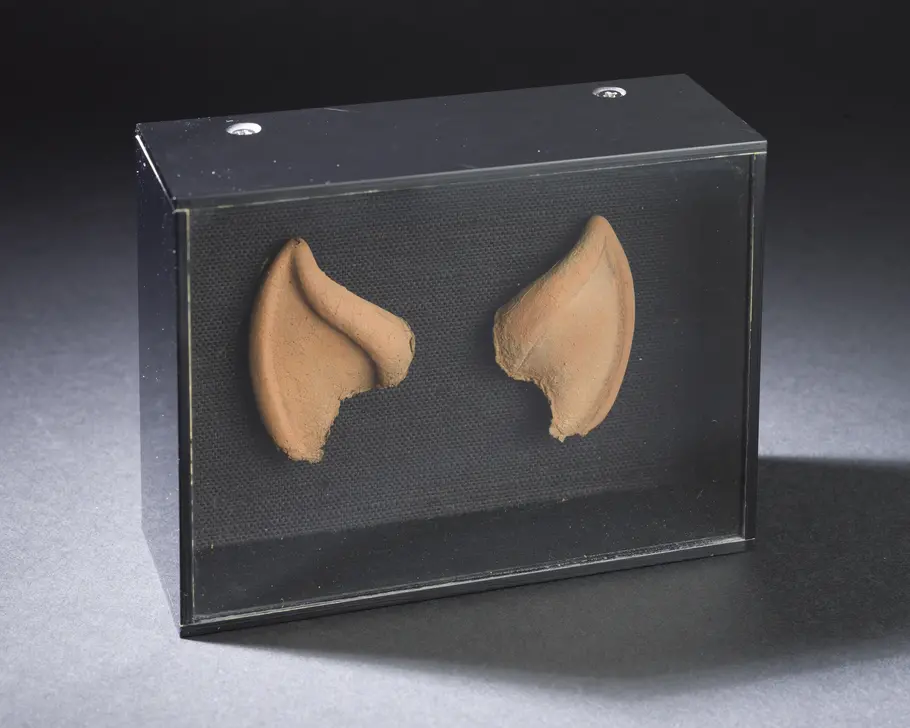
Spock ears in a box handmade by Leonard Nimoy.
Image credit: Smithsonian’s National Air and Space Museum
There is a wealth of well-researched facts and foundational observations offered in this book, replete with incredible endnotes and bibliography – assets that make this volume indispensible, not just for Star Trek fans, but those that deep dive into the meaning of space exploration.
Writes Swanson: “Is Star Trek an anomaly like the Apollo program? Both were products of the same decade. Apollo was the opening act to a period of time when our species could and did leave this world to venture out and explore another. Apollo was our first giant leap into space, and Star Trek was there to remind us not to get discouraged.”
So boldly go and get this terrific account of Star Trek’s beginnings and the evolving legacy it projects today.
For more information on this book, go to:
https://schifferbooks.com/products/inspired-enterprise
Also, you can test your Star Trek knowledge at this site, courtesy of the National Air and Space Museum’s Air and Space Quarterly at:
https://airandspace.si.edu/air-and-space-quarterly/issue-20/star-trek-museum-quiz
 Posted in
